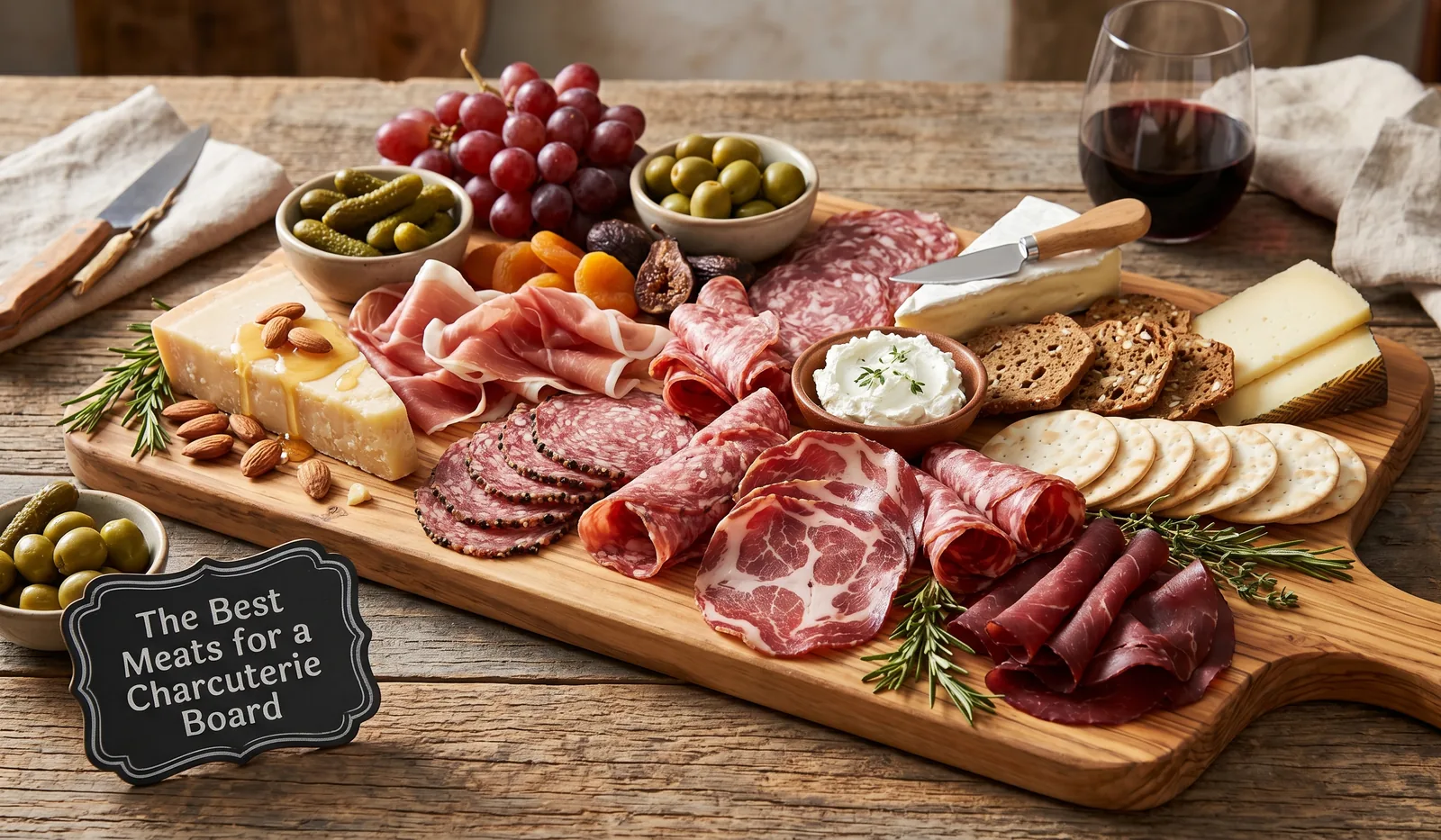
Quick Answer: There are hundreds of cured meats, but almost all of them fit into 8 families. Five sit on a line from cooked deli meats (moist and mild) through semi-dry sausages, whole-muscle meats like prosciutto and salami to jerky (dry and intense). The other three are cured fat like lardo, pâtés and spreads, and cured fish. Know the family and you know roughly how it will taste, and whether you need to cook it.
Every cured meat in one picture
Top to bottom: moist and mild, down to dry and intense
Plus three more families
No pork? Jump to the pork-free picks.
Jump to a section
Love cured meat? Cured Meat Field Guide $5 · printable PDF
The 8 types of cured meat at a glance
Cured meats mostly differ in two ways: whether they're cooked or dried, and whether they're a whole cut or chopped. The drier and older, the stronger the flavor.
How cured meat is made, in 4 steps
All cured meat starts with salt. What happens next decides which family it lands in. Here's the science of why it doesn't spoil.
- 1Salt it
Salt pulls water out of the meat, and with less water, spoilage bacteria can't grow. Most cures also use a little nitrite, which guards against botulism and keeps the meat pink.
Prosciutto di Parma is the famous exception: salt is its only cure. All whole-muscle meats start here.
- 2Grind and ferment (sausages only)
For salami, meat and fat are chopped, seasoned and stuffed into a casing. Friendly bacteria then turn a little sugar into lactic acid, which adds tang and makes the meat safer.
Long fermenting and drying makes salami; a short one plus smoke makes semi-dry sausages.
- 3Dry and age
The meat hangs in cool, humid rooms for weeks, months or years while it loses water and its flavor deepens.
Prosciutto di Parma must age at least 14 months; jerky is dried fast with heat.
- 4Or cook and smoke it
Instead of drying, some cured meats are cooked or hot-smoked, which makes them moist, mild and ready to eat in days.
That's the whole deli counter: ham, mortadella, pastrami, smoked turkey.
Building a board? Pick one meat from three different families, like a whole-muscle meat (prosciutto), a salami (soppressata) and something spreadable (pâté), and every guest finds a favorite. See the best meats for a charcuterie board and how much charcuterie per person.
The cured meat chart: all 100 types
The full list of meats in this guide. Tap a family, pick a meat or type a name, and tap any linked meat to open its full guide.
How to read the chart
- Family is how it's made: cooked, lightly dried, whole and aged, chopped into salami, dried hard, or one of three specialties.
- Strength is how intense it is to eat, salt, spice and smoke included, for a typical piece from a US store.
- Ready to eat? Most are. Ones marked Cook first are cured but raw, and ones marked Serve warm are cooked but taste best heated.
- How we picked the 100: all 61 meats and fish with a Charcuterie Lab ingredient guide, plus 39 more you'll meet at delis, butcher shops and on travels, from bacon and bologna to biltong and Jinhua ham.
Showing all 100 meats
| Meat | Family | Animal | From | Strength | Tastes like | Try with |
|---|---|---|---|---|---|---|
| Prosciutto Cotto | Cooked & deli | Pork | Italy | Mild | Mild, juicy, lightly herbed ham | Fontina and focaccia |
| Honey Ham | Cooked & deli | Pork | USA | Mild | Sweet, soft, gently smoky | Swiss cheese and mustard |
| Jambon de Paris | Cooked & deli | Pork | France | Mild | Clean, mild, tender | Butter and baguette |
| Smoked Turkey | Cooked & deli | Turkey | USA | Mild | Lean, light, lightly smoky | Cranberry and Brie |
| Bologna | Cooked & deli | Pork & beef | USA | Mild | Mild, smooth, a little sweet | Yellow mustard and crackers |
| Mortadella | Cooked & deli | Pork | Italy | Gentle | Silky, mild, pistachio-flecked | Pistachios and Lambrusco |
| Corned Beef | Cooked & deli | Beef | USA & Ireland | Medium | Salty, beefy, warm spices | Rye and grainy mustard |
| Pastrami | Cooked & deli | Beef | USA | Bold | Peppery crust, smoky, rich | Rye and spicy mustard |
| Montreal Smoked Meat | Cooked & deli | Beef | Canada | Bold | Smoky, peppery, less sweet than pastrami | Mustard and dill pickles |
| Kielbasa Serve warm | Cooked & deli | Pork (often with beef) | Poland | Medium | Garlicky, smoky, juicy | Sauerkraut and mustard |
| Andouille Serve warm | Cooked & deli | Pork | USA (Louisiana) | Bold | Smoky, peppery, coarse | Creole mustard |
| Head Cheese | Cooked & deli | Pork | USA & Europe | Medium | Savory, herby, set in its own jelly | Vinegar and onions |
| Morcilla Serve warm | Cooked & deli | Pork (blood sausage) | Spain | Bold | Rich, earthy, warm spices | Roasted peppers |
| Tasso Ham Cook first | Cooked & deli | Pork | USA (Louisiana) | Intense | Fiery, smoky, very seasoned | Beans, greens and gumbo |
| Summer Sausage | Semi-dry & snack | Beef or pork & beef | USA | Gentle | Tangy, smoky, mild | Cheddar and crackers |
| Meat Sticks | Semi-dry & snack | Beef or pork & beef | USA | Gentle | Smoky, salty, snappy | Pepper Jack cubes |
| Kabanos | Semi-dry & snack | Pork | Poland | Gentle | Smoky, thin, snappy | Pickles and beer |
| Thuringer | Semi-dry & snack | Pork & beef | USA (German-style) | Medium | Tangy, smoky, peppery | Swiss and rye |
| Landjäger | Semi-dry & snack | Beef & pork | Germany, Switzerland & Austria | Medium | Smoky, dense, lightly spiced | Gruyère and pretzels |
| Lebanon Bologna | Semi-dry & snack | Beef | USA (Pennsylvania) | Bold | Sweet-sour tang, heavy smoke | Cream cheese roll-ups |
| Lap Cheong Cook first | Semi-dry & snack | Pork | China | Medium | Sweet, rich, rose-wine scented | Fried rice and scallions |
| Prosciutto di Parma | Whole-muscle | Pork | Italy | Gentle | Sweet, silky, delicately salty | Melon or Parmigiano |
| Prosciutto di San Daniele | Whole-muscle | Pork | Italy | Gentle | Sweeter and softer than Parma | Fresh figs |
| Prosciutto Toscano | Whole-muscle | Pork | Italy | Medium | Saltier, with pepper and herbs | Pecorino and Chianti |
| Culatello | Whole-muscle | Pork | Italy | Medium | Deep, sweet, almost winey | Parmigiano and Lambrusco |
| Lonzino | Whole-muscle | Pork | Italy | Gentle | Lean, delicate, fennel and pepper | Pears and pecorino |
| Coppa (Capicola) | Whole-muscle | Pork | Italy | Medium | Rich, marbled, warmly spiced | Aged provolone |
| Speck | Whole-muscle | Pork | Italy (Alto Adige) | Medium | Smoky, juniper, lightly spiced | Apples and rye crackers |
| Bresaola | Whole-muscle | Beef | Italy | Gentle | Lean, sweet, deep red | Arugula, lemon and Parmigiano |
| Jamón Serrano | Whole-muscle | Pork | Spain | Medium | Firmer and saltier than prosciutto | Manchego |
| Jamón Ibérico | Whole-muscle | Pork (Ibérico pigs) | Spain | Bold | Nutty, rich, melting fat | Fino sherry |
| Lomo | Whole-muscle | Pork | Spain | Gentle | Lean, tender, paprika edge | Manchego and almonds |
| Cecina | Whole-muscle | Beef | Spain | Medium | Smoky, beefy, deep | Olive oil and almonds |
| Jambon de Bayonne | Whole-muscle | Pork | France | Medium | Mellow, lightly sweet, hint of chile | Sheep's milk cheese and cherry jam |
| Duck Prosciutto | Whole-muscle | Duck | France & USA | Medium | Rich, gamey, buttery fat cap | Cherries or orange |
| Presunto | Whole-muscle | Pork | Portugal | Medium | Savory, salty, deep red | Melon and vinho verde |
| Pršut | Whole-muscle | Pork | Croatia & Slovenia | Medium | Dry, salty, sometimes smoked | Sheep's milk cheese and olives |
| Westphalian Ham | Whole-muscle | Pork | Germany | Medium | Smoky, firm, salty | Rye bread and mustard |
| Black Forest Ham | Whole-muscle | Pork | Germany | Gentle | Smoky and sweet | Swiss cheese |
| Bündnerfleisch | Whole-muscle | Beef | Switzerland | Medium | Lean, concentrated, alpine herbs | Gruyère |
| Pastirma | Whole-muscle | Beef | Turkey & Armenia | Bold | Garlicky fenugreek crust, intense | Eggs or white cheese |
| Country Ham Cook first | Whole-muscle | Pork | USA (South) | Bold | Very salty, funky, intense | Biscuits and pepper jelly |
| Jinhua Ham Cook first | Whole-muscle | Pork | China | Bold | Intensely savory, used like a seasoning | Soups and braises |
| Genoa Salami | Salami | Pork (sometimes beef) | Italy (US-style) | Gentle | Mild, garlicky, a touch of wine | Provolone |
| Hard Salami | Salami | Pork & beef | USA | Gentle | Firm, smoky, mild | Cheddar |
| Milano Salami | Salami | Pork (often with beef) | Italy | Gentle | Fine-grained, mild, garlicky | Grissini |
| Salame Felino | Salami | Pork | Italy | Gentle | Sweet, pure pork, peppercorns | Parmigiano |
| Cacciatorini | Salami | Pork | Italy | Gentle | Small, mild, garlicky | Olives and Asiago |
| Finocchiona | Salami | Pork | Italy (Tuscany) | Medium | Fennel, soft, aromatic | Pecorino and Chianti |
| Soppressata | Salami | Pork | Italy | Medium | Coarse, rustic, sweet or hot | Provolone and peppers |
| Calabrese Salami | Salami | Pork | Italy (Calabria) | Bold | Hot chile, smoky red pepper | Honey and ricotta |
| Wild Boar Salami | Salami | Wild boar & pork | Italy | Bold | Gamey, dark, rich | Pecorino and red wine |
| Rosette de Lyon | Salami | Pork | France | Gentle | Mild, buttery, coarse | Cornichons and Beaujolais |
| Saucisson Sec | Salami | Pork | France | Medium | Garlicky, peppery, nutty | Comté and baguette |
| Fuet | Salami | Pork | Spain (Catalonia) | Gentle | Thin, mild, peppery | Manchego and cava |
| Salchichón | Salami | Pork | Spain | Medium | Black pepper, nutmeg, savory | Marcona almonds |
| Chorizo (Spanish) | Salami | Pork | Spain | Bold | Smoky paprika, garlicky | Manchego and olives |
| Pepperoni | Salami | Pork & beef | USA | Medium | Smoky, spicy, paprika | Pizza, mozzarella |
| Hungarian Salami | Salami | Pork | Hungary | Medium | Smoky, fine, white mold coat | Pickled peppers |
| Kulen | Salami | Pork | Croatia & Serbia | Bold | Fiery paprika, garlic, smoke | Fresh cheese and bread |
| Sucuk Cook first | Salami | Beef | Turkey | Bold | Garlic, cumin, red pepper | Fried eggs |
| Beef Jerky | Jerky & dried | Beef | USA | Medium | Chewy, smoky, sweet-salty | Sharp cheddar |
| Venison Jerky | Jerky & dried | Venison | USA | Medium | Lean, gamey, peppery | Blackberry jam and cheddar |
| Biltong | Jerky & dried | Beef | South Africa | Bold | Beefy, coriander, vinegar | Chutney and red wine |
| Droëwors | Jerky & dried | Beef | South Africa | Bold | Coriander, clove, chewy | Lager |
| Bakkwa | Jerky & dried | Pork | Singapore & Malaysia | Medium | Sweet, sticky, grilled | Cold beer or jasmine tea |
| Kilishi | Jerky & dried | Beef | Nigeria & Niger | Bold | Peanut-spice crust, crisp, hot | Plantain chips |
| Lardo | Cured fat & belly | Pork fat | Italy | Gentle | Buttery, herby, melts on the tongue | Warm toast and honey |
| Salo | Cured fat & belly | Pork fat | Ukraine & Russia | Gentle | Garlicky, rich, clean | Rye bread and pickles |
| Pancetta Cook first | Cured fat & belly | Pork belly | Italy | Medium | Rich, peppery, porky | Pasta, peas and onions |
| Bacon Cook first | Cured fat & belly | Pork belly | USA & UK | Medium | Smoky, salty, sweet | Dates and maple |
| Guanciale Cook first | Cured fat & belly | Pork cheek | Italy (Rome) | Bold | Intensely porky, peppery, rich | Carbonara and pecorino |
| Lap Yuk (Chinese Bacon) Cook first | Cured fat & belly | Pork belly | China | Bold | Sweet, soy, rice wine | Steamed rice |
| Rillettes | Pâtés & spreads | Pork or duck | France | Gentle | Rich, shreddy, slow-cooked | Cornichons and baguette |
| Teewurst | Pâtés & spreads | Pork (often with beef) | Germany | Gentle | Smoky, soft, mild | Rye toast |
| Pâté de Campagne | Pâtés & spreads | Pork | France | Medium | Coarse, peppery, rustic | Dijon and cornichons |
| Chicken Liver Pâté | Pâtés & spreads | Chicken | France | Medium | Smooth, rich, minerally | Fig jam and toast |
| Foie Gras | Pâtés & spreads | Duck or goose | France | Medium | Buttery, very rich, sweet | Sauternes and brioche |
| Pâté en Croûte | Pâtés & spreads | Pork & game | France | Medium | Savory, layered, in pastry | Mustard and pickles |
| Liverwurst | Pâtés & spreads | Pork | Germany | Medium | Smooth, livery, savory | Rye and red onion |
| Braunschweiger | Pâtés & spreads | Pork | USA (German-style) | Medium | Smoked, livery, creamy | Crackers and onion |
| Sobrasada | Pâtés & spreads | Pork | Spain (Mallorca) | Bold | Paprika, soft, sweet heat | Honey on toast |
| 'Nduja | Pâtés & spreads | Pork | Italy (Calabria) | Intense | Fiery chile, spreadable, funky | Burrata and toast |
| Cocktail Shrimp | Cured fish | Shrimp | USA | Mild | Sweet, clean, firm | Cocktail sauce and lemon |
| Smoked Trout | Cured fish | Trout | USA & Europe | Gentle | Flaky, mild smoke | Horseradish cream |
| Smoked Salmon | Cured fish | Salmon | Scotland, Norway & USA | Gentle | Silky, smoky, rich | Cream cheese and capers |
| Gravlax | Cured fish | Salmon | Sweden & Norway | Gentle | Dill, sweet, silky, not smoked | Mustard-dill sauce |
| Lox | Cured fish | Salmon | USA (Jewish deli) | Medium | Salty, silky, not smoked | Bagels and cream cheese |
| Ventresca (Tuna Belly) | Cured fish | Tuna | Spain & Italy | Gentle | Buttery, tender, in olive oil | Piquillo peppers |
| Tinned Mackerel | Cured fish | Mackerel | Portugal & Spain | Medium | Rich, meaty, oily | Lemon and crusty bread |
| Sardines | Cured fish | Sardine | Portugal & Spain | Medium | Rich, savory, briny | Lemon and toast |
| Tinned Octopus | Cured fish | Octopus | Spain & Portugal | Medium | Tender, briny, smoky paprika | Potato chips and vermouth |
| Smoked Oysters | Cured fish | Oyster | USA & Asia | Medium | Smoky, briny, soft | Saltines and hot sauce |
| Pickled Herring | Cured fish | Herring | Scandinavia & Netherlands | Medium | Sweet-sour, briny, firm | Rye, onion and aquavit |
| Boquerones | Cured fish | Anchovy | Spain | Gentle | Bright, vinegary, mild | Olives and cava |
| Anchovies | Cured fish | Anchovy | Spain & Italy | Intense | Very salty, deeply savory | Butter and radishes |
| Mojama | Cured fish | Tuna | Spain | Bold | Dense, salty, like tuna prosciutto | Almonds and olive oil |
| Bottarga | Cured fish | Mullet or tuna roe | Italy | Intense | Salty, briny, intensely savory | Shaved over pasta |
| Ikura (Salmon Roe) | Cured fish | Salmon roe | Japan & Russia | Medium | Juicy pops, briny, rich | Blini and crème fraîche |
| Caviar | Cured fish | Sturgeon roe | Caspian region & farms | Bold | Briny, buttery, delicate pop | Blini and Champagne |
Nothing matches that. Try fewer filters.
1 Cooked & smoked cold cuts 14 types
Prosciutto Cotto, Honey Ham, Smoked Turkey, Mortadella and more
Cured or brined, then cooked or hot-smoked, so they're moist and ready to slice. Most of the deli counter lives here.
Why it tastes this way: Cooking sets the meat before its flavor has time to concentrate, so these stay juicy, mild and a little sweet. The pink color comes from the cure, not from being underdone.
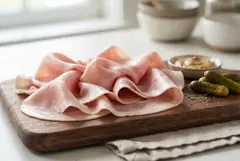 Prosciutto CottoMild, juicy, lightly herbed hamTry with: Fontina and focaccia
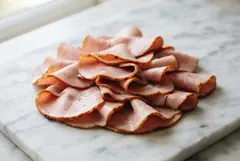 Honey HamSweet, soft, gently smokyTry with: Swiss cheese and mustard
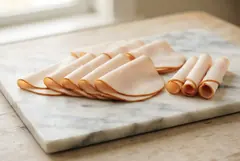 Smoked TurkeyLean, light, lightly smokyTry with: Cranberry and Brie
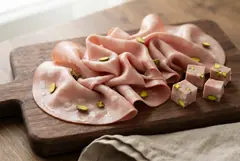 MortadellaSilky, mild, pistachio-fleckedTry with: Pistachios and Lambrusco
See all 14 cooked & deli types
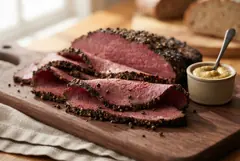 PastramiPeppery crust, smoky, richTry with: Rye and spicy mustard
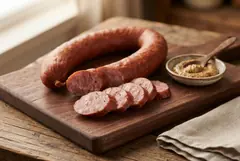 Kielbasa Serve warmGarlicky, smoky, juicyTry with: Sauerkraut and mustard
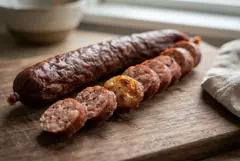 Andouille Serve warmSmoky, peppery, coarseTry with: Creole mustard
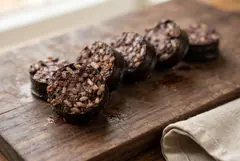 Morcilla Serve warmRich, earthy, warm spicesTry with: Roasted peppers
Often confused: Mortadella vs. bologna
Shopping for one? See the best deli meat brands.
Tip These spoil the fastest. Keep them cold and finish an opened pack within 3 to 5 days.
2 Semi-dry & snack sausages 7 types
Summer Sausage, Meat Sticks, Landjäger, Lap Cheong
Sausages that are fermented and smoked, then dried only part of the way, so they stay soft enough to bite.
Why it tastes this way: A short fermentation gives a gentle tang and smoke does most of the flavor work. Less drying than salami means softer, juicier and milder.
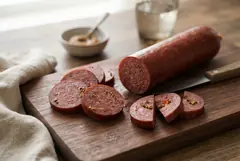 Summer SausageTangy, smoky, mildTry with: Cheddar and crackers
 Meat SticksSmoky, salty, snappyTry with: Pepper Jack cubes
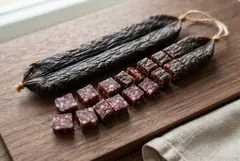 LandjägerSmoky, dense, lightly spicedTry with: Gruyère and pretzels
See all 7 semi-dry & snack types
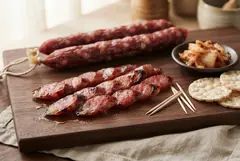
Tip Many are sold shelf-stable. Once you cut one open, keep it in the fridge.
3 Whole-muscle cured meats 22 types
Prosciutto di Parma, Prosciutto di San Daniele, Culatello, Coppa (Capicola) and more
A whole leg, loin, neck or other cut, salted and air-dried for months or years, then sliced paper-thin.
Why it tastes this way: Salt pulls out water, then the meat's own enzymes slowly break proteins down into savory amino acids. Long aging is what makes a great ham taste sweet and nutty.
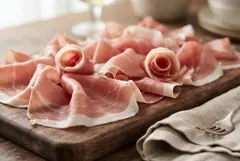 Prosciutto di ParmaSweet, silky, delicately saltyTry with: Melon or Parmigiano
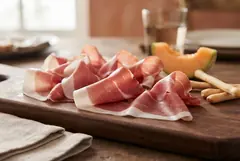 Prosciutto di San DanieleSweeter and softer than ParmaTry with: Fresh figs
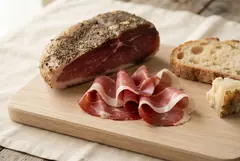 Prosciutto ToscanoSaltier, with pepper and herbsTry with: Pecorino and Chianti
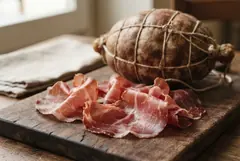 CulatelloDeep, sweet, almost wineyTry with: Parmigiano and Lambrusco
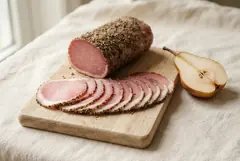 LonzinoLean, delicate, fennel and pepperTry with: Pears and pecorino
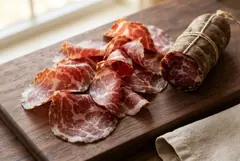 Coppa (Capicola)Rich, marbled, warmly spicedTry with: Aged provolone
See all 22 whole-muscle types
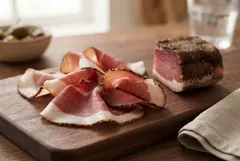 SpeckSmoky, juniper, lightly spicedTry with: Apples and rye crackers
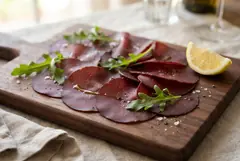 BresaolaLean, sweet, deep redTry with: Arugula, lemon and Parmigiano
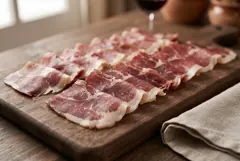 Jamón SerranoFirmer and saltier than prosciuttoTry with: Manchego
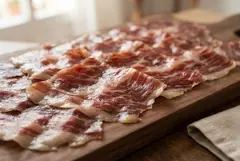 Jamón IbéricoNutty, rich, melting fatTry with: Fino sherry
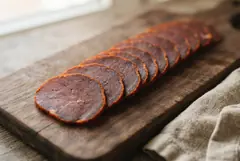 LomoLean, tender, paprika edgeTry with: Manchego and almonds
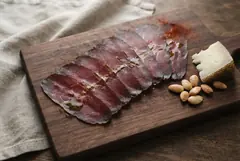 CecinaSmoky, beefy, deepTry with: Olive oil and almonds
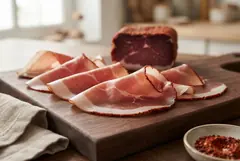 Jambon de BayonneMellow, lightly sweet, hint of chileTry with: Sheep's milk cheese and cherry jam
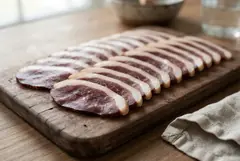 Duck ProsciuttoRich, gamey, buttery fat capTry with: Cherries or orange
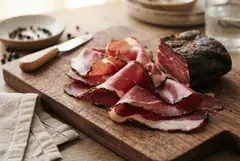 Black Forest HamSmoky and sweetTry with: Swiss cheese
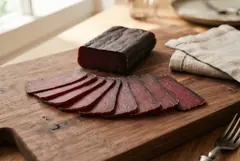 BündnerfleischLean, concentrated, alpine herbsTry with: Gruyère
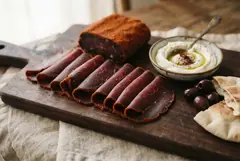 PastirmaGarlicky fenugreek crust, intenseTry with: Eggs or white cheese
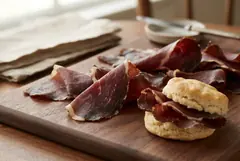 Country Ham Cook firstVery salty, funky, intenseTry with: Biscuits and pepper jelly
Often confused: Prosciutto vs. serranoBresaola vs. prosciutto
Shopping for one? See the best prosciutto brands.
Tip Slice as thin as you can and fold it loosely so the slices don't stick. Take it out about 20 minutes early so the fat softens.
4 Dry-cured salami & sausages 18 types
Genoa Salami, Hard Salami, Finocchiona, Soppressata and more
Chopped meat and fat, salted and spiced, stuffed into a casing, fermented and then air-dried for weeks or months.
Why it tastes this way: Friendly bacteria turn sugar into lactic acid, which gives salami its tang and helps keep it safe as it dries. The white coat on many salamis is a harmless mold that protects it while it ages.
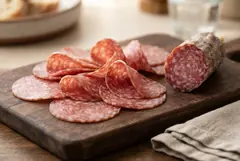 Genoa SalamiMild, garlicky, a touch of wineTry with: Provolone
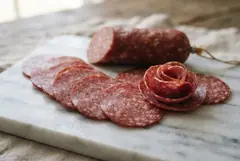 Hard SalamiFirm, smoky, mildTry with: Cheddar
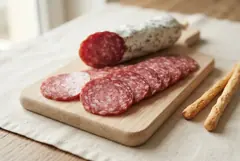 Milano SalamiFine-grained, mild, garlickyTry with: Grissini
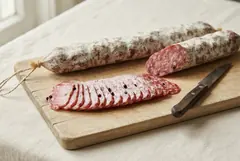 Salame FelinoSweet, pure pork, peppercornsTry with: Parmigiano
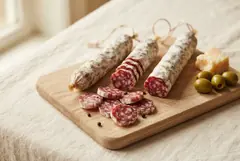 CacciatoriniSmall, mild, garlickyTry with: Olives and Asiago
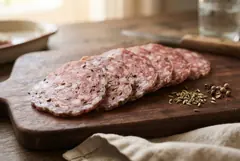 FinocchionaFennel, soft, aromaticTry with: Pecorino and Chianti
See all 18 salami types
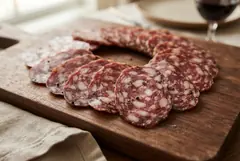 SoppressataCoarse, rustic, sweet or hotTry with: Provolone and peppers
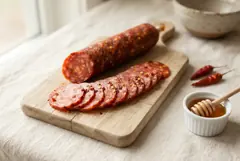 Calabrese SalamiHot chile, smoky red pepperTry with: Honey and ricotta
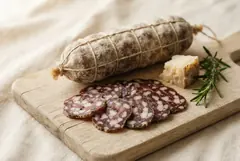 Wild Boar SalamiGamey, dark, richTry with: Pecorino and red wine
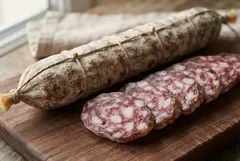 Rosette de LyonMild, buttery, coarseTry with: Cornichons and Beaujolais
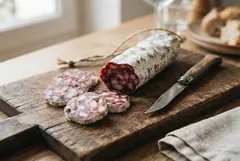 Saucisson SecGarlicky, peppery, nuttyTry with: Comté and baguette
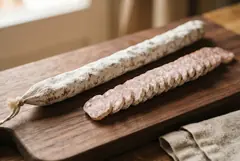 FuetThin, mild, pepperyTry with: Manchego and cava
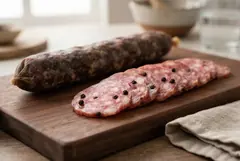 SalchichónBlack pepper, nutmeg, savoryTry with: Marcona almonds
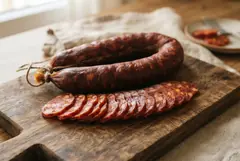 Chorizo (Spanish)Smoky paprika, garlickyTry with: Manchego and olives
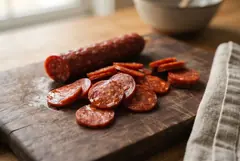 PepperoniSmoky, spicy, paprikaTry with: Pizza, mozzarella
Often confused: Genoa vs. hard salamiSoppressata vs. salamiSalami vs. pepperoniSalami vs. chorizo
Want to go deeper? See the types of salami.
Tip Peel the casing before slicing. Cut soft salami thicker and hard salami thinner.
5 Jerky & dried meats 6 types
Beef Jerky, Biltong
Lean meat, seasoned and dried until most of the water is gone. Chewy, packable and usually shelf-stable.
Why it tastes this way: With so little water left, bacteria can't grow. The flavor comes from the marinade or rub: soy and sugar for jerky, vinegar and coriander for biltong.
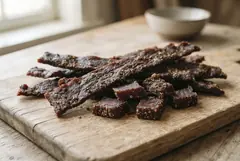 Beef JerkyChewy, smoky, sweet-saltyTry with: Sharp cheddar
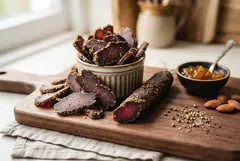 BiltongBeefy, coriander, vinegarTry with: Chutney and red wine
Shopping for one? See the best beef jerky and the best meat sticks.
Tip Biltong is air-dried instead of cooked, so it's softer and beefier than jerky.
6 Cured fat & belly 6 types
Lardo, Pancetta, Guanciale
Pork fat or belly cured with salt and spices. Lardo and salo are sliced thin and eaten as they are; pancetta, guanciale and bacon are mostly cooked.
Why it tastes this way: Fat carries flavor, so the pepper, garlic and herbs in the cure come through strongly. Warmth makes it melt, which is why lardo goes on hot toast.
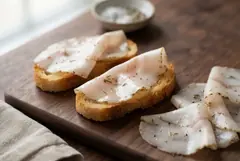 LardoButtery, herby, melts on the tongueTry with: Warm toast and honey
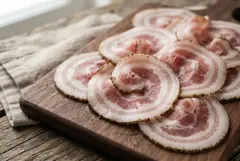 Pancetta Cook firstRich, peppery, porkyTry with: Pasta, peas and onions
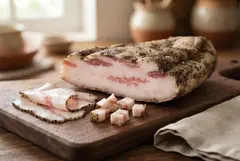 Guanciale Cook firstIntensely porky, peppery, richTry with: Carbonara and pecorino
Often confused: Prosciutto vs. pancetta
Tip Lay lardo over warm crostini right before serving so it turns translucent.
7 Pâtés, rillettes & spreads 10 types
Rillettes, Teewurst, Pâté de Campagne, Liverwurst and more
Meat, liver or fat made soft enough to spread, from French rillettes and pâté to fiery 'nduja.
Why it tastes this way: Fat and fine grinding make them rich and soft. Liver adds a deep, minerally flavor, and paprika or chile make 'nduja and sobrasada red and hot.
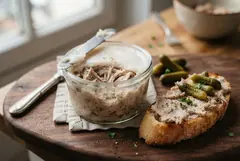 RillettesRich, shreddy, slow-cookedTry with: Cornichons and baguette
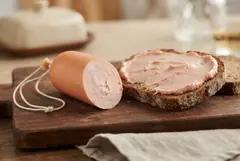 TeewurstSmoky, soft, mildTry with: Rye toast
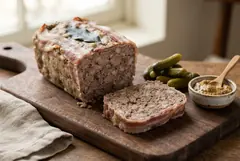 Pâté de CampagneCoarse, peppery, rusticTry with: Dijon and cornichons
See all 10 pâtés & spreads types
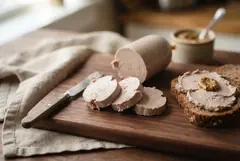 LiverwurstSmooth, livery, savoryTry with: Rye and red onion
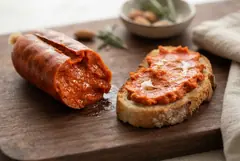 SobrasadaPaprika, soft, sweet heatTry with: Honey on toast
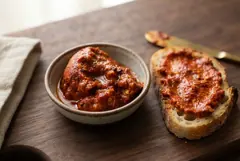 'NdujaFiery chile, spreadable, funkyTry with: Burrata and toast
Shopping for one? See the best pâté you can buy.
Tip Serve with something sharp and crunchy: cornichons, grainy mustard or pickled onions.
8 Cured, smoked & tinned fish 17 types
Cocktail Shrimp, Smoked Trout, Smoked Salmon, Gravlax and more
Fish and seafood preserved with salt, smoke, brine or a tin: smoked salmon, anchovies, bottarga and caviar.
Why it tastes this way: Salt draws out water and firms the flesh, and smoke adds flavor. Rich, oily fish want acid: lemon, capers, pickled onion or sparkling wine.
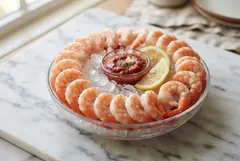 Cocktail ShrimpSweet, clean, firmTry with: Cocktail sauce and lemon
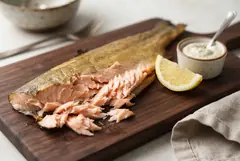 Smoked TroutFlaky, mild smokeTry with: Horseradish cream
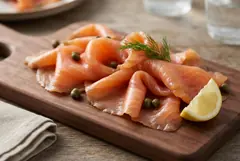 Smoked SalmonSilky, smoky, richTry with: Cream cheese and capers
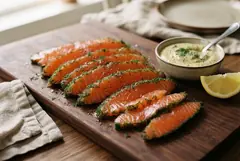 GravlaxDill, sweet, silky, not smokedTry with: Mustard-dill sauce
See all 17 cured fish types
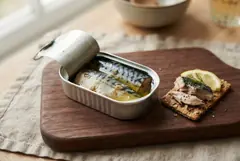 Tinned MackerelRich, meaty, oilyTry with: Lemon and crusty bread
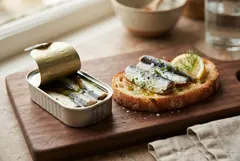 SardinesRich, savory, brinyTry with: Lemon and toast
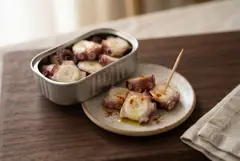 Tinned OctopusTender, briny, smoky paprikaTry with: Potato chips and vermouth
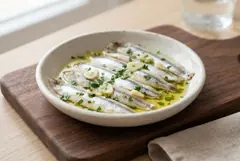 BoqueronesBright, vinegary, mildTry with: Olives and cava
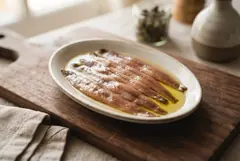 AnchoviesVery salty, deeply savoryTry with: Butter and radishes
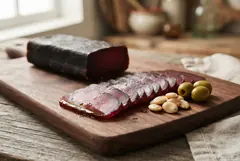 MojamaDense, salty, like tuna prosciuttoTry with: Almonds and olive oil
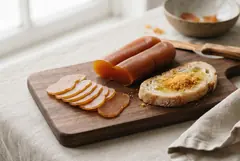 BottargaSalty, briny, intensely savoryTry with: Shaved over pasta
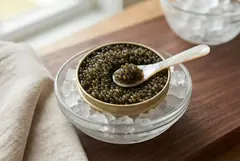 CaviarBriny, buttery, delicate popTry with: Blini and Champagne
Building a whole board of it? See the best tinned fish and the best smoked salmon.
Tip Give fish its own corner of the board, or its own plate on ice if it will sit out.
Cured meats by country
Every tradition has its own. Here's where each of the 100 comes from (seafood is in its own section).
Italy has the longest list. Salumi is the Italian word for all of them; salami is just one kind. See them region by region →
Prosciutto Cotto · Mortadella · Prosciutto di Parma · Prosciutto di San Daniele · Prosciutto Toscano · Culatello · Lonzino · Coppa (Capicola) · Speck · Bresaola · Genoa Salami · Milano Salami · Salame Felino · Cacciatorini · Finocchiona · Soppressata · Calabrese Salami · Wild Boar Salami · Lardo · Pancetta · Guanciale · 'Nduja
Paprika (pimentón) is the signature, and jamón is the national treasure.
Morcilla · Jamón Serrano · Jamón Ibérico · Lomo · Cecina · Fuet · Salchichón · Chorizo (Spanish) · Sobrasada
The French gave us the word charcuterie, from chair cuite, "cooked meat", and they lead on pâtés and rillettes.
Jambon de Paris · Jambon de Bayonne · Duck Prosciutto · Rosette de Lyon · Saucisson Sec · Rillettes · Pâté de Campagne · Chicken Liver Pâté · Foie Gras · Pâté en Croûte
Smoke, caraway, paprika and garlic: hearty meats made for cold winters.
Kielbasa · Kabanos · Landjäger · Pršut · Westphalian Ham · Black Forest Ham · Bündnerfleisch · Hungarian Salami · Kulen · Salo · Teewurst · Liverwurst
Deli classics, smokehouse sausages and jerky.
Honey Ham · Smoked Turkey · Bologna · Corned Beef · Pastrami · Montreal Smoked Meat · Andouille · Head Cheese · Tasso Ham · Summer Sausage · Meat Sticks · Thuringer · Lebanon Bologna · Country Ham · Hard Salami · Pepperoni · Beef Jerky · Venison Jerky · Bacon · Braunschweiger
From Chinese lap cheong to South African biltong.
Lap Cheong · Presunto · Pastirma · Jinhua Ham · Sucuk · Biltong · Droëwors · Bakkwa · Kilishi · Lap Yuk (Chinese Bacon)
The best cured meat for the job
Genoa Salami · Prosciutto di Parma · Prosciutto Cotto · Mortadella · Summer Sausage · Smoked Turkey
Pepperoni · Soppressata · 'Nduja · Calabrese Salami · Speck · Prosciutto di Parma
Guanciale · Pancetta · Bacon · Lap Cheong · Andouille · Tasso Ham
Bresaola · Bündnerfleisch · Cecina · Pastirma · Biltong · Duck Prosciutto · Beef Jerky · Smoked Salmon
Chorizo (Spanish) · Calabrese Salami · 'Nduja · Sobrasada · Kulen · Andouille
Speck · Black Forest Ham · Cecina · Landjäger · Pastrami · Smoked Trout
Jamón Ibérico · Culatello · Caviar · Foie Gras · Pâté en Croûte · Bottarga
If you like this, try that
Each row goes from easy to bold. Find a meat you already like and take one step right.
- Genoa Salami
- Finocchiona
- Soppressata
- Wild Boar Salami
- Pepperoni
- Chorizo (Spanish)
- Calabrese Salami
- 'Nduja
Is it raw? Is it safe? What does "uncured" mean?
Many of the best ones were never cooked. Prosciutto and salami are made safe by salt, drying and (for salami) fermentation, and they're sold ready to eat. A few are cured but still raw and need cooking: pancetta, guanciale, bacon and lap cheong. The label will say "cook before eating".
The CDC advises people who are pregnant, 65 or older, or have a weakened immune system to heat deli meats to 165°F, or until steaming hot, before eating. Cooked-on-a-pizza prosciutto and salami are fine. More in can you eat prosciutto while pregnant and our pregnancy-safe board.
In the US, these words usually mean the maker cured the meat with celery powder or another natural source of nitrite instead of sodium nitrite. The meat is still cured. USDA has said it plans to change these label rules.
An uncut dry salami keeps for weeks (check the label). Sliced deli meat is the most perishable: eat an opened pack within 3 to 5 days. On the table, perishable food shouldn't sit out more than 2 hours (1 hour above 90°F).
Words you'll see on the label
| Word | What it means |
|---|---|
| Dry-cured | Salted and air-dried, not cooked. Prosciutto, jamón and most salami. |
| Fermented | Friendly bacteria were added to give a tang and help preserve it. Most salami and summer sausage. |
| Fully cooked | Cooked during processing, so it's ready to eat cold or warm. Ham, mortadella, kielbasa. |
| Cook before eating | Cured but still raw. Bacon, pancetta, guanciale, lap cheong. |
| Uncured | In the US, cured with celery powder or another natural nitrite source. Still cured. |
| Curing salt (pink salt) | Salt mixed with a little sodium nitrite, dyed pink so it isn't mistaken for table salt. |
| PDO / DOP / AOP | A protected name: made in one region by set rules. Prosciutto di Parma is one. |
| PGI / IGP | Protected too, with looser rules than PDO. Speck Alto Adige and Bresaola della Valtellina are examples. |
| Ibérico de bellota | From Ibérico pigs fattened on acorns. A black label means 100% Ibérico and acorn-fed, the top grade. |
| White coating | The powdery mold on salami. It's harmless and part of the aging, but most people peel the casing off. |
Good to know
- How much to buy: about 2 ounces of meat per person with a meal, 3 to 4 ounces when the board is the meal. Here's how much charcuterie per person.
- Serving: take whole-muscle meats and salami out of the fridge about 20 minutes early so the fat softens and the flavor opens up. Fold, don't stack, so slices don't stick.
- Shaping: try a salami rose, a salami river or a prosciutto rose.
- Why it lasts: salt, drying and acidity keep bacteria from growing. Here's why cured meat doesn't spoil.
Sources
- Consorzio del Prosciutto di Parma: New production rules
- USDA FSIS: Jerky and Food Safety
- USDA FSIS: Response to the petition on "uncured" and "no nitrate or nitrite added" labels (PDF)
- CDC: Listeria and deli meats
- FoodSafety.gov: Cold food storage chart
FAQ
How many types of cured meat are there?
There's no official count. Almost every region of Italy, Spain, France and Germany has its own hams and sausages, so the true number runs into the hundreds. This guide covers 100, and nearly all cured meats fit into 8 families: cooked cold cuts, semi-dry sausages, whole-muscle meats, salami, jerky, cured fat, spreads and cured fish.
What are the main types of cured meat?
Cooked and smoked cold cuts (ham, mortadella, pastrami), semi-dry sausages (summer sausage, meat sticks), whole-muscle cured meats (prosciutto, jamón, coppa, bresaola), dry-cured salami (Genoa, soppressata, chorizo), jerky and dried meats (beef jerky, biltong), cured fat (lardo, pancetta), spreads (pâté, rillettes, 'nduja) and cured fish (smoked salmon, anchovies).
What is the difference between salami and prosciutto?
Prosciutto is a whole pork leg that's salted and air-dried for many months, often more than a year, then sliced paper-thin. Salami is chopped meat and fat mixed with spices, stuffed into a casing, fermented and dried. Prosciutto tastes sweet and silky; salami is firmer, tangier and usually more seasoned.
Is cured meat raw?
Many dry-cured meats, like prosciutto and salami, are never cooked. Salt, drying and fermentation make them safe, and they're sold ready to eat. Some cured meats are still raw and must be cooked, including pancetta, guanciale, bacon and Chinese sausage. Check the label for "cook before eating".
What does uncured mean on a meat label?
In the US, "uncured" usually means the meat was cured with a natural source of nitrite, such as celery powder, instead of sodium nitrite. It is still cured and still contains nitrite. USDA has said it plans to update these labeling rules.
What is the difference between charcuterie and salumi?
Charcuterie is the French word for prepared meats (from chair cuite, "cooked meat") and is now used for any cured meat board. Salumi is the Italian word for cured meats. Salami is only one kind of salumi.
What are the best cured meats for a charcuterie board?
Pick three from different families: one whole-muscle meat like prosciutto, one salami like Genoa or soppressata, and one surprise, like a spicy 'nduja, a pâté or bresaola for guests who don't eat pork. Plan about 2 ounces of meat per person when there's a meal and 3 to 4 when the board is the meal.