The short version
Whole pork loin, salt-cured, rubbed with paprika and garlic, and air-dried for months. Lean, deep red and dense — the pork equivalent of bresaola, with Spanish seasoning. Pound for pound it's the best value in a Spanish deli case.
What it is
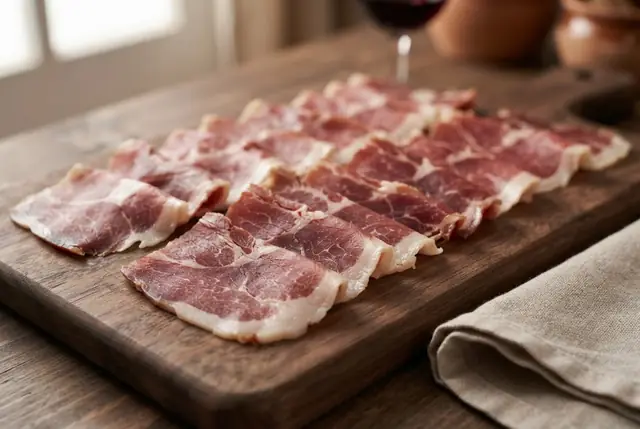
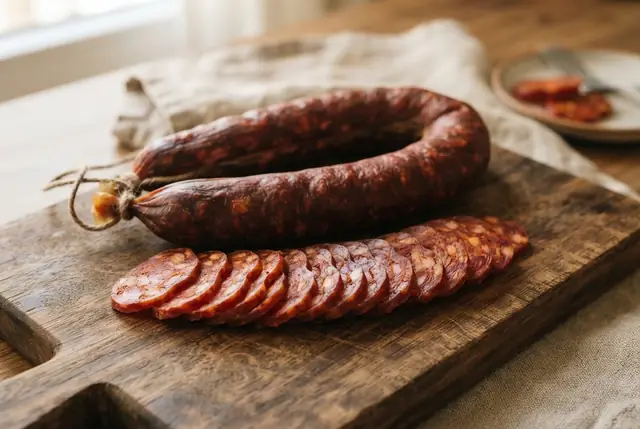
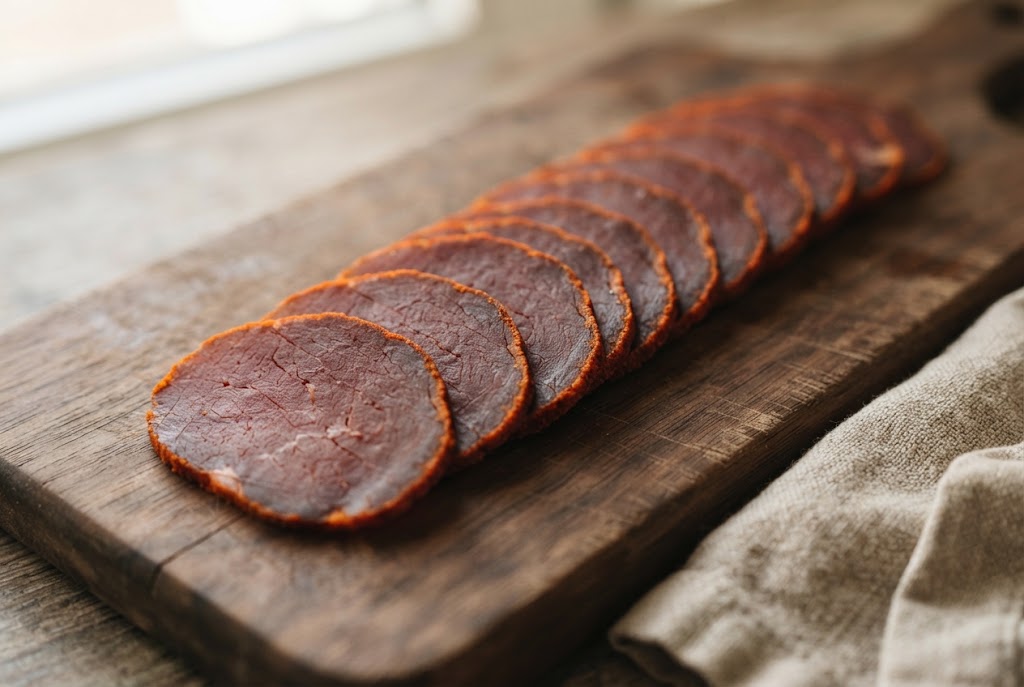
Lomo embuchado is the loin — the same lean muscle as a pork chop — cured whole rather than ground. It's marinated in pimentón, garlic and oregano, stuffed into a casing and dried for two to four months. Lomo ibérico de bellota uses acorn-fed Iberian pork and is a considerably finer thing.
- Taste
- savory, gently smoky from pimentón, garlicky, moderately salty
- Texture
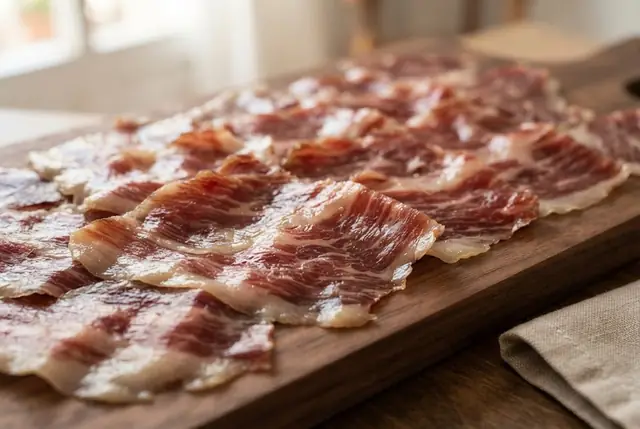
- firm and lean, dense, with a thin fat rim
- Look
- deep red-brown rounds with a paprika-stained edge
Low fat over long drying is the mechanism, and it puts lomo between bresaola and jamón. There's more intramuscular fat than in cured beef, so it doesn't go leathery as fast — but far less than in a ham, so it stays firm and lean rather than melting. That makes it the sturdy, sliceable meat on a Spanish board.
Lomo vs prosciutto, jamón and bresaola
| Lomo | Prosciutto | Jamón serrano | Bresaola | |
|---|---|---|---|---|
| Country | Spain | Italy | Spain | Italy |
| Cut | Pork loin | Pork leg | Pork leg | Beef eye of round |
| Seasoning | Pimentón, garlic, oregano | Salt only | Salt | Salt and spices |
| Fat | Lean, thin rim | Soft fat cap | Firm fat cap | Very lean |
| Texture | Firm and dense | Silky, melts | Chewier than prosciutto | Firm, dry |
| On a board | Thin flat rounds | Loose ribbons | Thin curls | Thin rounds with olive oil |
Lomo is the one to pick when you want a cured meat that's lean, savory and easy to slice, and it costs less than ham of the same quality.
Is lomo raw?
It isn't cooked, but it's fully cured. The salt and months of air-drying make it safe to eat straight from the package, the same way prosciutto and salami are. Keep it in the fridge once it's opened, wrapped tightly, and use sliced lomo within a few days.
Pregnant guests: the CDC advises heating deli meats and dry-cured sausages until steaming hot during pregnancy. Offer cooked ham or another option instead.
What it pairs with — and why
| Pair it with | Why it works |
|---|---|
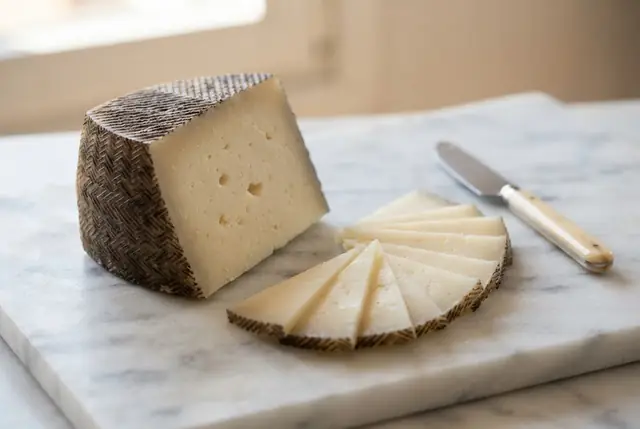
| Manchego | The default Spanish pairing, and the sheep's milk suits lean pork. |
| Marcona almonds | Salt and fat against lean muscle. |
| Membrillo | Sweet quince against paprika and salt. |
| Pan con tomate | Acid and olive oil supplying the fat the meat lacks. |
| Piquillo peppers | Sweet, smoky and Spanish — an echo of the pimentón. |
| Green olives | Brine and bitterness against a lean, paprika-rubbed loin. |
| Rioja, Ribera del Duero, Fino sherry | Spanish, structured, dry. |
Skip it with: smoked cheese — the pimentón already brings smoke — and delicate fresh cheeses, which the garlic overwhelms.
How to prep it for the board
- Slice thin. Lomo is lean and firm; a thick slice is chewy.
- Lay slices flat and overlapping so the paprika-stained rim reads as a band of colour.
- Temper 20 minutes.
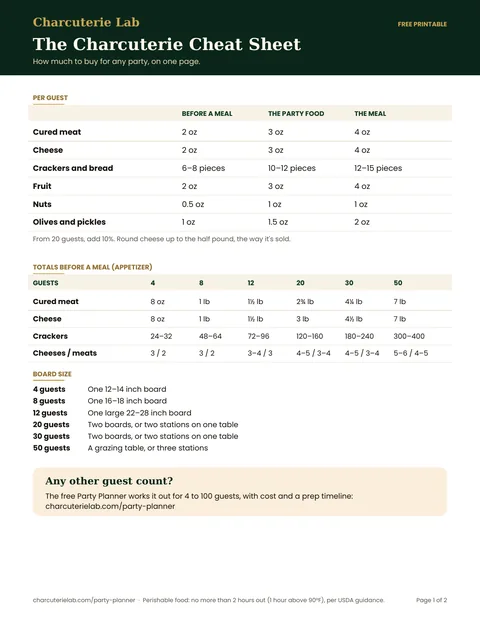
- Serve 1–1.5 oz per person.
- Add olive oil. A light drizzle over the slices does for lomo what it does for bresaola — it replaces the fat the cut doesn't have.
- Peel the casing.
- Fix: dry and curling? Brush with olive oil and serve within fifteen minutes of slicing.
What to buy
| Product | Where | Notes |
|---|---|---|
| Lomo Ibérico de Bellota | Spanish specialty grocers, online | Acorn-fed Iberian loin. Superb and far cheaper than the ham. |
| Lomo embuchado (standard) | Whole Foods, Spanish grocers | The everyday version. Good value. |
| Fermín Lomo | Whole Foods, specialty | Well-distributed and reliable. |
| Caña de lomo | Spanish grocers | The whole cured loin, sold as a piece. Cheapest per ounce. |
| Bresaola | Italian delis, Whole Foods | The beef equivalent — see its own page. |
| Cecina de León | Spanish specialty grocers | Smoked cured beef. Bolder and excellent. |
Label check: ibérico and bellota mark the acorn-fed Iberian version, which is a genuinely different product. Standard lomo will just say lomo embuchado.
Skip: buying it pre-sliced if it looks dark and dry in the tray. Lean cures show their age at the edges.
Quick FAQ
What is lomo in English?
Cured pork loin. The full Spanish name, lomo embuchado, means encased loin.
Is lomo raw?
It isn't cooked, but it is fully dry-cured with salt and air-dried for months, so it's ready to eat as is, like prosciutto or salami.
What's the difference between lomo and prosciutto?
Lomo is the lean pork loin, seasoned with paprika and garlic. Prosciutto is the leg, cured with salt only, softer and fattier.
How do you pronounce lomo?
LOH-moh.
What cut is lomo?
The pork loin — the same lean muscle as a pork chop — cured whole.
Is it like jamón?
Same curing idea, different cut. Jamón is the leg with a fat cap; lomo is lean loin. Lomo is firmer and much less fatty.
Why is the edge red?
It's rubbed with pimentón — Spanish smoked paprika — before curing.
How much per person?
1–1.5 oz. It's lean and intense.
Is lomo ibérico worth it?
Yes, and it's one of the best-value ways to taste acorn-fed Iberian pork — a fraction of the price of the ham.