The short version
Spanish cured pork sausage coloured and flavoured almost entirely by smoked paprika. Firm, brick-red and sliceable. Mexican chorizo is a different product — raw, loose and made to be cooked — and buying it by mistake is the single most common error in this category.
What it is
Spanish chorizo is coarsely chopped pork mixed with pimentón — Spanish smoked paprika — plus garlic and salt, cased and air-dried for weeks to months. Pimentón dulce makes chorizo dulce; pimentón picante makes chorizo picante. Mexican chorizo uses fresh chilies and vinegar and is sold raw.
- Taste
- smoky, sweet-peppery, garlicky, salty
- Texture
- firm, slightly chewy, oily at room temperature
- Look
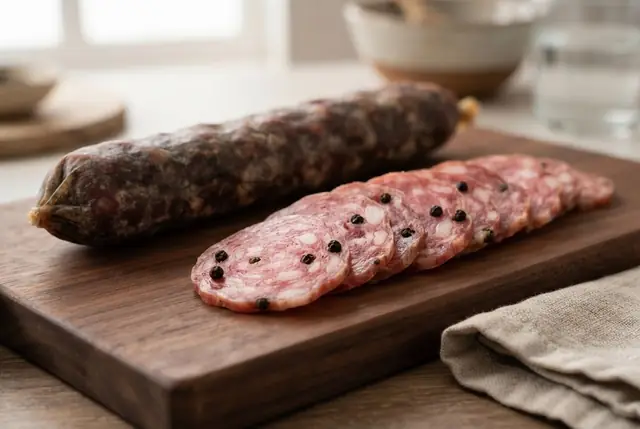
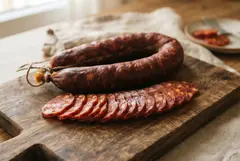
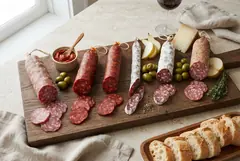
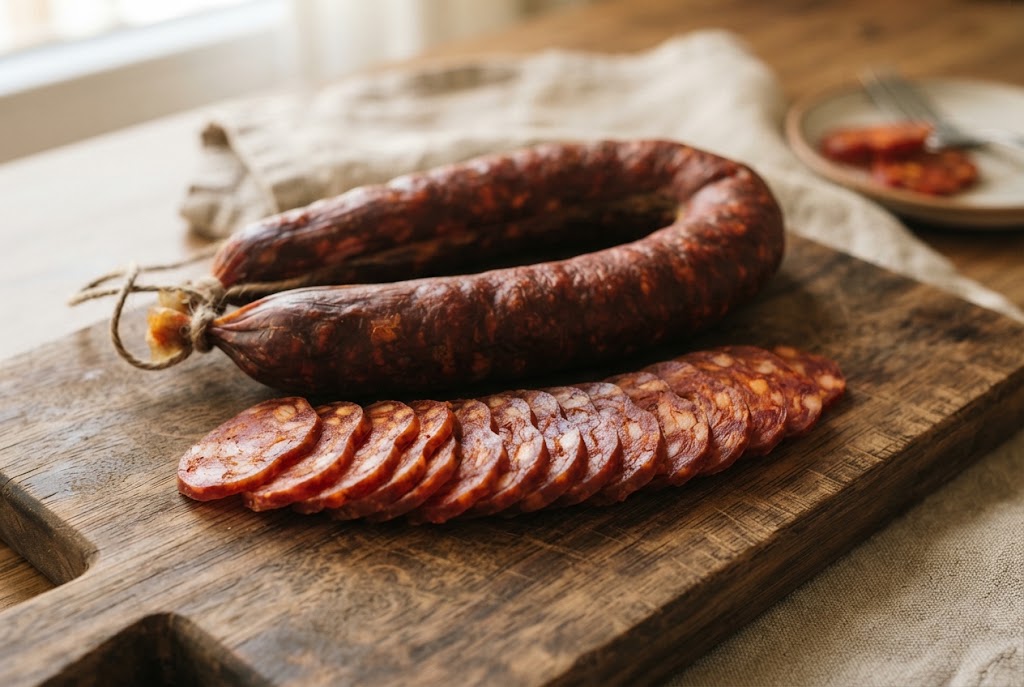
- brick red to deep orange, coarse fat flecks, often tied in a horseshoe
Pimentón is the mechanism, and it isn't just seasoning. Spanish paprika is made from peppers dried slowly over oak smoke, so it brings smoke, sweetness and colour in one ingredient. That's why chorizo tastes smoked without ever seeing a smokehouse, and why the fat runs orange.
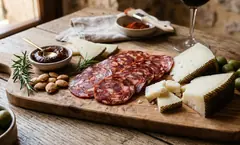
What it pairs with — and why
| Pair it with | Why it works |
|---|---|
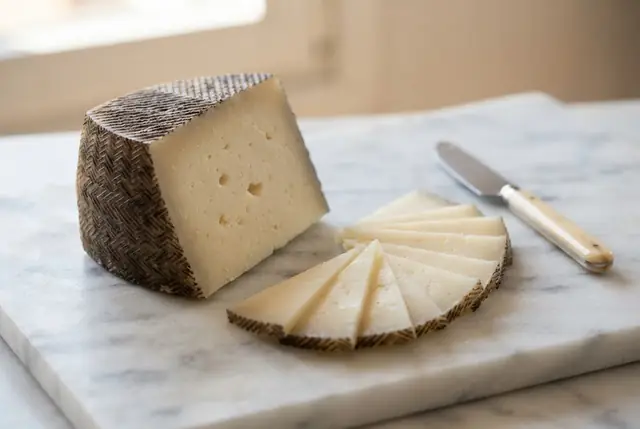
| Manchego | The Spanish pairing. Nutty sheep's milk against smoke and paprika. |
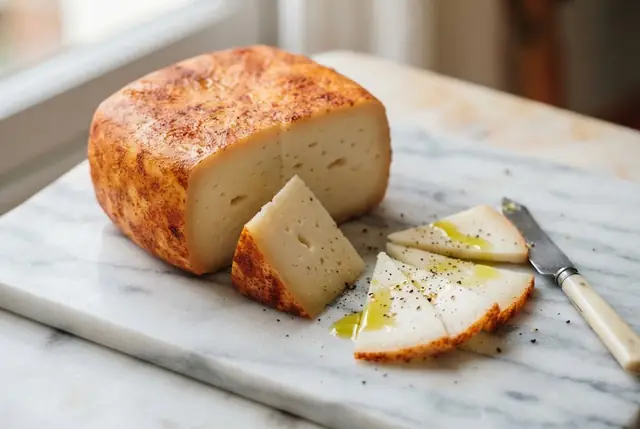
| Mahón or Idiazábal | Spanish cheeses whose own paprika rind or smoke echoes the sausage. |
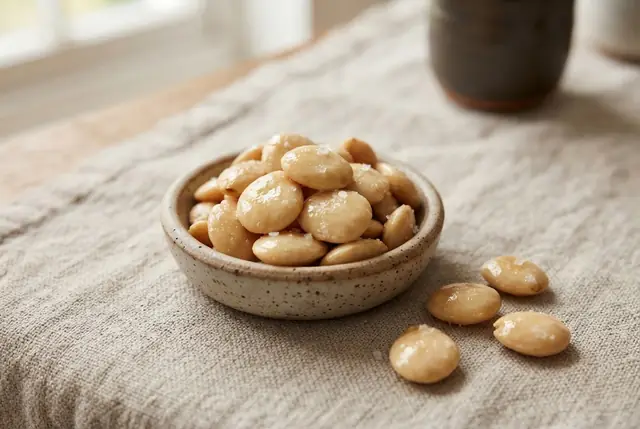
| Marcona almonds | Salt and fat, and both are Spanish staples. |
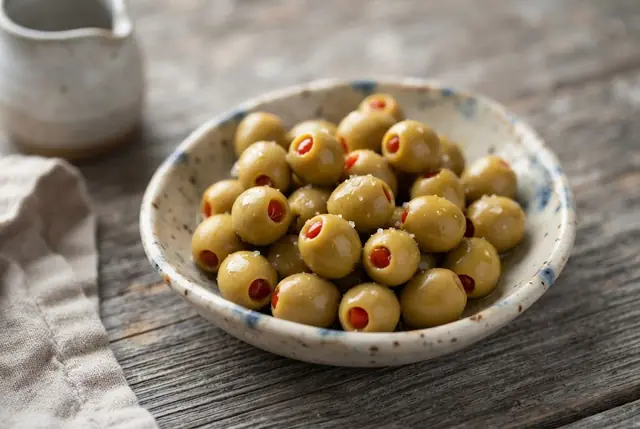
| Green olives — gordal, manzanilla | Brine cutting oily paprika fat. |
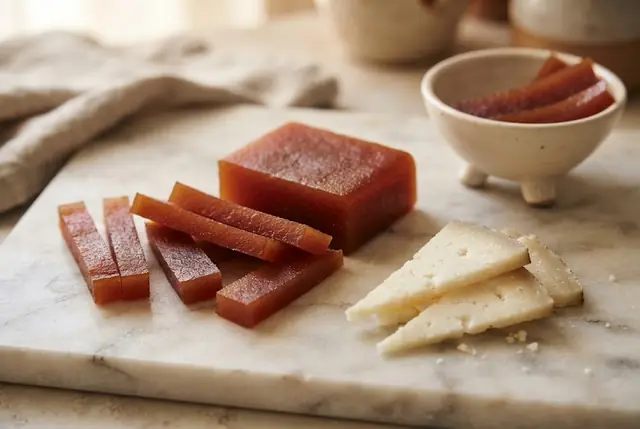
| Membrillo (quince paste) | Sweetness against smoke and salt. |
| Pan con tomate | Acid and oil under a rich sausage. |
| Rioja, Tempranillo, cold cider | Spanish reds, or Asturian cider for the acid. |
Skip it with: delicate fresh cheeses — paprika and garlic bury them. And skip putting chorizo next to Idiazábal and smoked gouda; that's smoke three times.
How to prep it for the board
- Buy the Spanish cured kind. If it's soft, raw-looking, in a plastic tube and refrigerated, it's Mexican and needs cooking.
- Slice thin, on a slight diagonal. Chorizo is firm and a diagonal cut gives a bigger, better-looking oval.
- Temper 20 minutes so the paprika oil softens.
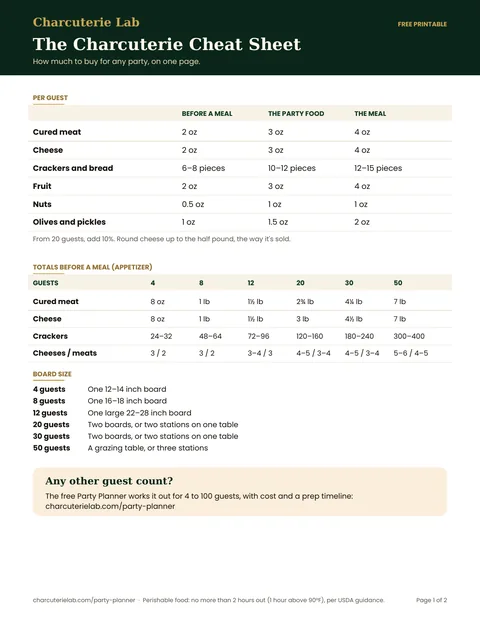
- Serve 1–2 oz per person.
- Peel the casing unless it's clearly natural and papery.
- Expect orange fingers. Put it where guests can reach a napkin — the oil transfers to everything.
- Fix: hard and dry at the end of the chub? Trim the cut face; the interior is fine.
What to buy
| Product | Where | Notes |
|---|---|---|
| Palacios Chorizo (mild or hot) | Most grocery stores, Whole Foods | The most widely distributed Spanish chorizo in the US. Reliable. |
| Chorizo Ibérico | Spanish grocers, specialty | Made from Iberian pork. Richer and much better. |
| Fermín chorizo | Whole Foods, specialty | Excellent, widely imported. |
| Chorizo de León or Cantimpalo | Spanish specialty grocers | Regional styles worth trying. |
| Mexican chorizo | Any grocery, refrigerated | A raw cooking sausage. Not a board item. |
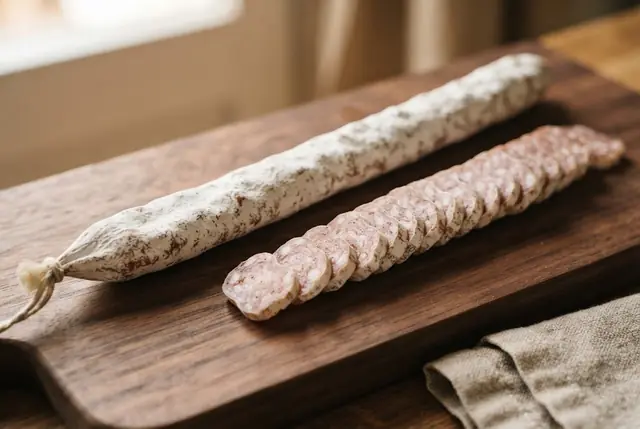
| Salchichón | Spanish grocers | The peppered, non-paprika Spanish salami — see its own page. |
Label check: dulce is mild, picante is hot. Look for pimentón high in the ingredients and a firm, dry sausage — not a soft refrigerated tube.
Skip: Mexican chorizo for a board, and any "chorizo-style" sausage that lists paprika rather than pimentón. The smoke is the point.
Ranked picks: our top-rated Spanish chorizo is Palacios Chorizo (mild or hot) (4.3 out of 5), and the best value is Columbus Spanish Style Chorizo Salame. See the full ranking of the best Spanish chorizo.
Quick FAQ
What's the difference between Spanish and Mexican chorizo?
Spanish chorizo is cured, firm and sliceable, flavoured with smoked paprika. Mexican chorizo is raw, soft and made with fresh chilies and vinegar — it has to be cooked.
Dulce or picante?
Dulce is sweet-smoky and mild; picante has hot pimentón. Dulce is the safer board choice.
Why is the fat orange?
Paprika is fat-soluble, so the colour leaches into the fat during curing.
How much per person?
1–2 oz as one of several meats.
Can I eat the casing?
Natural casing is edible but tough. Most people peel it.