The short version
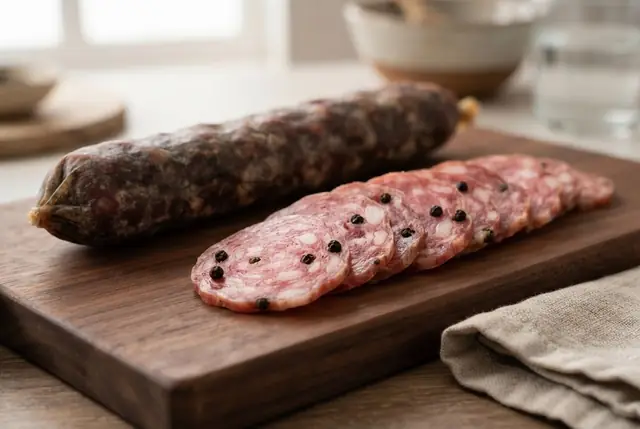
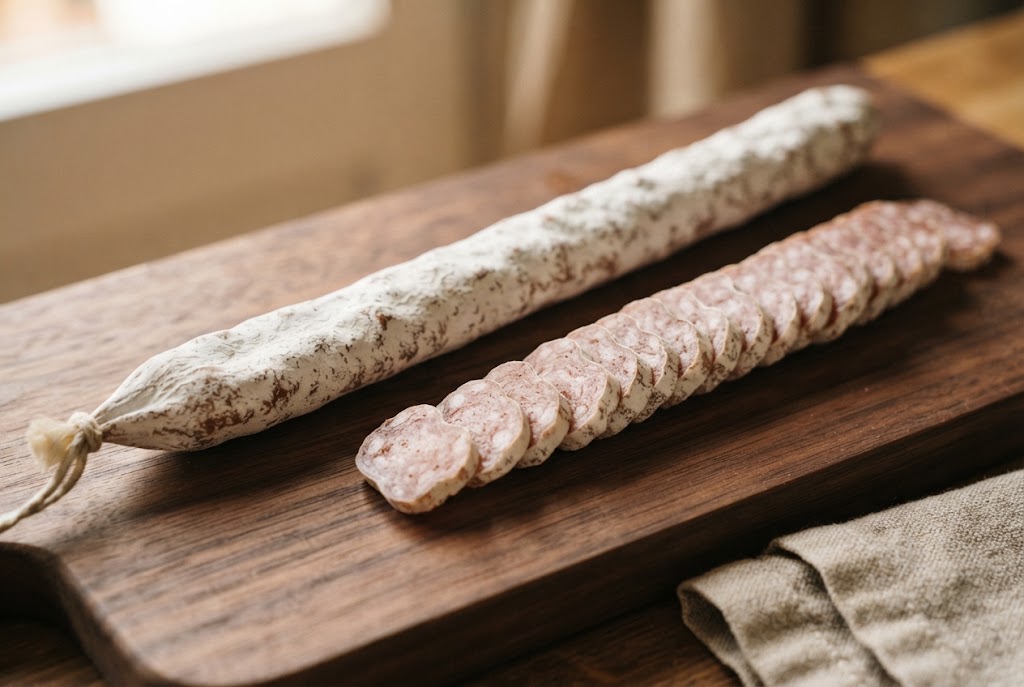
A thin, pale Catalan salami, about as thick as a thumb, dusted white with an edible surface mould. It's mild, faintly nutty and made for snapping into pieces by hand. On a board it's the item people eat without thinking.
What it is
Fuet means whip in Catalan — a description of the long thin shape. Lean pork is ground fine, seasoned lightly with black pepper and garlic, cased in a narrow casing and dried for two to four weeks. The white bloom on the outside is Penicillium mould, deliberately encouraged, exactly as on a French saucisson.
- Taste
- mild, nutty, gently peppery, faintly tangy
- Texture
- firm but tender, drier at the edges, snaps cleanly
- Look
- pale pink-beige stick, chalky white mould coating
The narrow diameter is the mechanism. A thin sausage dries in weeks rather than months, so fuet never develops the deep fermented tang of a fat salami — it stays mild and lightly acidic. That's why it eats like a snack rather than a statement, and why it's cheap.
What it pairs with — and why
| Pair it with | Why it works |
|---|---|
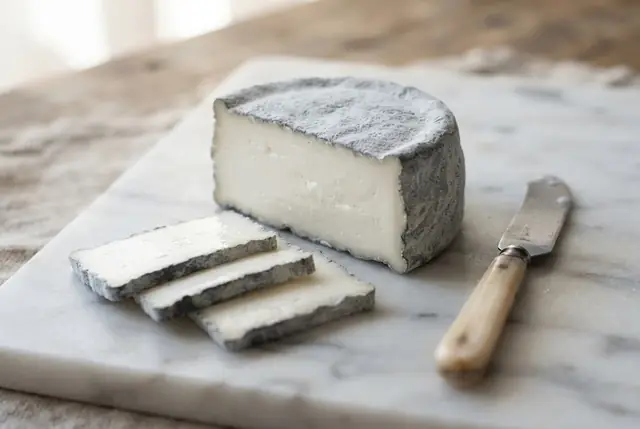
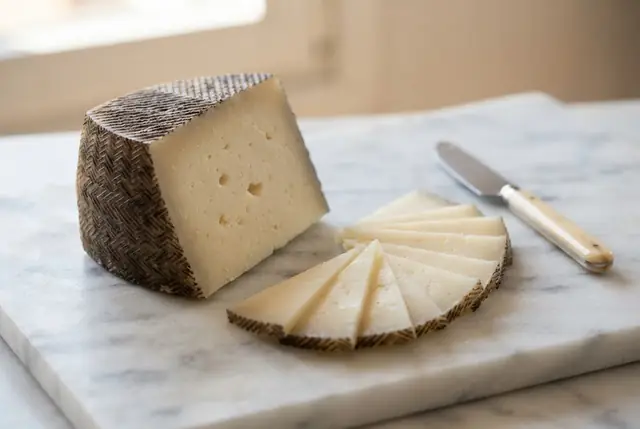
| Garrotxa or Manchego | Catalan or Spanish cheese with a Catalan sausage. |
| Pan con tomate | The Catalan default. Bread, tomato, oil, fuet. |
| Olives and pickled guindillas | Brine and acid against a plain, lightly fermented stick. |
| Marcona almonds | Salt and fat with a lean, mild sausage. |
| Membrillo or fig jam | Sweetness against a plain salty stick. |
| Cava | Catalan sparkling wine, and the bubbles suit a snacking meat. |
| Cold lager or vermut | Spanish aperitivo drinking. |
Skip it with: delicate fresh cheeses if the fuet is garlic-heavy. Otherwise it's about as easy-going as cured meat gets.
How to prep it for the board
- Snap it, don't slice it. Fuet is traditionally broken into rough two-inch lengths by hand. It looks better and it's what people expect.
- Or slice it thin on a steep diagonal for longer ovals.
- Leave the white mould on. It's edible, it's part of the flavour, and scrubbing it off makes the sausage look worse and taste blander.
- Temper 15 minutes.
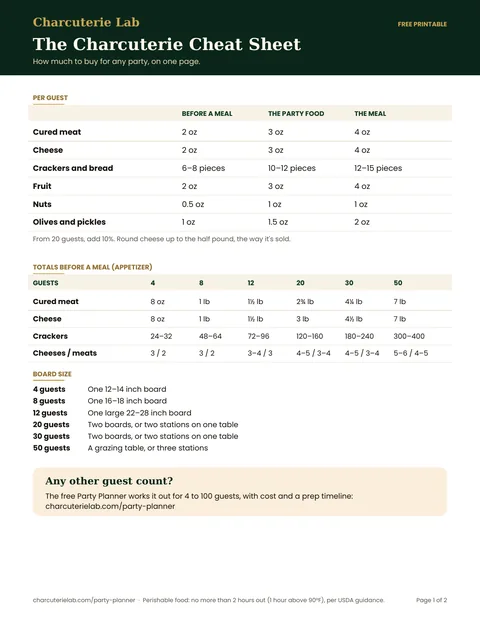
- Serve 1–1.5 oz per person.
- Put it somewhere people can graze — a small glass or a corner. It's a snacking meat, not a composed one.
- Fix: hard and over-dry at the ends? Trim an inch. Thin sausages dry from the tips inward.
What to buy
| Product | Where | Notes |
|---|---|---|
| Fuet Extra (Catalan) | Whole Foods, Spanish grocers, specialty | The standard. Look for a good white bloom. |
| Espetec | Spanish grocers, online | A brand name for fuet, very widely sold in Spain. |
| Fuet ibérico | Spanish specialty grocers | Made from Iberian pork. Richer and better. |
| Saucisson sec | Whole Foods, French delis | The thicker French relative — see its own page. |
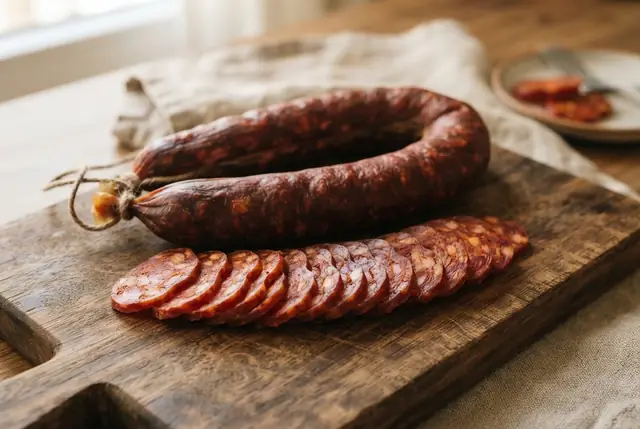
| Salchichón | Whole Foods, grocery | The wider, more peppery Spanish version — see its own page. |
| Snack-stick salami | Most grocery | Not the same thing, but the same role on a casual board. |
Label check: an even chalky white bloom, not grey or green patches. Pork, salt, pepper and garlic should be most of the list.
Skip: peeling the mould off. It's the single most common mistake with fuet and saucisson alike.
Quick FAQ
Can you eat the white coating?
Yes. It's an edible Penicillium mould, deliberately cultivated, and it adds flavour. Leave it on.
Do I slice fuet or snap it?
Traditionally snapped into rough pieces by hand. Thin diagonal slices also work.
Fuet or saucisson sec?
Fuet is thinner, milder and Catalan; saucisson is thicker, tangier and French. Fuet is the more casual of the two.
How much per person?
1–1.5 oz. People graze on it, so err generous.
Why is it so cheap?
It's thin, so it dries in weeks rather than months. Less time means less cost.