The short version
The Spanish salami seasoned with black pepper instead of paprika — essentially what chorizo would be without the pimentón. Milder, drier and more versatile. If chorizo is already on the board, this is the second Spanish sausage to add.
What it is
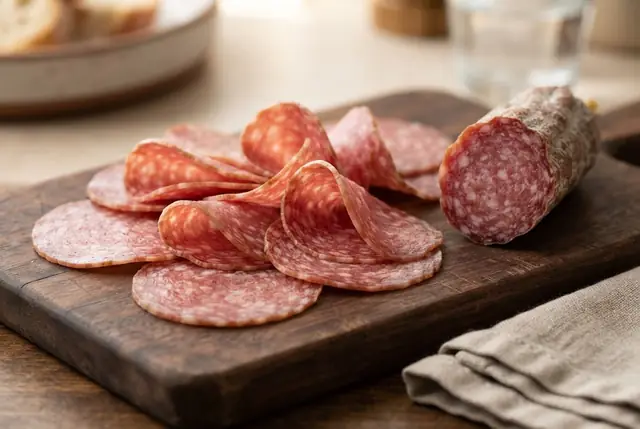
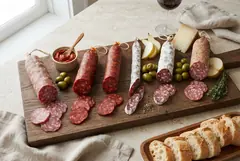
Salchichón is coarsely chopped pork seasoned with black peppercorns, salt, garlic and sometimes nutmeg or clove, then cased and air-dried. Salchichón de Vic (Catalonia) is the best-known protected version, made with coarse pepper and cured in cool mountain air.
- Taste
- peppery, savory, mildly tangy, less sweet than Italian salami
- Texture
- firm and dry, coarse grind, slightly chewy
- Look
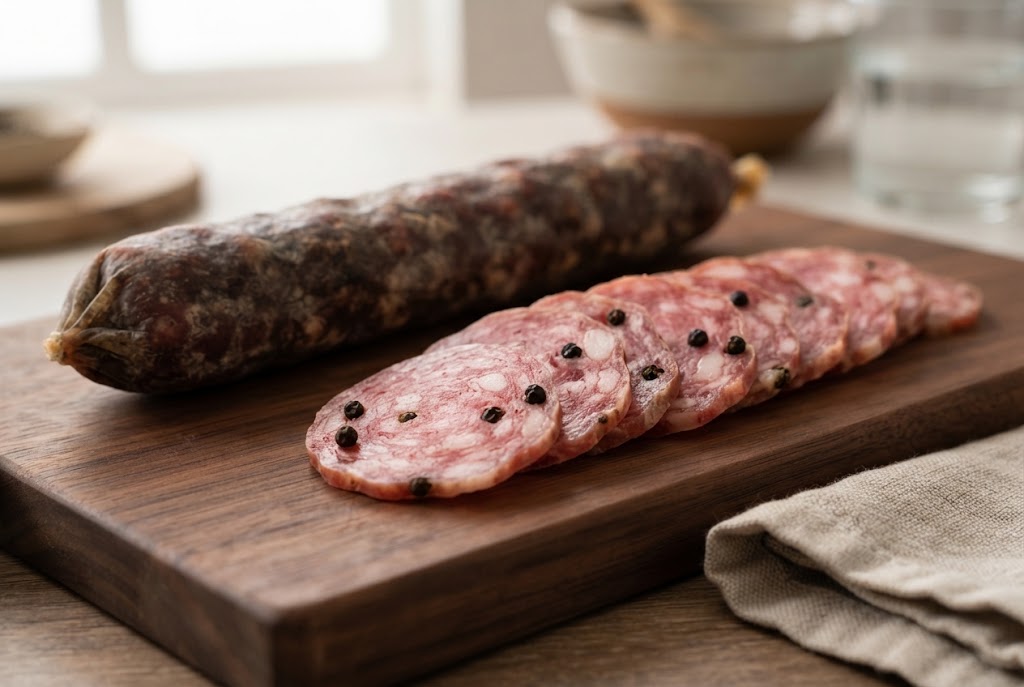
- pale pinkish-red with visible black peppercorns and irregular fat
Whole peppercorns are the mechanism and the reason salchichón eats differently from a ground-pepper salami. Biting a whole corn releases a burst of piperine in one spot rather than a uniform background heat, so the sausage tastes intermittently sharp — which keeps a mild salami from getting monotonous.
What it pairs with — and why
| Pair it with | Why it works |
|---|---|
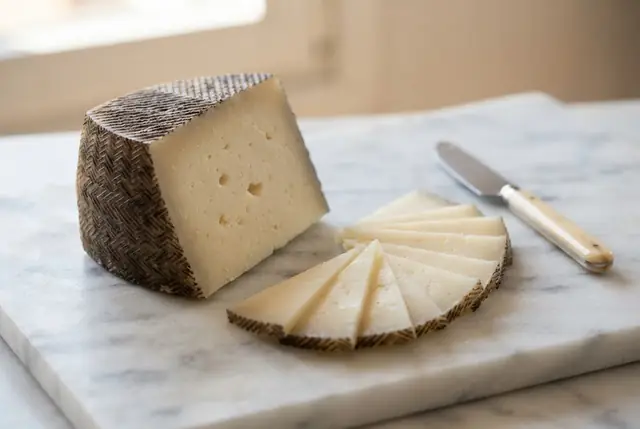
| Manchego | Spanish default. Buttery sheep's milk against black pepper. |
| Membrillo | Sweet against peppery salt. |
| Marcona almonds | Salt and fat with a lean, dry sausage. |
| Green olives and pickled guindilla peppers | Brine and acid cutting the fat. |
| Pan con tomate | Acid and oil under a dry sausage. |
| Aged Mahón or Idiazábal | Spanish cheeses with enough character to meet it. |
| Rioja, Priorat, cold lager | Spanish reds or something plain and cold. |
Skip it with: delicate fresh cheeses, which the garlic and pepper flatten. Otherwise it's an easy, agreeable sausage.
How to prep it for the board
- Slice thin and on the diagonal for a larger oval face that shows the peppercorns.
- Temper 20 minutes.
- Fan the slices rather than folding — the pepper pattern is the look.
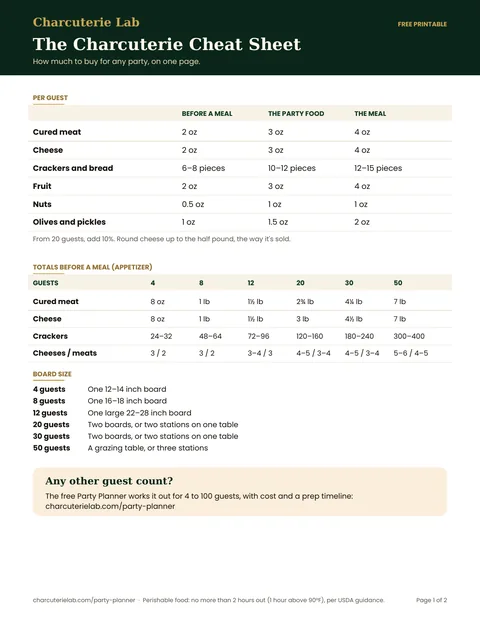
- Serve 1–2 oz per person.
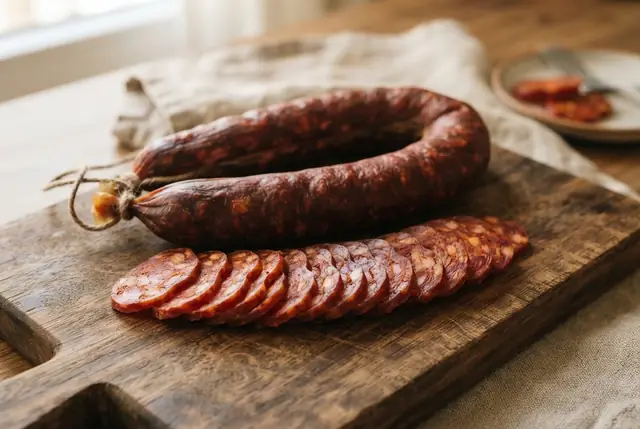
- Pair it with chorizo, not instead of it. Side by side, the pepper-versus-paprika contrast is the point of having both.
- Peel the casing.
- Fix: if it's crumbling as you slice, it's over-dried. Cut slightly thicker.
What to buy
| Product | Where | Notes |
|---|---|---|
| Salchichón de Vic IGP | Spanish specialty grocers, online | The protected Catalan version. Coarse pepper, excellent. |
| Palacios Salchichón | Whole Foods, grocery | The most widely available in the US. |
| Salchichón Ibérico | Spanish grocers, specialty | Made from Iberian pork. Much richer. |
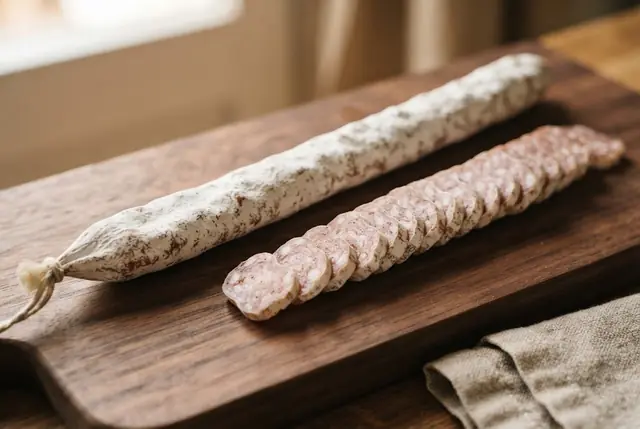
| Fuet | Whole Foods, Spanish grocers | The thin Catalan cousin — see its own page. |
| Chorizo | Most grocery | The paprika counterpart — see its own page. |
| Genoa salami | Any grocery | The Italian equivalent if Spanish isn't available. |
Label check: visible whole peppercorns, and pork and pepper high in the ingredients. Ibérico means Iberian pork and a noticeably better sausage.
Skip: buying salchichón and fuet and chorizo all at once unless the board is explicitly Spanish. Two cured sausages is usually enough.
Quick FAQ
How is salchichón different from chorizo?
Chorizo is seasoned with smoked paprika; salchichón with black pepper. Same country, same technique, completely different flavour.
Is it spicy?
Peppery rather than hot. The whole peppercorns give sharp bursts, not chili heat.
Salchichón or fuet?
Fuet is thinner, milder and softer, with a white mould bloom. Salchichón is wider, drier and more peppery.
How much per person?
1–2 oz as one of several meats.
Can I eat the casing?
Natural casing is edible but chewy. Most people peel it.