Quick Answer: Fifty complete boards, sorted by occasion, budget and guest count. Each one lists how many it serves, what it costs, how long it takes and the skill level, plus the one detail that makes it work, from a $40–$65 supermarket starter board for 8–12 people to holiday, date-night and game-day boards.
Search "charcuterie board ideas" and you get photographs. Beautiful ones. What you rarely get is the reasoning: why those five things, in that arrangement, for that particular Tuesday.
A board is not a still life. It is a small piece of engineering with a job to do, and the job changes completely depending on who is standing in front of it. A board that holds twelve people for three hours at a holiday party has almost nothing structurally in common with a board for two people on a Friday night, even if the photographs look similar. One needs redundancy and refresh cycles. The other needs restraint and a single genuinely good cheese.
What follows is fifty distinct board concepts, each built for a specific occasion, guest count and budget. For each one you get the shape of the idea, what it runs, roughly how long it takes, and the one detail that makes it work — the thing that would not be obvious from looking at a photo.
These are drawn from Charcuterie Lab: 50 Boards, Built by Science, where each of these fifty gets a full blueprint: exact quantities, the build order, substitutions, and the optional upgrades. Think of this page as the table of contents with the reasoning left in.
If you are still finding your footing, start with our charcuterie board ideas framework — it covers the structural logic that all fifty of these sit on top of.
The Five Foundations
Learn these and every other board on this list becomes a variation. Each one is a complete regional tradition compressed onto a single surface.
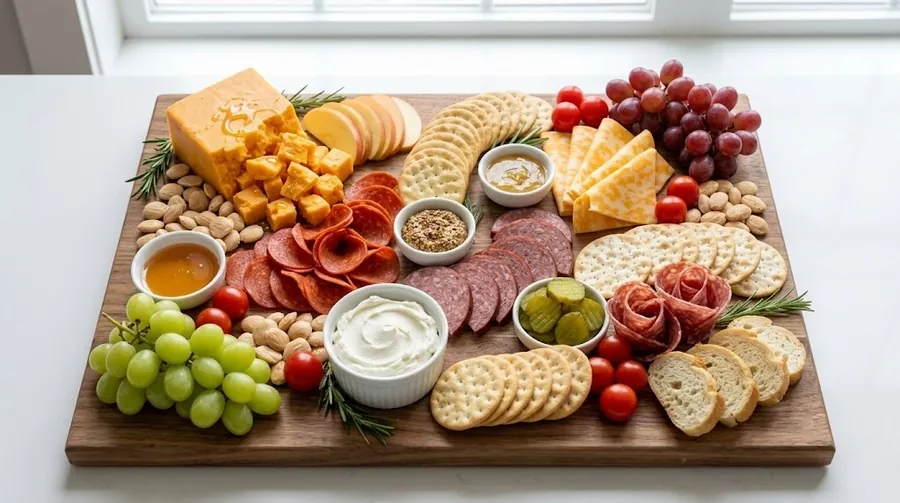
1. The Classic American Starter Board
8–12 people · $40–$65 · 20–25 minutes · beginner
Everything on this board is available at any supermarket in the country, which is exactly the point. Sharp cheddar, Colby Jack and whipped cream cheese give you hard, semi-soft and spreadable — three different eating mechanics that keep people moving around the board instead of parking at one corner. The cream cheese in particular acts as a deliberate speed bump: it takes a moment to spread, and that moment slows the whole table down. Start here if you have never built one.
2. The Italian Antipasto Board
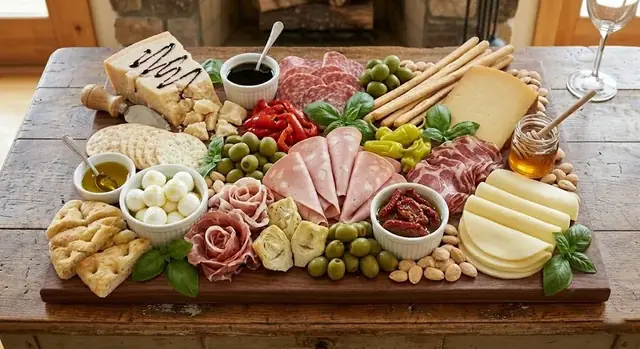
8–12 people · $65–$110 · 30–35 minutes · beginner to intermediate
Four meats, four fat profiles: delicate, creamy, spiced-firm and richly marbled. Italian salumi tradition treats this as a progression rather than a pile, and once you place them in that order the board reads completely differently. Romans were doing a version of this two thousand years ago and called it gustatio — "before the meal" — which makes it arguably the oldest social eating format still in regular use.
3. The Spanish Tapas Board
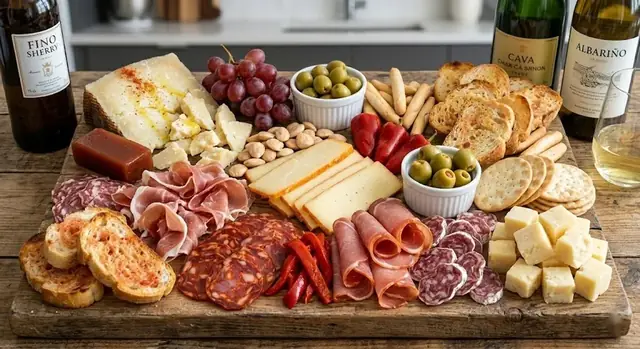
8–12 people · $55–$90 · 25–30 minutes · beginner to intermediate
Manchego's crystalline crunch is tyrosine — clusters of free amino acid that form only with real age — and it primes the palate for the jamón that follows. Serrano cured 24 to 36 months is doing the same thing from the meat side, loading the board with glutamate. The result is a board that tastes savoury out of proportion to what is actually on it.
4. The French Brasserie Board
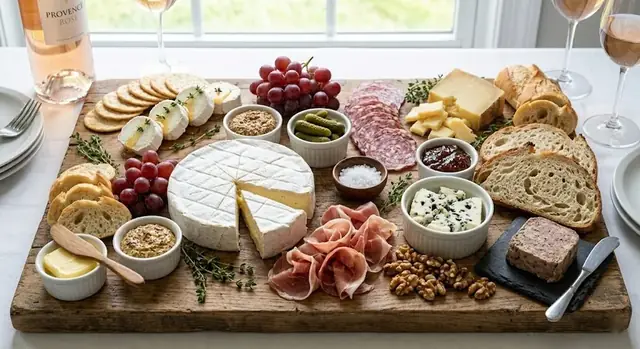
8–12 people · $60–$95 · 25–30 minutes · beginner to intermediate
Brie, saucisson, pâté, Dijon, cornichons — the standing order at any brasserie in France, and the pâté is the piece most home boards leave off. Its liver content makes it rich in inosinic acid, which bridges the mild cheese and the cured meat and pulls the whole board together. De Gaulle famously complained about governing a country with 246 cheeses.
5. The Greek Mediterranean Board
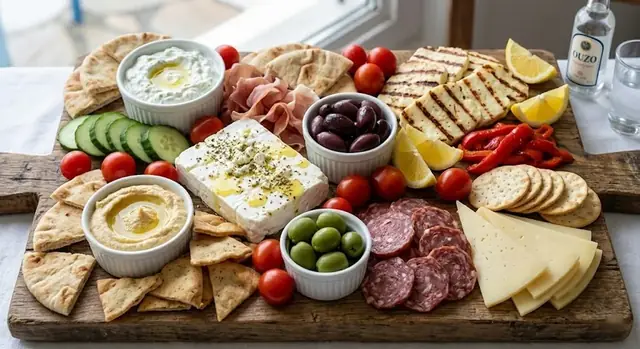
8–12 people · $50–$80 · 25–30 minutes · beginner
Kalamatas taste different from the mild black olives most people know because they are cured slowly in brine, often with red wine vinegar, instead of the quick lye cure used for canned olives, which leaves them winey, sharp and fruity. Built around feta and tzatziki with dolmades and cucumber, this is the lightest board on the list and the one that holds up best in heat.
Boards Built Around the Drink
When there is a bottle on the table, the bottle should pick the cheese — not the other way round. These four start from the glass and work backwards.
6. The Wine & Cheese Pairing Board
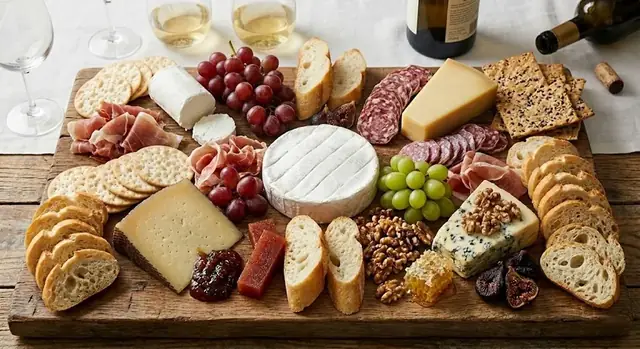
8–12 people · $70–$110 · 30–35 minutes · intermediate
Five cheeses, each chosen against a specific wine, arranged so guests move through them in the right order. Pairing is mostly acid management — the wine's tartaric acid against the cheese's lactic acid — with a second effect layered on top: when a food and a wine share volatile compounds, the brain reads the combination as a single flavour rather than two. Worth knowing before you open anything: much of what you think of as taste is actually smell.
7. The Beer & Charcuterie Board
8–12 people · $55–$85 · 25–30 minutes · intermediate
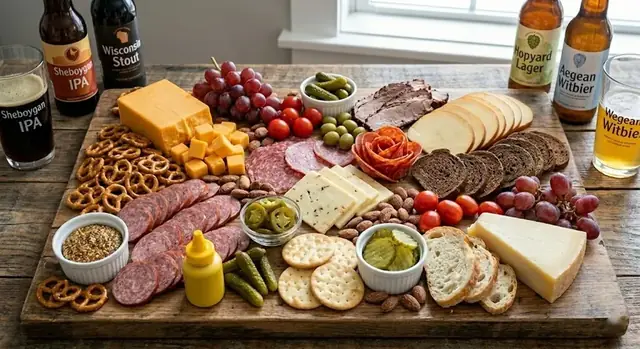
Carbonation clears fat off the palate mechanically, which makes beer a more effective reset than wine's acidity — a genuinely underrated advantage on a board heavy with cured pork. The smoked meat and dark beer pairing works because both got their flavour from the same place: high-heat browning, the Maillard reaction, running in parallel in a smokehouse and a roasting drum. Beer brewing goes back 13,000 years; the Sumerians had a goddess for it.
8. The Cocktail Party Board
12–20 people · $65–$100 · 25–30 minutes · intermediate
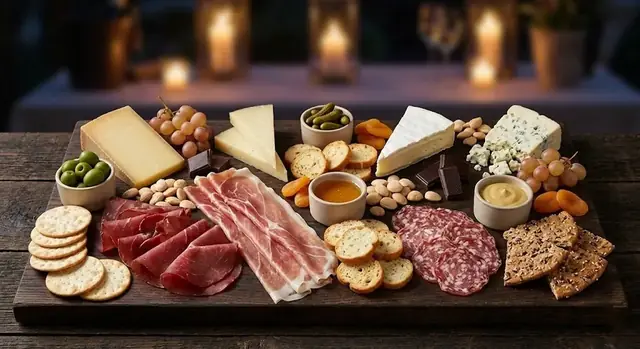
Every guest has one hand occupied by a glass, so anything requiring a knife will sit untouched all night. This board is designed entirely around the free hand: firm cheese cubed, meats pre-folded, nothing that needs assembly. Bresaola earns its place as the cocktail meat because its lean, faintly iron note sits well beside whisky and gin where a fattier salami would not. The cocktail party itself is usually credited to a St. Louis hostess in 1917, who wanted to skip formal dinner protocol.
9. The New Year's Eve Board
10–15 people · $90–$145 · 35–45 minutes · intermediate
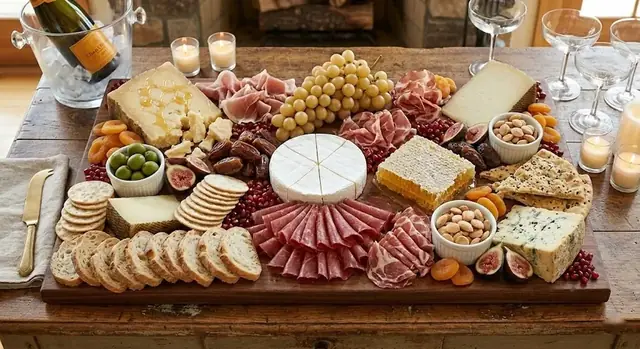
Champagne's yeast ageing produces nucleotides that meet aged Gruyère's glutamate, and the combination measures as more savoury than either part. Add truffle honey and you get a three-way synergy that is genuinely more than the sum of its parts. Build it late in the evening rather than early — this is a board with a deadline. And point the Champagne cork away from the board when you open it.
Each of these has its full pairing chart and pour order in the book.
The Holiday Calendar
Six boards pinned to specific dates. The constraint is never the ingredients — it is that everyone is already cooking something else.
10. The Holiday Entertaining Board
12–16 people · $85–$140 · 35–45 minutes · intermediate
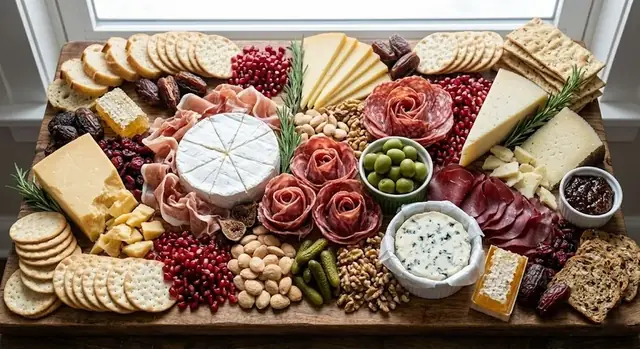
Five cheeses covering sharp, soft, aged, blue and semi-firm means every guest finds something without you having to know their preferences in advance — which, at a party this size, you don't. The honeycomb is the single highest-impact visual element you can put on a board; nothing else generates the same reaction. An eggnog recipe credited to George Washington calls for rye, rum and sherry, made by the bowlful.
11. The Thanksgiving Board
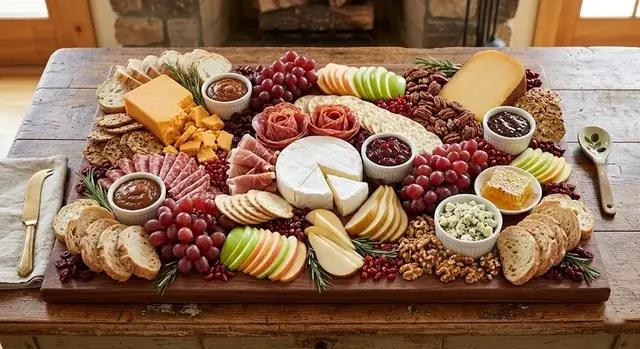
10–15 people · $70–$110 · 30–40 minutes · intermediate
The board's job on Thanksgiving is to hold people without competing with dinner, which means smaller portions than instinct suggests. Aged Gouda carries pyrazine compounds from the Maillard reaction — the same aromatic family as roasted nuts and browned butter — which is why it reads as autumn beside apple and pear. The Pilgrims' 1621 feast almost certainly had no pumpkin pie.
12. The Valentine's Day Board
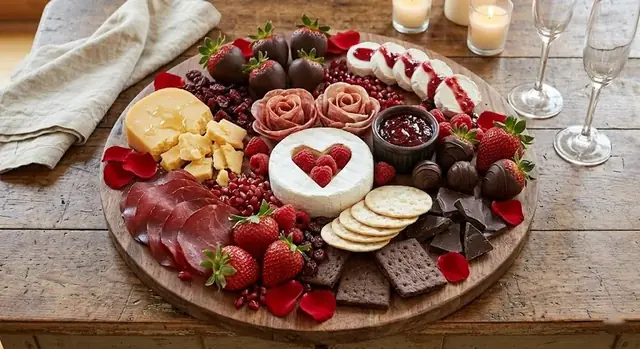
4–6 people · $55–$80 · 25–30 minutes · beginner
Red is the colour most people connect with appetite and celebration, which is why this board is built around a red and pink palette rather than simply being described as romantic. A heart carved into the brie rind is the one flourish worth the thirty seconds. In Japan the day splits chocolate into honmei for romance and giri for colleagues, which seems a useful distinction.
13. The St. Patrick's Day Board
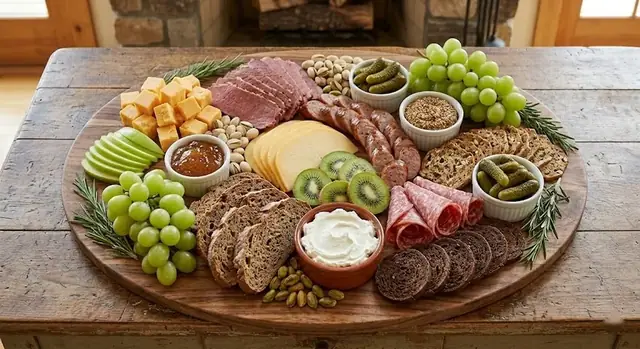
8–12 people · $45–$70 · 20–25 minutes · beginner
Irish grass-fed cheddar has a rich, buttery character you can taste before you have thought about the theme at all. Brine-cured corned beef brings enough sodium to amplify the umami in everything sitting next to it. Arthur Guinness signed a 9,000-year lease on the Dublin brewery in 1759; it runs to the year 10,759.
14. The Easter & Spring Board
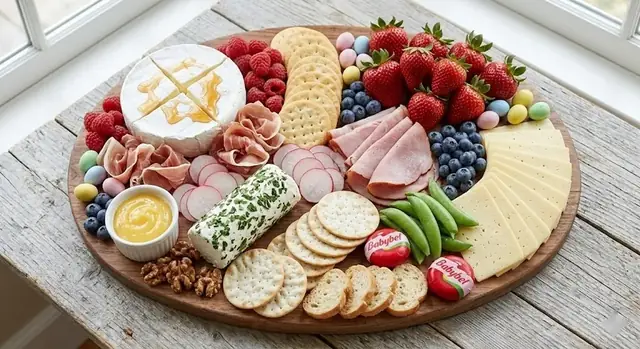
10–16 people · $50–$80 · 25–30 minutes · beginner
Brie hits peak creaminess between 65 and 68°F — genuinely a different cheese from the one that comes out of the fridge — and this board is timed around getting it there. Prosciutto's fat melts at body temperature and coats the palate, which is what makes the brie taste richer than it is. Decorating eggs for spring is far older than Easter; Persian families still do it for Nowruz.
15. The Fall Harvest Board
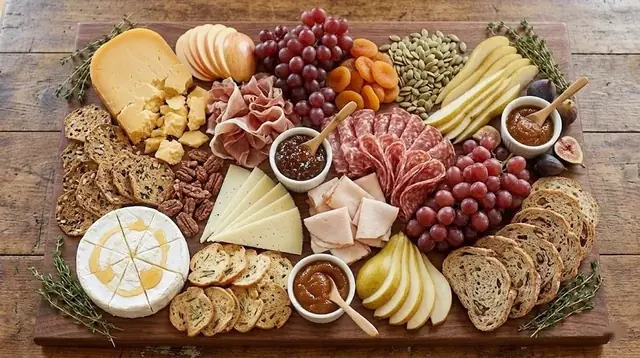
8–12 people · $50–$75 · 25–30 minutes · beginner
Aged Gouda and prosciutto placed together is the whole trick here: the prosciutto's glutamate binds synergistically with the Gouda's nucleotides and both taste more intense than they do apart. Everything else is seasonal produce doing colour work. Incidentally, the pumpkin on your harvest board is botanically a fruit — "vegetable" has no botanical definition at all, only a culinary one.
Outdoors, Backyards and Game Day
Boards that have to survive something — heat, transport, distraction, or a room full of people watching a screen.
16. The Summer Backyard Board
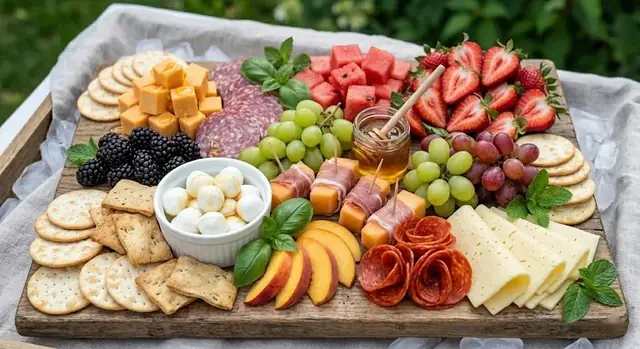
8–12 people · $45–$70 · 20–25 minutes · beginner
Fresh mozzarella holds far more water than aged cheese, which is why it turns unpleasant in the heat while the cheddar beside it is fine. Build the board knowing that, and it survives the afternoon. Watermelon is mostly water, which makes it a cooling ingredient rather than a merely refreshing one.
17. The Summer Beach Picnic Board
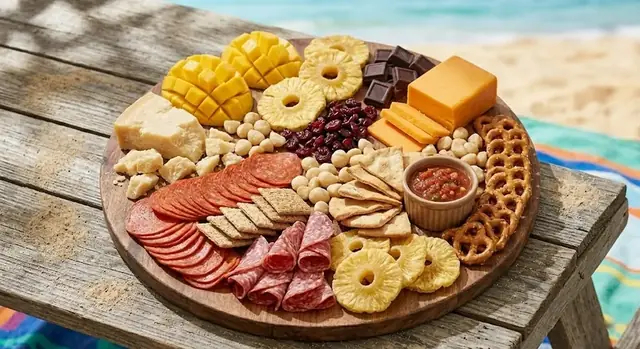
6–10 people · $35–$55 · 15–20 minutes · beginner
Every item is chosen by water activity. Hard aged cheeses sit below 0.85 and dry-cured salami below 0.87, which means bacteria cannot multiply meaningfully and the board stays safe for four to six hours above refrigeration temperature. No cooler panic, no soft cheese sweating in a tote bag. This is the most quietly technical board on the list and the one that looks the most casual.
18. The Camping & Outdoor Board
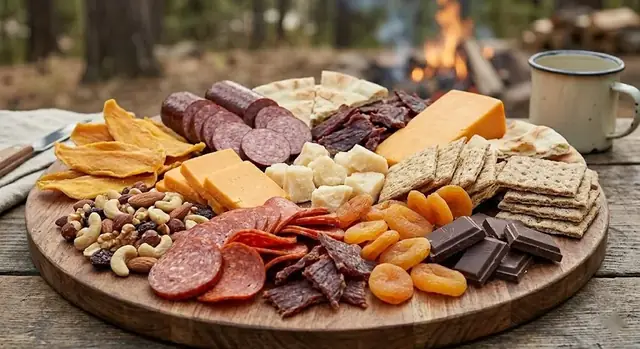
4–8 people · $30–$50 · 10–15 minutes · beginner
Vacuum-packed aged cheddar needs no refrigeration at all, and summer sausage fermented below pH 5.0 is the most pathogen-resistant cured meat you can carry into the woods. Ten minutes of assembly at a picnic table, nothing that needs a cold chain. Jerky belongs here by ancestry as much as convenience — the Quechua called it ch'arki, which is where the English word comes from.
19. The Southern BBQ-Inspired Board
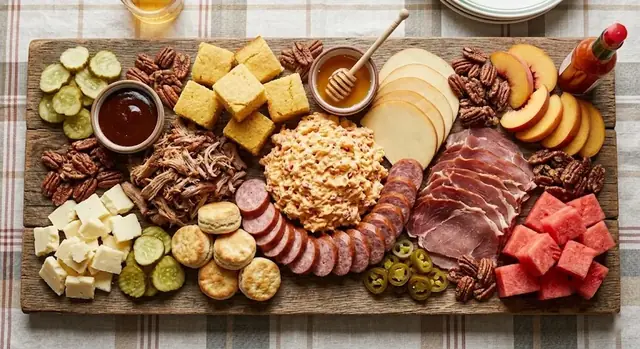
8–14 people · $45–$70 · 25–30 minutes · beginner
Pimento cheese is the centrepiece and the reason the board works: mayo, sharp cheddar and pimento build a base that carries smoke better than any straight cheese would. The pulled pork bark supplies the pyrazines that read as barbecue before you have identified anything specific. Vinegar-based sauce is the older style, and the Carolinas have not stopped mentioning it.
20. The Game Day Party Board
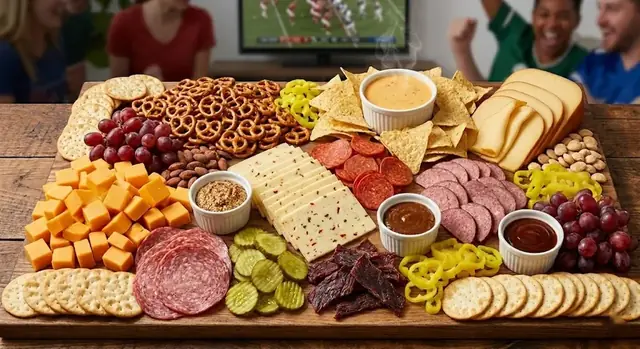
12–16 people · $60–$95 · 30–35 minutes · intermediate
People graze this board standing up, half-watching a screen, so every element has to be finishable in one or two bites with no utensil and no decision-making. Three dips rather than one is not indulgence: variety keeps people coming back to the bowls.
The book gives each of these its own timing chart — what to build the night before, and what has to wait.
Money at Both Ends
Two of these cost less than a takeaway. One costs more than a decent dinner out. All three are engineered rather than merely scaled.
21. The $25 Budget Board
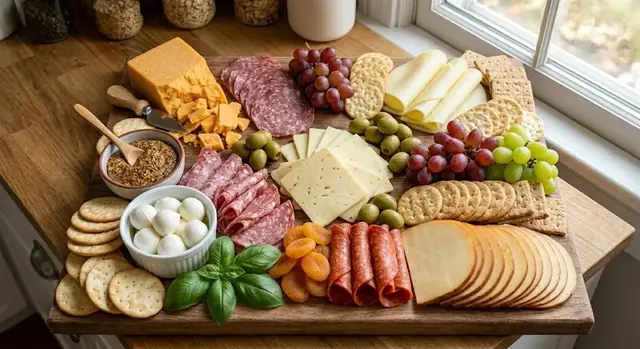
6–8 people · $20–$25 · 15–20 minutes · beginner
The idea behind this board is that flavour in cheese tracks age and style more than the price on the label, so a well-aged store-brand cheddar can carry it. What does change perception is presentation: fanning identical items rather than piling them makes the same amount look like more. This board spends its money on the right things and its effort on the rest.
22. The Luxury Splurge Board
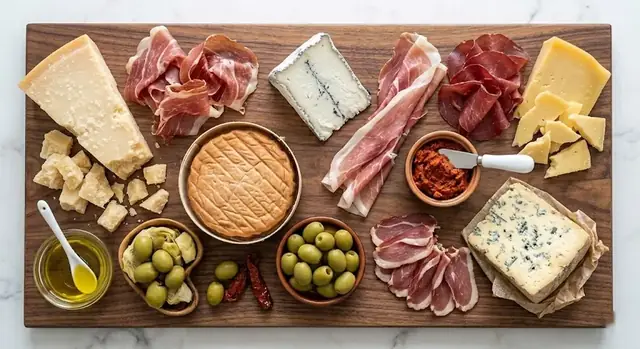
8–12 people · $150–$250 · 40–50 minutes · advanced
The counter-intuitive rule for expensive boards is to leave space. Empty surface around premium items makes them look more special — crowd them and they read as ordinary. Époisses is washed in Marc de Bourgogne during ageing, which is what produces that orange rind and its famously strong smell. Jamón ibérico de bellota comes from pigs that finish on acorns in open oak forest, and Spanish rules set how much forest each pig needs.
23. The Truffle & Luxury Board
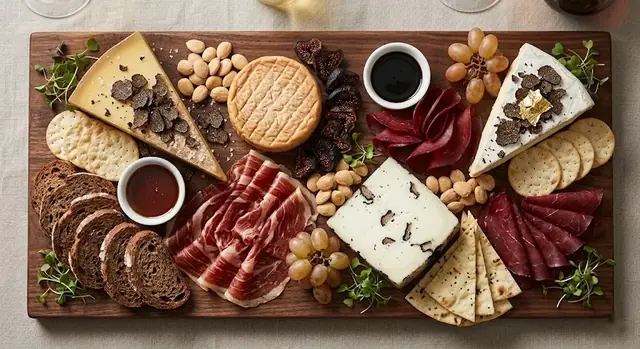
6–10 people · $100–$180 · 20–25 minutes · advanced
Black truffle's signature compound, 2,4-dithiapentane, is already present in aged Comté, Pecorino and Époisses — so shaving truffle over them is not decoration, it is amplification of something that was there. Jamón ibérico de bellota is famously rich in oleic acid, the same fat that defines olive oil, and it carries the truffle aroma without competing. The truffle itself evolved to be dug up and eaten: the smell is a recruitment ad for mammals.
Who Is Actually Coming
The guest list changes the board more than the occasion does. Nine boards built around the people rather than the date.
24. The Kid-Friendly Board
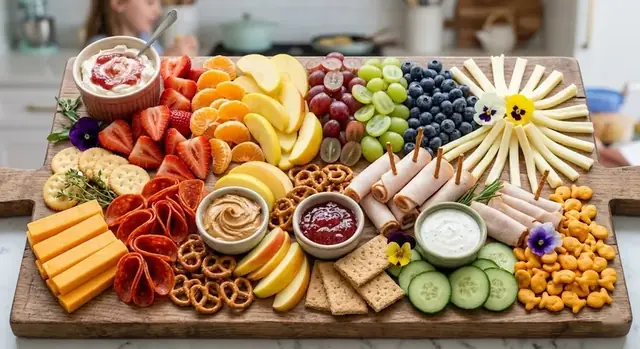
8–10 people (families) · $35–$55 · 20–25 minutes · beginner
Food neophobia — the wariness of unfamiliar food — peaks between ages two and six, so this board leads with recognisable shapes and colours and hides nothing. Children also respond to five or six distinct colours on a plate rather than fewer, because visible variety lowers the sense of risk. Goldfish crackers started in Switzerland in 1958.
25. The Date Night Board for Two
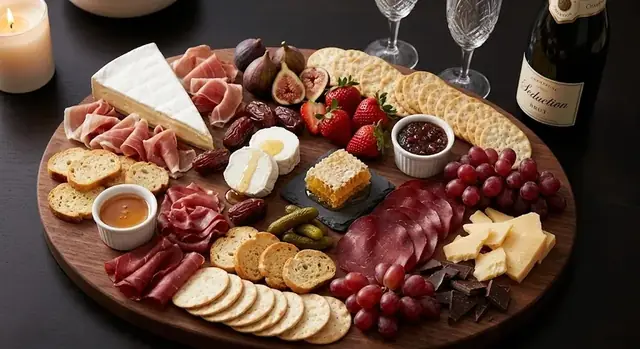
2 people · $35–$55 · 15–20 minutes · beginner
Half portions, one good cheese, and a board small enough that both people have to reach into the same space, which feels more shared than two separate plates. Candlelight does real work too: warm light flatters a white cheese.
26. The Movie Night Board
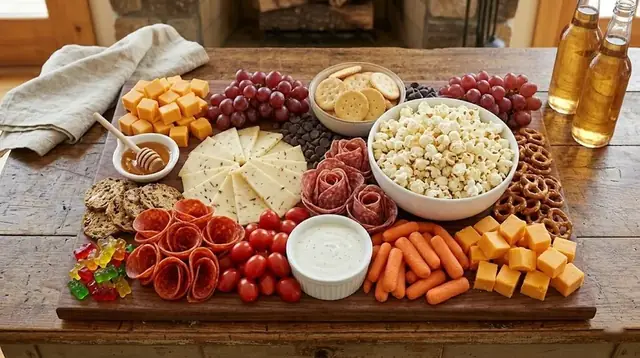
4–8 people · $35–$55 · 15–20 minutes · beginner
Everything here is designed to be picked up one-handed in a dark room without looking. Cheese is pre-cubed, and salami is folded into cups that hold the cubes — the board does the assembly so the guest does not have to. Popcorn was a cinema staple before films had sound, and theatre owners originally banned it for being too noisy and insufficiently refined.
27. The Book Club Afternoon Board
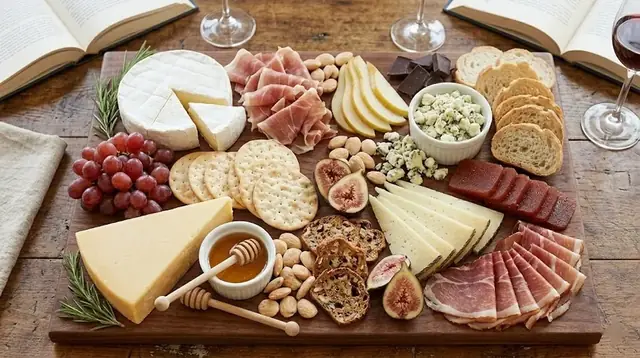
6–10 people · $50–$80 · 20–25 minutes · intermediate
Sequenced deliberately from mild to intense, because a board that guides people through an arc produces more satisfaction than the same ingredients scattered at random. Speck's cold-smoking creates guaiacol compounds that meet Manchego's free fatty acids and make both taste rounder. Tea only replaced beer as Britain's breakfast drink in the early 1700s — before that, weak beer was standard for adults and children alike.
28. The Office Party Board
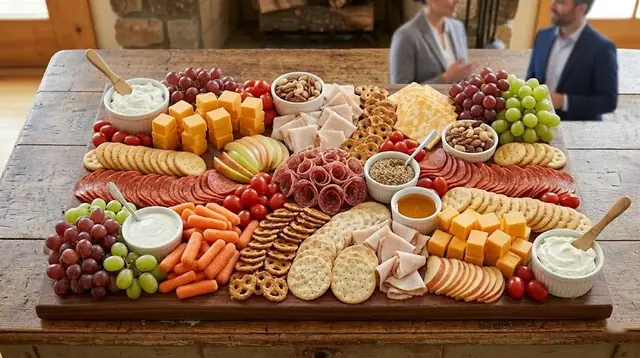
15–25 people · $60–$100 · 25–30 minutes · beginner
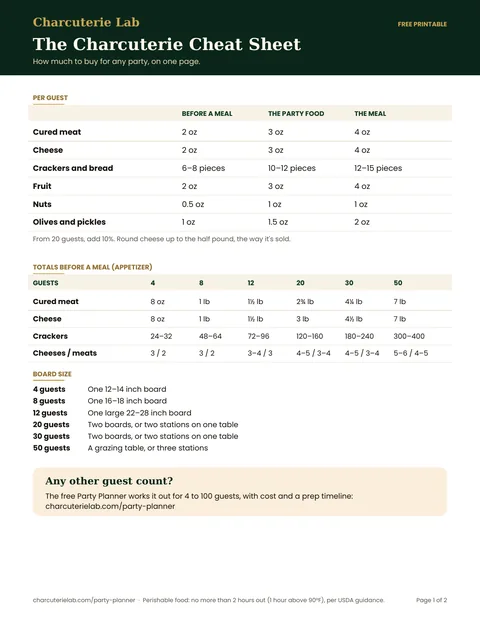
An office contains the widest palate range you will ever cater to, and no way to survey it in advance, so this board anchors hard on familiar cheeses and keeps allergens separated and legible. Plan 2 oz each of cheese and meat per person if lunch follows, or 3 oz each if the board is the lunch. Don't trim the amounts: a shared spread tends to go faster than you expect.
29. The Baby Shower Board
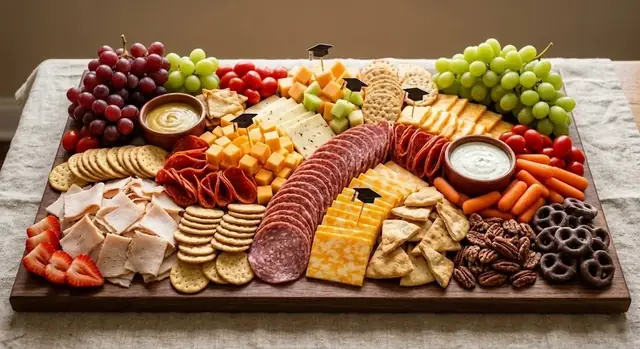
10–16 people · $55–$85 · 25–30 minutes · beginner to intermediate
Every cheese on this board is pasteurised, following the CDC's advice for pregnancy, so the guest of honour doesn't have to work it out from labels. The pink, white and soft yellow palette sets the mood before anyone takes a bite.
30. The Graduation Celebration Board
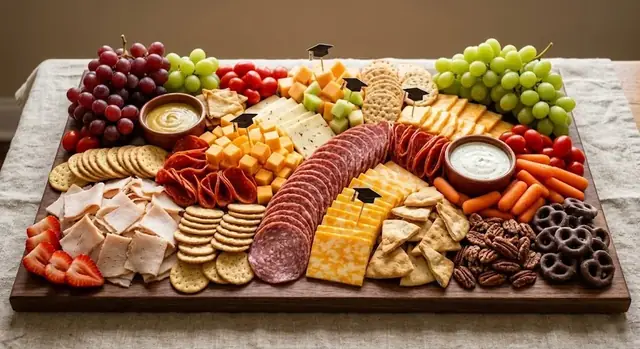
12–20 people · $65–$100 · 30–35 minutes · intermediate
Built to be colour-matched to a school, this is a board people photograph. As the party food, plan 3 oz each of cheese and meat per person.
31. The Wedding & Shower Board
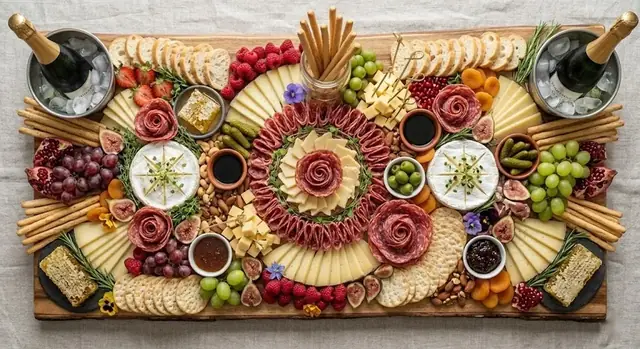
20–30 people · $175–$275 · 60–75 minutes · advanced
Large grazing tables fail for a reason nobody anticipates: if guests can only approach from one side, most of the eating happens in the strip they can reach. Access dictates the layout before aesthetics do. Salami roses are the highest perceived-effort item you can put on a board at about 45 seconds each, which is a good return.
32. The Breakfast & Brunch Board
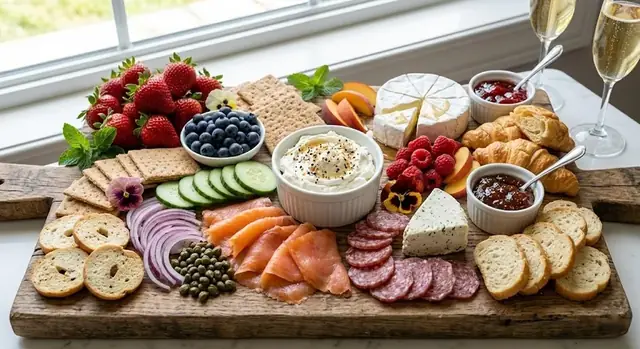
8–12 people · $50–$80 · 25–30 minutes · beginner
Smoked salmon and capers is a pairing with actual chemistry behind it: the capric acid in capers cleaves the salmon's long-chain omega-3 fats, which is why the combination tastes cleaner than salmon alone. Everything bagel seasoning is doing more than decoration too — sesame contributes sesaminol, which carries its own bitter-sweet complexity. The croissant, for the record, descends from the Austrian kipferl.
Guest counts, shopping quantities and make-ahead timings for all fifty are worked out in the book so you are not doing the arithmetic at the shop.
Dietary Boards, Built Properly
None of these are the standard board with things removed. Each one is designed from its own constraints outward.
33. The Vegan & Plant-Based Board
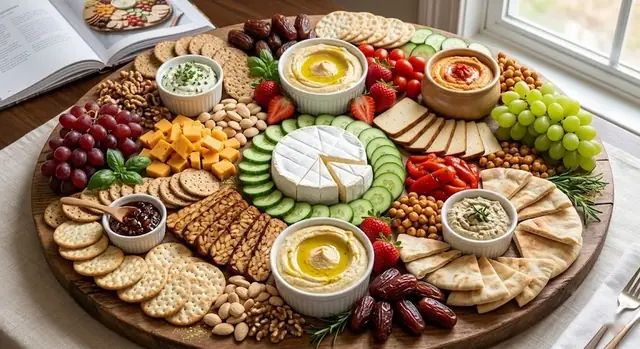
8–12 people · $45–$70 · 25–30 minutes · intermediate
Cashew cheese works because cashews are dominated by oleic acid — the same monounsaturated fat that gives dairy cheese its mouthfeel — so the texture is not an approximation, it is the same mechanism arrived at differently. Tempeh's Rhizopus fermentation adds a savoury depth that plain tofu never has. Cashews are always sold shelled for a reason: the shell oil is chemically related to poison ivy.
34. The Gluten-Free Board
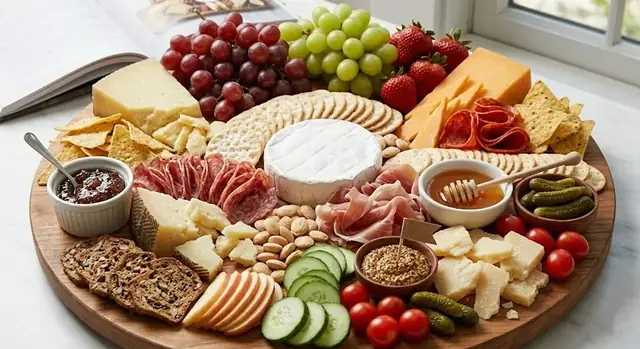
8–12 people · $50–$80 · 25–30 minutes · beginner
Naturally aged cheese contains no gluten at all — casein and whey have no gluten peptides — so the board's risk sits entirely in the crackers and in cross-contact. That matters more than most hosts realise: for someone with coeliac disease, a few crumbs from a shared knife are enough to cause a reaction.
35. The Low-Carb / Keto Board
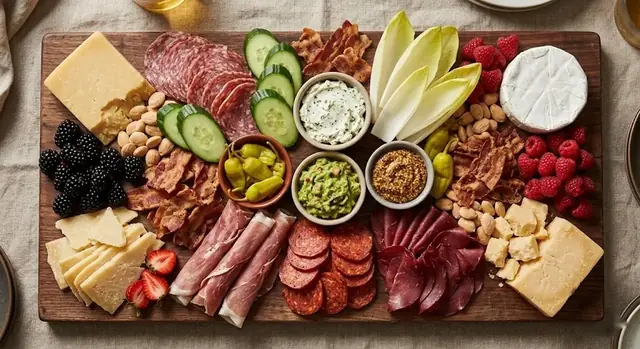
6–10 people · $45–$70 · 20–25 minutes · beginner
Remove the crackers and the cheese has nowhere to hide, so this board runs four distinct cheeses covering all four texture categories and lets them carry the whole thing. Guests engage with the flavours more directly than they would with a vehicle in between. The ketogenic diet was developed in the 1920s to treat childhood epilepsy, decades before anyone marketed it for weight loss.
A Sense of Place
Eight boards that belong somewhere specific — four American regions, four traditions from further afield.
36. The Midwest Comfort Board
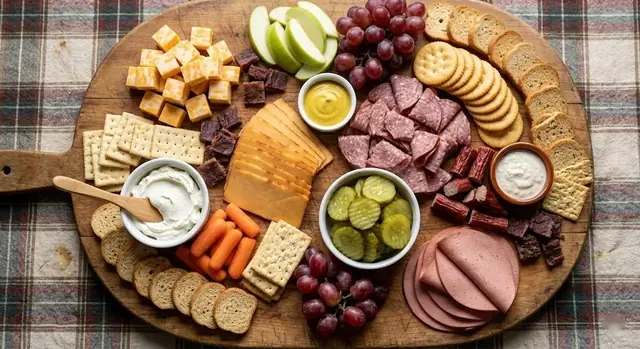
8–12 people · $35–$55 · 20–25 minutes · beginner
Colby Jack was invented in Wisconsin in 1885, which makes anchoring the board with it a genuine regional statement rather than a default. Summer sausage fermented to pH 4.6–4.8 brings the umami intensity that keeps a board of mild cheeses from going flat. Velveeta dates to 1918, when a New York cheesemaker found a use for broken Swiss wheels.
37. The Pacific Northwest Board
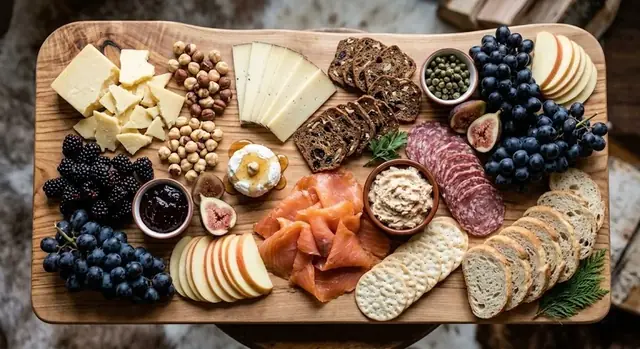
8–12 people · $55–$85 · 20–25 minutes · intermediate
Beecher's Flagship is raw milk aged fifteen months and stands up against European farmhouse cheese without apology. Oregon's Willamette Valley grows nearly all of America's hazelnuts, harvested by machines that shake the trunk until the nuts fall.
38. The Tex-Mex Fiesta Board
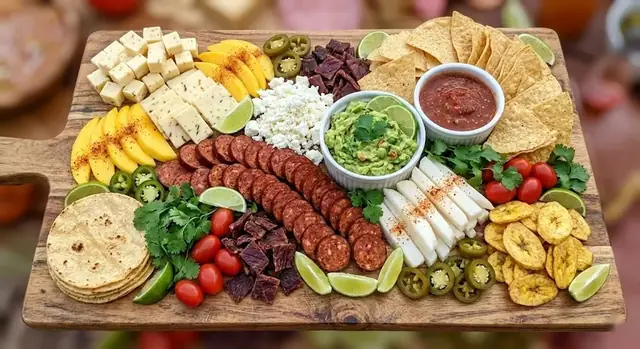
8–14 people · $40–$65 · 20–25 minutes · beginner
Pepper jack's capsaicin primes the palate at the first bite and sets expectations for everything after it — the board is sequenced deliberately around that. Mexican chorizo brings ancho and guajillo capsinoids, which trigger heat perception through a slightly different route than raw chile does, so the warmth builds rather than spikes. NASA flew jalapeños on the Space Shuttle in 1982; food tastes muted in orbit, so astronauts ask for heat.
39. The Japanese-Inspired Board
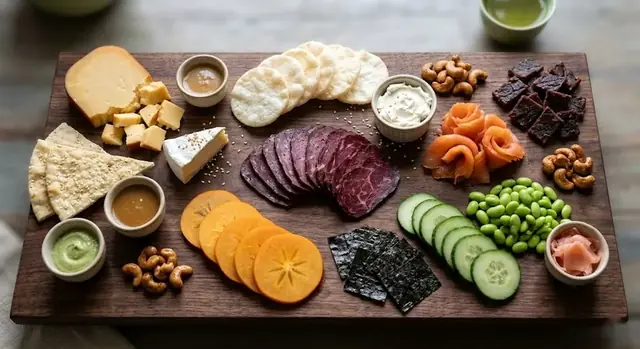
6–10 people · $55–$85 · 20–25 minutes · intermediate
Japanese cooking has the most developed working understanding of umami of any tradition, and structuring a board around that idea rather than around cheese produces something genuinely unlike the rest of this list. Wagyu's heavy marbling is rich in oleic acid, the same fat as olive oil, which is why so little of it goes so far. Elegant, restrained, and the board most likely to surprise a guest.
40. The Middle Eastern Mezze Board
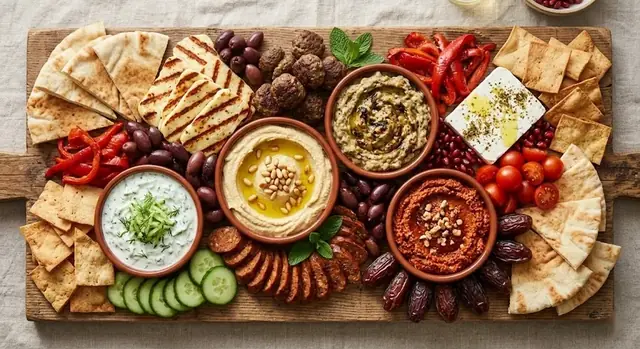
8–14 people · $40–$65 · 20–25 minutes · beginner
Four dips covering four distinct profiles — earthy, smoky, dairy-cool and sweet-hot — which is what stops a mezze board from tasting like one long note. Halloumi's direct-acid coagulation gives it an unusually high melting point, so it grills rather than collapses. Za'atar has been in continuous use for over two thousand years, and thyme, one of its core components, turned up in Tutankhamun's tomb.
41. The Scandinavian Nordic Board
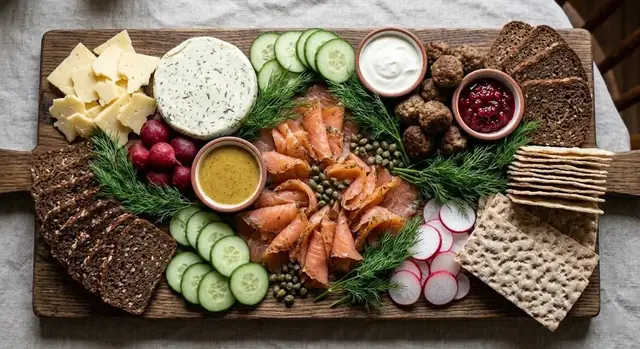
6–10 people · $55–$85 · 25–30 minutes · intermediate
Nordic food is built on the interplay of salt, acid, fat and smoke, and this board puts all four in plain sight. Gravlax cured in dill, salt and sugar takes on linalool terpenes from the dill, which is why it tastes distinctly different from cold-smoked salmon despite starting as the same fish. Hygge was shortlisted for Oxford's word of the year in 2016; a proper hygge spread nearly always includes something pickled and something smoked.
42. The Seafood & Smoke Board
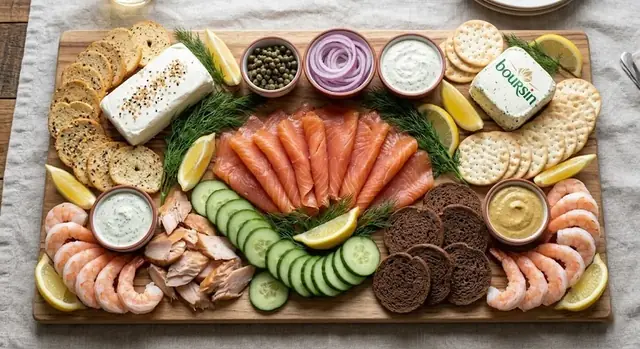
8–12 people · $55–$85 · 20–25 minutes · intermediate
Smoked salmon carries both glutamate and inosinate, which makes it the single highest natural umami concentration you can put on a board. Smoked trout sits alongside as the bridge — lighter smoke, milder flesh — connecting the salmon to the cream cheese instead of leaving a gap between them. Pacific Northwest communities have smoked salmon for food and trade for thousands of years.
43. The Farm-to-Table Local Board
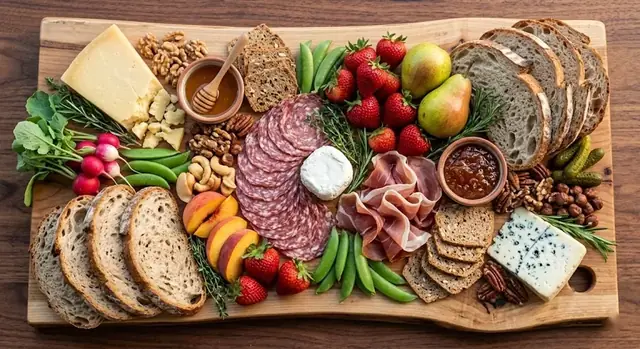
8–12 people · $55–$95 · 25–30 minutes · intermediate
Knowing where a food came from changes how people experience it, so the sourcing on this board is part of the flavour, not just sentiment. A farmstead cheddar aged on site carries genuine terroir from the grass, water and local microflora.
Regional boards live or die on sourcing. The book lists what to ask for at the counter when your shop does not stock the obvious answer.
One Idea, Taken All the Way
Five boards that pick a single subject and commit to it completely.
44. The All-Cheese Connoisseur Board
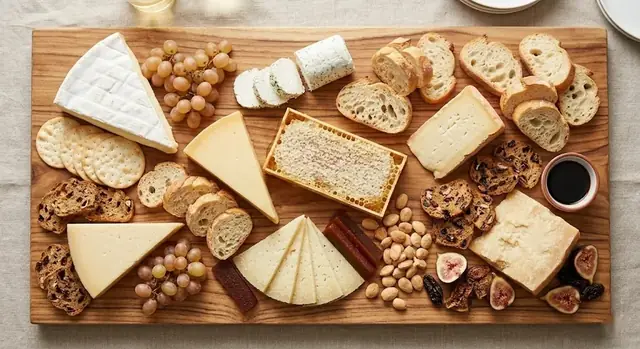
8–12 people · $60–$100 · 20–25 minutes · intermediate
Six cheeses arranged as a flight, mild to pungent, with no meat to hide behind. Structuring a cheese board as a sequence rather than a spread gets more out of identical ingredients, purely from the order. Crackers are matched to intensity — neutral water crackers at the mild end, robust seeded ones at the far end. The world's most expensive cheese is often said to be Pule, a Serbian donkey-milk cheese.
45. The Meat Lover's Carnivore Board
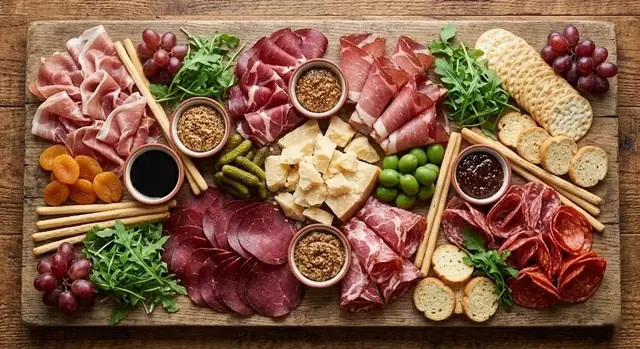
8–12 people · $55–$85 · 25–30 minutes · intermediate
Six meats, almost no dairy, tasted mild to intense — and each one displayed according to what its texture needs. Prosciutto has to breathe in loose folds, salami wants folding or fanning, bresaola lies flat. Get the display wrong and good meat eats badly. "Charcuterie" comes from chair cuit, cooked flesh; medieval French charcutiers were licensed to sell cooked pork only, with raw meat reserved for a separate guild.
46. The Antipasto Skewer Board
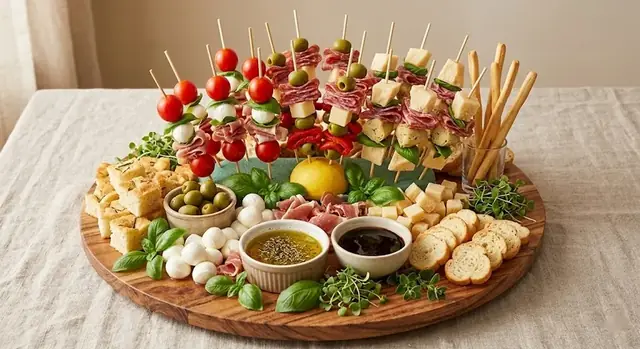
10–16 people · $45–$75 · 30–35 minutes · intermediate
Every skewer is a complete four-element bite — meat, cheese, vegetable, herb — so the pairing happens by construction rather than by guesswork at the board. Standing them vertically adds height that a flat board cannot, and the whole thing needs no utensils. Roman thermopolia were doing small prepared bites two thousand years ago; over eighty have been excavated in Pompeii alone.
47. The Sweet & Savory Dessert Board
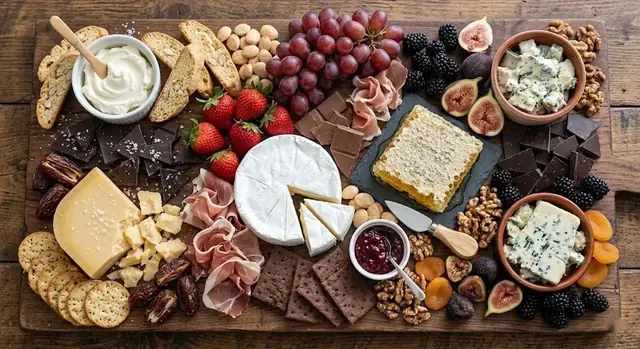
8–12 people · $55–$90 · 25–30 minutes · intermediate
Cheese as dessert, which is standard in France and still faintly radical everywhere else. Aged Gouda's caramel notes come from tyrosine converting during long ageing, and they meet dark chocolate on genuinely common ground: both get their depth from long, slow transformation, fermentation for the cacao and ageing for the cheese.
48. The Sweet Dessert Charcuterie Board
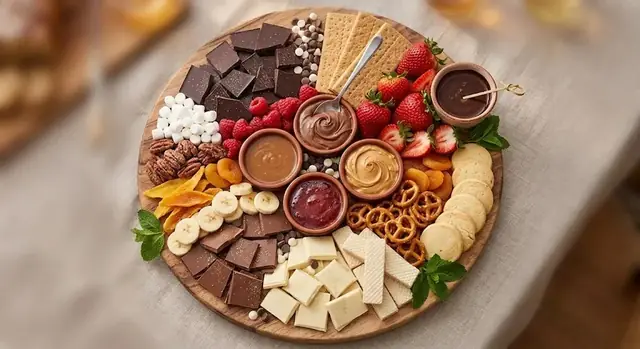
8–12 people · $35–$60 · 20–25 minutes · beginner
No cheese, no meat, no pretence — chocolate, fruit and sweets arranged with the same structural logic as everything else here. The dark-to-milk-to-white progression, from 70% down to 30% cocoa, runs bitter to sweet, so each piece tastes like a step up instead of the sweetest one flattening everything after it.
The Showstoppers
Two boards whose entire purpose is the moment someone walks into the room.
49. The Showstopper Grand Board
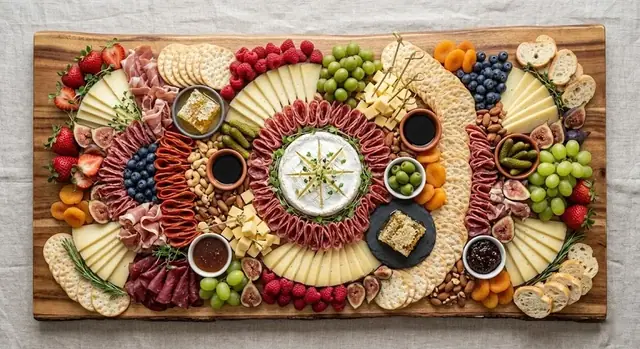
20–30 people · $120–$200 · 45–60 minutes · advanced
Past about 36 inches a board stops being a board and becomes a landscape, and the design rules change with it — the centre can no longer be the focus, because half the guests will never reach it. Each cheese becomes a landmark that people navigate toward, so where you put them determines how the room moves. "Showstopper" meant a performance so good the show had to pause for applause, long before it meant a bake.
50. The Ultimate 50th Celebration Board
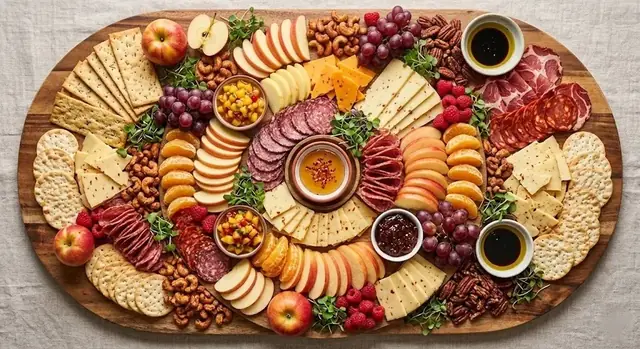
20–30 people · $175–$300 · 60–90 minutes · master
Eight cheeses spanning all four texture categories and three milk types — cow, sheep and goat — which is about as complete as a single board can be before it stops making sense. The organising principle is not maximum expense but maximum rightness: every element is the best version of itself rather than the priciest available. Fitting, for board fifty. The fiftieth year was the Jubilee: debts forgiven, land returned, a clean slate.
Where to Start
If you have never built one, build number one. It costs about $40, takes twenty minutes, and every technique on it transfers to the other forty-nine.
If you have built a few and want the next real step, take the Wine & Cheese Pairing Board or the All-Cheese Connoisseur Board. Both force you to think in sequence rather than in ingredients, and that shift is what separates a board that photographs well from one people remember.
And if you are cooking for a specific date — Thanksgiving, a wedding, a fiftieth — go straight to that board. The constraints are already solved.
Every one of these fifty has a full blueprint in Charcuterie Lab: 50 Boards, Built by Science: the exact shopping list with quantities and prices, the build order with timings, substitutions for anything your shop does not carry, and the optional upgrades worth paying for. It is the version of this page with nothing left out.
How to Adapt Any of These
All eight boards follow the same underlying logic: 2–3 cheeses covering different texture/intensity ranges, 2–3 meats with varying fat content and flavor profile, 2–3 condiments spanning sweet/savory/acidic, fresh and dried fruit, and crackers in at least two types.
Any board concept above can be scaled (multiply the quantities), simplified (drop one meat or one cheese), or seasonally adjusted (swap stone fruit in summer for citrus in winter). The structure is the recipe — the ingredients are the expression.
FAQ
What are the most popular charcuterie board themes?
The most searched and popular board themes are: Italian boards (prosciutto, salami, Parmigiano, Pecorino, olives, grissini), holiday/Christmas boards (seasonal colors, cranberry, rosemary), date night boards (brie, prosciutto, figs, chocolate, sparkling wine), grazing tables for large crowds, and dessert boards (chocolate, fruit, cookies). Seasonal boards — spring, summer, fall, winter — are perennially popular as people seek to refresh their repertoire.
What should go on a charcuterie board for beginners?
Beginners succeed with familiar, widely available ingredients: aged cheddar (or Colby jack), salami or pepperoni, grapes, crackers, and a simple condiment like honey or mustard. This five-element board is easy to assemble, universally liked, and genuinely delicious. Add brie as a stretch ingredient once the format feels comfortable.
How do I come up with unique charcuterie board ideas?
Start with a theme — a cuisine (Italian, French, Spanish), a season, an occasion (baby shower, Valentine's Day), or a flavor profile (sweet and salty, spicy, vegetarian). Let the theme guide ingredient selection. The most memorable boards have a clear through-line: every element reinforces the theme rather than just being randomly assembled.
What are the most visually impressive charcuterie board elements?
Prosciutto roses (folded roses from thin-sliced prosciutto), salami rivers (flowing overlapping rows), a ripe whole brie with a wedge removed, honeycomb on a board, fresh figs cut open, and pomegranate arils scattered across the board are consistently the most photographed and admired visual elements. These are also relatively easy to execute.
What is the difference between a charcuterie board and a grazing board?
The terms are often used interchangeably. Technically, "charcuterie" refers specifically to cured and preserved meats. A "grazing board" is broader, often including vegetables, dips, and other non-cured elements. In practice, most people use both terms for the same type of spread — a curated arrangement of cheeses, meats, and accompaniments.