The short version
The fine-ground, mildly spiced, wine-scented salami in every American deli case. It's the default for a reason — cheap, widely liked, and it goes with almost everything. Its connection to Genoa is essentially nominal.
What it is
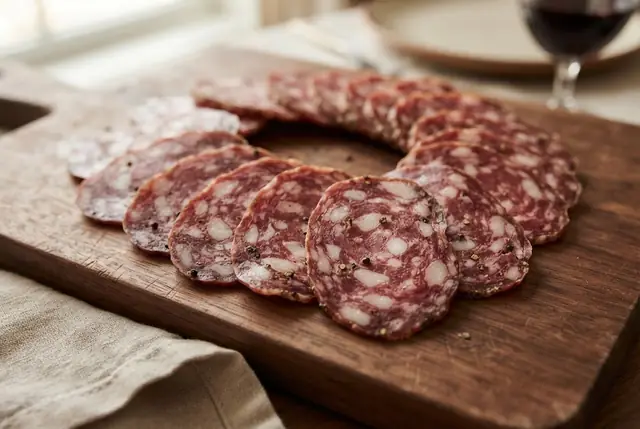
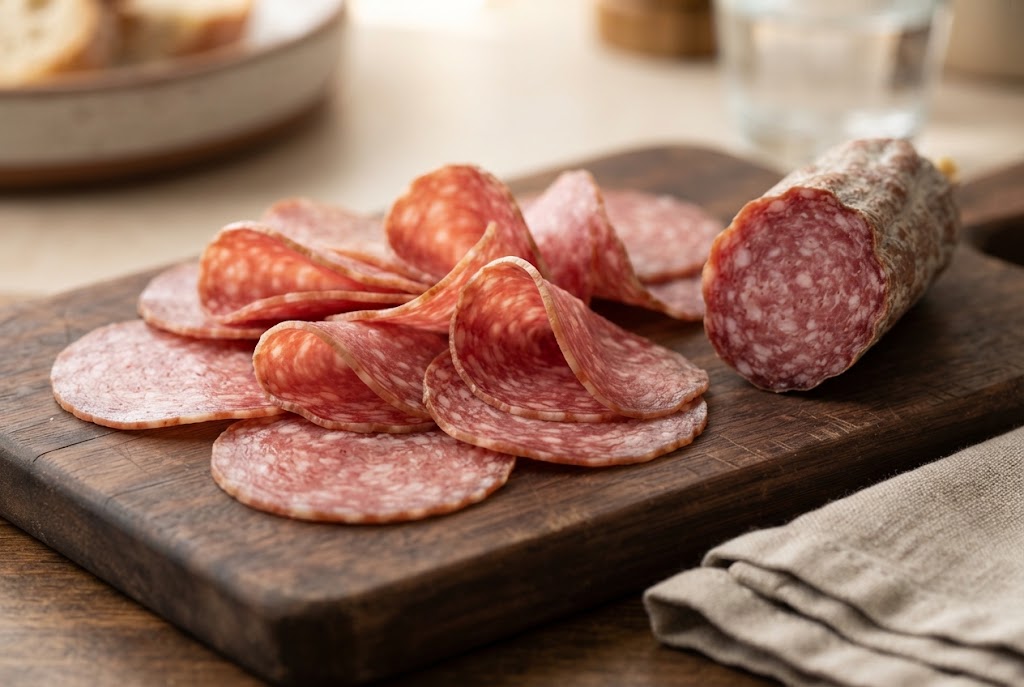
Genoa salami is an Italian-American category rather than a protected Italian one. Pork (sometimes with veal) is ground fine, seasoned with garlic, white pepper and red wine, fermented, cased and air-dried for weeks. The tang comes from fermentation, the softness from a higher fat content than most dry salami.
- Taste
- mildly tangy, garlicky, wine-scented, gently salty
- Texture
- soft, supple, slightly moist — less firm than most dry salami
- Look
- pale rose-red rounds with fine even white fat flecks
Fermentation is the mechanism behind the tang. Lactic bacteria acidify the meat during the first days of curing, which both preserves it and produces the sour note that separates salami from a simple dried sausage. Genoa is fermented gently — that's why it reads as mild rather than sharp.
What it pairs with — and why
| Pair it with | Why it works |
|---|---|
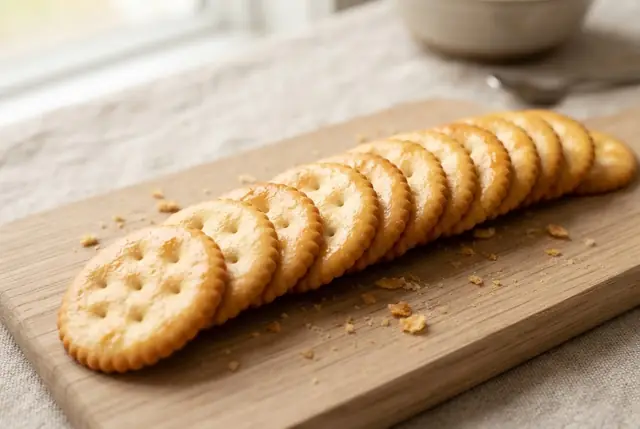
| Butter crackers | The American deli pairing. Fat and salt on a sweet-ish cracker. |
| Aged provolone | Sharp cheese against a mild salami. The sub-shop combination. |
| Cornichons and pickled onion | Acid cutting fat, and it's what the salami expects. |
| Grainy mustard | Sharpness a mild salami doesn't supply itself. |
| Olives and pepperoncini | Brine and mild heat cutting a soft, garlicky salami. |
| Aged cheddar | Not traditional, but salt and acid against garlic works well. |
| Chianti, Sangiovese, lager | Nothing precious required. |
Skip it with: delicate fresh cheeses — the garlic lingers and mutes anything subtle after it. Keep it on the casual half of the board.
How to prep it for the board
- Slice thin. Genoa is soft and a thick slice eats fatty.
- Fold slices into quarters and stand them in a row, or make a salami rose in a small glass — it's the one meat soft enough to shape.
- Temper 20 minutes.
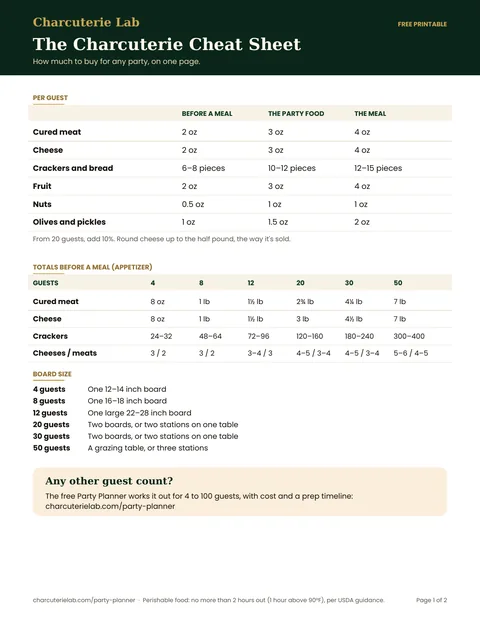
- Serve 1–2 oz per person.
- Peel the casing. Most supermarket Genoa uses inedible casing.
- Use it as the volume meat on a big board and spend the money on a better ham or a coppa.
- Fix: greasy on the board? It's too warm. Genoa has more fat than most dry salami and it sweats above about 72°F.
What to buy
| Product | Where | Notes |
|---|---|---|
| Volpi Genoa Salame | Grocery, Whole Foods, Instacart | American-made since 1902. The best widely available version. |
| Columbus Genoa Salame | Most grocery stores | Very widely stocked, consistent, cheap. |
| Boar's Head Genoa | Deli counters | Cut to order. Fine. |
| Creminelli or Olli | Whole Foods, Target | Better ingredients, small premium. |
| Salame Milano | Italian delis | The actual Italian fine-ground salami. Milder and better. |
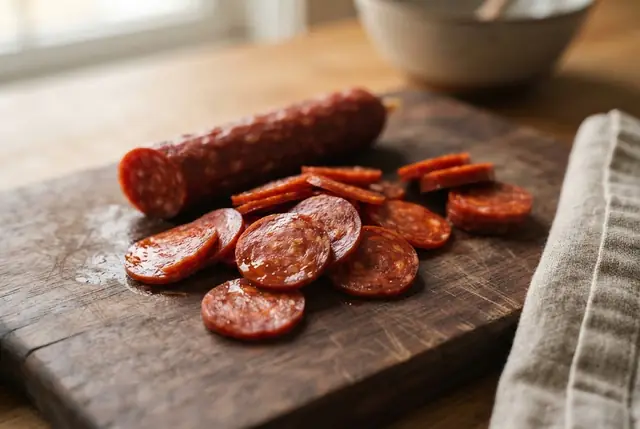
| Soppressata | Grocery, Whole Foods | The coarse, spicier alternative — see its own page. |
Label check: pork (and maybe veal), salt, wine, spices. Long ingredient lists with fillers, corn syrup or "mechanically separated" anything are worth avoiding.
Skip: pre-sliced salami that's been sitting in a tray — the edges dry and curl. Buy a chub and slice it, or buy from the counter.
Ranked picks: our top-rated salami is Olli Salumeria (4.5 out of 5), and the best value is Volpi Genoa Salame. See the full ranking of the best salami.
Gluten-free? Usually, but check the label. See Is salami gluten-free?.
Quick FAQ
Is Genoa salami actually from Genoa?
Not really. It's an Italian-American category named after the city, not a protected Italian product.
Genoa or hard salami?
Genoa is softer, fattier and wine-scented. Hard salami is drier, firmer and smokier. Genoa is the better board meat.
Can I eat the casing?
Usually not — most commercial Genoa uses inedible casing. Peel it.
How much per person?
1–2 oz as one of several meats.
Why is mine greasy?
It's warm. Genoa has a high fat content and starts to sweat above about 72°F.