Quick Answer: Genoa salami is softer and moister, usually all pork, seasoned with garlic, pepper and often wine, with a gentle fermented tang. Hard salami is an American deli style that's drier and firmer, often made with pork and beef, often smoked, and milder. Choose Genoa for a charcuterie board; choose hard salami when you want a firm slice for sandwiches, crackers or kids.
What is Genoa salami?
Genoa salami is the Italian-American name for a salami made in the style of Genoa, in northwest Italy. It's the salami most US deli counters slice first.
It's usually made with pork and pork fat, seasoned with garlic and pepper, often with a splash of red or white wine. Many versions have a light tang from fermentation. You'll see soft white flecks of fat through a rosy slice, and the bite is tender, almost supple.
For pairings and serving notes, see the Genoa salami ingredient guide.
What is hard salami?
Hard salami is an American deli-style salami that's dried until firm. The word "hard" describes the texture, not a specific region or recipe.
It's often made with a mix of pork and beef, often smoked, and seasoned mildly, usually with garlic and pepper. The result is a darker, denser slice that snaps rather than bends, with a gentle, savory flavor and a hint of smoke.
It's the salami in a lot of American lunchboxes and the pre-sliced packs in the deli case.
Genoa vs. hard salami at a glance
| Genoa salami | Hard salami | |
|---|---|---|
| Origin | Italian-American, in the Genoa style | American deli style |
| Meat | Usually pork | Often pork and beef |
| Texture | Softer, moister, tender | Drier, firmer, denser |
| Flavor | Garlic, pepper, often wine, light tang | Mild, savory, often smoky |
| Smoked? | Usually not | Often |
| Slice behavior | Bends and folds | Holds a flat, stiff shape |
| Best on a board | Folds, rivers, cheese pairings | Cracker stacks, kids' boards |
| Best in a sandwich | Italian subs, pressed sandwiches | Packed lunches, club-style stacks |
How they taste
Genoa tastes of garlic first, then pepper, then a slight wine and fermented sourness at the end. The fat is soft and melts quickly, so it reads rich.
Hard salami is quieter. The smoke and the beef give it a rounder, meatier flavor, and there's less tang. It's a good salami for people who find Genoa too garlicky.
Neither is spicy. If you want heat, look at calabrese, hot soppressata or pepperoni. Our salami vs. pepperoni guide explains where the spicy styles fit.
Texture: why it matters on a board
Texture is the real difference when you're building a board.
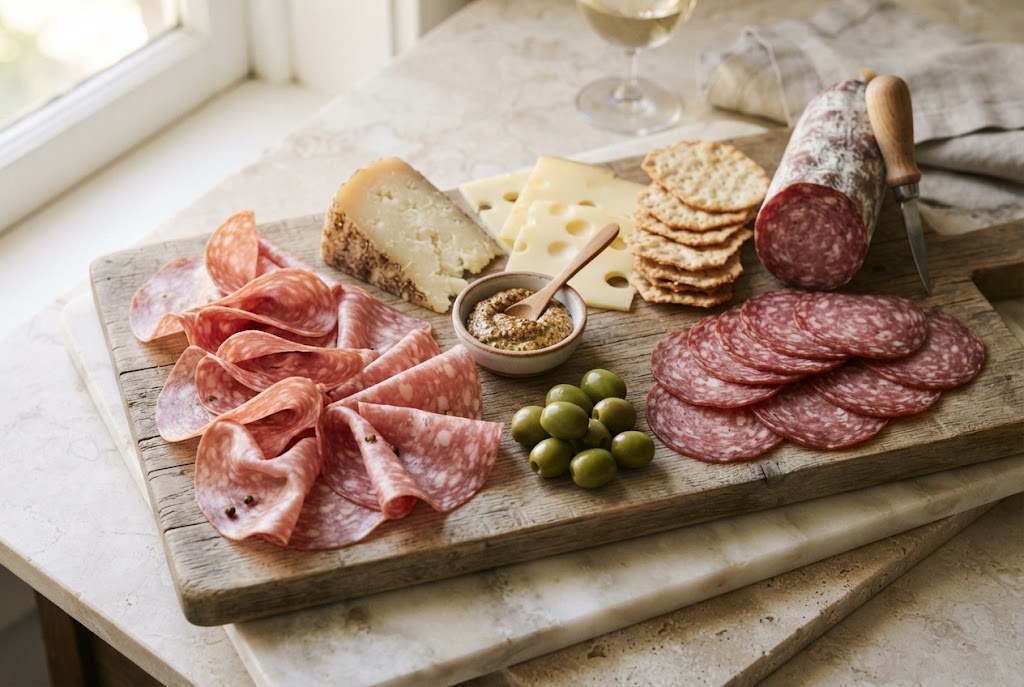
A soft, moist Genoa slice folds without cracking. That's what you want for half moons, quarter folds and a salami river winding between the cheeses.
A firm hard salami slice doesn't fold well. It cracks at the crease. Instead, fan it in overlapping rows or stack it flat next to the crackers, where it works like a ready-made topping.
Which to use on a charcuterie board
For most boards, choose Genoa. Its garlic and wine flavor pairs with more cheeses, and it looks more generous on the board.
Good matches for Genoa:
- Aged provolone for a salty, sharp Italian pair. See aged provolone.
- Aged cheddar for crunch and sharpness.
- Fresh mozzarella and cherry tomatoes for a mild, summery corner.
- Castelvetrano olives and a Chianti. See Chianti and Sangiovese pairings.
Use hard salami on a casual board, a game-day board or a kids' board, where firm slices get grabbed with crackers and cheese cubes. It pairs well with Swiss, mild cheddar, provolone and grainy mustard.
On a larger board, use both. They look different enough (Genoa rosy and soft, hard salami darker and flat) that they don't read as the same meat twice.
For a fuller list of what else to buy, see the best meats for a charcuterie board or look up what goes with Genoa salami.
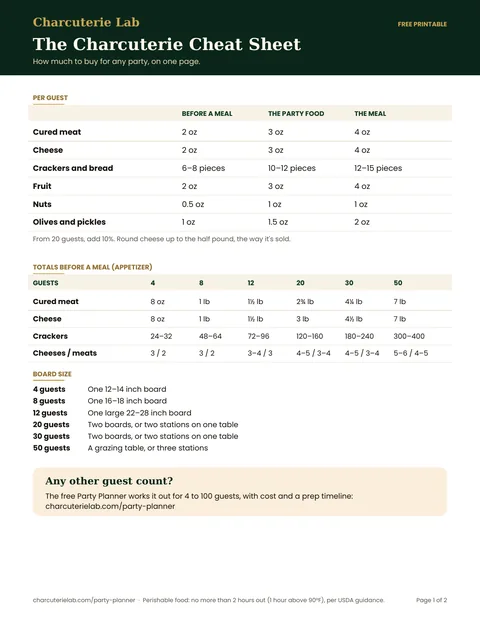
How much: plan 2 oz of meat per guest as an appetizer, 4 oz if the board is the meal. For 6 guests with two salamis on the board, 6 oz of each covers it.
Which to use in sandwiches
Genoa is the classic in an Italian sub, layered with provolone, capicola, lettuce, tomato and a vinegar dressing. It's soft enough to bite through cleanly.
Hard salami is the better lunchbox salami. It stays firm, doesn't go limp against bread, and its mild flavor suits kids. It's also good on a pressed sandwich, where its smokiness comes forward.
How to tell them apart at the deli counter
Labels help, but you can also tell by eye.
Genoa is rosy pink to light red, with soft, creamy white flecks of fat and often visible peppercorns. The slice looks moist and bends when you pick it up.
Hard salami is darker and more uniform, with a tighter, denser look and a drier surface. The slice stays flat and stiff.
If you're unsure, ask for a taste. Most deli counters will cut you a slice of each, and one bite settles it: garlic and tang means Genoa, mild smoke means hard salami.
Buy Genoa sliced as thin as the counter can go. Hard salami can be a touch thicker, since it's firm enough to hold together.
How long do they keep?
Both are dry sausages. The University of Minnesota Extension lists hard or dry sausage as keeping indefinitely unopened in the refrigerator, 3 weeks once opened, and 1-2 months in the freezer.
Deli-sliced salami is treated like other deli meats: 3-5 days once opened, 2 weeks unopened.
Common questions
What is the difference between Genoa salami and hard salami? Genoa is softer and moister, usually all pork, seasoned with garlic, pepper and often wine, with a light tang. Hard salami is drier and firmer, often pork and beef, often smoked, and milder.
What is hard salami? Hard salami is an American deli-style salami. It's dried until firm, often made with pork and beef, often smoked, and mildly seasoned. The word hard describes its texture.
Which is better for a charcuterie board, Genoa or hard salami? Genoa. It's softer, so it folds into half moons and rivers, and its garlic and wine flavor pairs with more cheeses. Hard salami is better for cracker stacks and kids' boards.
Which is better for sandwiches? Both work. Genoa is the classic in an Italian sub. Hard salami stays firmer, has a milder flavor, and holds up better in a packed lunch.
Can I substitute hard salami for Genoa? Yes. They're interchangeable in most recipes and on boards. Expect a firmer bite, a smokier and milder flavor, and less of Genoa's garlic and tang.
Get weekly charcuterie science (ingredient deep dives, pairing principles and board-building technique) in the Charcuterie Lab Report newsletter.