The short version
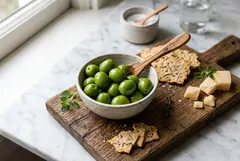
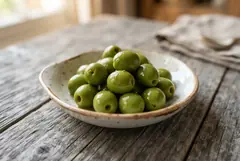
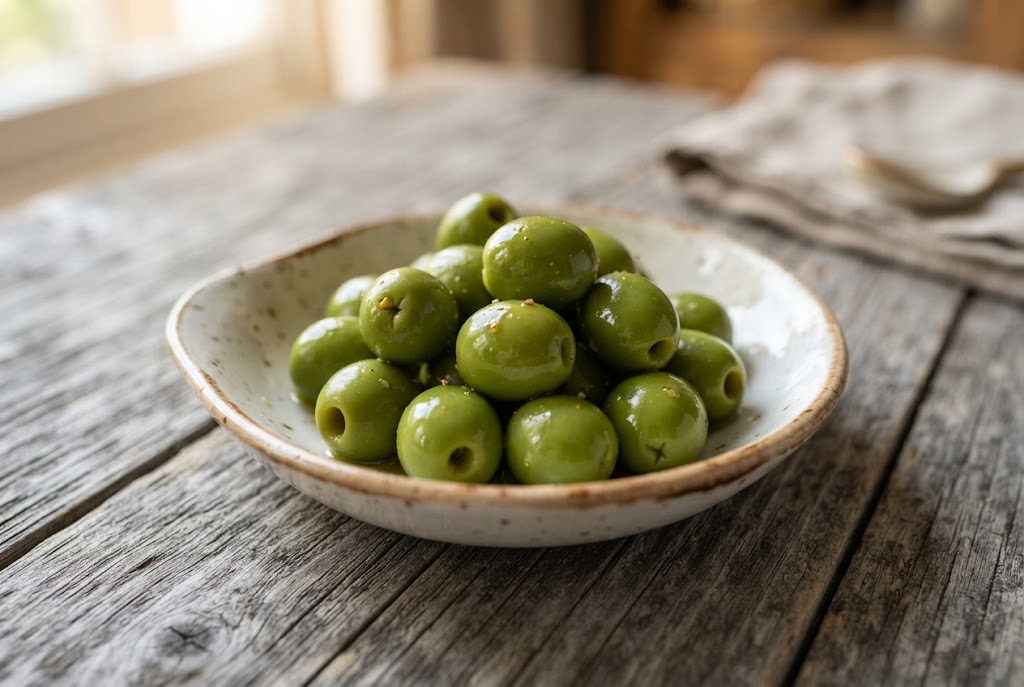
The one olive that belongs on every board. Castelvetranos are vividly green, firm, buttery and only lightly salty — closer to a fresh fruit than to a Kalamata. They're the olive people who "don't like olives" eat three of without noticing.
What it is
The Nocellara del Belice variety from Castelvetrano in western Sicily, cured briefly in a mild brine rather than aged in salt or oil. The short cure is why they keep their colour and their crunch. Sold with pits in, usually in brine.
- Taste
- buttery, mildly salty, faintly sweet, almost no bitterness
- Texture
- firm and meaty, snaps rather than yields
- Look
- bright grass-green, glossy, plump
The mechanism is a short cure. Long-cured olives develop the sharp, funky compounds that make olives divisive; Castelvetranos are pulled early, so what's left is fat and mild salt. On a board that means they add brine without adding an argument, which is why they can sit next to a delicate cheese where a Kalamata couldn't.
What it pairs with — and why
| Pair it with | Why it works |
|---|---|
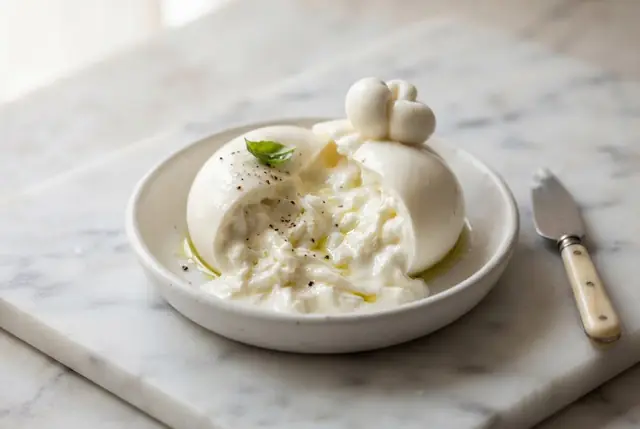
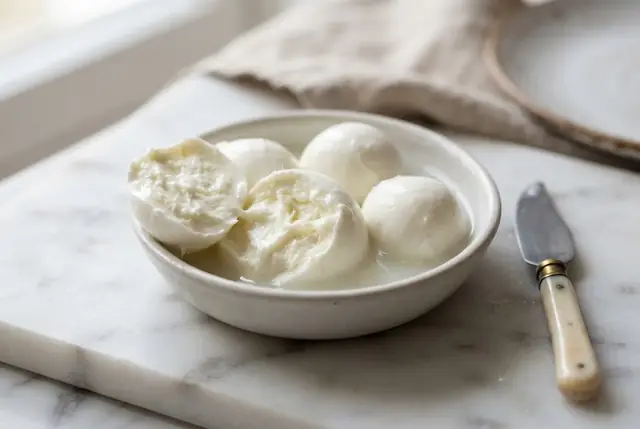
| Burrata and fresh mozzarella | Mild salt and firm texture against cream with none. The only olive gentle enough not to bury them. |
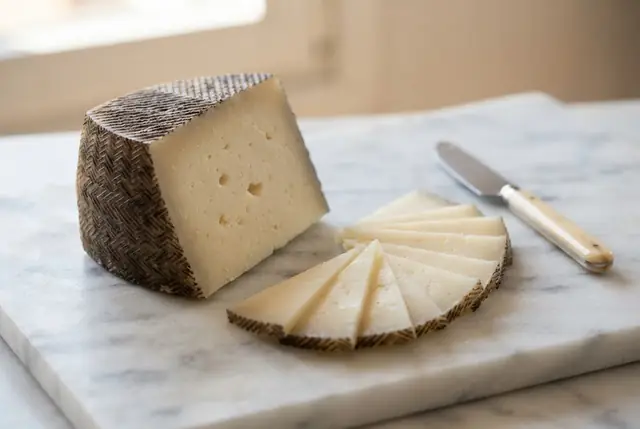
| Manchego | Sheep-milk fat and buttery olive; both are rich and neither is sharp. |
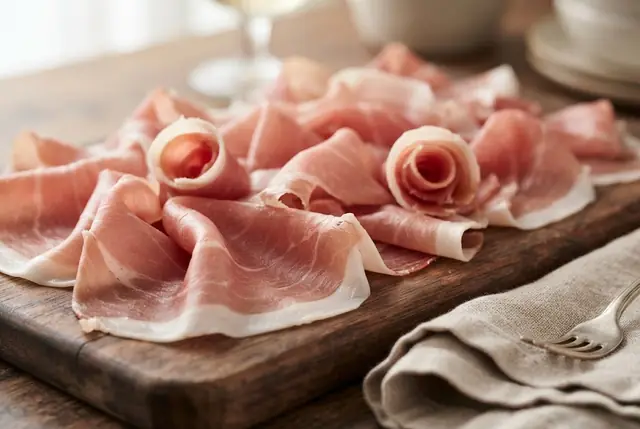
| Prosciutto | Salt and fat with a cold, firm, wet counterpoint. |
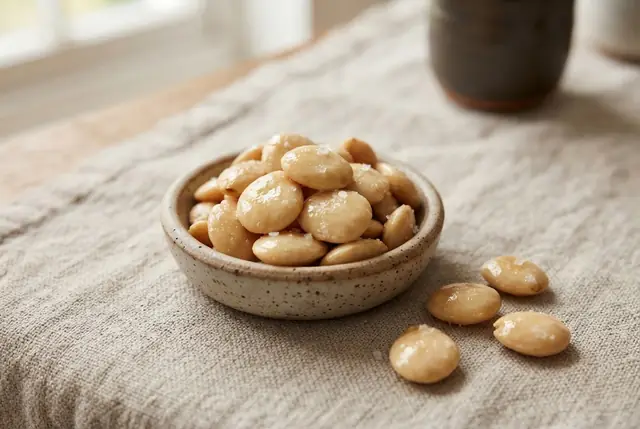
| Marcona almonds | Two buttery Mediterranean things, one salty and firm, one salty and crisp. |
| Aged pecorino | Salt against salt works here because the olive brings so much fat and so little bite. |
| Dry white wine and vermouth | The bar snack they were made for. |
Skip it with: nothing. Castelvetranos are the least confrontational olive sold.
How to prep it for the board
- Drain them and pat dry. Brine on the board soaks crackers.
- Serve in a small bowl, not scattered — the brine transfers.
- Put out a pit bowl. They're sold with pits and guests need somewhere to put them.
- Serve them cold or at room temperature — both work, room temperature is better.
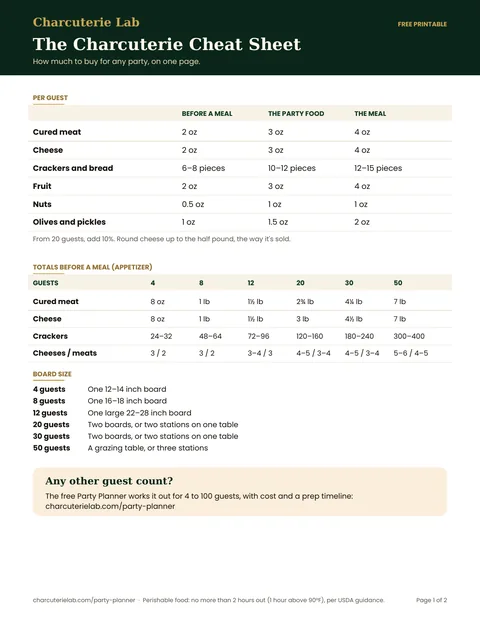
- Serve 1 oz per person.
- Leave the pits in. Pitted Castelvetranos are softer and less flavourful.
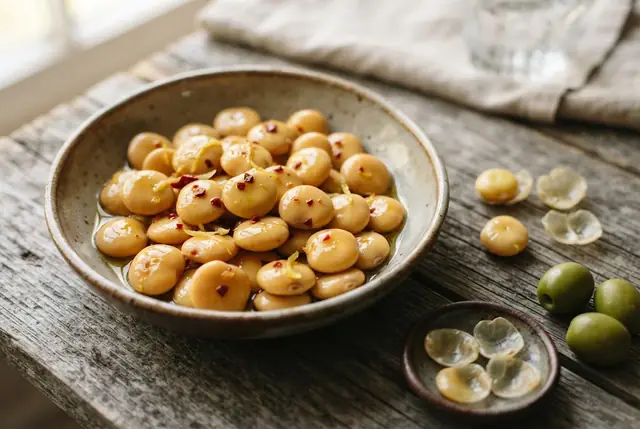
- Fix: too mild? Warm them with olive oil, garlic and lemon zest for five minutes. It wakes them up.
What to buy
| Product | Where | Notes |
|---|---|---|
| Castelvetrano olives in brine | Whole Foods, Trader Joe's, olive bars | The default. Buy from the olive bar if you can. |
| Divina Castelvetrano | Grocery, specialty | The most widely available jarred brand. Reliable. |
| Nocellara del Belice | Italian delis | The same olive under its variety name, sometimes cheaper. |
| Pitted Castelvetrano | Grocery | Convenient but softer and blander. Buy with pits if you can. |
| Castelvetrano with citrus and herbs | Olive bars | Marinated versions. Good, and they look better in a bowl. |
Label check: they should be bright green, not olive-drab. Dull colour means they've been sitting or are a different variety sold under the name.
Skip: anything labelled "green olives" generically — a Castelvetrano is worth paying for by name.
Ranked picks: our top-rated olives is Mezzetta Castelvetrano Olives (4.7 out of 5), and the best value is Trader Joe's Organic Conversation Olive Trio. See the full ranking of the best olives.
Quick FAQ
Why are Castelvetrano olives so green?
They're cured briefly in mild brine rather than aged, which preserves the natural green colour and the firm texture.
Are Castelvetrano olives salty?
Much less than most. They're buttery and mild, which is why they suit people who usually avoid olives.
Should I buy them pitted?
No, if you can avoid it. Pitted versions are softer and less flavourful. Put out a bowl for pits instead.
What cheese goes with Castelvetrano olives?
Burrata and fresh mozzarella, manchego, and aged pecorino.
How much per person?
About an ounce — four or five olives.