The short version
A fine-ground, paprika-and-chili spiced dry salami invented by Italian-Americans in New York in the early 1900s. Ask for pepperoni in Italy and you'll get bell peppers. Buy it as a whole stick from a deli and it's a genuinely good board meat rather than a pizza topping.
What it is
Pepperoni is pork and beef ground fine, seasoned heavily with paprika and cayenne, cured with lactic cultures for tang, then smoked and dried. The name comes from peperoni, Italian for bell peppers — the sausage itself is an American creation with no Italian original.
- Taste
- spicy, smoky, tangy, paprika-sweet
- Texture
- firm and slightly greasy, fine grain, softer than most dry salami
- Look
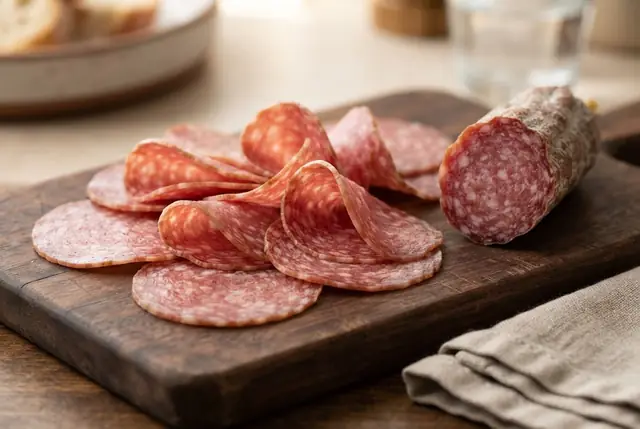
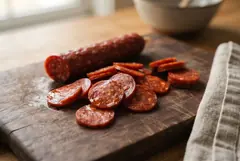
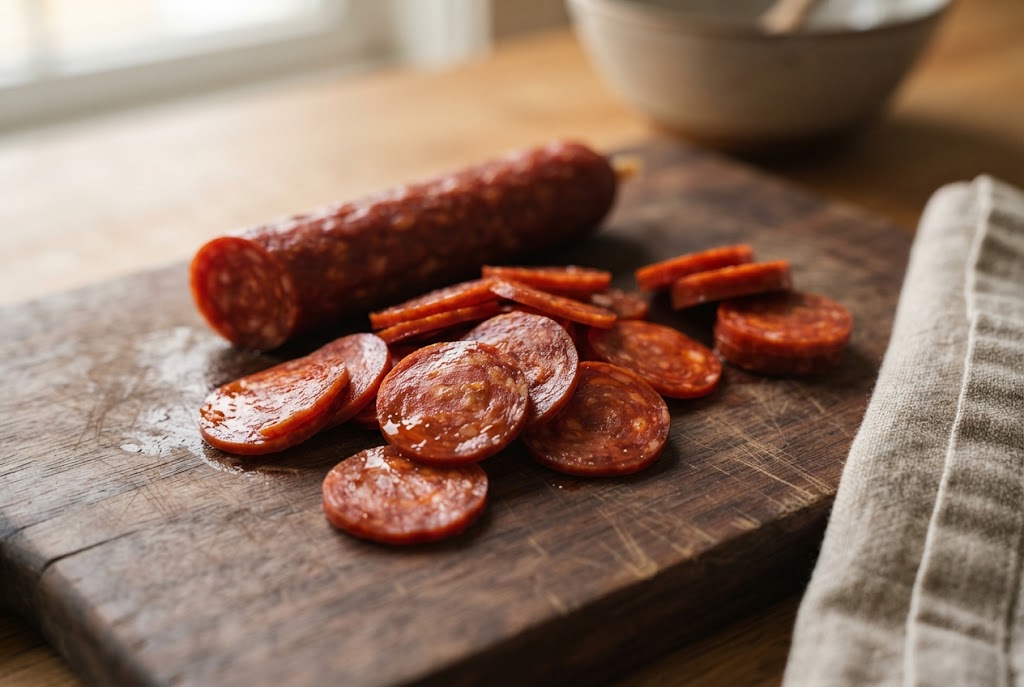
- deep red-orange, fine white fat flecks, glossy
Fine grinding plus high paprika is the mechanism, and it's what separates pepperoni from soppressata. Grinding fine distributes the fat and spice uniformly so every bite is identical; the heavy paprika load carries colour into the fat, which is why the surface goes orange and why the slices cup when heated.
What it pairs with — and why
| Pair it with | Why it works |
|---|---|
| Aged provolone | Sharp Italian-American cheese with an Italian-American sausage. |
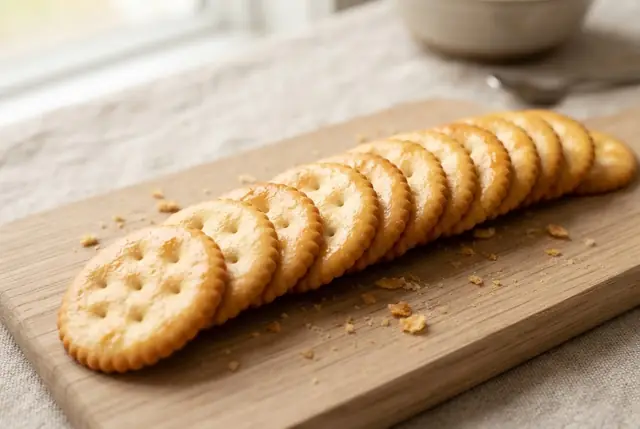
| Butter crackers | The deli-plate base. Fat and salt on a sweet cracker. |
| Fresh mozzarella | Cool milk against chili heat. |
| Pickled cherry peppers and pepperoncini | Acid and more heat. The pizzeria condiment shelf. |
| Hot honey | Sweetness and heat against spicy fat. Very good. |
| Aged cheddar | Sharp against spicy. Works well on a casual board. |
| Cold lager, Chianti, Sangiovese | Nothing precious required. |
Skip it with: delicate fresh cheeses other than mozzarella. Paprika and cayenne linger and flatten anything subtle after them.
How to prep it for the board
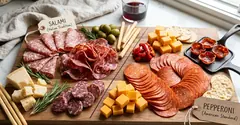
- Buy a whole stick, not pizza slices. Deli sticks are a different and much better product than the thin pre-sliced rounds.
- Slice thin on the diagonal for larger ovals.
- Temper 20 minutes.
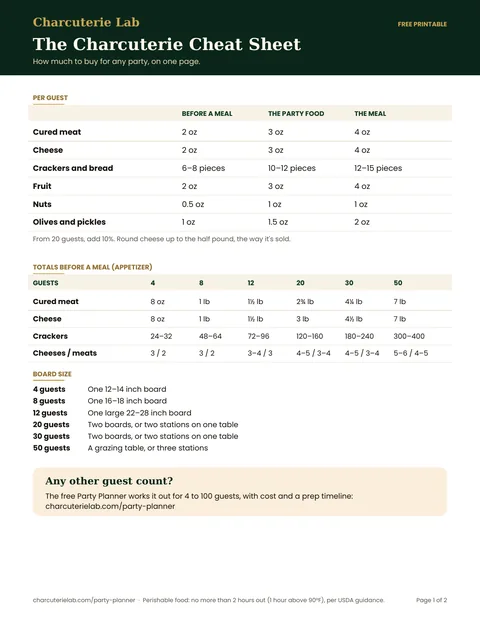
- Serve 1–1.5 oz per person.
- Consider crisping some. Two minutes in a dry pan turns pepperoni into crisp cups — genuinely one of the better cheap board items.
- Peel the casing.
- Fix: greasy on the board? It's warm. Pepperoni renders fat above about 72°F more than most dry salami.
What to buy
| Product | Where | Notes |
|---|---|---|
| Deli pepperoni stick | Deli counters, Italian markets | The board version. Ask for it whole. |
| Volpi or Boar's Head pepperoni | Grocery, deli counters | Widely available and reliable. |
| Ezzo or Hormel cup-and-char pepperoni | Online, restaurant supply | The kind that cups and crisps. Excellent crisped on a board. |
| Creminelli or Olli | Whole Foods, Target | Cleaner ingredients, small premium. |
| Soppressata piccante | Grocery, Whole Foods | The coarse Italian spicy salami — see its own page. |
| Calabrese salami | Italian delis | The Italian chili salami pepperoni is loosely modelled on. |
Label check: pork and beef, paprika and cayenne. Avoid long filler lists and "mechanically separated" anything.
Skip: thin pre-sliced pizza pepperoni for a board. It's engineered to melt, not to eat cold.
Ranked picks: our top-rated pepperoni is Boar's Head Pepperoni (4.5 out of 5), and the best value is Trader Joe's Ciao Pizza Prima Pepperoni. See the full ranking of the best pepperoni.
Gluten-free? Usually, but check the label. See Is pepperoni gluten-free?.
Quick FAQ
Is pepperoni Italian?
No — it's Italian-American, invented in New York in the early twentieth century. In Italy, peperoni means bell peppers.
Why does pizza pepperoni cup?
Natural casing and a particular fat structure make the edges contract faster than the middle when heated. Cup-and-char pepperoni is made for it.
Is it very spicy?
Moderately — paprika-warm rather than chili-hot for most brands.
How much per person?
1–1.5 oz.
Should I crisp it?
On a casual board, yes. Two minutes in a dry pan makes crisp cups that people finish first.