The short version
The tangy, smoky, semi-dry sausage that arrives in every holiday gift basket next to a block of cheddar. It's genuinely good, it's cheap, and the sourness that defines it comes from real fermentation rather than added vinegar.
What it is
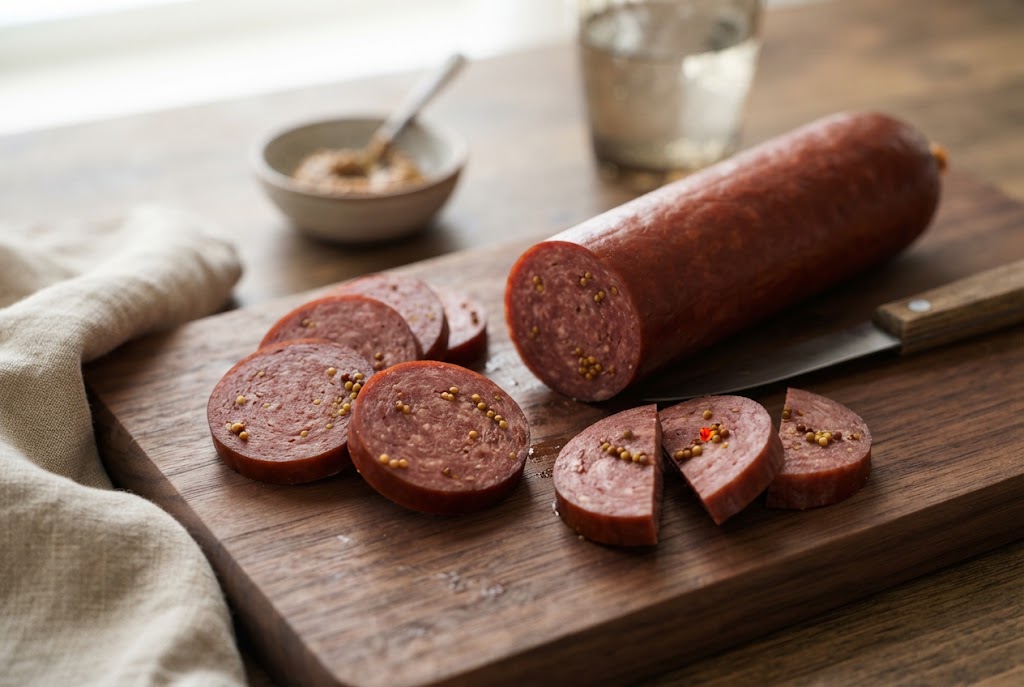
Summer sausage is beef, or beef and pork, ground with salt, mustard seed, black pepper and garlic, fermented with lactic cultures, then smoked and partially dried. The name comes from its keeping quality — it was made to survive summer without refrigeration.
- Taste
- tangy, smoky, peppery, mustardy, moderately salty
- Texture
- firm and semi-dry, slightly springy, not brittle
- Look
- deep red-brown, fine grain, often with visible mustard seeds
Lactic fermentation is the mechanism, and it's the same process that makes sourdough sour and yoghurt tangy. Cultures acidify the meat during the first days of curing, which both preserves it and produces the distinctive sour note. Cheap versions add vinegar to fake it — real ones taste rounder.
What it pairs with — and why
| Pair it with | Why it works |
|---|---|
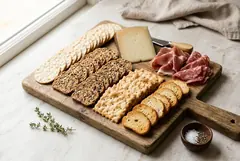
| Aged cheddar | The gift-basket pairing, and it's genuinely correct. Sharp cheese, tangy sausage. |
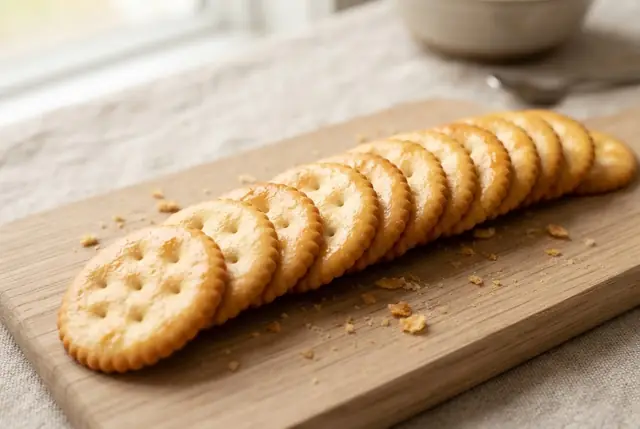
| Butter crackers | The American deli base. Sweet-ish cracker against sour sausage. |
| Grainy or yellow mustard | Mustard seed is already in the sausage. Doubling it works. |
| Pickles and pickled onion | Acid on acid, which works here because both are clean and sharp. |
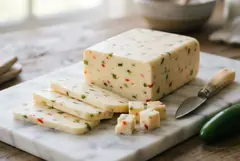
| Pepper jelly | Sweet heat against smoke and tang. |
| Swiss or Colby | Mild cheese as a counterweight. |
| Cold lager, cider, bourbon | Nothing precious required. |
Skip it with: delicate fresh cheeses and expensive aged European ones. Summer sausage is a casual-board meat and it flattens subtlety.
How to prep it for the board
- Slice thin, on the diagonal, for larger ovals.
- Fan the slices or stack them in short leaning piles.
- Temper 20 minutes.
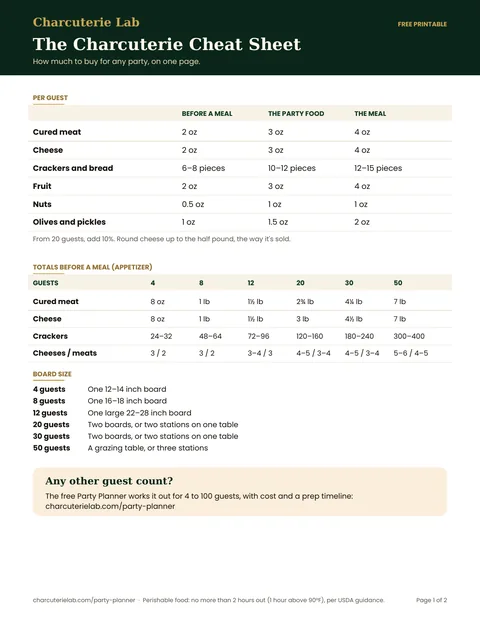
- Serve 1–2 oz per person. It's cheap — be generous.
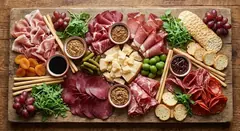
- Use it as the volume meat on a casual or holiday board and spend the money elsewhere.
- Peel the casing — most is inedible fibrous casing.
- Fix: slimy surface after a few days open? Wipe it, trim the face, and the interior is fine. Semi-dry sausages sweat.
What to buy
| Product | Where | Notes |
|---|---|---|
| Local butcher or Midwest producer | Midwest grocery, butchers, online | Wisconsin and Minnesota makers are the benchmark. Much better than mass-market. |
| Usinger's or Nueske's | Online, Midwest grocery | Well-known quality producers. |
| Hickory Farms / Johnsonville | Most grocery stores | The everyday version. Fine and cheap. |
| Venison summer sausage | Butchers, Midwest markets | Leaner and gamier. Worth trying. |
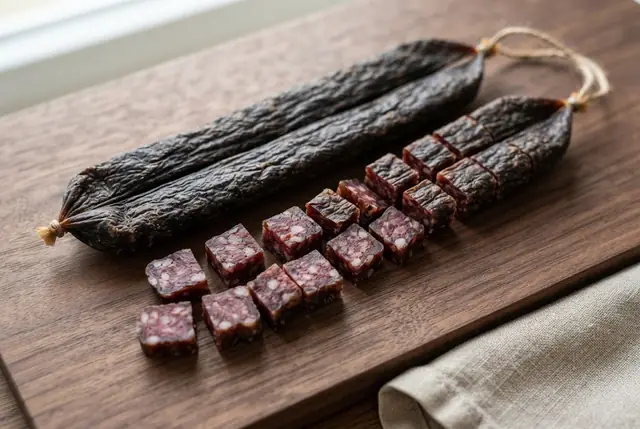
| Landjäger | German markets, Midwest | The Alpine relative — see its own page. |
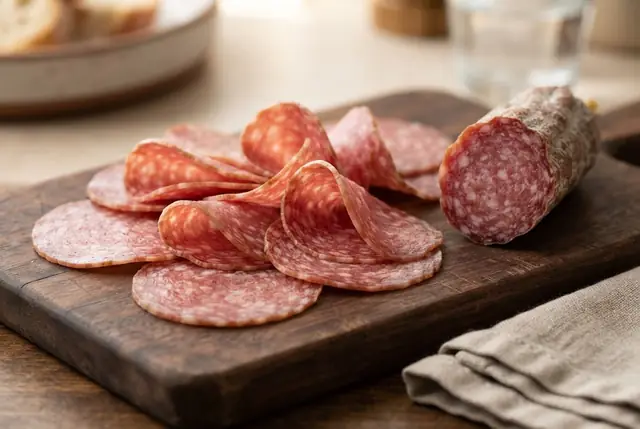
| Genoa salami | Any grocery | The Italian alternative — see its own page. |
Label check: cultured or fermented in the description rather than vinegar in the ingredients. Whole mustard seed visible in the slice is a good sign.
Skip: the sweetened honey-glazed versions on a savoury board. They belong with cheese and crackers at a gift-basket level, not on a composed board.
Ranked picks: our top-rated summer sausage is Cloverdale Original Tangy Summer Sausage (4.4 out of 5), and the best value is Trader Joe's Natural Turkey Summer Sausage. See the full ranking of the best summer sausage.
Gluten-free? Often, but check the label and gift boxes. See Is summer sausage gluten-free?.
Quick FAQ
Why is it called summer sausage?
It was made to keep without refrigeration through summer — fermented, smoked and partially dried.
Why is it tangy?
Lactic fermentation, the same process behind sourdough and yoghurt. Cheap versions fake it with vinegar.
Is it cooked?
Most commercial summer sausage is cooked during smoking and is ready to eat.
How much per person?
1–2 oz. It's inexpensive, so be generous.
Is it beef or pork?
Usually beef, or a beef-and-pork blend. Venison versions are common in the Midwest.