Quick Answer: Salami and Spanish chorizo are both cured pork sausages that are fermented, air-dried and sliced to eat cold. The difference is the seasoning: salami is built on garlic and pepper, while chorizo is built on pimentón, Spanish smoked paprika, which turns it brick red and gives it a smoky, sweet or spicy flavor. Watch out for Mexican chorizo: it's a raw sausage, sold soft in a casing or loose, and it has to be cooked. It doesn't belong on a board.
The chorizo mix-up that ruins boards
Before comparing anything, check which chorizo you have:
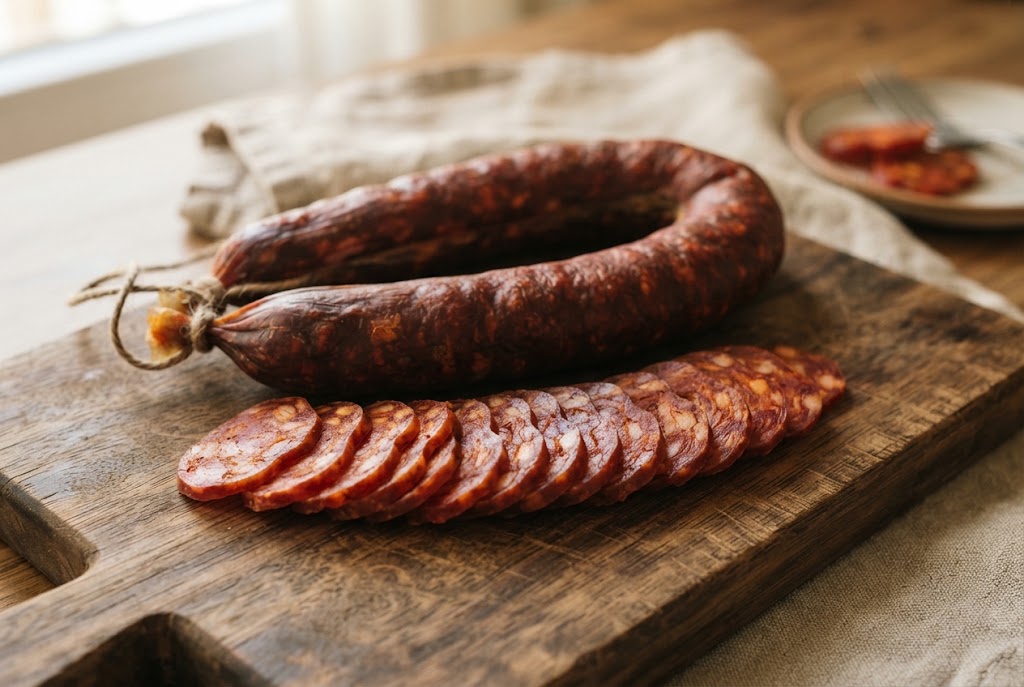
- Spanish chorizo is cured and firm. You can slice it and eat it. It's usually in the deli or the cured-meat case, often shaped like a horseshoe or a short stick.
- Mexican chorizo is raw, soft and usually in the refrigerated meat section. It's seasoned with fresh or dried chilies and vinegar and is meant to be crumbled into a pan.
- Spanish "chorizo para cocinar" (for cooking) is also soft and semi-cured. Cook it too.
If you can squeeze it like a fresh sausage, it needs a pan. If it's firm like salami, it's ready to slice.
Salami vs. Spanish chorizo at a glance
| Salami (Genoa-style) | Spanish chorizo | |
|---|---|---|
| Origin | Italy (and Italian-American) | Spain |
| Meat | Pork, sometimes pork and beef | Pork |
| Key seasoning | Garlic, black or white pepper, sometimes wine or fennel | Pimentón (smoked paprika), garlic |
| Color | Deep pink to red with white fat | Brick red to orange |
| Heat | Usually mild | Dulce (mild) or picante (hot) |
| Smoke | Rarely | Yes, from the smoked paprika |
| Texture | Fine to coarse, depending on style | Usually coarse |
| Best board role | The dependable base | The bold, smoky accent |
Why chorizo tastes so different
Pimentón is the whole story. Spanish paprika is made from peppers dried slowly over oak smoke and then ground. It brings three things at once: color, smoke and either sweetness (dulce) or heat (picante). The paprika's oils also dissolve into the fat, which is why chorizo's fat looks orange and why it leaves red oil on the board.
Salami's flavor comes from fermentation. Good bacteria sour the meat slightly as it cures, and the garlic and pepper sit on top of that tang. It's milder and more savory, with no smoke in most styles. There are dozens of salami styles, from fennel-scented finocchiona to spicy Calabrese. See our guide to the types of salami.
Which is better on a charcuterie board?
Use both if you have room. They do different jobs:
- Salami is the easy, crowd-pleasing base. Fold it, roll it or make a salami rose.
- Chorizo is the bold accent that makes the board taste like more than a deli tray.
Pair chorizo with:
- Cheese: Manchego is the classic. See chorizo and Manchego. Aged Gouda and mild goat cheese work too.
- Sweet: membrillo (quince paste), dates or fig jam.
- Briny: Marcona almonds, green olives and pickled guindilla peppers.
- Drinks: Tempranillo, Garnacha, a dry rosé or a cold lager.
Slice chorizo thin, on a slight diagonal, and peel off the casing first if it's thick or papery. Take both meats out of the fridge about 20 minutes before serving.
Food safety notes
- Never serve raw chorizo cold. Mexican chorizo and chorizo for cooking must be cooked thoroughly.
- Keep the board out no more than 2 hours, or 1 hour above 90°F.
- For pregnant guests, the CDC advises heating dry sausages like salami and chorizo until steaming hot.
How much to buy
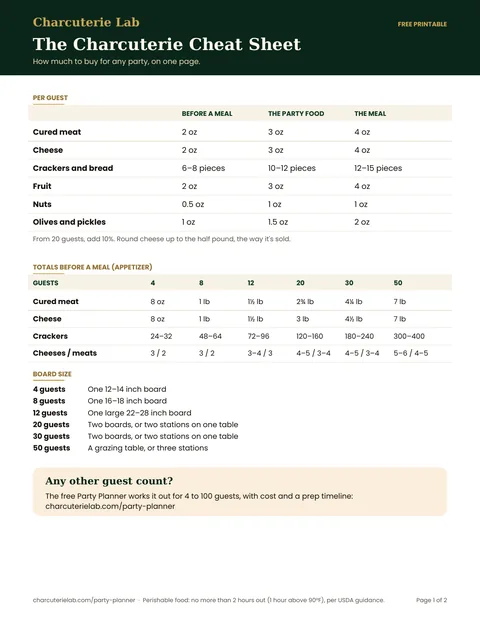
Meat in total: 2 oz per guest before a meal, 3 oz when the board is the party food and 4 oz when it's dinner. Chorizo is rich and strongly flavored, so it usually works best as one-third or less of the meat.
Which should you buy?
- For a mixed crowd: Genoa salami as the base, with a little chorizo dulce.
- For heat lovers: chorizo picante, or a spicy Calabrese salami.
- For a Spanish or tapas board: Spanish chorizo with Manchego, olives and Marcona almonds.
- For tacos or eggs: Mexican chorizo, cooked.
Our rankings of the best Spanish chorizo and the best salami brands name the ones worth buying.