The short version
Monterey Jack with jalapeño and sweet pepper folded into the curd. It is a mild cheese carrying a mild heat, which sounds unremarkable until you notice that most supermarket boards are three shades of mild with nothing to interrupt them. Pepper jack is the two-dollar fix. It is also, on a Tex-Mex or budget board, the cheese people reach for first.
What it is
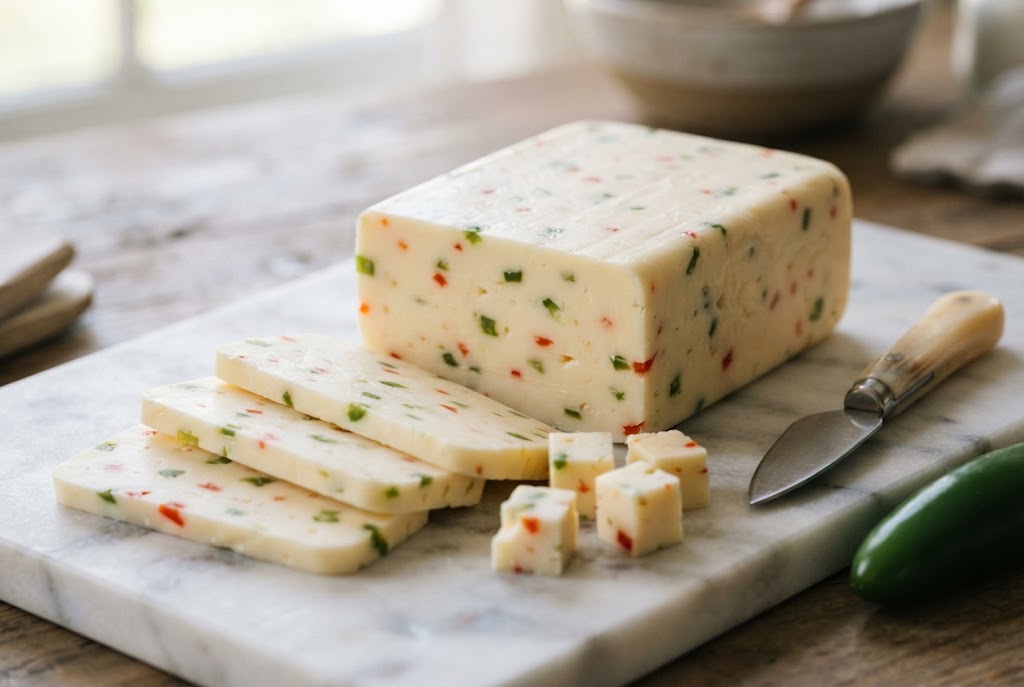
A young American cow's milk cheese, high in moisture and very low in acid, with chopped chilies mixed in before pressing. Monterey Jack itself was developed in California in the nineteenth century; the peppered version is a modern supermarket-era variation.
- Taste
- mild sweet milk, then a gentle vegetal chili warmth
- Texture
- soft, springy, almost squeaky
- Look
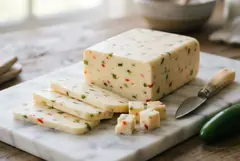
- ivory paste flecked with green and red
The mechanism is fat blunting capsaicin. Capsaicin is fat-soluble, so in a cheese with around 30 percent fat much of it is bound up and released slowly. That is why pepper jack is far milder than the same weight of chili eaten alone, and why it is safe to put in front of guests who claim not to like spicy food.
What it pairs with — and why
| Pair it with | Why it works |
|---|---|
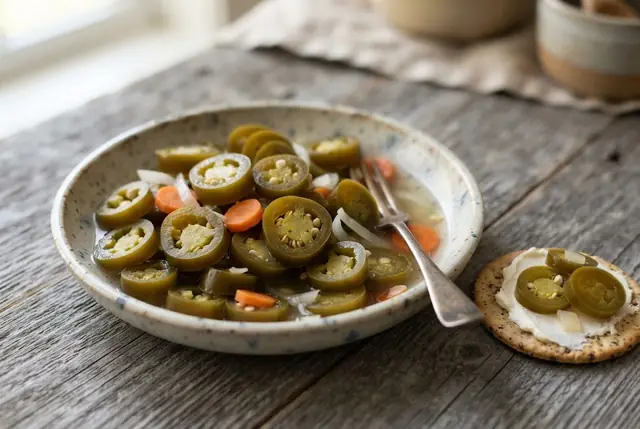
| Pickled jalapeños | The same pepper in its sharp form beside its mild one. Acid is what the cheese is missing. |
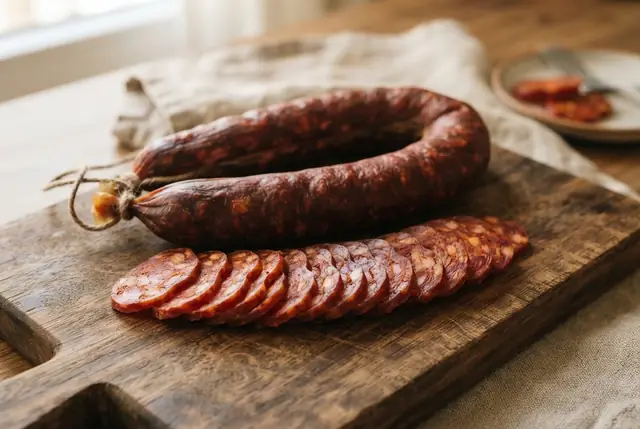
| Chorizo | Paprika, pork fat and chili. The board's whole Tex-Mex corner in two items. |
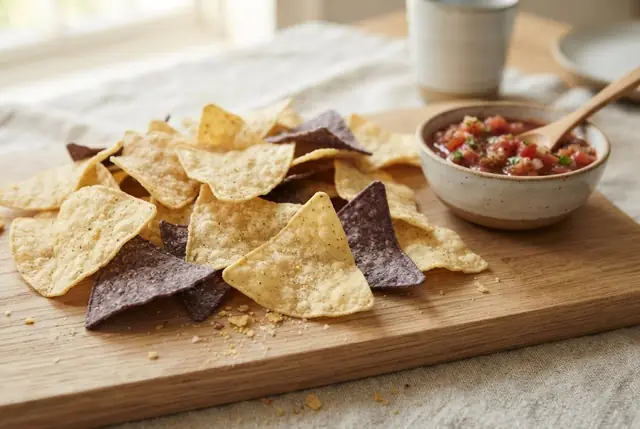
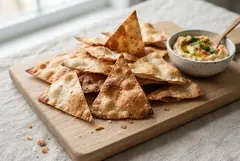
| Tortilla chips | The right base — sturdy, salty, neutral. |
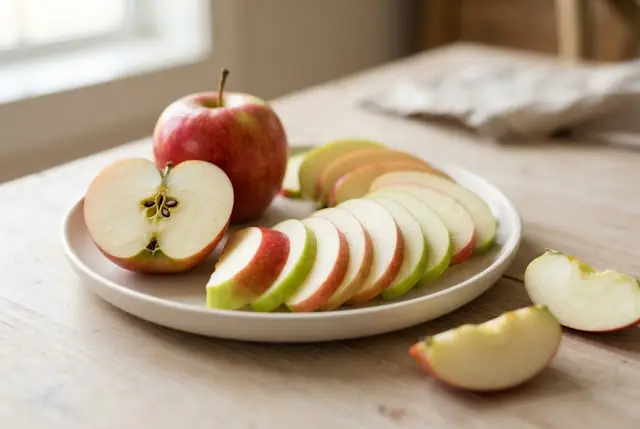
| Apples | Crisp acid and sugar against heat and fat. It works better than people expect. |
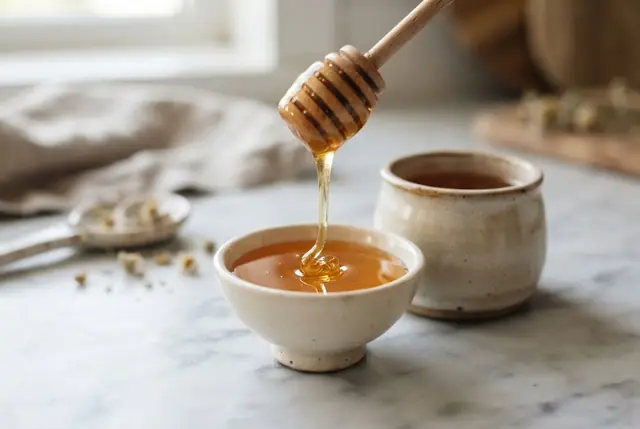
| Honey | Sweet against chili is a rule. A thread of honey over a cube of pepper jack converts sceptics. |
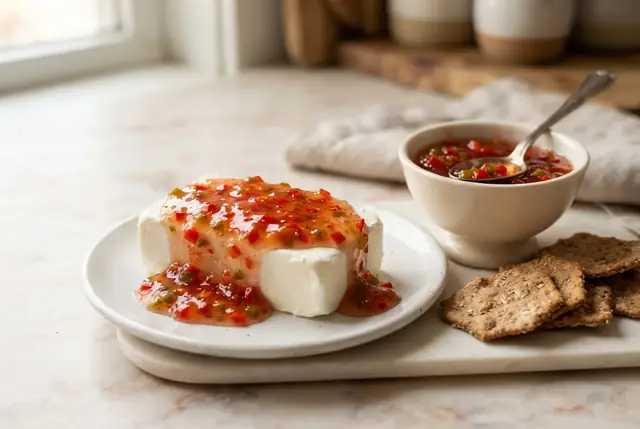
| Pepper jelly | Doubling down deliberately. Sweet, hot and sticky on mild cheese is a Southern classic. |
Skip it with: fine cured ham, bloomy French cheese and delicate preserves. It is a loud cheese in quiet company.
How to prep it for the board
- Temper it for 20 minutes. Cold, the heat and the milk both disappear.
- Cube it or cut batons. It is too soft to shave.
- Cut across the flecks so the peppers show on the face.
- Put acid beside it — pickles, apple, or something vinegary.
- Serve 1 to 2 oz per person.
- Keep it away from the delicate cheeses on the board.
- Fix: tasting only of salt? That is a very young industrial block. Look for a creamery version, or add honey and let the sweetness do the work.
What to buy
| Product | Where | Notes |
|---|---|---|
| Pepper jack block | Any grocery | The default. Cheap and consistent. Buy a block, not slices. |
| Creamery pepper jack | Cheese counters, farmers markets | Better milk and a longer make. Noticeably more flavour. |
| Habanero jack | Larger supermarkets | Genuinely hot. Label it on the board. |
| Dry Jack | Cheese counters | Aged Monterey Jack, no peppers. Hard, nutty and much more interesting. |
| Queso fresco with chili | Mexican grocers | Fresher, crumblier, saltier. A different route to the same idea. |
Label check: peppers should be visible throughout, not concentrated at one end of the block.
Skip: processed pepper jack slices. They will not sit on a board without sweating.
Ranked picks: our top-rated pepper jack is Cabot Pepper Jack (4.7 out of 5), and the mildest is Tillamook. See the full ranking of the best pepper jack.
Quick FAQ
How spicy is pepper jack?
Mild. The chilies are folded into a very mild cheese and the fat blunts most of the heat. It is warmth rather than burn.
What peppers are in it?
Usually jalapeño and sweet red pepper, sometimes serrano or habanero in hotter versions. The label says.
Does it belong on a real charcuterie board?
On an American, Tex-Mex or budget board, yes. It is the cheese that gives an otherwise mild lineup something to do.
Does it melt well?
Extremely well, which is why it is a sandwich and burger cheese. On a board serve it cold-cut.
How much per person?
One to two ounces.