The short version
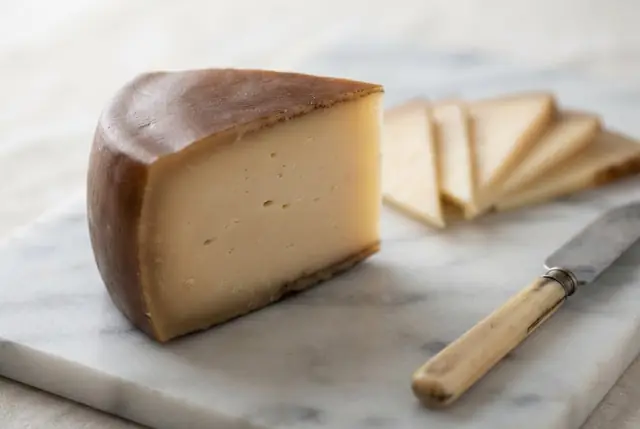
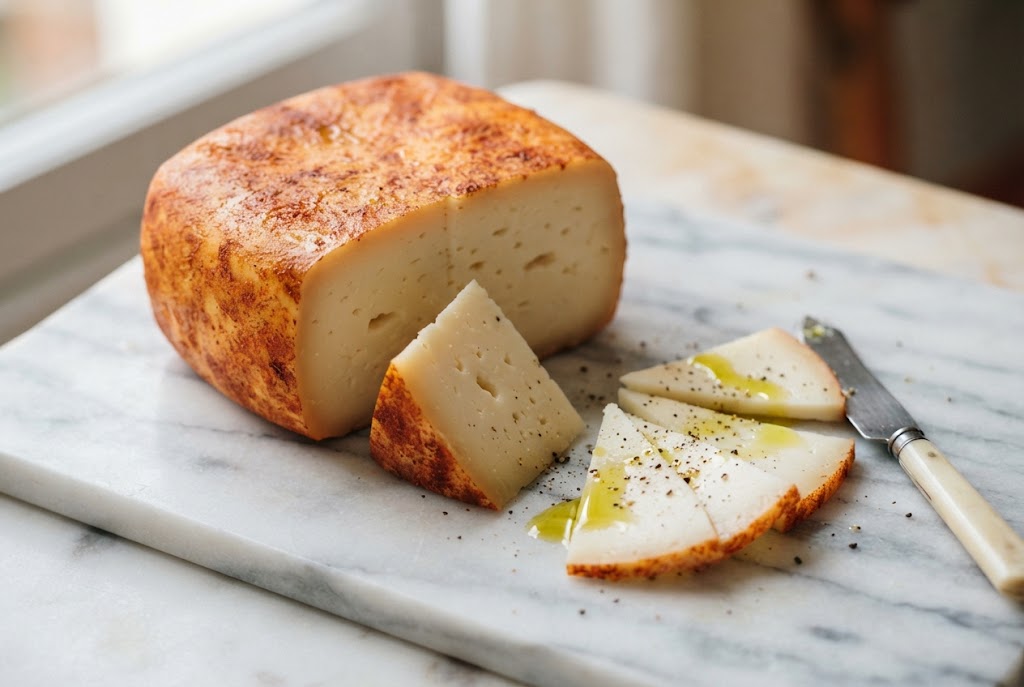
A square-edged cow's-milk cheese from the island of Menorca, rubbed with paprika and olive oil so the rind turns deep orange. Buttery, tangy and salty. It sits between cheddar and Manchego, and almost nobody outside Spain knows it.
What it is
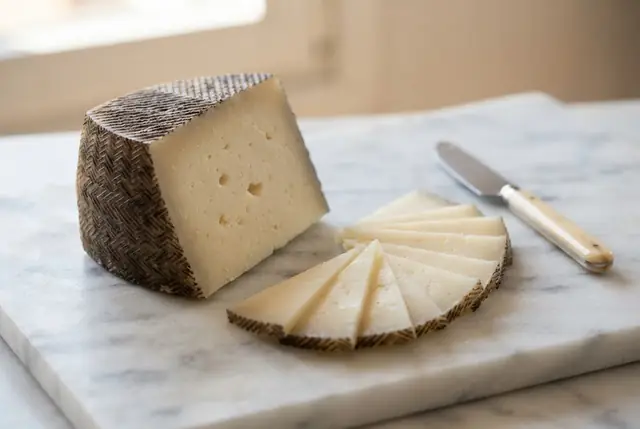
Mahón-Menorca DOP is made from cow's milk on an island where sea spray salts the pasture — producers and cheesemongers both credit that for its faintly saline edge. The wheels are pressed in cloth, which leaves a characteristic square shape with rounded edges and a puckered top.
- Taste
- buttery, tangy, salty, nutty with age
- Texture
- supple and dense when young; firm, dry and crystalline when aged
- Look
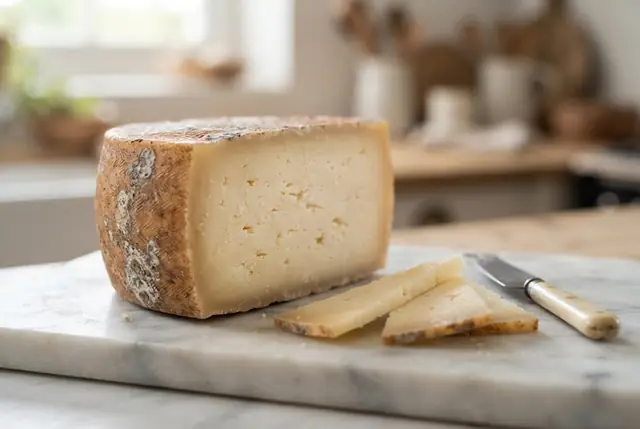
- pale ivory to deep gold paste, orange paprika-rubbed rind
Salinity is the mechanism, and it's the thing that distinguishes Mahón from every other cow's-milk cheese in its class. Where cheddar goes acidic and gouda goes sweet with age, Mahón goes savoury-saline — closer to the way a hard sheep cheese behaves, in a cow's-milk cheese at a cow's-milk price.
What it pairs with — and why
| Pair it with | Why it works |
|---|---|
| Olive oil and cracked pepper | The traditional Menorcan service: cut into wedges, drizzle, pepper. Do this. |
| Membrillo (quince paste) | Same logic as Manchego. Floral sweetness against salt. |
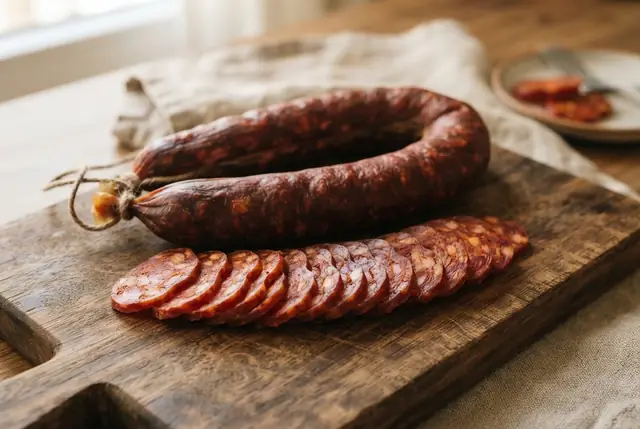
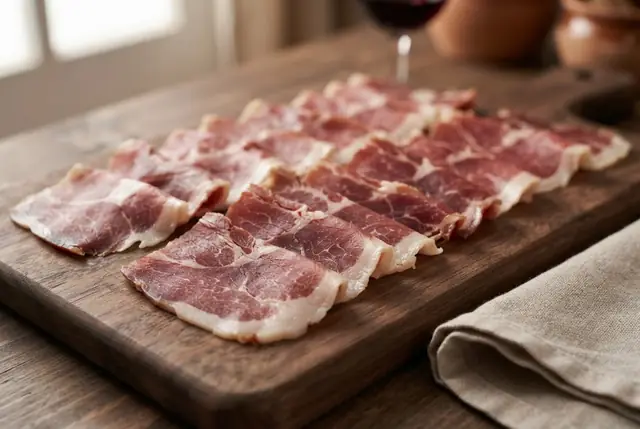
| Jamón serrano and chorizo | The Spanish plate. Paprika on the rind echoes paprika in the meat. |
| Marcona almonds | Nutty and salted, with a nutty salted cheese. |
| Green olives — gordal, manzanilla | Brine on brine, but both are mild enough that it works. |
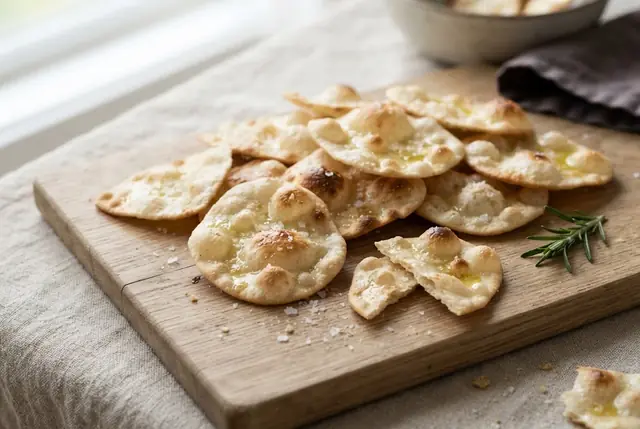
| Olive oil crackers | Fruity, peppery, Mediterranean. |
| Rioja, Cava, dry sherry | Spanish across the board. |
Skip it with: delicate fresh cheeses. And go easy pairing it with feta or pecorino — three salty cheeses is a monotonous board.
How to prep it for the board
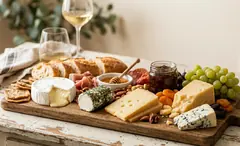
- Cut into thin triangular wedges so the orange rind edge shows. It's a good-looking cheese and the rind is the tell.
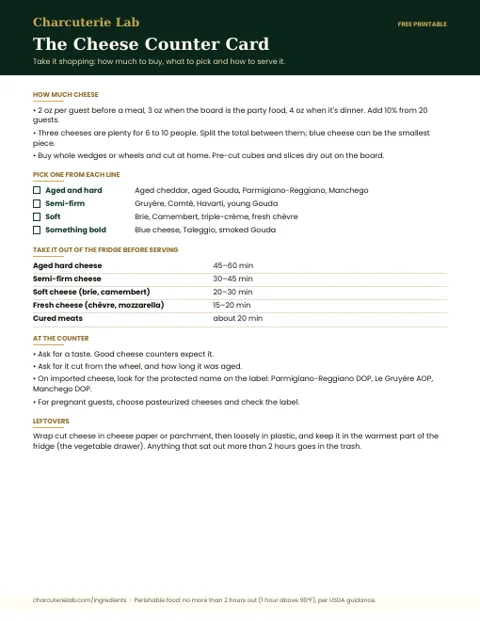
- Temper 30 minutes.
- Drizzle olive oil over the wedges and grind pepper on top. This is the traditional service and it takes ten seconds.
- Serve 1–2 oz per person.
- Buy semicurado for general boards, curado if the cheese is the point.
- Don't eat the rind — the paprika rub is for protection, not flavor.
- Fix: dry at the face? Trim thinly. Aged Mahón dries fast once cut.
What to buy
| Product | Where | Notes |
|---|---|---|
| Mahón-Menorca DOP, semicurado | Cheese counters, Whole Foods, Spanish grocers | Two to five months. Supple and buttery. The best starting point. |
| Mahón-Menorca DOP, curado | Cheese counters, specialty | Five to ten months. Firmer, saltier, more crystalline. |
| Mahón añejo | Specialty shops | Over ten months. Hard and intense. Rare in the US. |
| Manchego | Most grocery | The better-known Spanish alternative — see its own page. |
| Idiazábal | Cheese counters | Smoked Basque sheep cheese. A different, bolder direction. |
| Any Spanish specialty grocer | Local, or online | Best selection, and often artesano raw-milk wheels. |
Label check: the DOP mark, and artesano if you can find it — that means raw milk and hand production rather than industrial.
Skip: assuming the orange rind means it's flavored. It's a paprika-and-oil rub applied to the outside for protection; the paste inside is not spiced.
Quick FAQ
Is Mahón a sheep cheese like Manchego?
No — it's cow's milk. That's the main difference, and it's why it's buttery rather than nutty.
Why is the rind orange?
It's rubbed with paprika and olive oil during aging, as protection. The paste isn't spiced.
What does it taste like?
Buttery and tangy with a saline edge — somewhere between cheddar and Manchego.
Which age should I buy?
Semicurado for a general board, curado if you want more intensity.
How much per person?
1–2 oz.