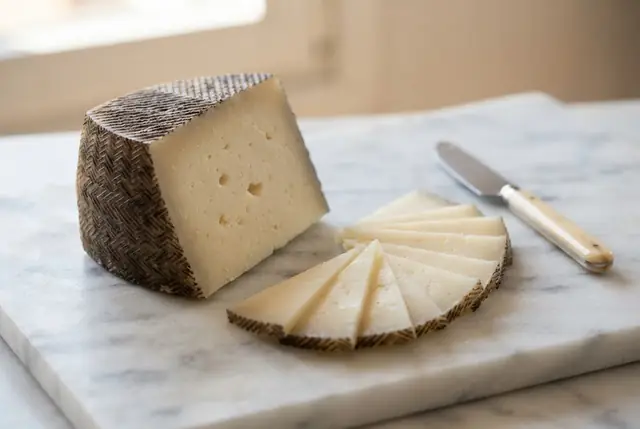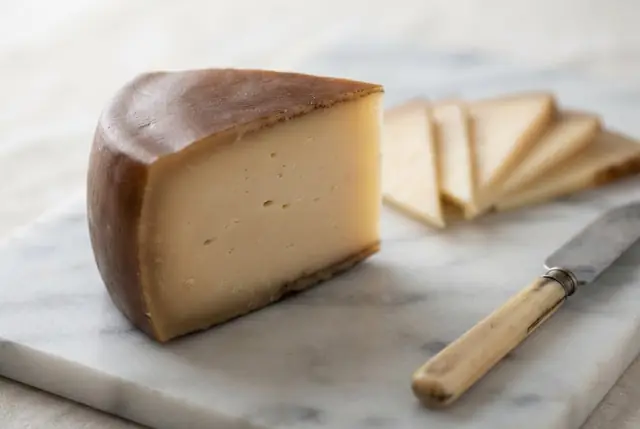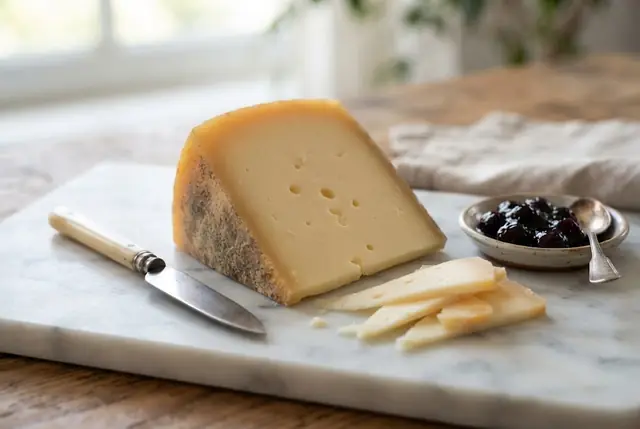
The short version
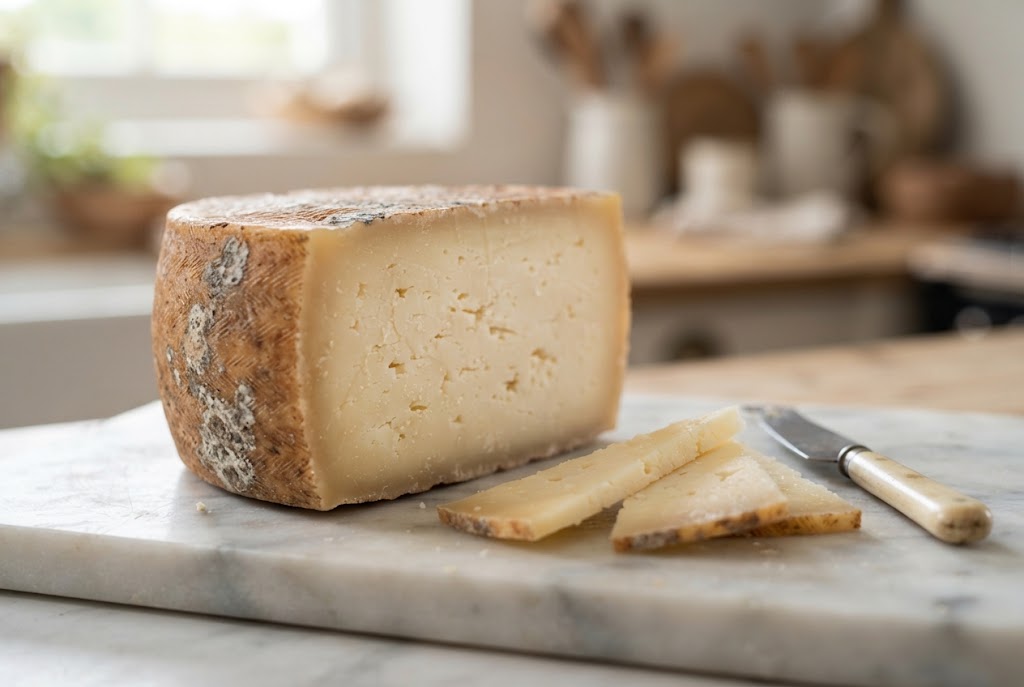
A firm raw sheep's-milk cheese from the Roncal Valley in Navarre — the first Spanish cheese ever granted protected status, in 1981. Nuttier, saltier and a little wilder than Manchego, and roughly the same price.
What it is
Roncal DOP is made in seven villages in a single Pyrenean valley, from raw milk of Latxa and Rasa sheep, and aged at least four months. Production is small compared to Manchego, and the cheese is made only from milk produced between December and July.
- Taste
- nutty, buttery, salty, faintly gamey and herbal
- Texture
- firm and dense, slightly granular with age
- Look
- ivory to deep straw paste, hard brown natural rind
Raw milk and a single valley are the mechanism. Manchego is made across a large region, much of it from pasteurized milk at industrial scale. Roncal is raw milk from one valley's flocks, which means seasonal and pasture variation carries through — the reason it tastes more particular than Manchego at a similar age.
What it pairs with — and why
| Pair it with | Why it works |
|---|---|
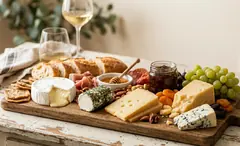
| Membrillo (quince paste) | The Spanish sheep-cheese pairing. Floral sweetness against nutty salt. |
| Marcona almonds | Nut on nut, both Spanish, both salted. |
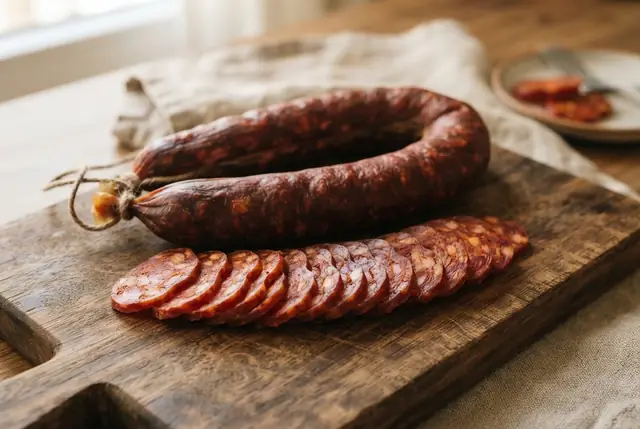
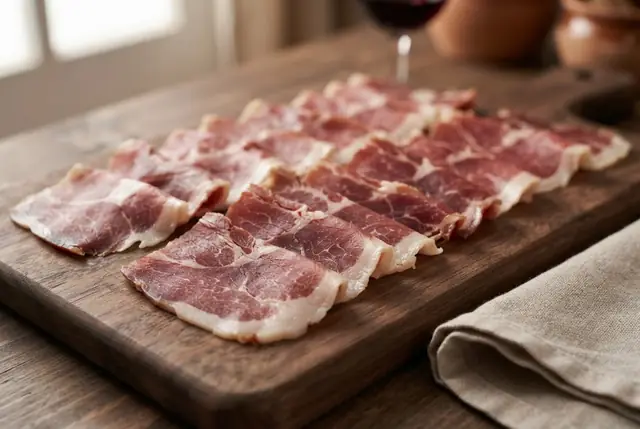
| Jamón serrano and chorizo | Salt, cure and paprika with a firm, gamey cheese. |
| Fresh pear | Sweet water cutting salt and density. |
| Walnuts and honey | Tannin and sweetness framing a savory cheese. |
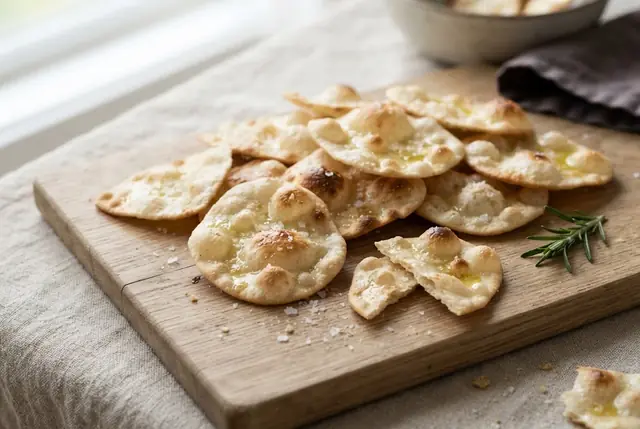
| Olive oil crackers | Fruity and peppery, and Mediterranean throughout. |
| Rioja, Navarra reds, dry sherry | Regional and structured. |
Skip it with: delicate fresh cheeses. And avoid serving Roncal, Manchego and Ossau-Iraty together unless a sheep's-milk comparison is the point — three similar cheeses reads as one long note.
How to prep it for the board
- Cut thin triangular wedges with the rind on the outer edge, Spanish style.
- Temper 30 minutes.
- Serve 1–2 oz per person.
- Use it in place of Manchego when you want the same role played with more character. Same price, more interesting cheese.
- Put membrillo and Marcona almonds beside it.
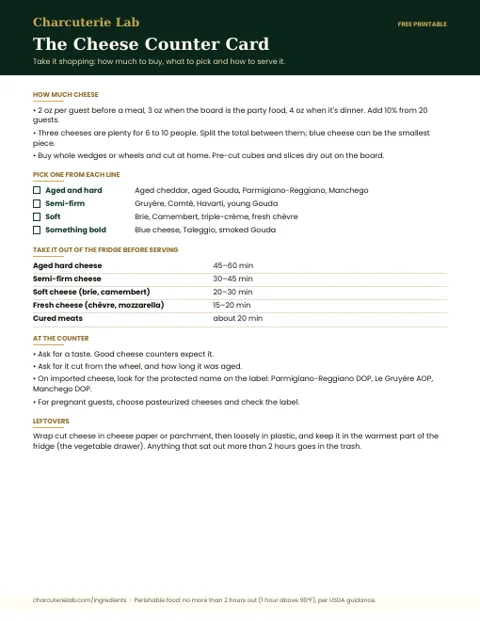
- Trim the hard rind.
- Fix: dry at the cut face? Trim thinly and rewrap in parchment. Raw-milk sheep cheeses dry fast once opened.
What to buy
| Product | Where | Notes |
|---|---|---|
| Roncal DOP | Cheese counters, Whole Foods, Spanish grocers | The real thing. Raw milk, from the Roncal Valley. |
| Idiazábal | Cheese counters | The neighboring Basque cheese, often smoked — see its own page. |
| Zamorano | Cheese counters, specialty | Another Spanish sheep cheese. Firmer and sharper. |
| Manchego | Most grocery | The widely available default — see its own page. |
| Ossau-Iraty | Cheese counters | The French Basque equivalent, softer and gentler. |
| Spanish specialty grocer | Local, or online | Best price and selection for all of these. |
Label check: the DOP mark and raw milk (leche cruda). Roncal is always raw milk by regulation, so pasteurized cheese labeled Roncal isn't the real thing.
Skip: buying it if you already have two other sheep's-milk cheeses on the board. It deserves to be noticed.
Quick FAQ
Roncal or Manchego?
Roncal is raw milk from a single valley — nuttier, saltier and more particular. Manchego is broader and more consistent. Roncal is the more interesting buy at a similar price.
Is it a strong cheese?
Firm and savory with a faint gamey edge, but not pungent. Comparable to a good aged Manchego.
Can you eat the rind?
No, trim it.
Was it really Spain's first protected cheese?
Yes — it received Denominación de Origen status in 1981, ahead of Manchego.
How much per person?
1–2 oz.