The short version
A firm Basque sheep's-milk cheese with a gentle natural smoke. Nutty, buttery and savory, with the smoke sitting behind the flavor rather than in front of it. If smoked gouda has ever tasted artificial to you, this is what smoked cheese is supposed to be.
What it is
Idiazábal DOP is made in the Basque Country and Navarre from raw milk of Latxa and Carranzana sheep. The smoking is traditional rather than decorative: shepherds stored wheels in the rafters of huts heated by wood fires, and the smoke was a by-product. Not every wheel is smoked, and the smoked ones use beech, hawthorn or cherry.
- Taste
- nutty, buttery, savory, with light woodsmoke behind it
- Texture
- firm and compact, slightly granular with age
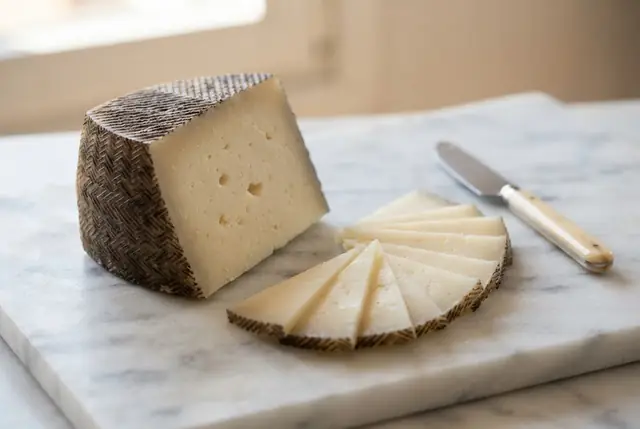
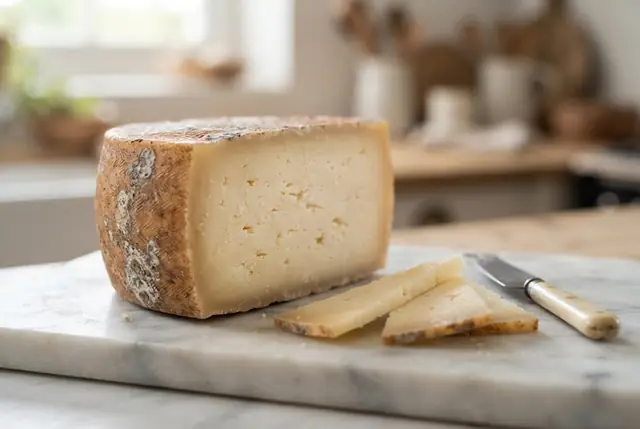
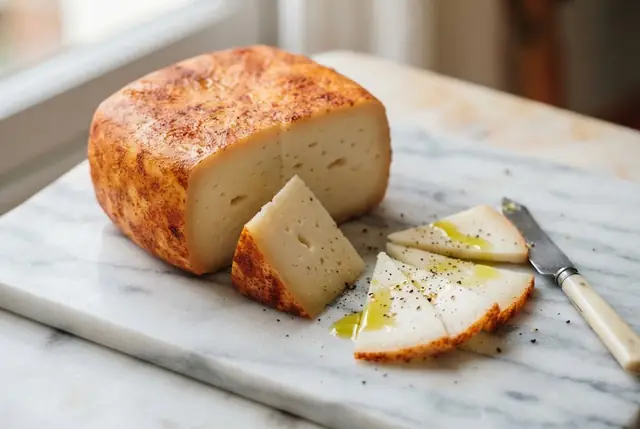
- Look
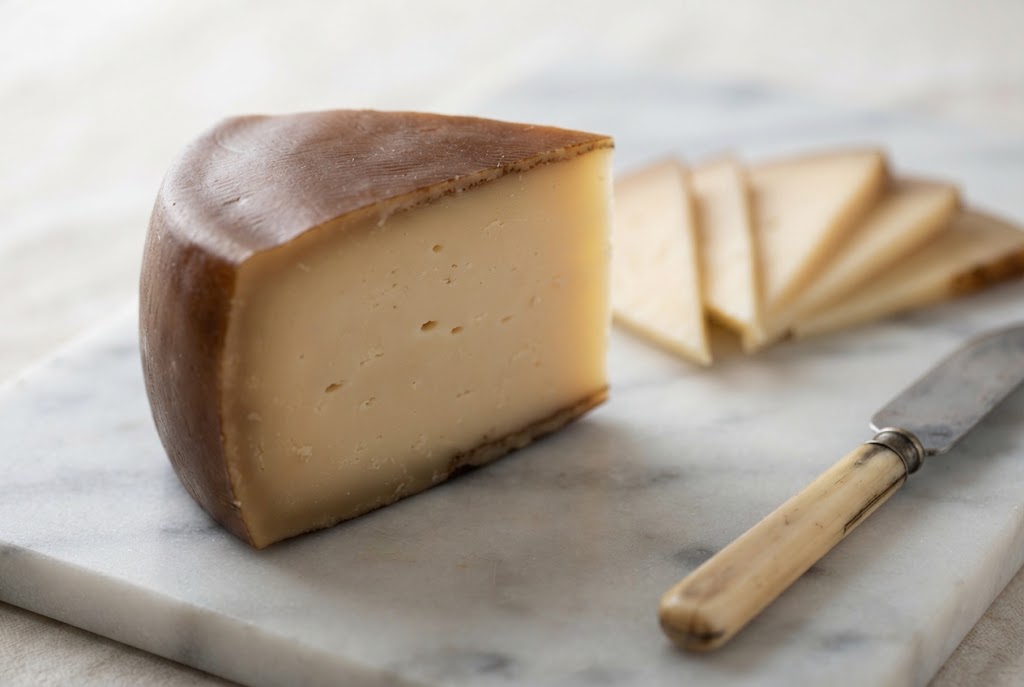
- ivory paste, hard amber-brown rind
Restraint is the mechanism, and it's the whole difference from commercial smoked cheese. Industrial smoking is applied fast and hard, often with liquid smoke, and it dominates. Idiazábal's smoke comes from weeks of ambient exposure and reads as one note among several — you taste sheep's milk first and smoke last.
What it pairs with — and why
| Pair it with | Why it works |
|---|---|
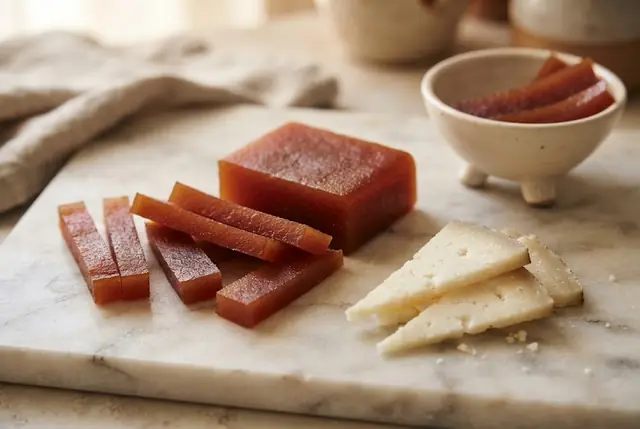
| Membrillo (quince paste) | Floral sweetness against smoke and salt. The Spanish standard for sheep cheese. |
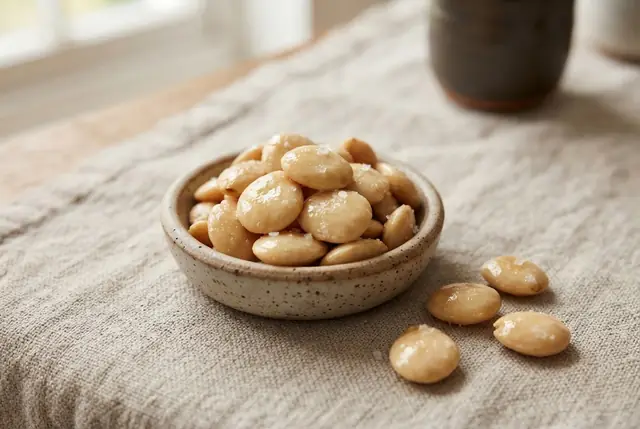
| Marcona almonds | Nut on nut, both Spanish, both salted. |
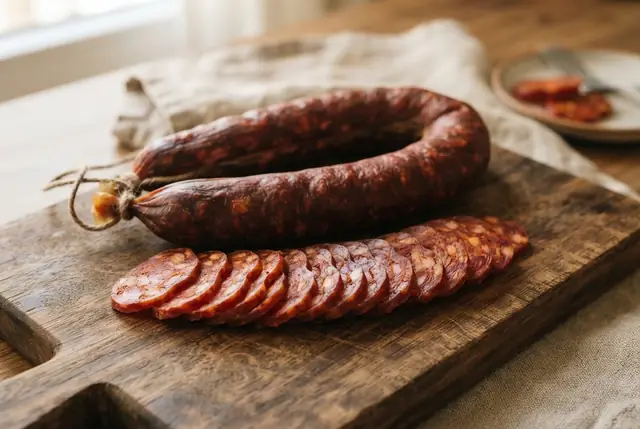
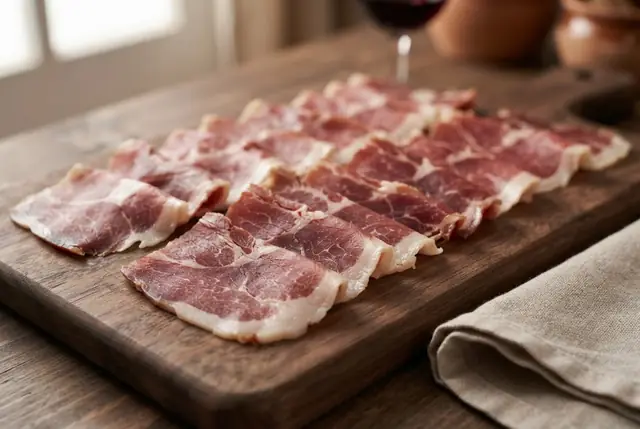
| Jamón serrano and chorizo | Smoke, paprika and cure. Everything in the same register. |
| Honey | Sweetness rounds off woodsmoke better than jam does. |
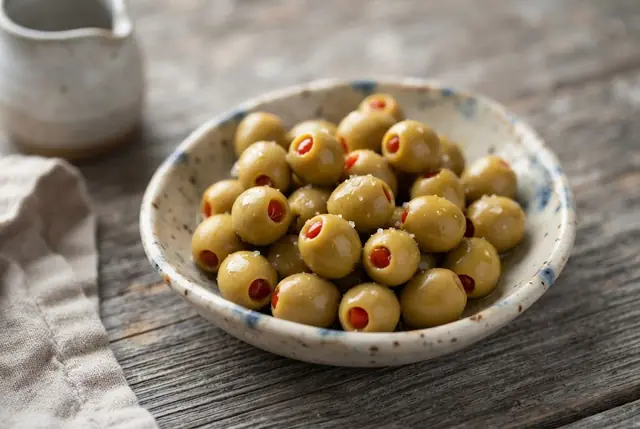
| Green olives — gordal, manzanilla | Brine and bitterness against a rich smoked cheese. |
| Roasted red peppers | Sweet and smoky, echoing the cheese from a different direction. |
| Rioja, Txakoli, dry sherry | Basque and Riojan wines. |
Skip it with: smoked gouda or any other smoked item on the same board — one smoked thing is a feature, two is a theme nobody asked for. Delicate fresh cheeses also lose here.
How to prep it for the board
- Cut thin triangular wedges with the rind on the outer edge, Spanish style.
- Temper 30 minutes. The smoke is subtle and cold suppresses it entirely.
- Serve about 1 oz per person. It's rich and distinctive; people take small pieces.
- Say it's smoked when you serve it. People expect sheep cheese to taste like Manchego and the smoke surprises them.
- Put membrillo or honey right beside it.
- Don't eat the rind.
- Fix: if the smoke seems to have vanished, the wedge is too cold. Give it another twenty minutes.
What to buy
| Product | Where | Notes |
|---|---|---|
| Idiazábal DOP, smoked (ahumado) | Cheese counters, Whole Foods, Spanish grocers | The version worth buying. Check the label — not all wheels are smoked. |
| Idiazábal DOP, unsmoked | Cheese counters | Nutty and excellent, just without the distinguishing feature. |
| Roncal | Cheese counters, specialty | The Navarrese neighbor, unsmoked. Similar family. |
| Manchego | Most grocery | The widely available Spanish sheep cheese — see its own page. |
| Ossau-Iraty | Cheese counters | The French Basque cousin, just over the border. |
| Spanish specialty grocer | Local, or online | Best price and selection. |
Label check: ahumado means smoked. The DOP mark matters — "Basque-style smoked cheese" without it is usually a cow's-milk imitation with liquid smoke.
Skip: anything listing "smoke flavoring." Real Idiazábal is smoked over wood, and the difference is obvious.
Quick FAQ
Is Idiazábal always smoked?
No. Both smoked and unsmoked wheels are made. Look for ahumado if you want the smoke.
How smoky is it?
Gentle — the smoke sits behind the nutty sheep's-milk flavor rather than in front of it. Far subtler than commercial smoked cheese.
Idiazábal or Manchego?
Manchego is the safe, widely-liked one. Idiazábal is more distinctive and more expensive.
Can you eat the rind?
No. Trim it.
How much per person?
About 1 oz. It's rich and assertive.