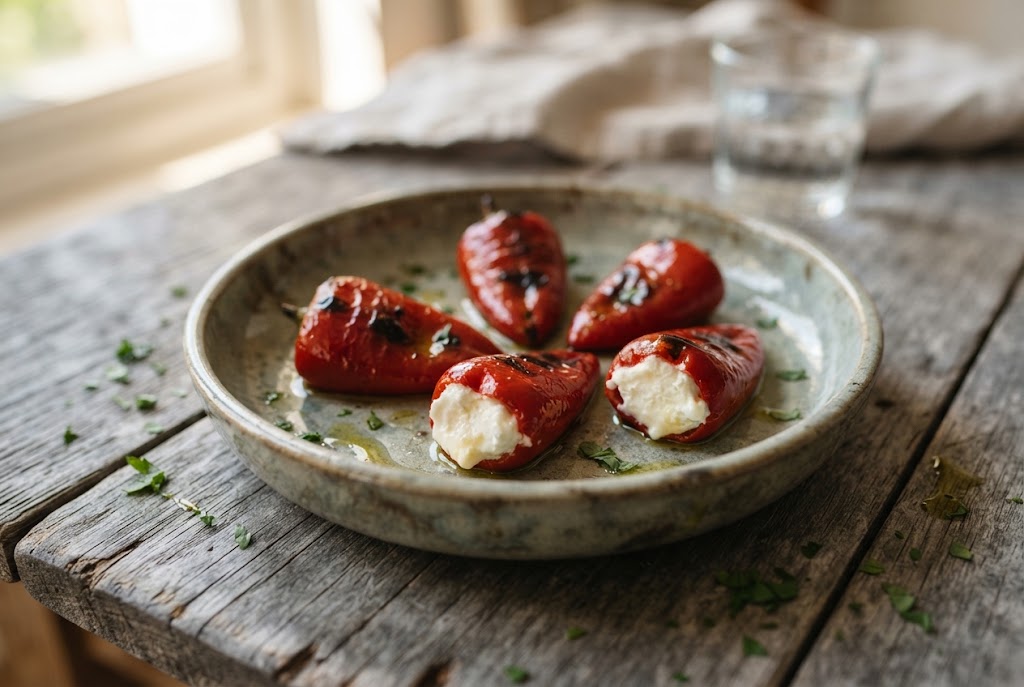
The short version
A small Navarran pepper, roasted directly over a wood fire and peeled by hand rather than with water or lye. That process keeps the flesh firm and concentrates the sugars, so a piquillo is sweeter, deeper and less watery than any jarred roasted red pepper. They cost two or three times as much and are worth it.
What it is
The Piquillo de Lodosa, grown in Navarra and protected by a DOP. The peppers are small, triangular and thick-walled. After roasting they are peeled dry, packed in their own juices, and sold whole in jars or tins.
- Taste
- deep sweetness, wood smoke, a little acid, no heat
- Texture
- firm and silky at once, holding its shape
- Look
- dark glossy red, small, pointed
The mechanism is dry peeling. Ordinary roasted peppers are peeled in water baths, which pulls out sugar and flavour along with the skin and leaves them waterlogged. Piquillos are peeled by hand while dry, so everything the fire concentrated stays in the pepper. That single step is the entire difference in taste.
What it pairs with — and why
| Pair it with | Why it works |
|---|---|
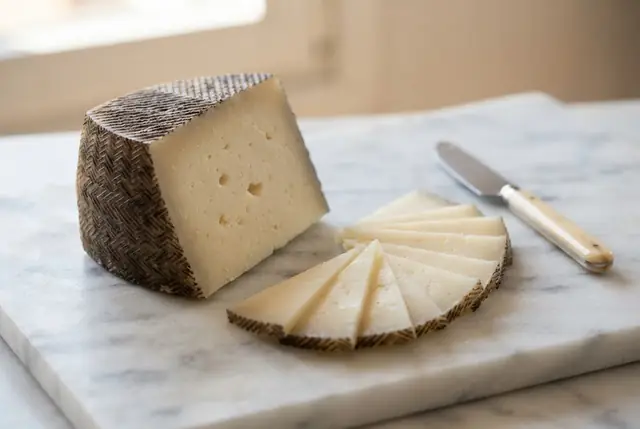
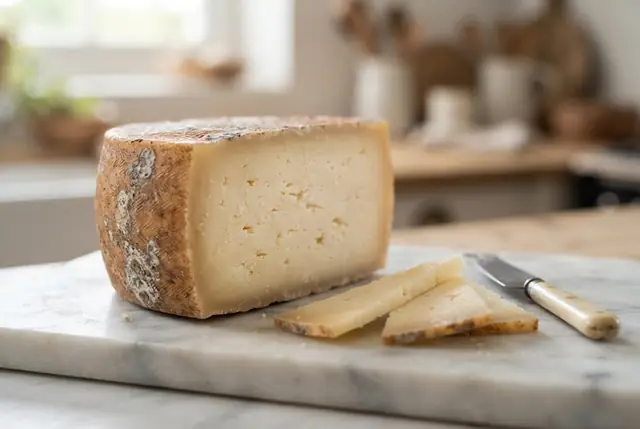
| Manchego | Spain on Spain. Sheep-milk salt and nuttiness against roasted sugar and smoke. |
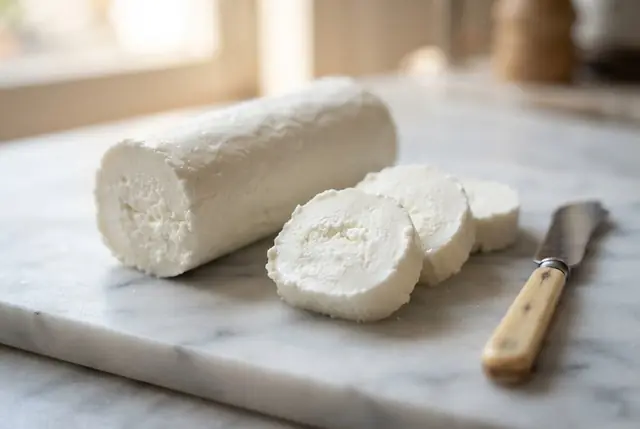
| Fresh goat cheese | Stuff the peppers with it. Chalky lactic tang inside sweet smoky flesh is one of the best two-ingredient dishes there is. |
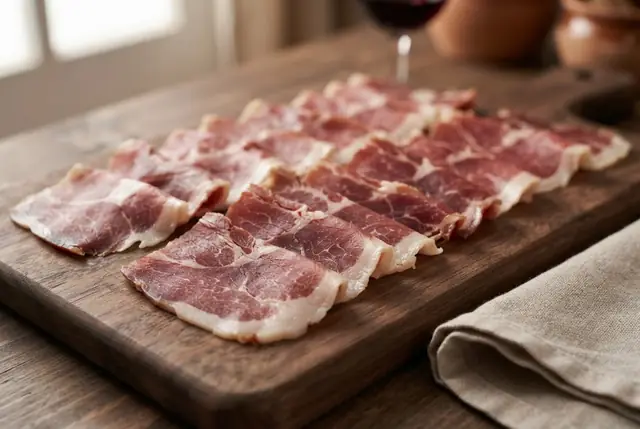
| Jamón serrano | Salt, fat and sweetness. Drape a slice over a split pepper. |
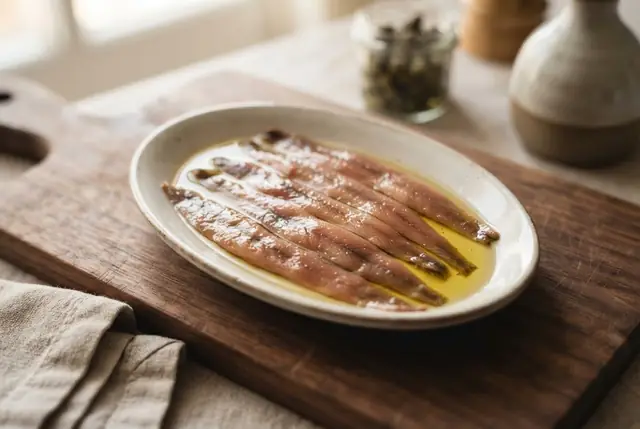
| Anchovies | The Catalan combination. Sweet, salty, oily, all at once. |
| Roncal | Another Navarran sheep cheese. Same region, same table. |
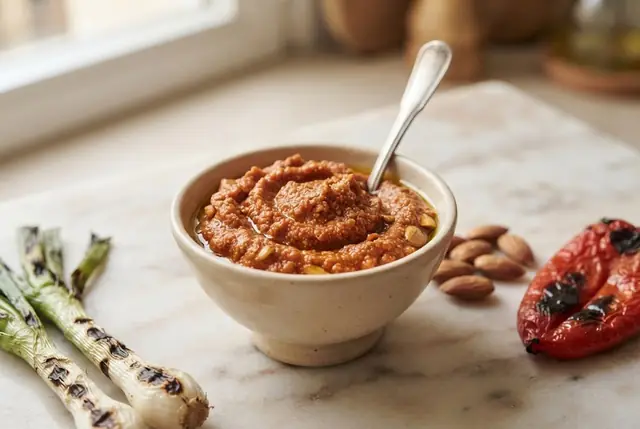
| Romesco | Pepper sauce beside whole peppers. Doubling down works here because the textures differ. |
Skip it with: blue cheese. Sweet smoke and blue funk do not reconcile.
How to prep it for the board
- Drain and blot. They carry juice.
- Serve them whole if they are small. They look far better than strips.
- Or split and fan them if they are large.
- Dress with good olive oil, a little sherry vinegar and salt.
- Stuff them with goat cheese for a five-minute upgrade that reads as a dish.
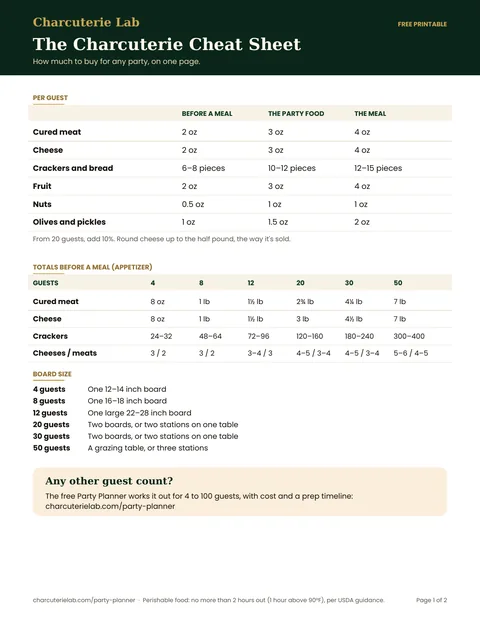
- Serve 0.75 oz per person — one or two peppers.
- Fix: tasting flat? They need salt and acid. Sherry vinegar, not lemon.
What to buy
| Product | Where | Notes |
|---|---|---|
| Piquillo de Lodosa DOP | Spanish delis, specialty | The reference. Firm, dark and concentrated. Worth the price. |
| Jarred piquillo peppers | Whole Foods, larger supermarkets | The common version. Good, softer, cheaper. |
| Tinned piquillos | Spanish delis | Often better than jarred and usually less expensive. |
| Stuffed piquillos | Spanish delis, tapas counters | Filled with cheese or cod. Ready to serve. |
| Pimientos del piquillo in oil | Specialty | Packed in oil rather than juice. Richer, good with bread. |
Label check: it should say Navarra or Lodosa, and the peppers should be small and dark. Large, pale peppers in a piquillo jar are a different pepper.
Skip: anything sold as piquillo that comes in strips. Whole peppers are the point.
Quick FAQ
What is the difference between piquillo and roasted red peppers?
Piquillos are a specific small Spanish variety roasted over wood fire and peeled by hand, never with water or lye. They are sweeter, deeper and firmer.
Are piquillo peppers spicy?
No. The name means little beak, not little hot pepper. They are sweet with the faintest warmth.
What do you stuff piquillos with?
Goat cheese, salt cod brandade, or tuna. Stuffed piquillos are a tapas standard and travel well to a board.
Is the DOP version worth it?
Piquillo de Lodosa DOP costs more and is noticeably better — firmer flesh and more concentrated flavour.
How much per person?
About three-quarters of an ounce, or one to two whole peppers.