Quick Answer: Bresaola is air-dried, salted beef (usually top round) from Italy's Valtellina valley, aged two to three months until it turns deep red. Prosciutto is dry-cured pork leg; Prosciutto di Parma is aged at least 14 months. Bresaola is lean, firm and clean-tasting; prosciutto is silky and sweet, with a ribbon of fat that melts on the tongue. Use bresaola as the lean, pork-free option on a board, and prosciutto when you want richness or something to wrap around melon.
Bresaola vs. prosciutto at a glance
| Bresaola | Prosciutto (di Parma) | |
|---|---|---|
| Meat | Beef, usually top round | Pork leg |
| Where it's from | Valtellina, Lombardy (northern Italy) | Parma, Emilia-Romagna, for Prosciutto di Parma |
| Cured with | Salt, spices and herbs, then air-dried | Salt only, for Prosciutto di Parma |
| Aging | About 2 to 3 months | At least 14 months for Prosciutto di Parma |
| Color | Deep red to almost purple | Rosy pink with a white fat edge |
| Fat | Almost none | A soft ribbon of fat |
| Flavor | Clean, savory, slightly sweet and musty | Sweet, nutty, salty, buttery |
| Texture | Lean, tender, slightly firm | Silky, melts in your mouth |
| Best for | A lean, pork-free option; salads with arugula | Classic boards, melon, figs, crisping |
How they're made
Bresaola is beef cured with salt and spices, then air-dried for two or three months until it's hard and dark red. (Wikipedia: Bresaola) The protected version, Bresaola della Valtellina PGI, is made only in the province of Sondrio in Valtellina, an Alpine valley where the dry mountain air does much of the work. (Consorzio Bresaola della Valtellina)
Prosciutto is a whole pork leg salted and hung to dry. For Prosciutto di Parma, the minimum aging rose from 12 to 14 months for hams that entered production from September 2023. (Prosciutto di Parma Consortium) That long, slow cure is why it's so silky. See prosciutto vs. serrano for how it compares with Spanish ham.
How they taste
- Bresaola tastes like a clean, concentrated version of good beef: savory, a little sweet, with a faint musty note from the drying. Because there's almost no fat, it doesn't coat your mouth.
- Prosciutto is sweet, salty and nutty, and its fat melts as you eat it. It's richer and more indulgent.
Which is better on a charcuterie board?
Both belong on a board, and they do different jobs.
- Bresaola is the lean contrast. It cuts through rich cheeses like aged Gouda, Gruyère and Parmigiano-Reggiano, and it gives guests who don't eat pork a real option.
- Prosciutto is the crowd-pleaser. It's the meat most guests expect, and it pairs with almost everything, especially melon, figs, brie and burrata.
For a board with two or three meats, try prosciutto and salami as the base, and add bresaola as the lean, beef option.
How to serve bresaola
- Slice it paper-thin, 1 to 2 mm. Thick bresaola is chewy.
- Serve it at room temperature or lightly chilled, draped loosely rather than folded tight.
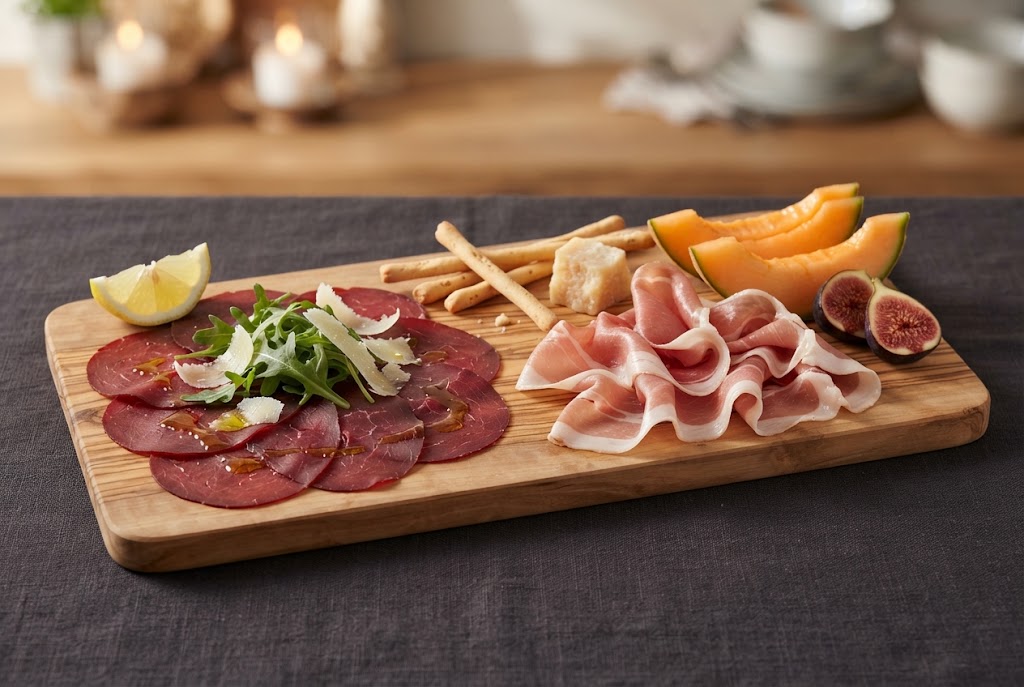
- Dress it the Italian way: a drizzle of olive oil, a squeeze of lemon, shaved Parmigiano and a handful of arugula.
- Roll it around arugula, goat cheese or a breadstick for an easy bite.
Prosciutto works best ruffled loosely in piles, or wrapped around melon. Our guide to making a prosciutto rose shows the fancy version.
Price and where to buy
Both are sold pre-sliced in packs and sliced to order at the deli. Bresaola is less common, so look in Italian delis, Whole Foods and specialty cheese counters; Trader Joe's also sells a sliced bresaola (see our Trader Joe's charcuterie guide). For prosciutto brands, see our prosciutto ranking.
Bresaola, prosciutto and pregnancy
Both are cured but uncooked. The CDC advises pregnant people to avoid deli meats and dry-cured meats unless they're heated to 165°F or until steaming hot. (CDC) Crisped prosciutto or bresaola baked on a pizza are safer options. See can you eat prosciutto while pregnant for more.
How much to buy
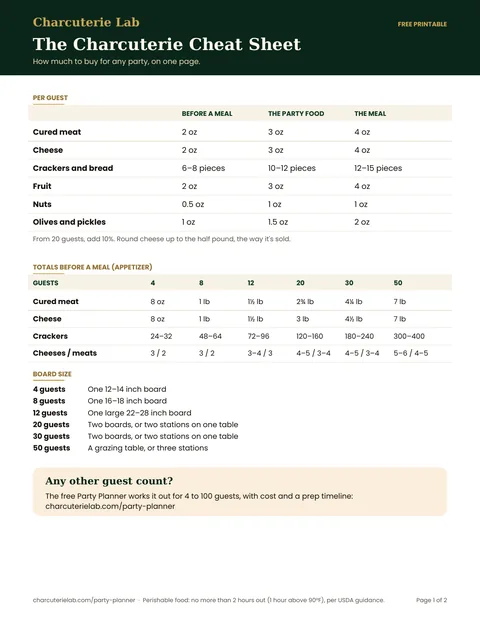
About 1 oz per guest of each meat when you serve two or three meats. A 3 oz pack of bresaola covers about 3 guests.
Sources
- Wikipedia: Bresaola
- Consorzio di Tutela Bresaola della Valtellina
- Prosciutto di Parma Consortium: New production rules
- CDC: Preventing Listeria infection
FAQ
What is the difference between bresaola and prosciutto?
Bresaola is air-dried, salted beef, usually top round, from Valtellina in northern Italy. Prosciutto is dry-cured pork leg. Bresaola is lean, deep red and clean-tasting; prosciutto is pink, silky and sweet, with a ribbon of fat.
Is bresaola healthier than prosciutto?
Bresaola is much leaner, with almost no visible fat, so it's lower in fat than prosciutto. Both are high in salt, so enjoy either in small amounts.
Is bresaola raw?
It's uncooked but cured: salted and air-dried for two to three months, which makes it safe to eat as is for most people. Pregnant people are advised to heat cured meats until steaming hot.
Can I use bresaola instead of prosciutto?
Yes, as a beef option on a board or in salads. It's leaner and firmer, so drizzle it with olive oil and lemon. For wrapping melon or crisping in the oven, prosciutto works better because of its fat.
Is bresaola good for guests who don't eat pork?
Yes, it's beef, so it's a good swap for guests who avoid pork. It isn't automatically halal or kosher, so check the label if that matters.