Quick Answer: Prosciutto and serrano are both dry-cured pork legs, sliced thin and eaten uncooked. Prosciutto is Italian: soft, silky, sweet and delicate. Serrano is Spanish: firmer, drier, more savory and a little saltier. Jamón ibérico is Spain's premium ham, made from Iberian pigs and aged longer, with a nutty, rich flavor and a price to match. For most boards, prosciutto is the easy choice; serrano is the one for a Spanish board.
Are prosciutto and serrano the same thing?
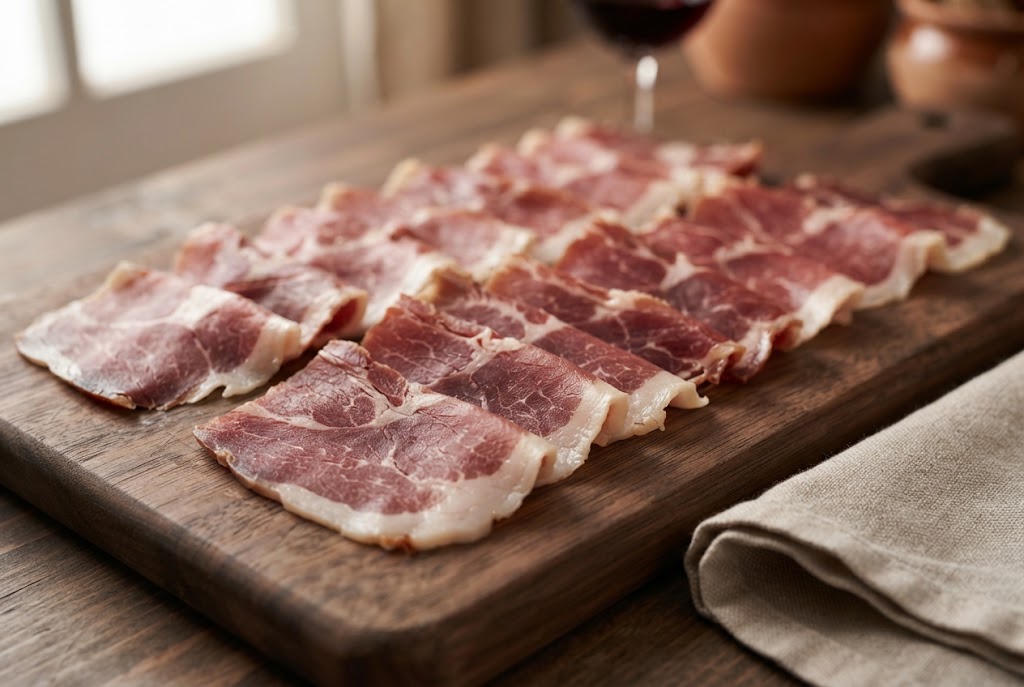
They're cousins. Both are made the same basic way: a pork leg is salted, then hung to dry in cool air for a year or more until it's firm enough to slice paper-thin. The country, the pigs and the curing time make the difference.
- Prosciutto is the Italian word for ham. The two famous protected versions are Prosciutto di Parma and Prosciutto di San Daniele.
- Jamón serrano means "mountain ham" and is Spain's everyday cured ham, made from white pig breeds.
- Jamón ibérico is Spain's premium ham, from black Iberian pigs.
Prosciutto vs. serrano vs. ibérico at a glance
| Prosciutto di Parma | Jamón serrano | Jamón ibérico | |
|---|---|---|---|
| Country | Italy | Spain | Spain |
| Pigs | Heavy white breeds | White breeds (Duroc, Landrace, Large White) | Iberian pigs |
| Curing | Salt only | Salt | Salt |
| Aging | At least 14 months (12 for hams started before September 2023) | Usually 9 to 18 months | Usually 2 to 4 years |
| Texture | Soft, silky, melts in the mouth | Firmer, drier, chewier | Tender, with fat that melts at room temperature |
| Flavor | Sweet, delicate, nutty | Savory, salty, straightforward | Rich, nutty, complex |
| Color | Rosy pink | Deeper red | Deep red, marbled with fat |
| Price | $$ | $ to $$ | $$$ |
Serrano is graded by age: bodega (about 9 months), reserva (about 12) and gran reserva (15 months or more).
How they taste
Prosciutto di Parma is cured with nothing but sea salt, and the long, cool aging slowly breaks the meat's proteins down into amino acids. That's where its sweetness and nutty depth come from, and why it tastes gentle rather than salty.
Serrano is drier and denser, with a more pronounced salty, savory flavor. It's honest everyday ham: good, but less nuanced.
Ibérico is in another league. Iberian pigs carry fat in the muscle itself, and the longer cure deepens it. The fat melts as soon as it warms up, so a slice tastes rich and nutty. The top grade, ibérico de bellota, comes from pigs that finish on acorns.
Which is better on a charcuterie board?
Prosciutto for most boards. It's soft, easy to drape or fold into ribbons, and it pairs with almost everything: melon, figs, pears, burrata, mozzarella and Parmigiano-Reggiano.
Serrano for a Spanish board. Pair it with Manchego, membrillo (quince paste), Marcona almonds and olives. It's sturdier, so it holds up on a board that sits out for a while.
Ibérico as a splurge. Buy a small amount, take it out of the fridge about 20 minutes before serving so the fat softens, and put it where guests will notice it.
Slicing tip: serrano needs to be sliced as thin as prosciutto, or thinner, because it's firmer. Ask the deli counter to slice it to order.
How much to buy
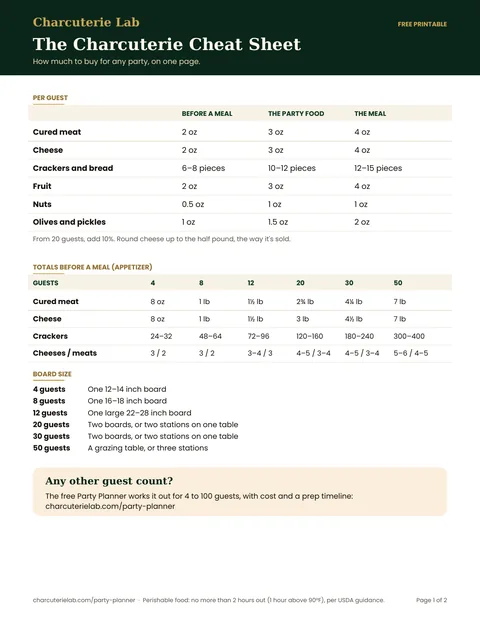
Meat in total: 2 oz per guest before a meal, 3 oz when the board is the party food and 4 oz when it's dinner. A cured ham is usually one of two or three meats in that total.
Which should you buy?
- For a classic or Italian board: Prosciutto di Parma or San Daniele.
- For a Spanish board: serrano, with Manchego and membrillo.
- For a special occasion: a few ounces of jamón ibérico.
- On a budget: serrano or a domestic prosciutto. See our ranking of the best prosciutto brands.
- For pregnant guests: the CDC advises heating deli meats and dry-cured meats until steaming hot, so set some aside to crisp in a pan.
For pairings and serving, see the Prosciutto di Parma, jamón serrano and jamón ibérico guides.