The short version
The other great Italian ham, from a small town in Friuli near the Slovenian border. Sweeter and softer than Parma, pressed into a distinctive flat shape, and always sold with the trotter still attached. If you've only had Parma, this is worth the comparison.
What it is
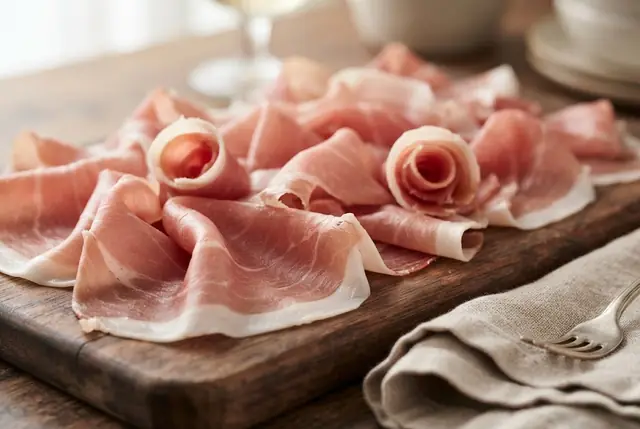
Prosciutto di San Daniele DOP is made in one town, from Italian-born pigs, with sea salt and nothing else. Two things set it apart: the hams are pressed during curing, which gives them their flat guitar shape and drives salt deeper, and the trotter is left on, which producers say helps regulate moisture as the ham dries. Minimum thirteen months.
- Taste
- sweeter than Parma, delicate, faintly nutty
- Texture
- softer and more yielding, almost buttery
- Look
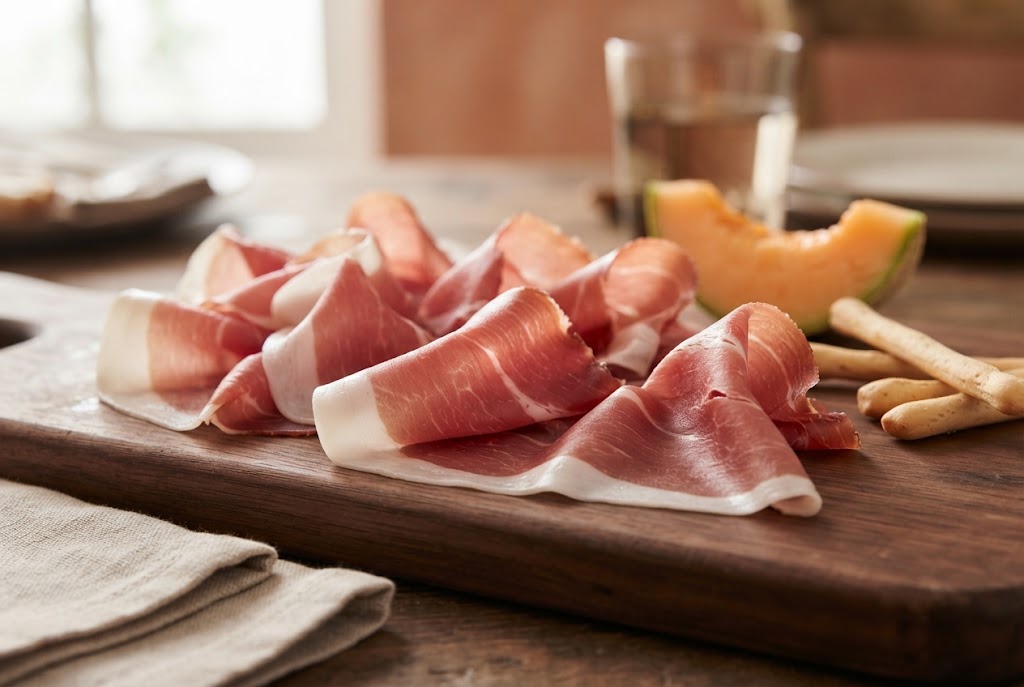
- darker rose-red, flatter profile, trotter attached on the whole leg
Microclimate is the mechanism producers point to. San Daniele sits where humid Adriatic air meets dry Alpine air coming down off the Carnic Alps, and the constant exchange dries the hams slowly and evenly. Whether or not you credit the romance, the result is measurably softer and sweeter than Parma.
What it pairs with — and why
| Pair it with | Why it works |
|---|---|
| Fresh figs and melon | Sweet fruit against a ham that's already sweet — it amplifies rather than contrasts, and it works. |
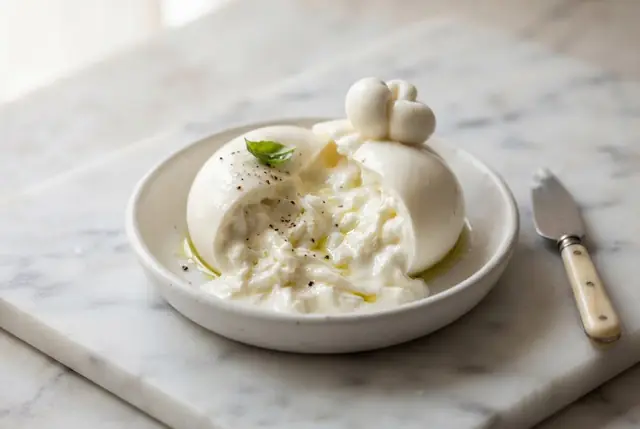
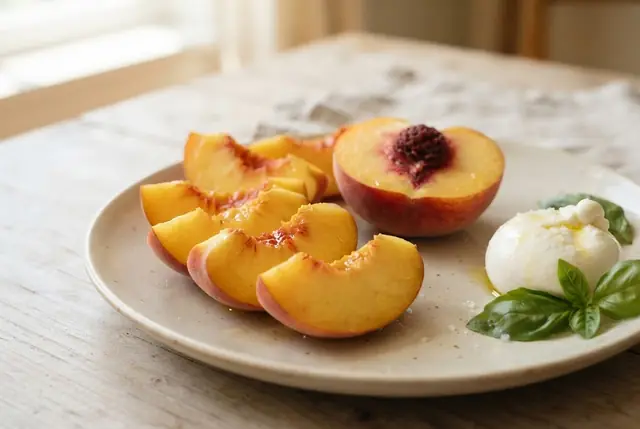
| Burrata | Milky and unsalted under silky and salted. |
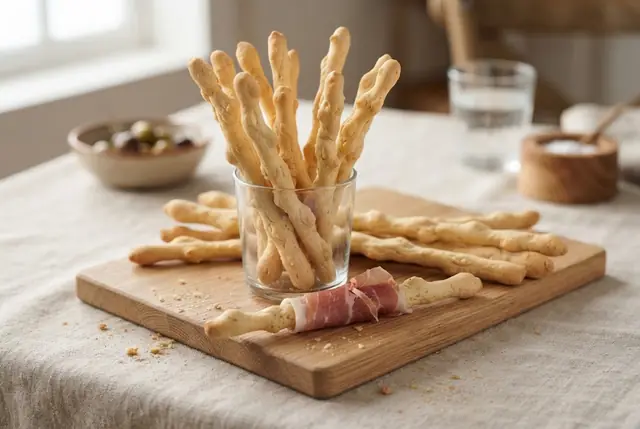
| Grissini, wrapped | Dry crunch inside soft silk. |
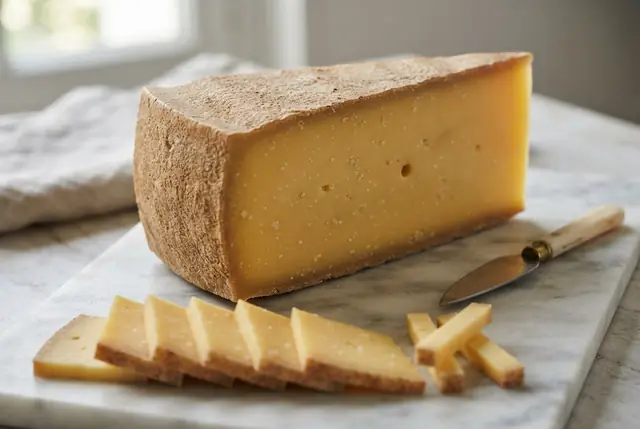
| Comté or aged Montasio | Friuli borders the Alps; nutty mountain cheese is the regional match. |
| Baguette and butter | Plain and rich, letting the ham lead. |
| Ripe pear | Cold sweet water cutting salt. |
| Friulano, Prosecco, Ribolla Gialla | Friulian whites, high-acid and local. |
Skip it with: loud crackers, smoked cheese and anything spicy. This is the most delicate meat in the section — treat it accordingly.
How to prep it for the board
- Slice paper-thin, to order if possible.
- Temper 20 minutes. Softer than Parma to begin with, and cold blunts it completely.
- Drape in loose folds, never flat-stacked.
- Serve 1–2 oz per person.
- Put Parma beside it if you have both. Side by side, the sweetness difference is obvious and it makes a genuinely interesting board.
- Leave the fat on.
- Fix: if slices tear, they're too cold or cut too thin for the machine. Ask for a fractionally thicker cut.
What to buy
| Product | Where | Notes |
|---|---|---|
| Prosciutto di San Daniele DOP, counter-sliced | Italian delis, Whole Foods, specialty | The best version. Ask for it cut to order. |
| San Daniele DOP, pre-sliced | Grocery cheese case, Italian markets | Widely imported. Check for the DOP mark. |
| Prosciutto di Parma DOP | Most grocery stores | The better-known rival — see its own page. |
| Speck Alto Adige | Italian delis, Whole Foods | Smoked northern Italian ham — see its own page. |
| Culatello di Zibello | Specialty importers | The rarest and best Italian ham — see its own page. |
| La Quercia Prosciutto Americano | Whole Foods, specialty | American-made, very good, easier to find. |
Label check: the DOP mark and "San Daniele." Pork and salt should be the only ingredients.
Skip: buying it and Parma in the same week unless you'll serve them together. Both are expensive and both are best fresh-sliced.
Quick FAQ
San Daniele or Parma?
San Daniele is sweeter and softer; Parma is more savory and slightly firmer. Neither is better — serve both if you can.
Why is the trotter left on?
Producers hold that it helps regulate moisture as the leg dries. It's also the visual signature of the DOP.
Why is it flat?
The hams are pressed during curing, which shapes them and helps the salt penetrate evenly.
How much per person?
1–2 oz as one of several meats.
Does it need to be sliced to order?
It's noticeably better, but good pre-sliced packs are widely sold.