The short version
The innermost, best muscle of the pork leg, boned out and cured inside a bladder in the fog of the Po river valley. It takes years, it costs more than any other cured pork, and it is generally considered the finest thing in Italian charcuterie.
What it is
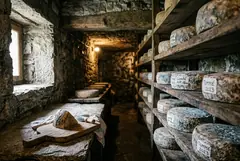
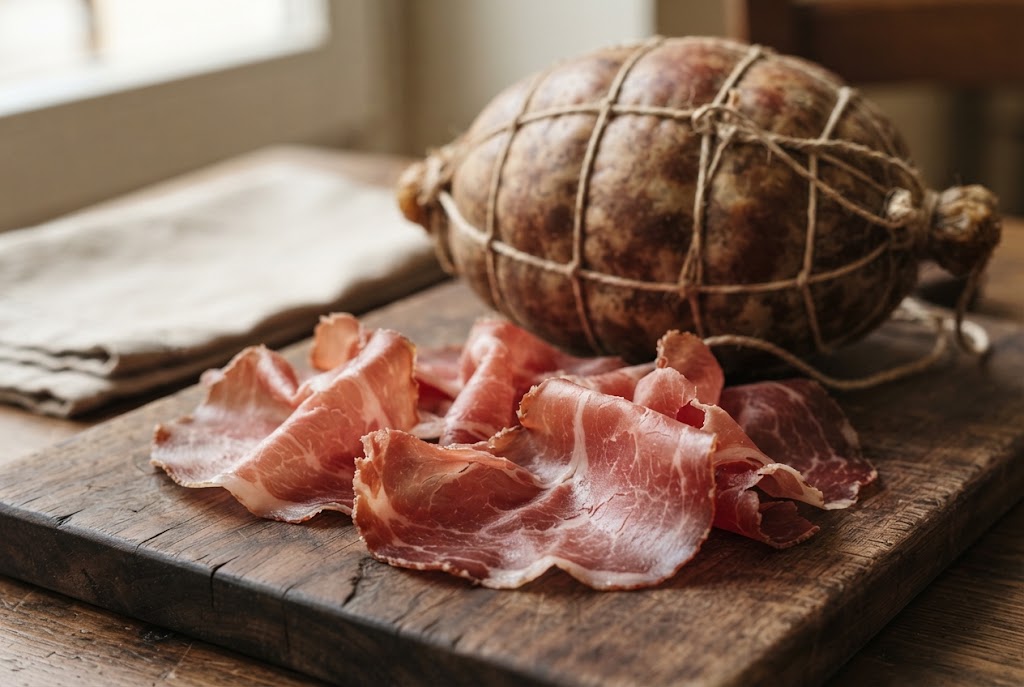
Culatello di Zibello DOP is made in a handful of villages near Parma. The culatta — the heart of the rump muscle — is separated from the leg, salted, massaged, sewn into a pig's bladder and tied into a pear shape, then aged for at least twelve months and often two to three years in damp cellars. Fog off the Po is credited with the humidity that makes it work.
- Taste
- intensely sweet, nutty, complex, less salty than prosciutto
- Texture
- silky, tender, almost dissolving
- Look
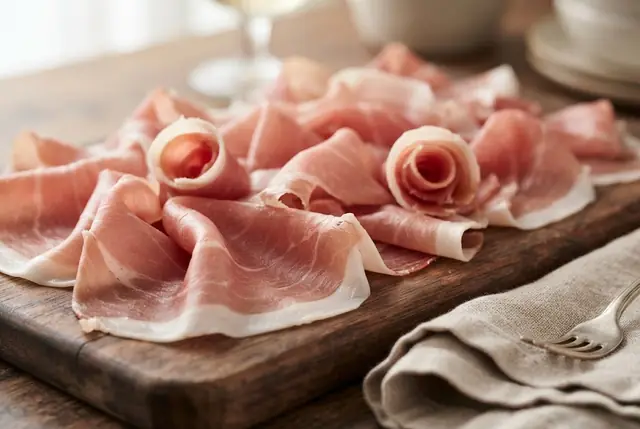
- deep rose-red, marbled with fine fat, irregular pear-shaped slices
Humidity is the mechanism. Prosciutto dries in ventilated air; culatello ages in damp cellars inside a bladder that slows moisture loss to a crawl. The meat stays soft while proteolysis runs for years, which produces sweetness and depth a drier cure can't reach.
What it pairs with — and why
| Pair it with | Why it works |
|---|---|
| Plain bread and butter | The traditional Emilian service. Nothing should compete with it. |
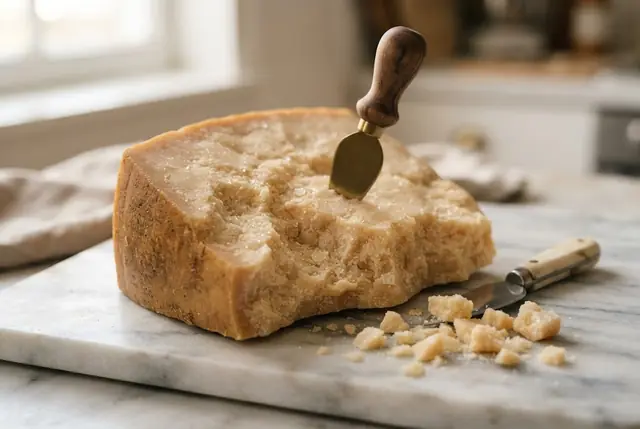
| Parmigiano-Reggiano | Same province, and both are the long-aged best of their category. |
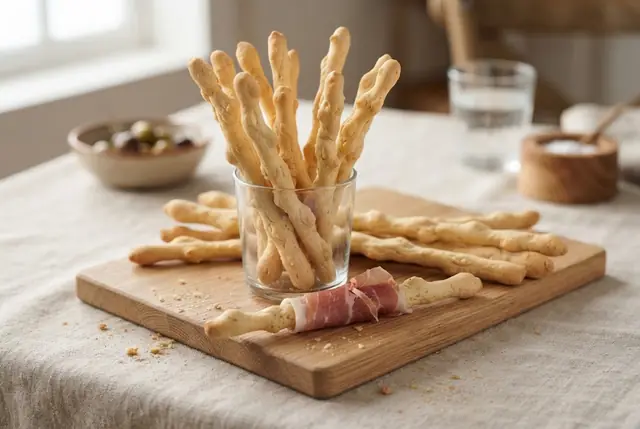
| Grissini | Dry crunch and nothing else. |
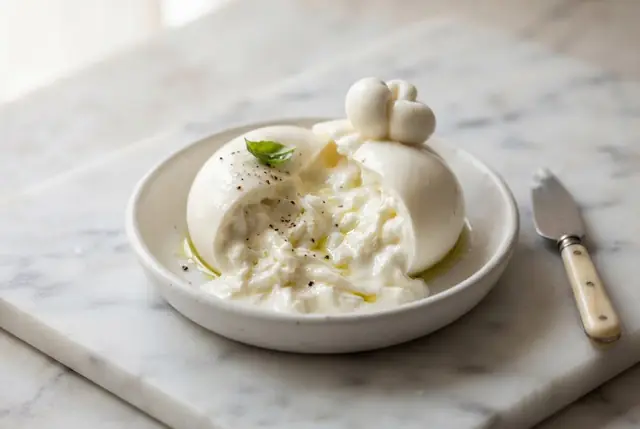
| Burrata | Unsalted cream against a sweet, complex ham. |
| Fresh figs | If you add fruit, keep it to one thing. |
| Lambrusco or Malvasia | The local wines, and the bubbles cut the fat. |
| Nothing at all | Worth stating. This is the one meat to serve with almost nothing. |
Skip it with: everything crackers, smoked cheese, blue cheese, and anything spiced. It's the most expensive item on the board and the most easily wasted.
How to prep it for the board
- Slice it thin, to order, and serve it immediately. Culatello has more surface fat than prosciutto and it oxidizes fast once cut.
- Serve it alone or nearly alone. A small plate of culatello, bread and butter beats a crowded board every time.
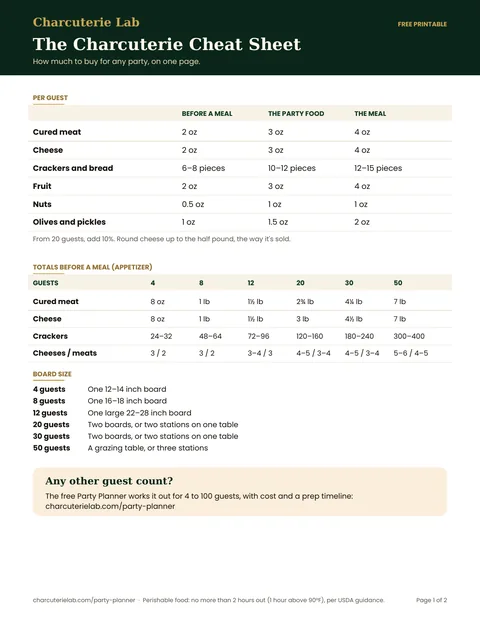
- Serve about 1 oz per person. It's expensive and rich.
- Temper 20 minutes.
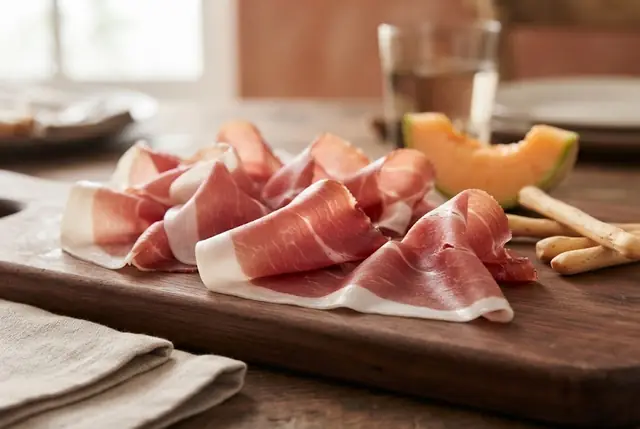
- Drape in loose folds, never flat-stack.
- Tell people what it is. Half the pleasure is knowing it took three years and a pig's bladder.
- Fix: slices going dull at the edges? They've been out too long. Cut fewer at a time.
What to buy
| Product | Where | Notes |
|---|---|---|
| Culatello di Zibello DOP | Specialty importers, high-end delis, online | The protected original. Rare in the US and expensive. |
| Culaccia or culatta | Italian delis, specialty | The same muscle cured without the bladder. Much cheaper, genuinely close. |
| Fiocco | Italian delis | The other half of the leg, cured the same way. Leaner, cheaper. |
| Prosciutto di Parma DOP | Most grocery | The accessible everyday version — see its own page. |
| La Quercia Acorn Edition | Whole Foods, specialty | American long-aged prosciutto. A real luxury alternative. |
| Any high-end Italian importer | Online | Availability is genuinely limited. Call ahead. |
Label check: the DOP mark and Zibello. Much of what's sold as "culatello" in the US is culaccia — the same muscle, cured without the bladder. That's a good product, just not the protected one.
Skip: planning a board around it without confirming stock. US availability is patchy and seasonal.
Quick FAQ
Why is culatello so expensive?
It uses only the best muscle of the leg, discards the rest of the ham, is hand-sewn into a bladder, and ages for one to three years. Yields are tiny.
How is it different from prosciutto?
Prosciutto is the whole bone-in leg dried in ventilated air. Culatello is one boned muscle aged in a damp cellar inside a bladder — sweeter, softer, more complex.
What's culaccia?
The same muscle cured without the bladder. Much cheaper, widely available, and close enough that it's the sensible buy for most boards.
How much per person?
About 1 oz. Serve it with very little else.
What do I serve with it?
Bread and butter. Genuinely. Anything more competes.