Quick Answer: Beer pairs with charcuterie as well as wine, and sometimes better. Carbonation scrubs fat off the palate, hop bitterness balances rich meat without amplifying salt the way tannin can, and malt echoes the browned flavors in aged cheese. Try a saison with aged Manchego, an IPA with sharp cheddar and soppressata, and an amber ale with aged Gouda.
Wine is the default charcuterie pairing, but it's not the only option — and for certain items on a board, beer actually works better. Carbonation performs the same fat-cutting function as acidity. Bitterness from hops resolves against fat the same way tannins do (but without the salt-amplification problem). Malt's roasted sweetness creates Maillard echoes with aged cheeses.
This guide maps beer styles to board items with the flavor science behind each pairing.
The Core Mechanisms: Why Beer Works
Before the style-by-style breakdown, the three key mechanisms beer uses in pairing:
Carbonation as Acid Substitute
The CO₂ in beer creates carbonic acid in solution, which mildly acidifies the drink. More importantly, the physical sensation of carbonation — bubbles scrubbing the palate surface — dislodges fat physically. This is the same palate-resetting mechanism as Champagne, which is why Champagne is considered the most versatile food pairing wine.
Higher carbonation = more effective fat cutting. Belgian saisons and wheat beers (highly carbonated) are among the most versatile beer pairings for fatty boards.
Hop Bitterness vs. Tannin Bitterness
Wine tannins and beer hop bitterness are both bitter, but they behave differently with food:
- Tannins (from wine) bind with salivary proteins and amplify salt perception. Young tannic reds make salty cured meat taste harsher.
- Hop bitterness (iso-alpha acids from hops) does not bind salivary proteins in the same way. Hop bitterness against fat resolves into clean dryness rather than amplified salt.
This is why IPAs and bitter ales can work with salty, fatty cured meats in ways that young red wines cannot.
Malt Roasting = Maillard Echo
Darker malts (Munich, Vienna, chocolate malt, roasted barley) develop Maillard reaction compounds during kilning — the same pyrazines, furanones, and melanoidins that form during cheese aging and meat curing. This creates compound echo pairings between malty beers and aged cheeses that are genuinely complementary rather than merely non-conflicting.
Style-by-Style Pairing Guide
Saison / Farmhouse Ale
Character: Highly carbonated, dry, slightly fruity and spicy from Belgian yeast strains, moderate bitterness, often with a faint barnyard or earthy note.
Pairs with:
- Aged hard cheeses (Comté, Manchego, Gruyère): The yeast's fruity esters echo the complex aromatics in cave-aged alpine cheeses. The dry finish clears the fat.
- Washed-rind cheeses (Taleggio, Époisses): Classic pairing — farmhouse ale's own barnyard yeast notes harmonize with the washed-rind bacteria's funkier aromatics rather than clashing.
- Prosciutto and speck: The carbonation cuts through the fat; the saison's slight spice echoes the herb and pepper cures.
The science: Saison yeasts produce 4-vinylguaiacol and isoamyl acetate during fermentation — spicy and fruity esters that create compound echoes with the terpenoid and ester compounds in aged alpine cheeses.
Wheat Beer (Hefeweizen, Witbier)
Character: Lightly hopped, banana and clove notes from Bavarian yeast (Hefeweizen) or citrus and coriander from Belgian wit (Witbier), very high carbonation, hazy, soft.
Pairs with:
- Fresh chèvre and ricotta: The citrus and herbal notes in Witbier echo the lemon and herb accents commonly used to season fresh chèvre. Extremely high carbonation resets the palate after the creamy fat.
- Bresaola: The beef's lean, slightly mineral character works with Witbier's light fruit — not an echo but a contrast that neither overwhelms.
- Prosciutto: The banana and vanilla notes of Hefeweizen create a pleasant sweet-savory contrast with the delicate prosciutto fat.
Pale Ale / IPA
Character: Pronounced hop bitterness and aroma (citrus, tropical fruit, pine depending on hop variety), moderate-high carbonation, moderate malt backbone.
Pairs with:
- Aged cheddar: The most classic beer-cheese pairing. Sharp aged cheddar's crystalline bitterness and intense glutamate against an IPA's hop bitterness creates a layered bitter-savory complex where each amplifies the other without harshness. The carbonation resets between bites.
- Soppressata and spiced salami: Hoppy bitterness cuts through high-fat salami; the citrus notes in modern American hops contrast with the meat's garlic and spice.
- Manchego: The lanolin-sweetness in sheep's milk Manchego against IPA bitterness creates a bitter↔sweet contrast that works particularly well.
Why not with blue cheese: IPA bitterness + blue cheese bitterness stacks rather than resolves — too much of the same dimension. Skip.
Belgian Tripel / Strong Golden Ale
Character: High alcohol (8–10%), fruity and spicy Belgian yeast, moderate bitterness, rich malt backbone, effervescent.
Pairs with:
- Blue cheeses (Roquefort, Stilton, Gorgonzola): The beer's residual sweetness and high carbonation manage the intensity of blue cheese the same way Sauternes does — sweet↔salty contrast, carbonation as palate reset. A Tripel with Roquefort is genuinely remarkable.
- Aged Gouda: The beer's dried fruit and honey notes from its yeast character echo the butterscotch and caramelized notes of long-aged Gouda.
- Culatello or prosciutto di Parma: The beer's complexity matches and highlights the salumi's refined depth without overwhelming it.
Amber Ale / Märzen / Oktoberfest Lager
Character: Caramel malt sweetness, medium bitterness, clean lager character (Märzen) or slight fruity note (Amber Ale), medium carbonation.
Pairs with:
- Aged Gouda: The beer's caramel malt sweetness creates a compound echo with aged Gouda's butterscotch-caramel notes. Both products of Maillard chemistry — Maillard in malt kilning, Maillard in cheese aging — resonating together.
- Speck and prosciutto: The beer's rounded maltiness complements cured mountain meats without the hop bitterness that can sometimes overwhelm delicate salumi.
- Comté or Gruyère: Semi-sweet malt against the nutty, slightly sweet character of alpine cheeses.
Stout / Porter
Character: Roasted malt (coffee, dark chocolate), moderate-low carbonation, bittersweet, substantial body.
Pairs with:
- Aged cheddar (extra sharp): Roasted malt's coffee-chocolate Maillard compounds echo the crystalline intensity of very old cheddar. A compound echo pairing across two very different products.
- Dark chocolate + aged Gouda station: If you have a dark chocolate element on the board, a stout or porter creates a three-way Maillard echo across cocoa roasting, malt roasting, and cheese aging.
- Soppressata: The beer's roasted bitterness resolves against the salami's fat and spice.
- Stilton: Stout + Stilton is the English pub pairing canon — the beer's sweetness and roast against the blue's funk and salt. Works for the same reason Sauternes works with Roquefort — sweet↔salty contrast.
Avoid with: Fresh or delicate cheeses (chèvre, ricotta, Brie) — the stout overwhelms completely.
Sour Ale (Gueuze, Berliner Weisse, Gose)
Character: Genuine sourness from lactic and acetic acid fermentation, often funky or fruity, very low to moderate bitterness, high carbonation.
Pairs with:
- Aged hard cheeses: The beer's genuine acidity performs the same palate-resetting function as wine acidity — cuts fat, clears the palate, prepares for the next bite.
- Prosciutto and bresaola: The acidity-contrast with delicate cured meats creates a Fat↔Acid pairing using the beer's acid rather than wine's.
- Gose (salt and coriander): The salt in the beer creates an interesting echo with cured meat's salinity — salt in both the pairing and the food creates harmony rather than redundancy.
- Bloomy-rind cheeses (Brie): The lactic acid in sour ales echoes the lactic character of bloomy-rind cheese's interior. A compound echo from fermentation chemistry.
Quick Reference Table
| Beer Style | Best With | Skip With |
|---|---|---|
| Saison | Aged alpine, washed-rind, prosciutto | Very delicate fresh cheeses |
| Wheat beer | Fresh chèvre, bresaola, prosciutto | Strong blues |
| IPA / Pale Ale | Aged cheddar, spiced salami, Manchego | Blue cheeses |
| Belgian Tripel | Blue cheese, aged Gouda, prosciutto di Parma | Fresh ricotta |
| Amber / Märzen | Aged Gouda, speck, Comté | Very sharp blues |
| Stout / Porter | Extra-sharp aged cheddar, Stilton, soppressata | Brie, chèvre, delicate items |
| Sour Ale | Aged hard cheeses, bresaola, Brie | Washed-rind (acidity on funk = too much) |
Building a Beer-Focused Board
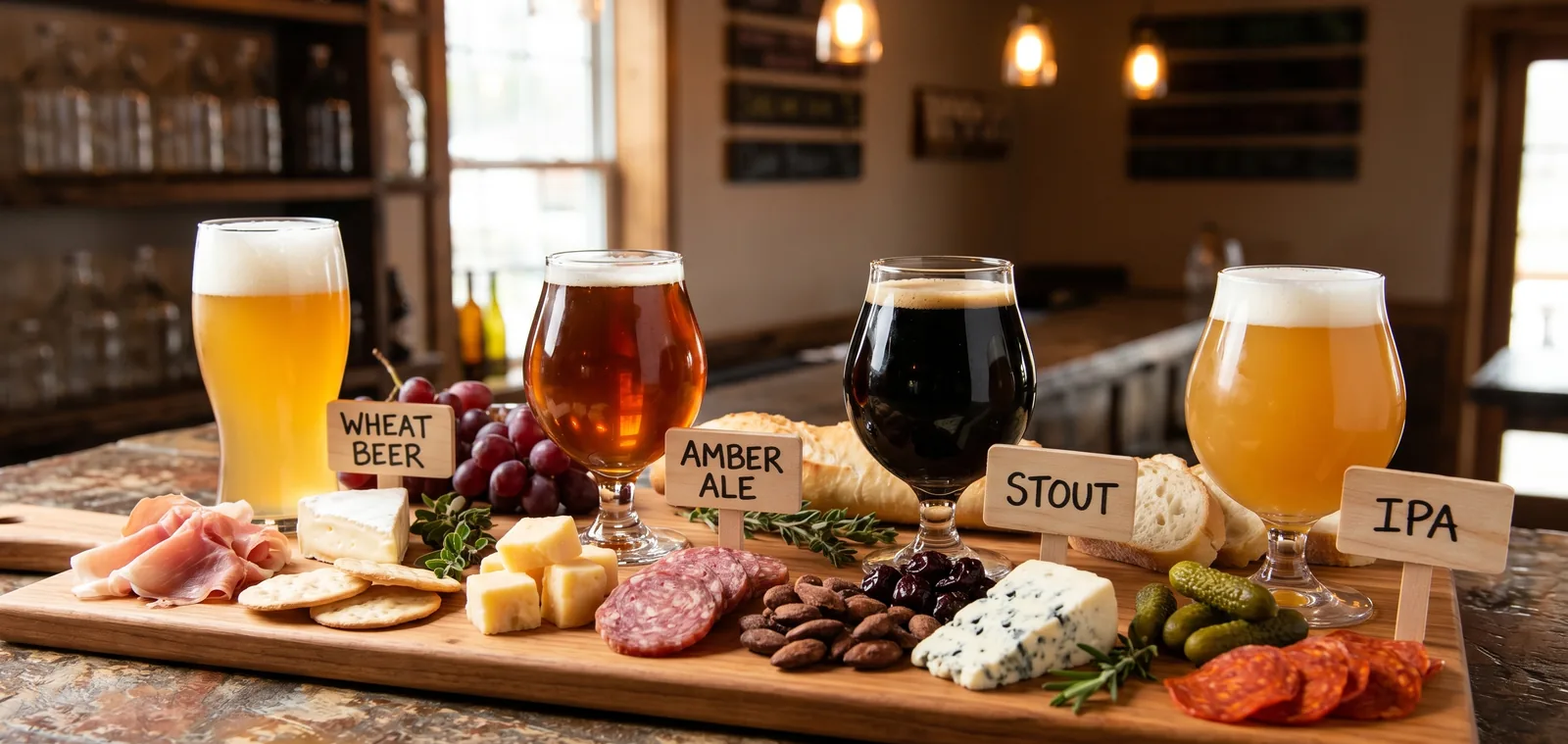
For a beer-focused board, organize around 2–3 beer styles and choose board items that play with each:
Three-beer flight approach:
- Beer 1 (Saison): Paired with aged Manchego, speck, honey
- Beer 2 (IPA): Paired with extra-sharp cheddar, soppressata, cornichons
- Beer 3 (Stout): Paired with extra-aged Gouda, dark chocolate, dried cherries
Label each station with the beer pairing. The board becomes an interactive tasting experience rather than passive grazing.
The Takeaway
Beer's carbonation, hop bitterness, and malt roasting create the same core pairing mechanisms as wine's acidity, tannin, and oak complexity — but with different strengths. Hop bitterness doesn't amplify salt the way tannins do. High-carbonation styles are as fat-cutting as high-acid whites. Dark malt's Maillard compounds echo aged cheese chemistry in ways wine rarely matches.
Wine isn't the only answer. For certain board items, it's not even the best one.
Subscribe to The Charcuterie Lab Report for weekly pairing guides.
FAQ
Does beer pair with charcuterie as well as wine?
Beer pairs exceptionally well with charcuterie — often better than wine for certain meats. The carbonation cuts through fat more aggressively than tannins, and bitterness from hops contrasts salt in ways that refresh the palate. The key is matching intensity: delicate meats with lighter beers, bold salamis with assertive ales.
What beer goes with prosciutto?
Prosciutto's delicate sweetness and silky fat pair best with light, effervescent beers: Pilsner, Kölsch, or a dry farmhouse saison. Avoid heavy stouts or IPAs — their bitterness overwhelms the meat's subtle flavor.
What beer pairs with aged cheddar or sharp cheese?
Bold cheeses need bold beer. An IPA's bitterness cuts through aged cheddar's fat, while the citrus hop notes complement the cheese's sharpness. Brown ales and porters also work well, matching the caramel and nutty notes in aged hard cheeses.
Can I serve a beer flight with charcuterie?
A beer flight is an excellent pairing format — it lets guests explore how different styles interact with different board elements. Build the flight from lightest to darkest: Pilsner → wheat beer → pale ale → IPA → porter or stout.
Should I avoid any beers on a charcuterie board?
Very sour beers (Lambic, Gueuze) can clash with acidic pickles and vinegary elements, doubling up on tartness. Extremely sweet fruit beers can make the board feel cloying. Start with clean fermented styles and add complexity from there.