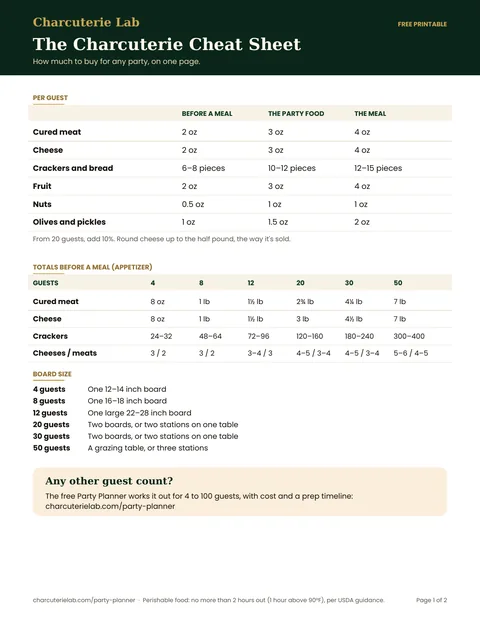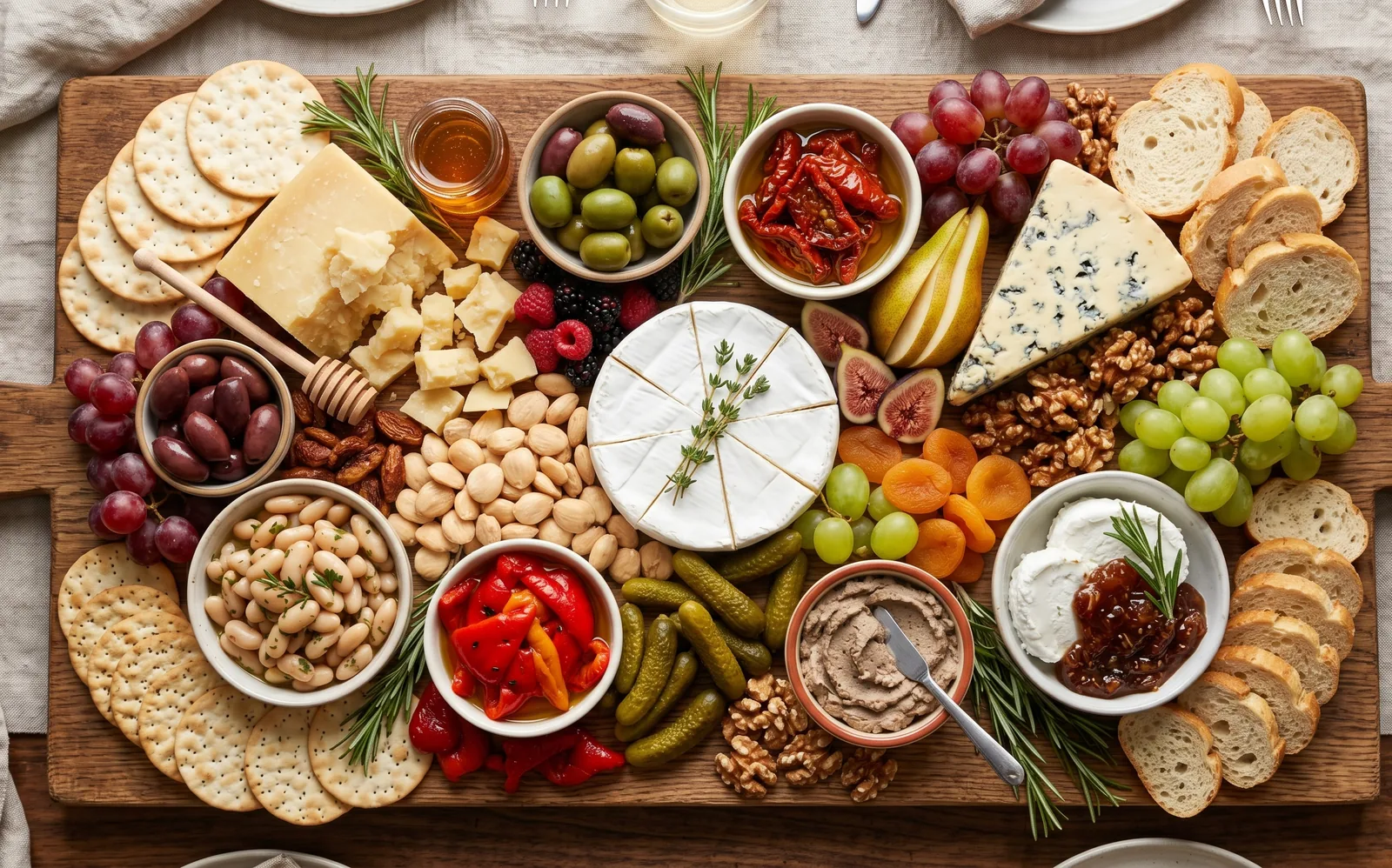
A vegetarian charcuterie board done badly is only a board with the meat left out — a few cheeses surrounded by awkward gaps and unsatisfying crackers. Done well, it's a different kind of board entirely: cheese-forward, textural, and built around the same contrast principles that make any great board work.
The key insight: meat on a traditional board serves specific roles — saltiness, fat, protein density, chew. Each of those roles can be filled by vegetarian ingredients. This guide gives you the framework and the specific items.
Quick Answer: A vegetarian charcuterie board replaces cured meats with high-umami plant elements: marinated olives, sun-dried tomatoes, roasted peppers, mushroom or lentil pâté, and tapenade. Pair with a full cheese selection, nuts, fresh and dried fruit, hummus, and quality crackers. The same contrast principles apply — salt, sweet, fat, acid, and crunch — achieved through plant-based sources instead of meat.
Cooking for vegan guests too? See 15 vegan charcuterie board ideas, with no meat and no dairy.
Check the cheese: Parmigiano-Reggiano, Pecorino Romano, Gruyère and Gorgonzola are usually made with animal rennet, and some tapenades contain anchovies. Our vegetarian guide sorts every cheese by rennet.
The Quick Answer
Vegetarian board for 6–8 guests (appetizer):
| Category | Item | Amount |
|---|---|---|
| Cheese 1 (anchor) | Aged cheddar or Parmigiano-Reggiano | 5–6 oz |
| Cheese 2 (soft) | Brie or bloomy-rind | 6–8 oz wheel |
| Cheese 3 (sharp/blue) | Gorgonzola Dolce or Stilton | 3–4 oz |
| Cheese 4 (fresh/bright) | Fresh chèvre or ricotta | 3–4 oz |
| Protein analog | Marinated white beans or edamame | 2–3 oz |
| Savory/umami | Olives (Castelvetrano + Kalamata) | 2–3 oz each |
| Savory/umami | Sun-dried tomatoes in oil | 1–2 oz |
| Vegetable | Roasted red peppers | 2 oz |
| Vegetable | Cornichons or gherkins | 6–8 pieces |
| Fruit | Grapes + seasonal fruit | 4–5 oz |
| Nuts | Marcona almonds + candied walnuts | 2 oz each |
| Accoutrement | Honey | Small jar |
| Accoutrement | Fig jam or cherry preserves | 2–3 tbsp |
| Crackers/bread | 2–3 varieties | As needed |
The Philosophy: Filling Meat's Roles Without Meat
Meat on a charcuterie board isn't there just for protein — it performs four distinct functions:
1. Salt delivery: Cured meats are typically 1,500–2,300 mg sodium per 100g. This concentrated saltiness seasons every other item on the board and creates contrast with sweet fruits and mild crackers.
2. Fat density: The intramuscular and cap fat in prosciutto and salami delivers rich, slow-melting fatty mouthfeel that satisfies and signals satiety.
3. Umami: Cured and fermented meats have undergone proteolysis (protein breakdown) that concentrates free glutamate — the same umami compound that makes aged cheese so savory.
4. Chew and texture: The slightly resistant, chewy texture of salami and prosciutto provides physical satisfaction that soft cheeses and crackers don't provide on their own.
How Vegetarian Ingredients Cover These Roles
| Meat Function | Vegetarian Substitute | Why It Works |
|---|---|---|
| Salt delivery | Olives, cornichons, capers, sun-dried tomatoes | Cured/pickled, high sodium, concentrated flavor |
| Fat density | Nuts (Marcona almonds), olive oil-packed items | Oleic acid-rich fats, similar satiety mechanism |
| Umami | Aged cheeses, sun-dried tomatoes, olives, miso-marinated items | Glutamate-rich; fermented items add LAB complexity |
| Chew/texture | Firm cheese chunks, whole nuts, pickled vegetables | Physical resistance and textural satisfaction |
The Four-Cheese Framework
The vegetarian board compensates for missing meat by going deeper and wider on cheese. Four cheeses rather than three allows you to cover a full flavor and texture spectrum:
Cheese 1: The Anchor (Assertive, Aged, Firm)
Best options: Aged cheddar (18+ months), Parmigiano-Reggiano, aged Manchego, aged Gruyère
This is your umami heavyweight. Its concentrated glutamate and crystalline texture do the flavor-anchoring work that coppa or salami would do on a traditional board. Serve in irregular chunks guests can break themselves.
Pairing on the board: Place near honey and the fig jam — the sweet-salty contrast at this station is the highest-impact flavor moment on the board.
Cheese 2: The Soft Centerpiece (Creamy, Accessible, Crowd-Pleasing)
Best options: Brie, Camembert, triple-crème, robiola
Every board needs a cheese that runs a little when ripe, that guests immediately reach for, and that pairs with almost everything. For a vegetarian board, lean into the soft cheese even more than usual — place it centrally, score the top slightly if it's very ripe, add a sprig of fresh thyme or a drizzle of honey directly on the rind.
Pairing on the board: Grapes and sliced pear nearby; water crackers and crusty bread adjacent.
Cheese 3: The Contrast (Sharp, Blue, or Pungent)
Best options: Gorgonzola Dolce, Stilton, Roquefort, aged blue
Blue cheese performs a critical function on a vegetarian board: it brings the assertiveness and intensity that cured meat would normally provide. Gorgonzola Dolce is the most accessible entry point — creamier and milder than Piccante, with a buttery quality that's approachable to blue skeptics.
Pairing on the board: Candied walnuts immediately adjacent. The walnut's caramelized sugar tames the blue's sharpness before it ever reaches the cheese.
Cheese 4: The Fresh Counterpoint (Bright, Light, Lactic)
Best options: Fresh chèvre, ricotta, labneh, fromage blanc
A fresh, lactic cheese creates necessary relief from the intensity of the other three. It also serves as a canvas — guests will spread it and add their own combinations of honey, jam, herbs, or fruit. This is your most interactive cheese.
Pairing on the board: Fig jam or cherry preserves alongside; fresh herb sprigs (thyme, rosemary) for guests to incorporate.
The Vegetable Analogs
These are the items that replace the visual, textural, and flavor role of charcuterie most effectively:
Olives: The Closest Meat Analog
Castelvetrano olives (bright green, buttery, mild) and Kalamata olives (purple-black, briny, assertive) together cover the same spectrum as a mild and a bold meat. Both are cured, both are high in fat (oleic acid), both are salty.
Castelvetranos' oleic-acid-rich fat, the same fat as olive oil, gives them a buttery, almost sweet richness that visually and texturally mimics the delicate fat of prosciutto. Place them in a small bowl — olives with pits look more natural and stay juicier.
Sun-Dried Tomatoes: Concentrated Umami
Sun-dried tomatoes are one of the highest natural sources of glutamate outside of aged cheese and fermented products — approximately 650–1,100 mg/100g of free glutamate. Packed in olive oil, they're also fatty and rich. They bring the same savory backbone that fermented meats provide on a traditional board.
Use 1–2 oz, place in a small pile or small bowl near the aged anchor cheese.
Roasted Red Peppers: Sweet-Savory Bridge
Jarred roasted red peppers (or fresh roasted) add sweetness, slight smokiness, and a different color and texture. They're particularly effective alongside aged cheddar and fresh chèvre — the sweetness bridges both.
Cornichons: The Acid Counterpoint
Every board needs something acidic to reset the palate. On a traditional board, that might come from the malic acid in sliced pear and grapes. Cornichons add sharp, vinegar-forward acidity that cuts through fat more aggressively. Two or three per guest is enough — they're intense.
Marinated Chickpeas or White Beans: Protein and Chew
A small bowl of olive-oil and herb-marinated chickpeas or white beans provides actual protein density and a satisfying chew that crackers and cheese don't offer. Marinate with olive oil, lemon juice, fresh rosemary, and flaked sea salt for a few hours before serving. Place in a bowl alongside the chèvre.
The Accoutrements
Honey
Non-negotiable. The sweet-salty contrast with aged cheese and the compound echo with blue cheese work exactly the same on a vegetarian board as on a traditional one.
Fig Jam or Cherry Preserves
Place alongside the fresh chèvre as the primary jammy accompaniment. Fig's concentrated sweetness and slight earthiness pairs particularly well with chèvre and Brie; cherry preserves create a bright contrast with aged cheddar.
Nuts
Marcona almonds for accessibility; candied walnuts specifically beside the blue cheese. The walnuts' caramelized coating creates the sweet-bitter-sharp compound sequence that makes blue cheese approachable for skeptics.
Build Sequence
The vegetarian board benefits from deliberate anchoring because the visual texture differs from a traditional board — no pink prosciutto fans or salami cascades to draw the eye.
- Bowls first: Honey, olives (Castelvetrano and Kalamata in separate bowls), beans or chickpeas, fig jam
- Cheeses: Four cheeses in distinct zones — spread across the board, not clustered
- Vegetables and savory: Sun-dried tomatoes, roasted peppers, cornichons filling gaps between cheese zones
- Fruit: Grapes and sliced pear near the soft cheeses
- Nuts: Marcona almonds in general zones; candied walnuts specifically adjacent to the blue
- Crackers and bread: Fan water crackers, slice baguette, add seeded crackers for visual variety
- Garnish: Fresh herb sprigs (rosemary, thyme) placed for aroma and visual texture
Common Mistakes on Vegetarian Boards
Skipping olives. Olives are the single closest functional analog to cured meat — cured, fatty, salty, umami-forward. Leaving them out leaves a significant gap.
Using only two cheeses. On a traditional board, meat provides textural and flavor variety that two or three cheeses don't need to cover alone. On a vegetarian board, cheese is doing more work — four is the right number.
Forgetting the acid element. Cornichons or pickled vegetables are especially important without the acidity that comes from the lactic acid in cured meats.
Over-relying on crackers for bulk. Crackers are vehicles, not content. A cracker-heavy vegetarian board feels sparse even when the board is technically full.
FAQ
What goes on a vegetarian charcuterie board?
A vegetarian charcuterie board replaces cured meats with plant-based proteins and bold umami elements: smoked cheeses, marinated olives, roasted and marinated vegetables (artichoke hearts, sun-dried tomatoes, roasted peppers), hummus, tapenade, pâté (mushroom or lentil), seeded crackers, fresh and dried fruit, nuts, and honey. The goal is to maintain the flavor range (umami, salt, fat, acid, sweet) that cured meats provide using entirely plant-based elements.
What replaces the umami from cured meats on a vegetarian board?
Sun-dried tomatoes and tomato paste, aged hard cheeses (especially Parmigiano-Reggiano and aged Manchego), fermented foods (miso paste, kimchi, olives), mushroom pâté, and walnuts all provide the savory, satisfying umami notes that cured meats deliver. Smoked cheeses add the smoke dimension that salami and prosciutto bring.
Can a vegetarian board be as satisfying as a traditional one?
Yes — when built intentionally with attention to the same contrast principles. Textural contrast (creamy hummus + crunchy crackers + firm aged cheese), flavor contrast (sweet dried fruit + salty olives + bold fermented elements), and satiety (nuts, aged cheese, substantial spreads) all contribute to satisfaction. A lazy vegetarian board (just crackers and fresh vegetables) feels incomplete; a thoughtfully built one is genuinely excellent.
What cheeses work on a vegetarian charcuterie board?
All cheeses are vegetarian (unless you're avoiding all animal products). The best choices for a vegetarian board lean on bold, savory character: aged cheddar, Manchego, Parmigiano-Reggiano (rich umami), Gruyère, aged Gouda, and Stilton for intensity. Balance with a soft cheese (chèvre, brie) and something fresh (burrata) for contrast.
How do you make a vegetarian charcuterie board visually as impressive as a traditional board?
Color and texture variety compensate for the visual impact of folded and fanned meats. Use bright roasted peppers, deep purple olives, and vibrant fresh herbs to provide color movement across the board. Arrange marinated vegetables in fan shapes to echo meat presentation. Use a variety of cracker shapes and sizes to create visual interest where meat sections would normally sit.
The Takeaway
A vegetarian charcuterie board isn't a traditional board with something missing. It's a board built on a cheese-forward logic, with each vegetarian element mapped to the specific function that cured meat would have served: salt, fat, umami, chew, and visual contrast.
Four cheeses. Olives. Sun-dried tomatoes for glutamate. Cornichons for acid. Honey for sweet contrast. The flavor principles don't change — only the ingredients.
Subscribe to The Charcuterie Lab Report for weekly board science.