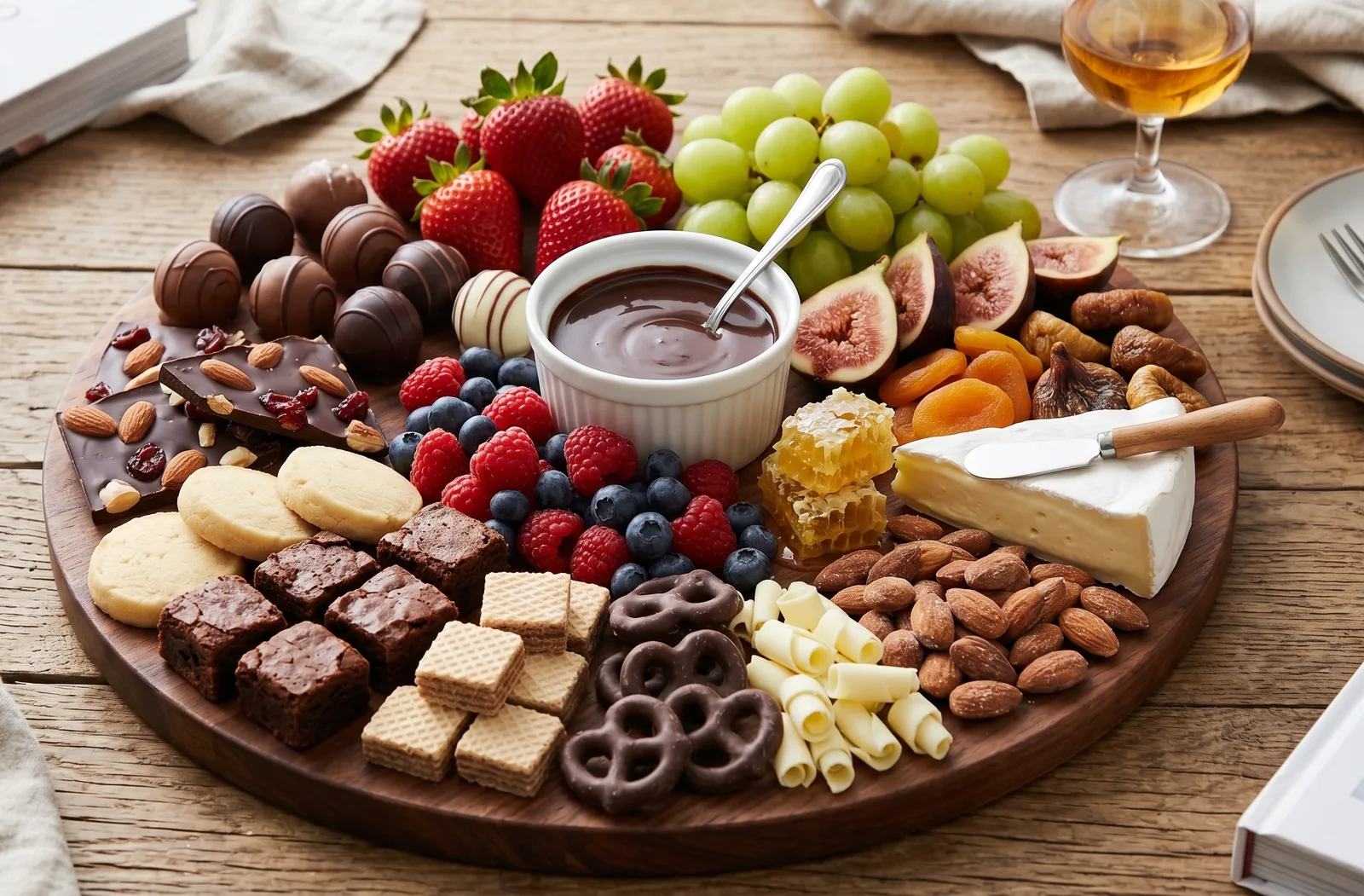
Quick Answer: Treat it like a real board, built on contrast: one dark or rich chocolate, one creamy dip, two fruits, two cookies or crisp items, one salty crunch such as pretzels or salted nuts, and a fresh garnish. Place the bowls first, then the chocolate, cookies and fruit in clusters.
A dessert charcuterie board works best when it is treated like a real board, not a pile of candy. The goal is contrast: creamy, crisp, juicy, bitter, salty, rich, and fresh. If every bite is only sweet, guests take one or two pieces and stop. If the board has balance, people keep coming back because each bite resets the next one.
The easiest formula is:
Chocolate + fruit + cookies + creamy dip + salty crunch
That gives you enough variety for a party board without turning the grocery list into a project.
Want the full board-building system? The Charcuterie Lab ebook includes 50 boards with shopping lists, pairing logic, substitutions, and build notes.
Quick Shopping List for 8 to 10 People
Use this as a dependable starter board:
| Category | What to Buy | Amount |
|---|---|---|
| Chocolate | Dark chocolate squares or bark | 6 to 8 oz |
| Chocolate | Milk chocolate truffles or filled chocolates | 10 to 14 pieces |
| Fruit | Strawberries | 1 lb |
| Fruit | Grapes or orange slices | 2 cups |
| Cookies | Shortbread, biscotti, or butter cookies | 18 to 24 pieces |
| Crunch | Pretzels, almonds, or pistachios | 1 to 1 1/2 cups |
| Creamy | Mascarpone dip, whipped cream cheese, Nutella, or caramel | 1 cup |
| Fresh finish | Mint, raspberries, or pomegranate arils | 1 small handful |
If this is the only dessert, add one more cookie or pastry and one more fruit. If it follows dinner, this list is plenty.
The Five-Part Dessert Board Formula
1. Start With One Rich Chocolate
Dark chocolate is the best anchor because it brings bitterness, structure, and a grown-up flavor. Use broken chocolate bark, dark chocolate squares, chocolate-covered almonds, or a sliced brownie.
Avoid building the whole board from soft chocolate. Truffles, brownies, fudge, and ganache all read as rich and soft. You need crisp and fresh items around them or the board becomes heavy fast.
2. Add Fresh Fruit for Juiciness
Fruit does the same job on a dessert board that pickles and grapes do on a savory board: it resets the palate. Strawberries are the most useful because they are bright, familiar, and easy to pick up. Grapes, raspberries, orange slices, sliced pears, and apple wedges also work.
Cut wet fruit close to serving. If you use apple or pear slices, toss them lightly with lemon juice and pat them dry before adding them to the board.
3. Use Cookies as the Crunch
Cookies are the cracker equivalent. They create structure, give people something easy to grab, and make dips useful. Shortbread, biscotti, vanilla wafers, butter cookies, pizzelle, and graham crackers all work.
Use two cookie shapes if possible. One round cookie and one long cookie creates better movement on the board than one big pile of identical pieces.
4. Include One Creamy Dip or Spread
A creamy element makes the board feel intentional. Good options:
- Mascarpone with honey
- Whipped cream cheese with vanilla
- Chocolate hazelnut spread
- Salted caramel
- Greek yogurt with honey
- Cannoli dip
Put the dip in a small bowl and place it near the fruit and cookies that belong with it. Do not make guests guess what to combine.
5. Add a Salty or Bitter Accent
This is the difference between a pretty dessert board and one people actually eat. Add pretzels, salted almonds, pistachios, flaky sea salt chocolate, espresso beans, or salted caramel.
Salt makes chocolate taste deeper and keeps the board from becoming one-note. Bitter accents, like dark chocolate or coffee, do the same thing from the opposite direction.
Layout Order
Build the board in this order:
- Place bowls first: dip, caramel, or small candies.
- Add chocolate anchors in two or three zones.
- Fan cookies or biscotti outward from the bowls.
- Add fruit in clusters, not scattered single pieces.
- Fill small gaps with pretzels, nuts, or chocolate-covered almonds.
- Finish with mint, pomegranate, raspberries, or a light dusting of powdered sugar.
This keeps the board organized. Bowls and chocolate create the structure, cookies create direction, fruit adds color, and small crunchy items finish the gaps.
For more layout logic, use the same anchor-and-fill approach from the easy charcuterie board guide and the board theme ideas in charcuterie board ideas.
Best Dessert Board Pairings
Chocolate + strawberries + mascarpone: rich, fresh, creamy.
Dark chocolate + orange slices + pistachios: bitter, bright, salty.
Shortbread + lemon curd + raspberries: buttery, tart, fresh.
Pretzels + caramel + milk chocolate: salty, chewy, sweet.
Biscotti + chocolate dip + espresso beans: crisp, bitter, rich.
The board does not need every pairing. Choose two or three pairings and repeat them visually so guests understand the board.
Budget Dessert Board
For a lower-cost board, skip specialty chocolates and build around grocery-store staples:
- One chocolate bar, broken into pieces
- Strawberries or grapes
- Store-brand shortbread or vanilla wafers
- Pretzels
- Cream cheese whipped with powdered sugar and vanilla
- A small drizzle of honey or caramel
The trick is presentation. Break chocolate irregularly, fan the cookies, keep fruit in clusters, and put the dip in a small bowl. A simple board looks much better when every item has a place.
Make-Ahead Plan
The day before:
- Wash and dry berries.
- Make dip.
- Portion nuts, pretzels, and chocolates.
- Choose the board and bowls.
One to two hours before serving:
- Place bowls, chocolate, cookies, pretzels, and nuts.
- Keep fruit covered in the refrigerator.
Right before serving:
- Add cut fruit and berries.
- Add mint or garnish.
- Add powdered sugar only at the end.
For timing and food quality, the same cold-to-room-temperature thinking applies as it does with cheese. The temperature guide is useful if your board includes cream cheese, mascarpone, or dairy-based dips.
Common Mistakes
Too much soft food: brownies, fudge, truffles, and dip all compete. Add cookies, pretzels, nuts, or crisp fruit.
No fresh element: a board without fruit feels heavy quickly.
No salt: pretzels, salted nuts, or salted caramel make sweet flavors taste better.
Everything is brown: chocolate, cookies, caramel, and brownies need red fruit, green mint, citrus, or white bowls for contrast.
Wet fruit touching cookies: keep juicy fruit away from crisp items or the texture falls apart.
Final Formula
For a dessert board that looks good and eats well, choose:
- 1 dark or rich chocolate
- 1 soft or creamy dip
- 2 fruits
- 2 cookies or crisp items
- 1 salty crunch
- 1 fresh garnish
That is enough structure for almost any party, holiday, date night, shower, or movie night dessert board.