Yes — but not the whole thing, and not the way most people try it.
The most common mistake is building the entire board the night before and pulling it out of the fridge the next day. This leads to dried-out meat edges, softened crackers, discolored apple slices, and weeping soft cheeses. None of these are catastrophic, but together they signal that the board wasn't fresh — and a charcuterie board's appeal is partly visual.
The good news: with the right prep split between the night before and the day of, you can have ninety percent of the work done ahead of time and still put out a board that looks and tastes fully fresh.
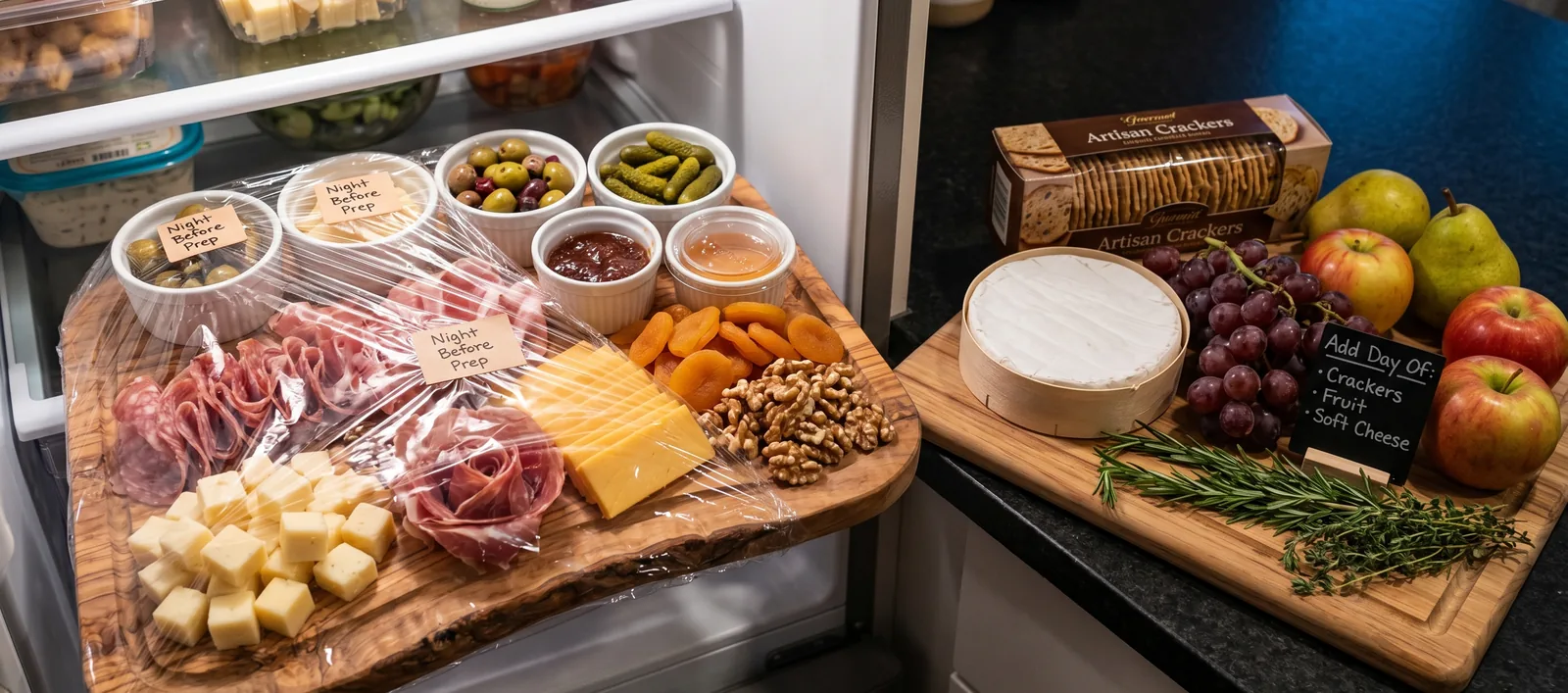
Quick Answer: You can partially assemble a charcuterie board the night before. Prep-ahead safe: hard and semi-firm cheeses (cut and wrapped), condiment bowls (covered and refrigerated), nuts, and dried fruit. Add on the day of: crackers (they go stale), fresh fruit, sliced cured meats, and soft cheeses. Take hard cheeses out about an hour before serving, and soft cheeses and cured meats 20–30 minutes before.
Night-before vs. day-of, at a glance
| When | What to do |
|---|---|
| The night before | Cut hard cheeses, portion and fold cured meats, fill bowls with olives, pickles, jams, honey, nuts and dried fruit. Cover everything and refrigerate. |
| 45–60 minutes before | Take the hard cheeses out of the fridge so they come to room temperature. |
| 20–30 minutes before | Take out soft cheeses and cured meats; arrange cheeses and bowls on the board, then the meats. |
| Just before guests arrive | Add crackers, bread, fresh fruit, soft cheeses and herbs. |
Need a plan for a specific party? The Board Builder makes the shopping list and a timeline for your guest count.
What You Can Prep the Night Before
Hard and semi-hard cheeses Aged cheddar, manchego, Parmigiano, Gruyère, aged Gouda — all of these can be cut, broken, or sliced the night before and stored in the fridge. Keep them in an airtight container or wrapped in plastic. Pull them out 30–45 minutes before serving; flavor compounds in hard cheese are more pronounced at room temperature and cold mutes them.
Cured meats — most types Prosciutto, coppa, bresaola, sopressata, and most sliced salami can be portioned the night before. If you've folded or ruffled prosciutto or coppa into roses or folds, store them loosely on a plate covered with plastic wrap — they hold their shape well overnight. Avoid folding very thinly sliced meats too tightly; they can stick and tear.
Nuts and dried fruit These can go straight into small bowls or portioned into containers the night before. No storage considerations needed.
Olives, pickles, and condiments Fill small bowls with olives, cornichons, and other pickled elements. Cover and refrigerate. These are fully fine overnight — they're already brined.
Honey and jams Pour into serving vessels, cover, and refrigerate. No quality loss.
Board layout planning Know where each element goes before you start. Most of the time spent on day-of board building is decision-making. If you've pre-portioned everything and have a layout in mind, final assembly takes fifteen minutes.
What to Do Day-Of (30–60 Minutes Before Serving)
Soft cheeses Brie, camembert, fresh goat cheese, burrata, and other soft or bloomy-rind cheeses are better added the same day. They can weep moisture overnight when stored improperly, and their texture at the point of serving is better when they haven't been refrigerated for an extended period after cutting. If you must prep the night before: leave brie and camembert whole (uncut) and wrapped, then score and plate day-of.
Crackers Always add crackers the day of, ideally within an hour of serving. Refrigerator humidity softens crackers faster than room air. There is no way around this: crackers added the night before will be soft by serving time.
Fresh fruit Apple slices, pear slices, grapes — cut or separate the day of. Apple and pear oxidize and brown overnight even with lemon juice treatment. Grapes can be rinsed and refrigerated as a bunch overnight and separated day-of.
Any final garnish Fresh herbs (rosemary, thyme sprigs), edible flowers, or any delicate fresh element should go on last, right before guests arrive.
How to Store an Overnight Board
If you've partially assembled on the board itself (cheese + meats already arranged), cover tightly with plastic wrap and refrigerate. The plastic needs to make contact with the board surface to minimize air exposure — loose tent coverage lets the meats dry out at the edges.
Better practice: store components in separate containers and assemble the day of. This takes more prep time but produces a fresher-looking result, especially for soft cheeses and delicate meats.
The Night-Before Prep Checklist
Do the night before:
- Cut and portion hard/semi-hard cheeses → airtight container
- Fold or portion cured meats → covered plate
- Fill condiment bowls (honey, jam, olives, pickles) → covered and refrigerated
- Portion nuts and dried fruit → covered containers or bowls
- Keep soft cheeses whole and wrapped in the fridge
Do day-of (30–60 min before serving):
- Pull all refrigerated elements out to come to temperature (especially hard cheeses)
- Add crackers to the board
- Slice fresh fruit
- Plate soft cheeses
- Final assembly and garnish
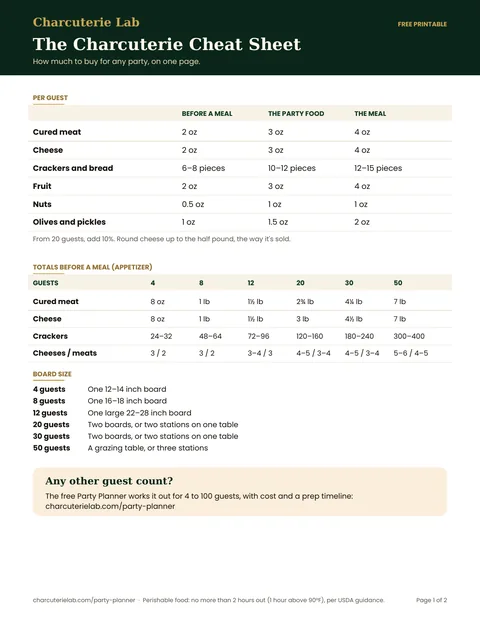
Planning a large gathering? The charcuterie quantity guide at How Much Charcuterie Per Person covers exactly how much to buy for 4 to 30+ guests.
>
Get weekly board-building science in the Charcuterie Lab Report newsletter.
Sources
FAQ
Can you make a charcuterie board the night before?
Partially. You can assemble the non-perishable elements the night before (crackers stored separately, nuts, dried fruit, hard cheeses in the refrigerator, condiment bowls covered). Add sliced cured meats and soft cheeses the day of the event, 1–2 hours before serving. Fresh fruit and garnishes go on last, within 30–60 minutes of serving.
What charcuterie elements can be prepared the night before?
Safe to prep ahead: hard and semi-firm cheeses (cut and wrapped in parchment), condiments in small bowls (covered and refrigerated), nuts and dried fruit in bowls, and small prepared accompaniments like marinated olives. Store all refrigerated elements covered with plastic wrap. Take hard cheeses out about an hour before serving, and soft cheeses and cured meats 20–30 minutes before.
What should you never put on a charcuterie board the night before?
Crackers (they absorb moisture and go stale), fresh fruit (it oxidizes or dries out), soft cheeses with cut surfaces (they dry out and develop an unappetizing crust), and cured meats (they dry out and lose their visual appeal). These elements are best added on the day of serving, close to the event time.
How do you store a partially assembled charcuterie board overnight?
Cover the board tightly with plastic wrap and refrigerate. If the board is too large for the refrigerator, store components in separate containers and assemble on the board the day of the event. Take hard cheeses out about an hour before serving, and soft cheeses and cured meats 20–30 minutes before.
What is the best way to keep a charcuterie board fresh at a long event?
Build the board in two stages: initial setup with 60% of the food, and a refresh at the 1.5-hour mark with the remaining 40%. Store the reserve portion covered in the refrigerator. This approach keeps the board looking fresh and abundant throughout the event rather than starting full and becoming depleted and messy.