The short version
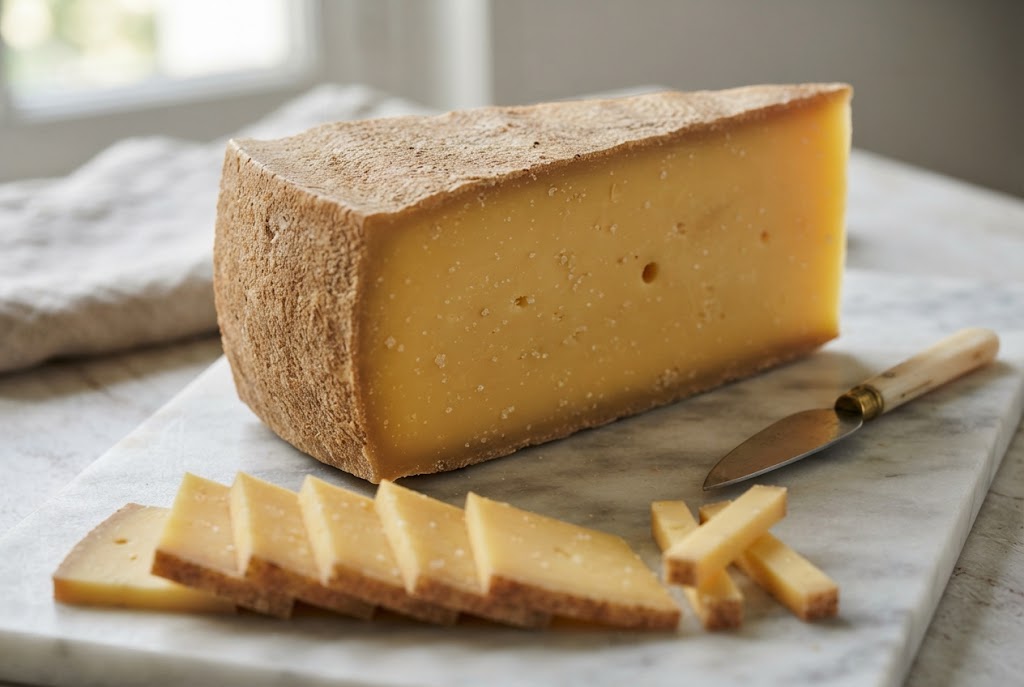
A firm alpine cheese from the Jura mountains, aged six months to three years. Nutty, brothy, and unusually complex for its price. If you buy one French cheese for a board and want it to be interesting rather than safe, buy this.
What it is
Comté is made in enormous 40kg wheels from raw milk of Montbéliarde cows, in village dairies called fruitières. Every wheel is scored out of 20 by a jury before sale — wheels above 14 get a green band, 12–14 a brown one, and anything lower can't be sold as Comté at all.
- Taste
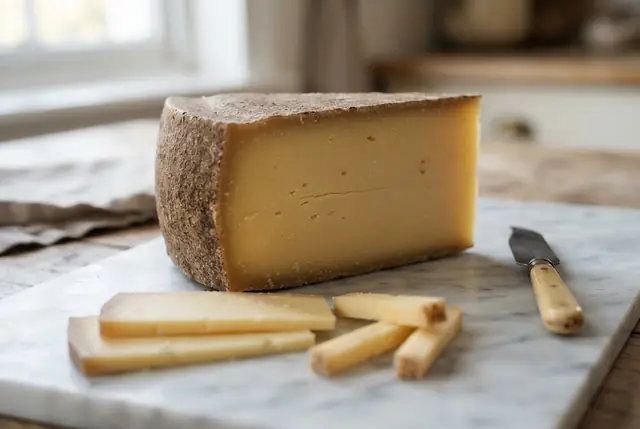
- nutty, brothy, faintly fruity, sometimes caramel or hazelnut
- Texture
- firm and dense, supple rather than crumbly, small crystals with age
- Look
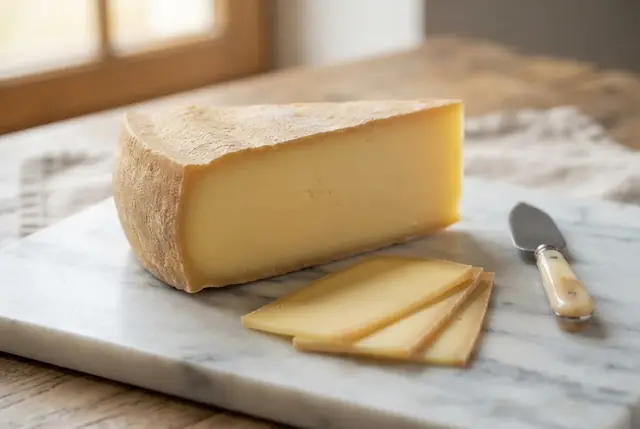
- pale gold to deep yellow, natural brown rind
Seasonality is the mechanism, and it's unusual to find it this visible in a cheese. Summer wheels are made from milk of cows on mountain pasture and come out golden and floral; winter wheels come from hay-fed cows and are paler and nuttier. Two wedges of the same cheese can taste noticeably different, and good cheesemongers will tell you which you're getting.
What it pairs with — and why
| Pair it with | Why it works |
|---|---|
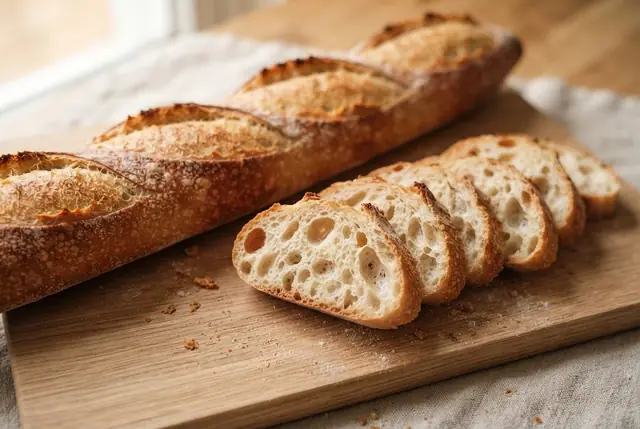
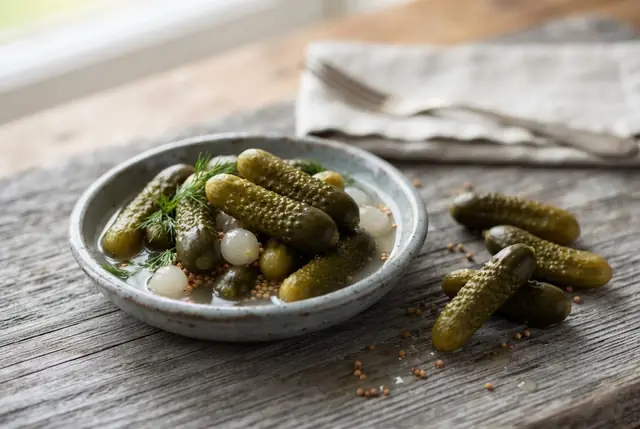
| Baguette and cornichons | The French cheese plate. Plain bread, sharp vinegar, complex cheese. |
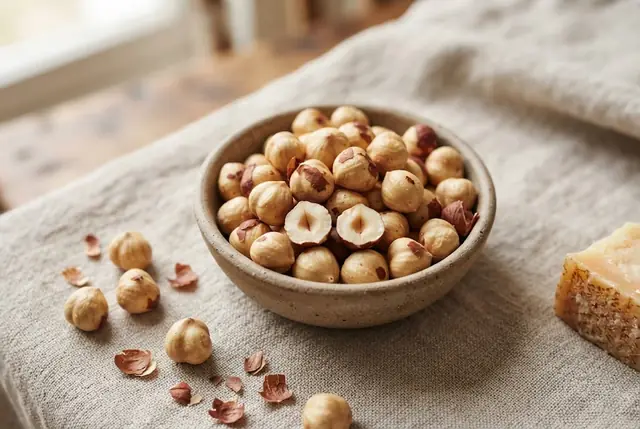
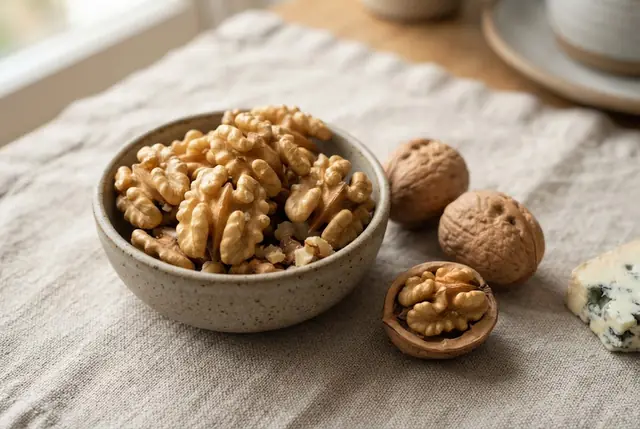
| Walnuts and hazelnuts | Comté's own nutty notes, amplified. |
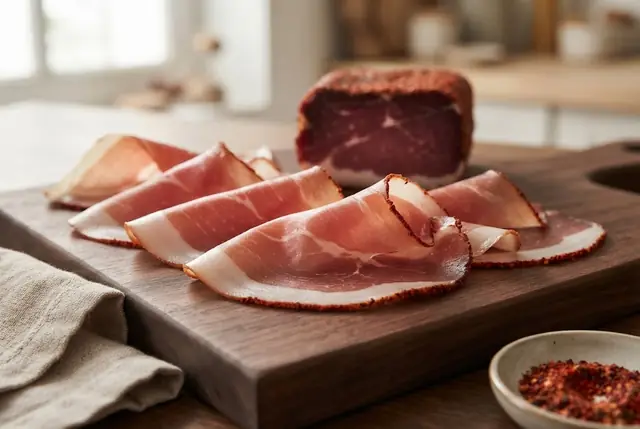
| Cured ham — jambon de Bayonne | Salt and cure against a brothy, savory cheese. |
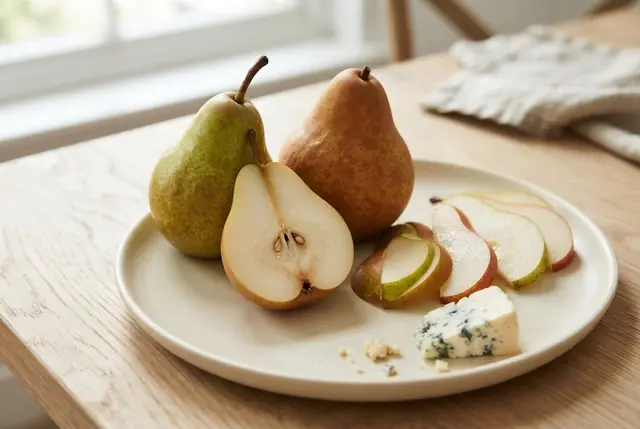
| Apple and pear | Acid and sweetness cutting dense fat. |
| Whole grain mustard | Sharp, vinegary, and traditional in the Jura. |
| Vin Jaune, Chardonnay, dry Riesling | Jura wines are the regional pairing; Vin Jaune with Comté is a classic. |
| Dark beer, dry cider | Both work well against alpine cheeses. |
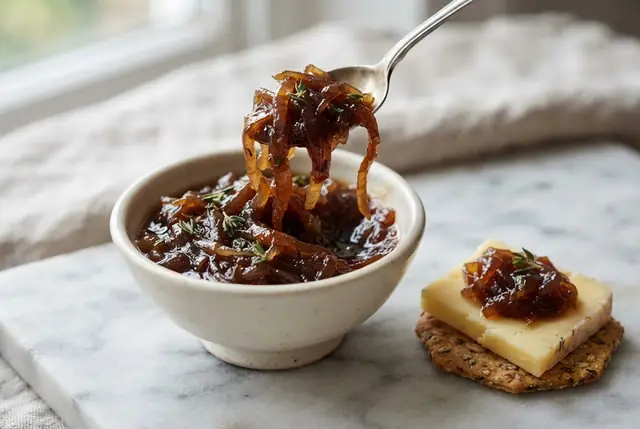
Skip it with: delicate fresh cheeses on the same corner, and very sweet jams — Comté's complexity gets buried under too much sugar.
How to prep it for the board
- Cut it into thick batons or short wedges, not thin slices. Its texture is supple and a thick piece eats better.
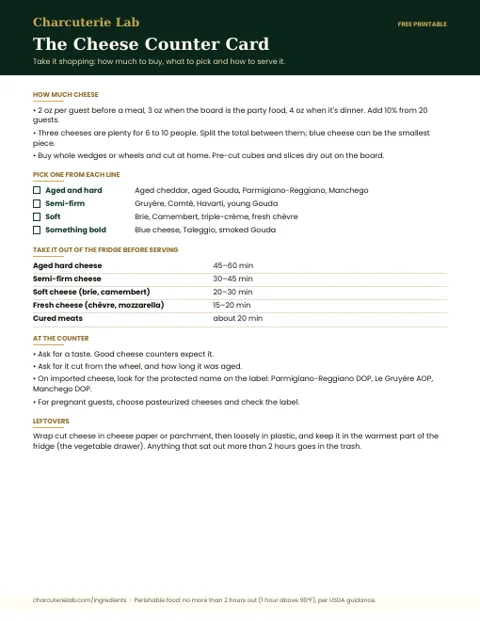
- Temper 30 minutes — this is a cheese with a lot to say and cold mutes most of it.
- Serve 1–2 oz per person.
- Ask the counter for the age and season when you buy, then say it when you serve. It's a genuinely interesting thing to know about a cheese.
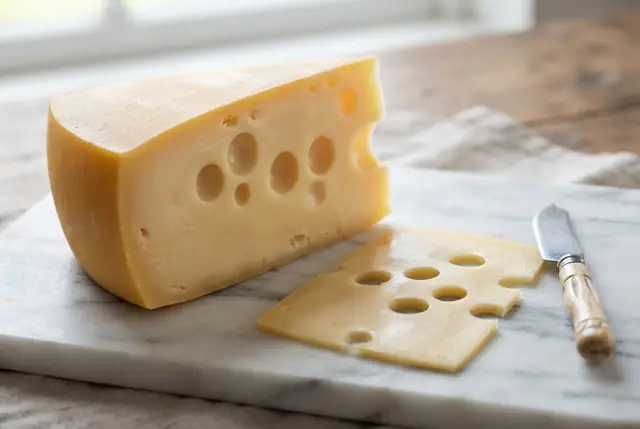
- Put it next to Gruyère if you have both — the comparison is one of the best on any board.
- Trim the rind. It's natural and edible in theory but tough and not pleasant.
- Fix: wrap in parchment or wax paper. Comté suffocates in plastic and develops off flavors within a week.
What to buy
| Product | Where | Notes |
|---|---|---|
| Comté AOP, 12 months | Whole Foods, cheese counters, Costco | The everyday version and a genuine bargain. |
| Comté AOP, 18–24 months | Cheese counters, specialty | More crystalline and more complex. The one to buy for a cheese board. |
| Comté Marcel Petite Fort St Antoine | Specialty shops, Murray's | Aged in a mountain fort. The famous one, and it earns it. |
| Costco Comté | Costco | Real AOP at an unusually good price. |
| Trader Joe's Comté | Trader Joe's | Cheap entry point, usually younger. |
| Beaufort or Gruyère | Cheese counters | The alpine neighbors — see their own pages. |
Label check: the AOP mark and, if you can see it, the green band, which means the wheel scored above 14 out of 20.
Skip: pre-packaged Comté that's been cut for weeks. Alpine cheeses dry at the face fast and lose the supple texture.
Quick FAQ
Comté or Gruyère?
Comté is fruitier and more varied; Gruyère is saltier and more direct. Comté is usually the better value.
Why do two pieces taste different?
Summer milk from mountain pasture versus winter hay-fed milk. The seasonal difference is real and visible in the color.
Can you eat the rind?
Technically yes, but it's tough and unpleasant. Trim it.
What does the green band mean?
The wheel scored above 14 out of 20 in the mandatory jury tasting.
How much per person?
1–2 oz as one of three cheeses.