The short version
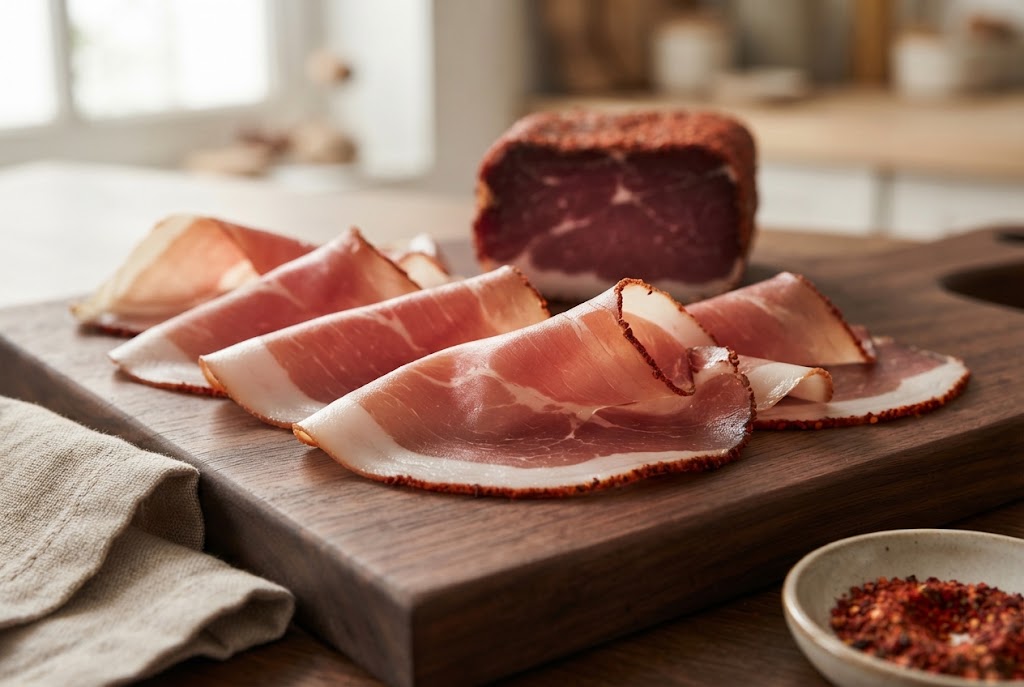
The French answer to prosciutto and serrano, from the Basque country in the southwest. Salted with local salt from the Adour basin, often finished with a rub of Espelette pepper. Softer than serrano, more savoury than Parma, and much less known outside France.
What it is
Jambon de Bayonne IGP is made in the Adour basin from pigs raised across southwest France. The hams are salted with salt from the Salies-de-Béarn springs, rested through winter, then dried through spring and summer for a minimum of seven months — usually nine to twelve. Many are rubbed with Espelette pepper before the final drying.
- Taste
- savoury, gently sweet, faintly peppery, moderately salty
- Texture
- soft and supple, more yielding than serrano
- Look
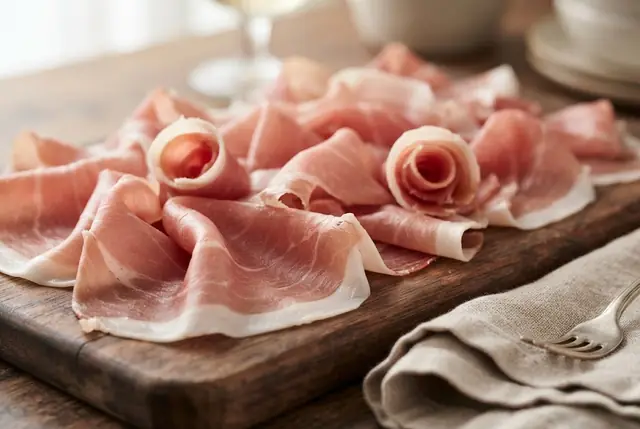
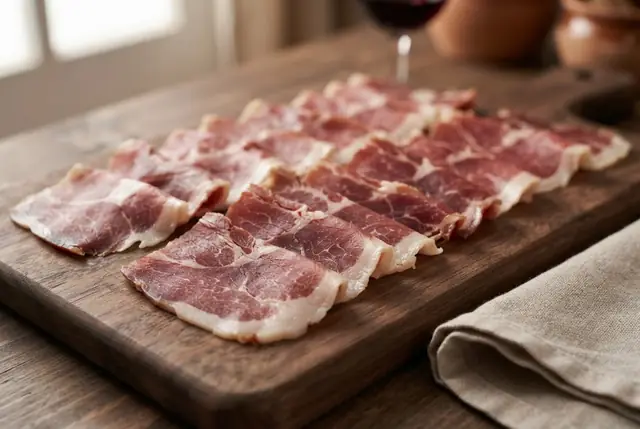
- deep rose-pink, wide white fat cap, sometimes a red pepper-dusted rind
The Adour climate is the mechanism producers point to — dry southerly foehn winds through spring and summer, moderated by Atlantic humidity, which dries the hams steadily rather than fast. The result sits between the Spanish and Italian styles: drier than Parma, softer than serrano.
What it pairs with — and why
| Pair it with | Why it works |
|---|---|
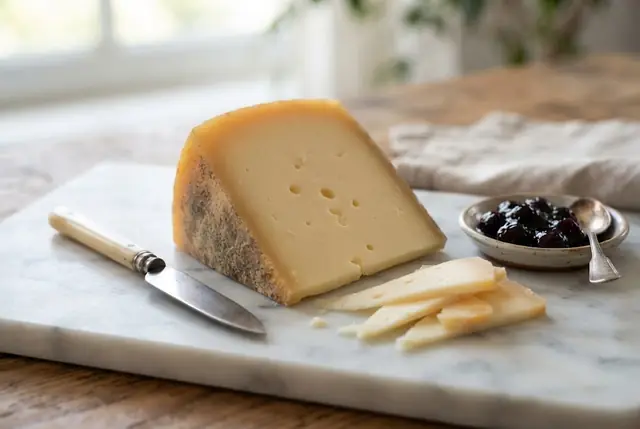
| Ossau-Iraty | Basque ham with Basque sheep cheese. The regional pairing and a very good one. |
| Black cherry jam | The Basque condiment, and it works with the ham as well as the cheese. |
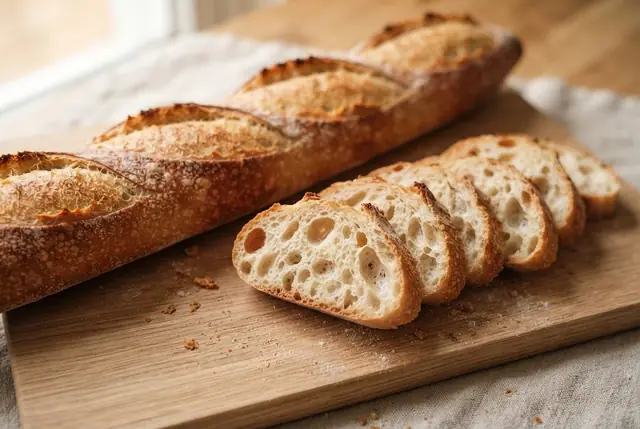
| Baguette and butter | Plain French service. |
| Espelette pepper | Already on the rind of many hams; a pinch alongside makes the link. |
| Melon and figs | Sweet fruit against salt, as with any dry-cured ham. |
| Comté | Nutty and firm against soft and savoury. |
| Irouléguy, Jurançon, dry cider | Southwest French wines. |
Skip it with: everything crackers and smoked cheese. It's more robust than Parma but still a delicate dry-cured ham.
How to prep it for the board
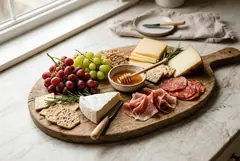
- Slice thin and drape in loose folds.
- Temper 20 minutes.
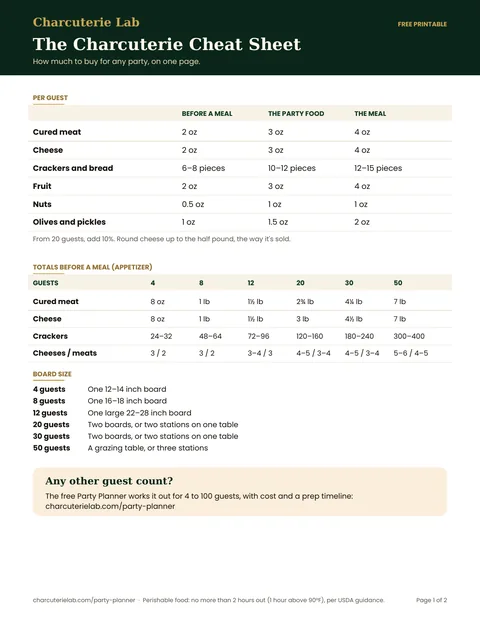
- Serve 1–2 oz per person.
- Leave the fat cap on. Bayonne hams have a generous one and it's where much of the flavour sits.
- Put black cherry jam beside it if you have it — it's the regional pairing and almost nobody outside France does it.
- Serve it alongside serrano or Parma for a three-country comparison. The differences are clear and it makes a better board than any one ham alone.
- Fix: slices sticking? Temper longer rather than pulling them apart cold.
What to buy
| Product | Where | Notes |
|---|---|---|
| Jambon de Bayonne IGP | Whole Foods, French delis, specialty | The protected version. Look for the Basque lauburu cross stamp. |
| Pre-sliced Bayonne packs | Grocery cheese case, Whole Foods | Widely imported and reliable. |
| Jambon de Savoie | French delis, specialty | The alpine French ham. Also excellent. |
| Jamón serrano | Most grocery | The Spanish equivalent — see its own page. |
| Prosciutto di Parma | Most grocery | The Italian benchmark — see its own page. |
| La Quercia Prosciutto Americano | Whole Foods | American-made and easy to find. |
Label check: the IGP mark and the Basque cross branded on the rind. Pork and salt should be the ingredients.
Skip: buying all three of Bayonne, Parma and serrano for a small board — one good ham beats three thin scatterings.
Quick FAQ
How is Bayonne different from prosciutto?
Bayonne is drier and more savoury, with a wider fat cap and often a rub of Espelette pepper. Parma is sweeter and silkier.
Is it smoked?
No. Some hams from the region are, but Jambon de Bayonne IGP is air-dried only.
What's the red dust on the rind?
Espelette pepper — a mild Basque chili — rubbed on before the final drying.
How much per person?
1–2 oz as one of several meats.
What's the regional pairing?
Ossau-Iraty cheese and black cherry jam from Itxassou. All three come from the same corner of France.