The short version
Four ingredients — flour, water, salt, yeast — and the only base on a board that gives you crunch and softness in the same bite. Buy it the day you serve it. A baguette bought yesterday is a different, worse ingredient.
What it is
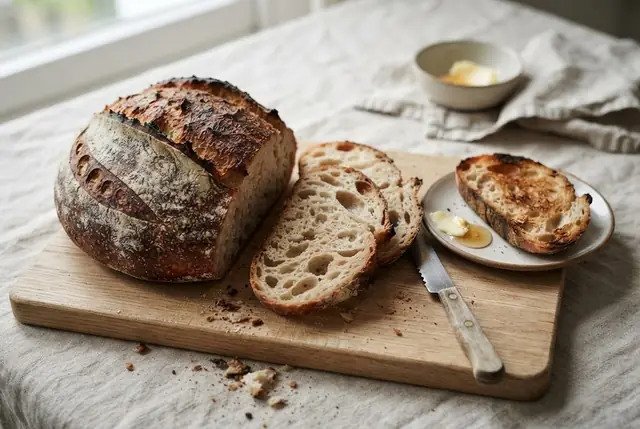
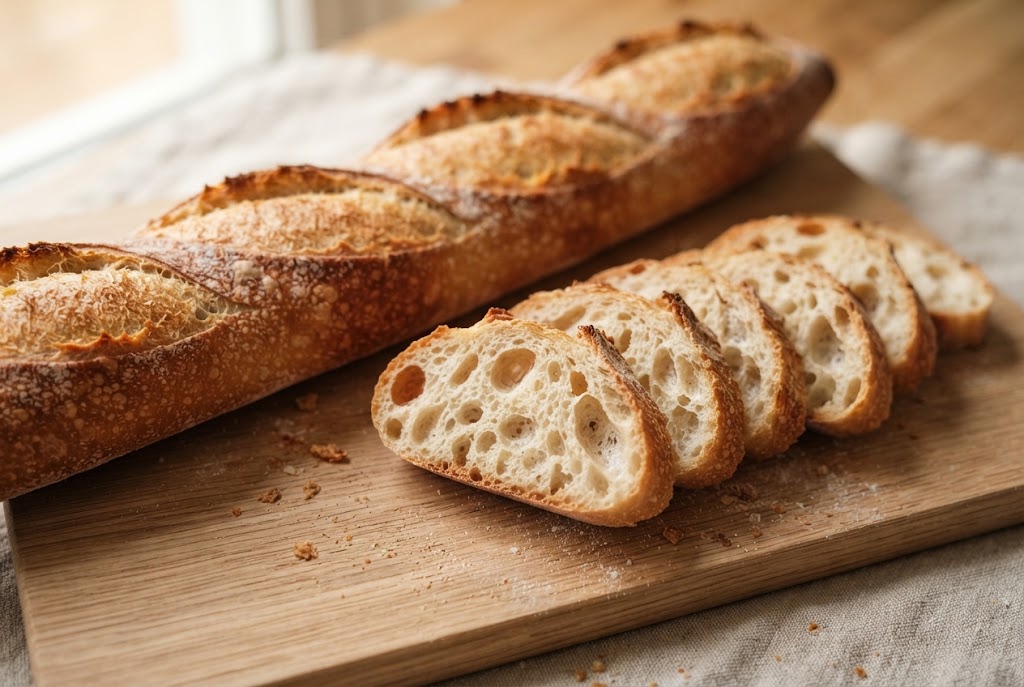
A lean French loaf, meaning no fat, no sugar, no milk. In France the pain traditionnel is legally limited to those four ingredients. The long thin shape maximizes crust, and steam in the oven is what makes that crust blister and shatter.
- Taste
- clean, wheaty, mildly sweet from the crumb
- Texture
- shattering crust over soft open crumb
- Look
- golden, slashed diagonally, irregular holes inside
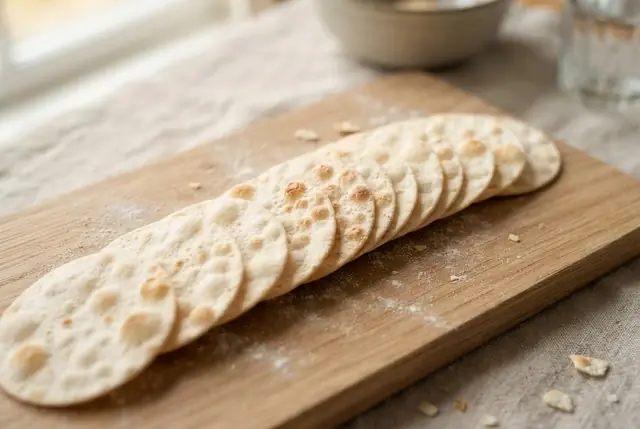
The two-textures-in-one thing is the mechanism. The crust gives you crunch; the crumb soaks up oil, soft cheese and juice without falling apart. No cracker can do both, which is why a baguette belongs on a board even when crackers are already there.
What it pairs with — and why
| Pair it with | Why it works |
|---|---|
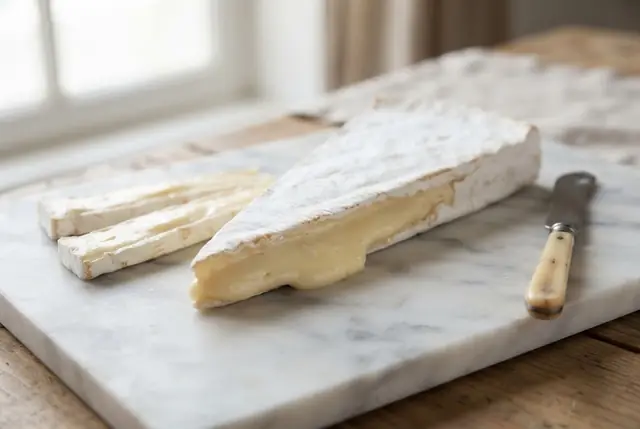
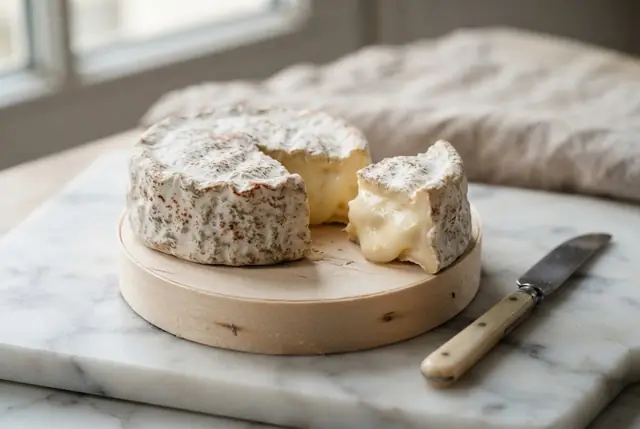
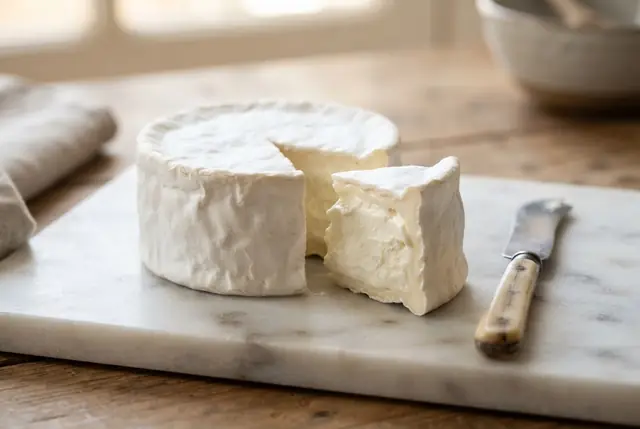
| Brie and Camembert | The canonical pairing. Soft crumb against soft cheese, with the crust supplying the only crunch needed. |
| Triple-crème cheese | Lean bread against very rich cheese. No fat competing with fat. |
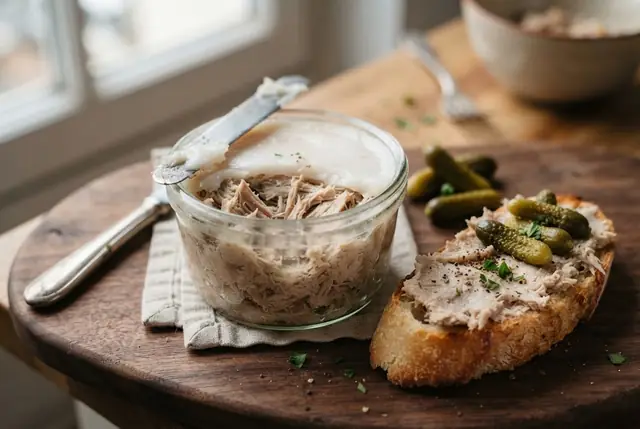
| Pâté and rillettes | Rich spreadable meat needs something plain and structural. This is what it's served on in France. |
| Cultured butter and radishes | Radis au beurre. Three ingredients, no cheese, and it always disappears first. |
| Good olive oil | The open crumb acts like a sponge. A cracker can't do this at all. |
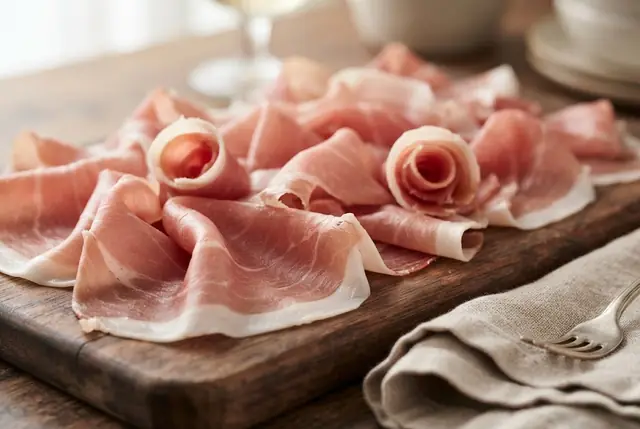
| Jamón and prosciutto | Salt and fat against neutral wheat — the crumb absorbs the rendered fat instead of skidding. |
| Fresh chèvre with herbs | Bright and tangy on a plain background, no cracker flavor interfering. |
Skip it with: anything wet that has to sit — marinated tomatoes, wet mozzarella, dressed salads. Bread goes soggy from underneath in about fifteen minutes.
How to prep it for the board
- Buy it the same day. This is the single rule. A day-old baguette is stale, not rustic.
- Slice on a sharp diagonal, about ⅓ inch thick. The angle gives you more surface for toppings and looks better than coins.
- Slice no more than 30 minutes ahead, or slice early and cover with a clean kitchen towel — not plastic, which traps steam and softens the crust.
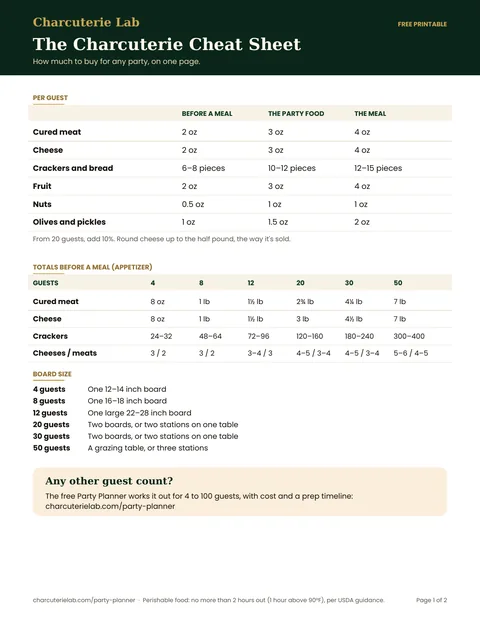
- Serve 3–4 slices per person alongside crackers. Half a loaf covers six people; a full loaf if bread is the main base.
- Tear the heel and leave it on the board. A torn end next to clean slices makes the whole thing look less like a catering tray.
- Fix: day-old loaf? Run it briefly under the tap, then 5–7 minutes at 350°F. The crust re-crisps and the crumb steams back to soft. Serve within the hour — it only works once.
What to buy
| Product | Where | Notes |
|---|---|---|
| Same-day loaf from a local bakery | Neighborhood bakery | Always the best option. Ask what time it came out. |
| In-store bakery baguette | Kroger, Publix, Whole Foods, Wegmans | Baked in-house that morning. Perfectly good. |
| La Brea Bakery Take & Bake Baguette | Most grocery stores, bread aisle | Par-baked. You finish it at home, so it's genuinely fresh at serving. |
| Trader Joe's par-baked baguettes | Trader Joe's | Cheap, freezer-friendly, 10 minutes in the oven. |
| Costco bakery French baguette (2-pack) | Costco | Big, cheap, good. Freeze the second one. |
Label check: the shorter the ingredient list, the better the loaf. Dough conditioners, preservatives and added sugar produce a soft loaf that never gets a real crust.
Skip: shelf-stable baguettes sold in a plastic sleeve in the bread aisle. They're soft-crusted sandwich bread in a baguette shape.
Quick FAQ
How much baguette per person?
3–4 slices, or roughly half a loaf per six people when crackers are also out.
Should I slice it or tear it?
Slice for a clean board, tear for a rustic one. Do both — a few torn pieces among the slices looks intentional.
Can I slice it the night before?
No. Slice it the day of and cover with a towel. Cut surfaces stale within hours.
Should I toast it?
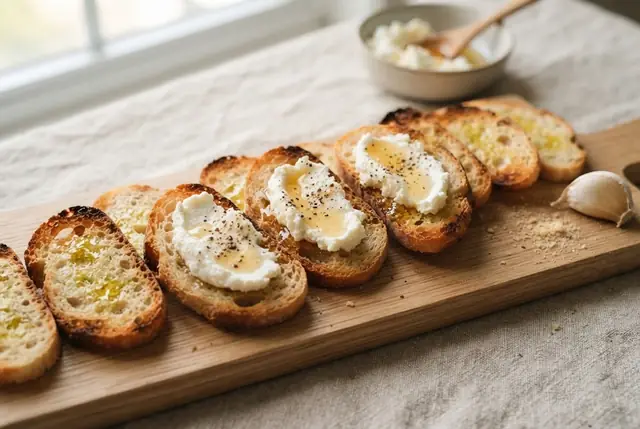
Only if the toppings are wet or you're making crostini. Otherwise the contrast between crisp crust and soft crumb is the point, and toasting removes it.
Can I freeze a baguette?
Yes, wrapped tightly, for about a month. Thaw at room temperature, then 5 minutes at 350°F to bring the crust back.