The short version
A Provençal paste of olives, capers, anchovy and olive oil. It's the most savoury thing you can put on a board — no sugar anywhere — which makes it the counterweight to a table full of jam and honey. Use it sparingly; it's very salty.
What it is
Black or green olives pounded with capers, anchovy, garlic and olive oil, often with lemon and thyme. The name comes from tapeno, Provençal for caper — the capers, not the olives, give it its name. Black olive tapenade is the standard; green is milder and more herbal.
- Taste
- intensely salty, briny, faintly bitter, umami-rich
- Texture
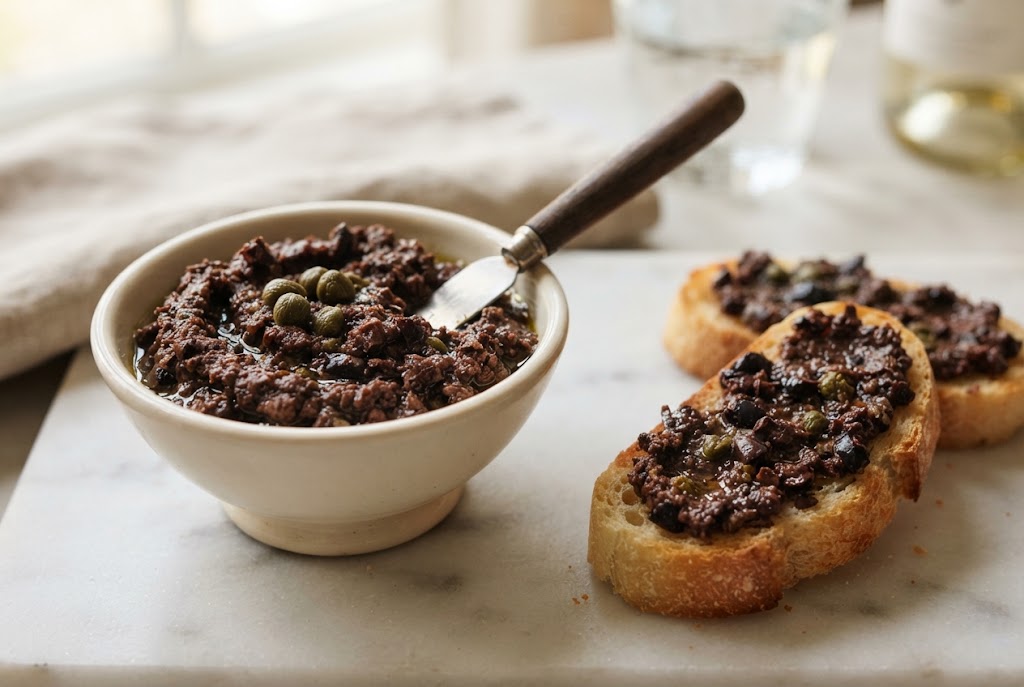
- coarse paste, oily, with visible olive pieces
- Look
- near-black or olive-green, glossy
The mechanism is salt and glutamate together. Olives, capers and anchovy are all high in free glutamate, so tapenade delivers savoury depth rather than just saltiness. Against a fresh, mild cheese that depth does what a jam's sugar does — it makes the cheese taste of more — but from the opposite direction.
What it pairs with — and why
| Pair it with | Why it works |
|---|---|
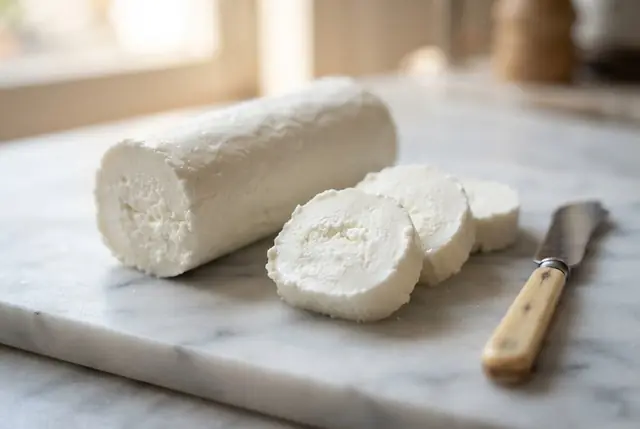
| Fresh goat cheese | The classic. Chalky lactic tang against oily salt, with neither having any sugar to muddle it. |
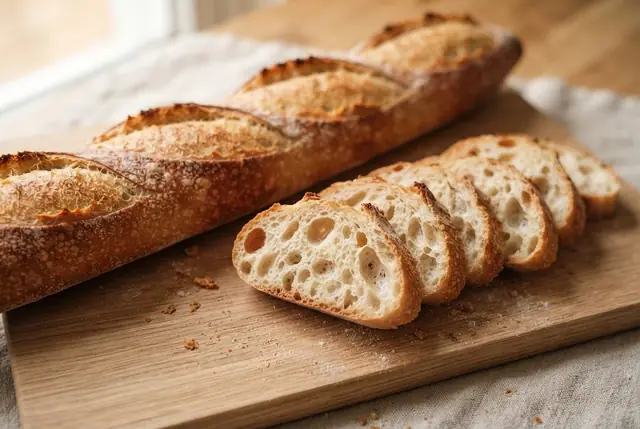
| Baguette and crostini | The traditional service. Spread thin on toasted bread, nothing else needed. |
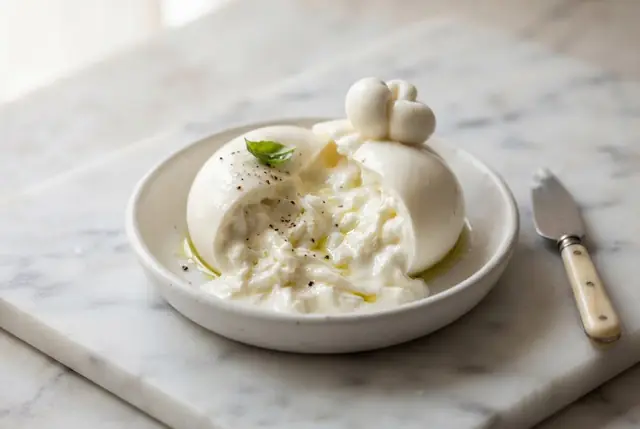
| Burrata | Cream as a foil for concentrated salt. A restaurant plate in two ingredients. |
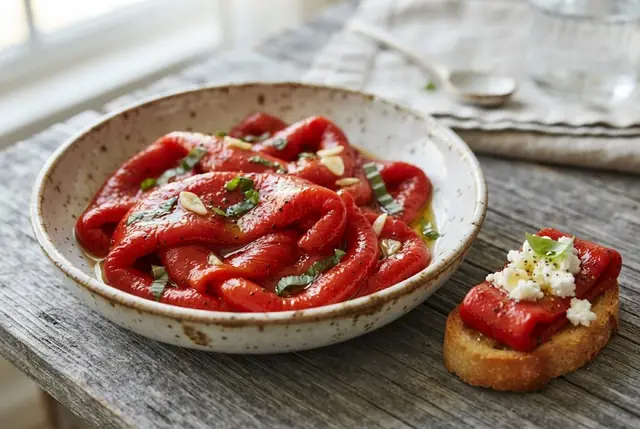
| Roasted red peppers | Sweetness against brine — the Provençal combination, and it fixes tapenade's one weakness. |
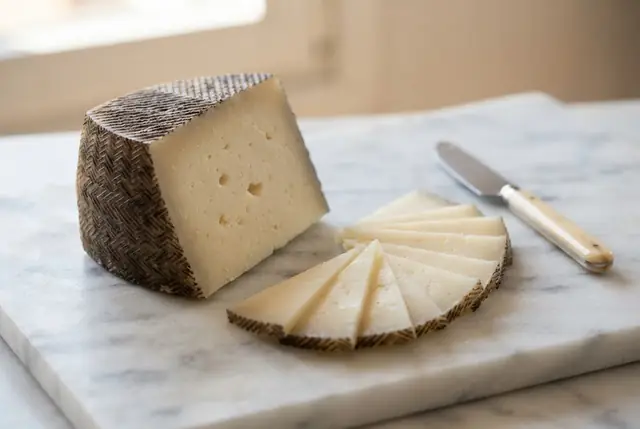
| Manchego and hard sheep cheese | Salt on salt, which works because the textures are so different. |
| Hard-boiled eggs and raw vegetables | The wider Provençal table. |
Skip it with: blue cheese and anything already very salty. Two salt bombs cancel each other out.
How to prep it for the board
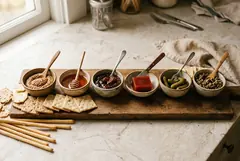
- Decant into a small bowl with a small spoon.
- Loosen it with olive oil if it's stiff — most jarred tapenade is.
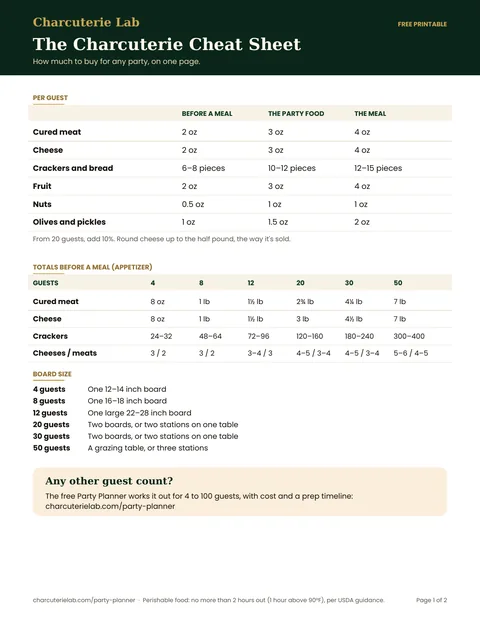
- Serve 0.5 oz per person. It's very salty and people take a little.
- Give it a plain base — baguette or a neutral cracker, never a salted one.
- Put it next to the fresh cheese, away from the jam.
- Say it contains anchovy. Many people assume tapenade is vegetarian.
- Fix: too salty? Stir in more olive oil and a squeeze of lemon.
What to buy
| Product | Where | Notes |
|---|---|---|
| French black olive tapenade | Specialty, cheese shops | The standard. Look for coarse texture, not purée. |
| Green olive tapenade | Specialty, Italian delis | Milder, more herbal. Better with burrata. |
| Trader Joe's olive tapenade | Trader Joe's | Cheap and good. |
| Anchovy-free tapenade | Specialty | For vegetarian guests. Milder, and it loses some depth. |
| Homemade | Make it | Pulse olives, capers, anchovy, garlic and oil in a processor. Five minutes, coarse not smooth. |
Label check: olives, capers, anchovy and olive oil should be the ingredients. Watch for sunflower oil, which is a cost-cutting sign.
Skip: anything blended completely smooth — texture is part of the point.
Quick FAQ
What is tapenade?
A Provençal paste of olives, capers, anchovy and olive oil, served on bread or with fresh cheese.
Is tapenade vegetarian?
Usually not — traditional tapenade contains anchovy. Anchovy-free versions exist and are labelled as such.
What cheese goes with tapenade?
Fresh goat cheese above all, plus burrata and hard sheep cheeses like manchego.
Why is it called tapenade if it's mostly olives?
The name comes from tapeno, the Provençal word for caper.
How much per person?
About half an ounce. It's very salty and a little goes far.