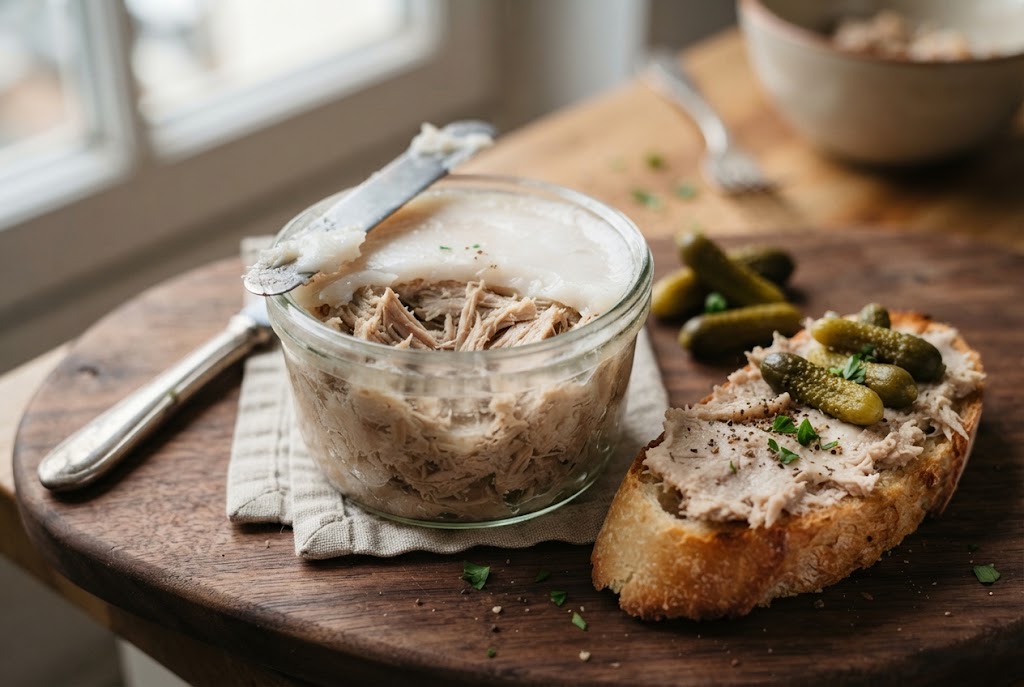
The short version
Pork cooked very slowly in its own fat until it falls apart, shredded, seasoned, and packed into a pot under a seal of fat. Rougher than pâté, richer than anything else spreadable. Serve it soft, with a knife, on toast.
What it is
Rillettes are a preservation technique from the Loire — Tours and Le Mans both claim the best. Pork belly and shoulder are simmered in lard for hours until the meat surrenders, then pulled into threads, seasoned, packed and sealed with a layer of fat. The fat cap excludes air, which is why a pot keeps for weeks.
- Taste
- deeply porky, savoury, gently peppery, rich
- Texture
- stringy and rough, spreadable when warm, firm when cold
- Look
- pale beige-grey, visibly shredded, under a white fat seal
Confit is the mechanism. Cooking meat submerged in fat at a low temperature breaks down connective tissue without ever browning or drying the meat, so it shreds while staying moist. The fat then does double duty as preservative and texture — which is why rillettes are so rich and why they last so long.
What it pairs with — and why
| Pair it with | Why it works |
|---|---|
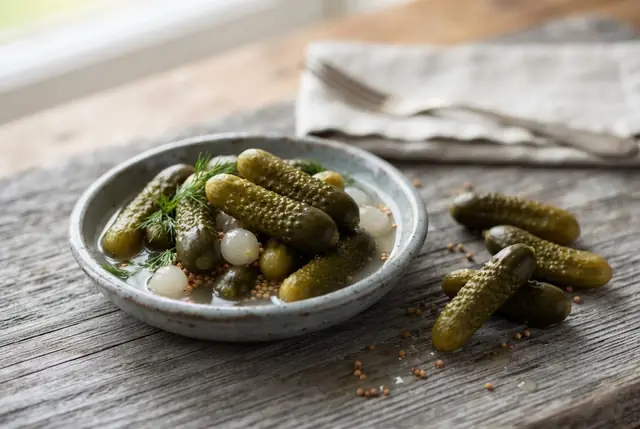
| Cornichons | Sharp vinegar against pure pork fat. Essential rather than optional. |
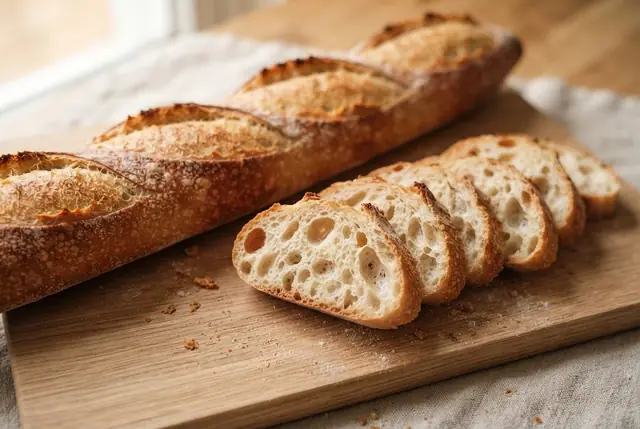
| Baguette, torn not sliced | Rough bread for rough meat. The French service. |
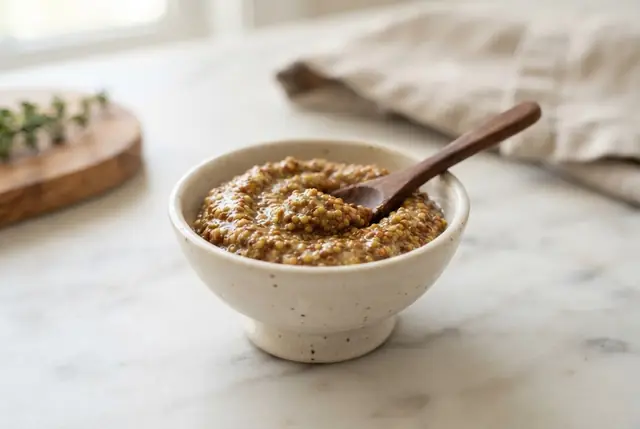
| Grainy mustard | Vinegar and seed texture against a smooth wall of pork fat. |
| Pickled onions and caperberries | More acid, more bite. |
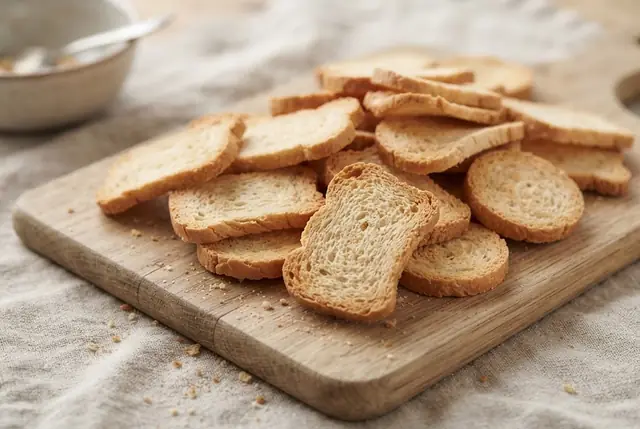
| Toasted country bread | Warm toast loosens the fat into the crumb. |
| Cherry or fig preserve | Sweetness against savoury fat — less traditional, very good. |
| Chinon, Vouvray, dry cider | Loire wines, and the acid is doing the work. |
Skip it with: smoked cheese, and any other very rich spread. One potted fat per board.
How to prep it for the board
- Temper 30 minutes. Straight from the fridge rillettes are a solid brick; at room temperature they spread. This is the whole preparation.
- Serve in the pot or a small bowl with its own knife, not spread onto anything in advance.
- Leave the fat cap on until serving, then either stir it in or push it aside — both are acceptable, and stirring it in is richer.
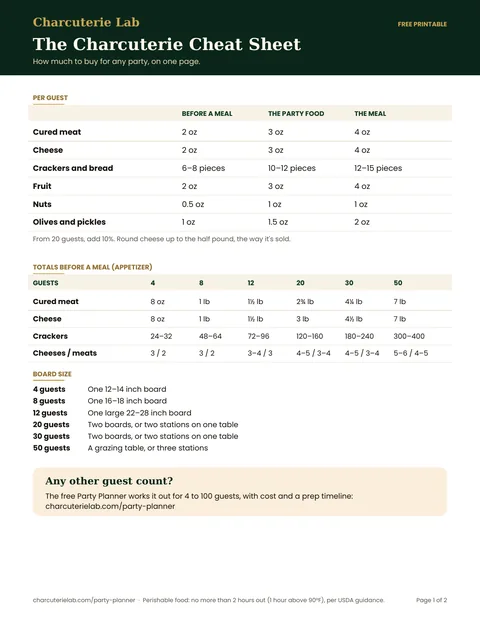
- Serve 1–1.5 oz per person.
- Put torn baguette and cornichons directly beside it.
- Rough it up with a fork before serving so it looks shredded rather than moulded.
- Fix: too firm to spread? More time out. Never microwave — it separates.
What to buy
| Product | Where | Notes |
|---|---|---|
| Les Trois Petits Cochons Pork Rillettes | Whole Foods, most grocery | Widely available and good. |
| Fabrique Délices rillettes | Whole Foods, specialty | California-made French charcuterie. Excellent. |
| Rillettes du Mans or de Tours | French delis, specialty importers | The traditional regional versions. |
| Duck rillettes | Whole Foods, French delis | Richer and darker. Arguably better. |
| Salmon rillettes | Whole Foods, specialty | The seafood version — lighter, and a good board item. |
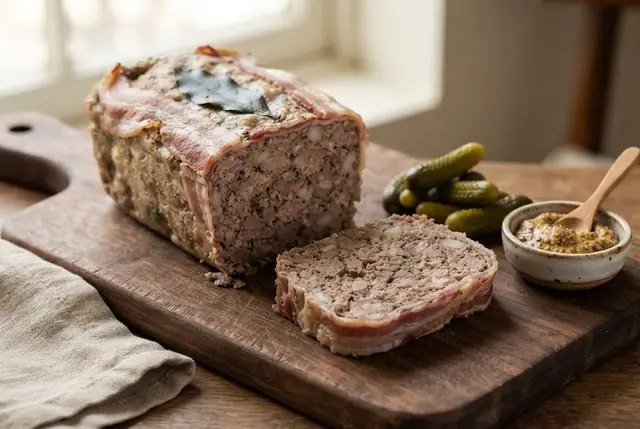
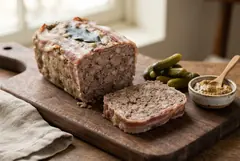
| Pâté de campagne | Whole Foods, grocery | The sliceable relative — see its own page. |
Label check: pork and pork fat as the main ingredients, and a visible shredded texture. Smooth rillettes have been over-processed.
Skip: serving it cold. It's the difference between a rich spread and an unyielding block.
Shopping for pâté too? See our pâté buyer's guide.
Quick FAQ
What are rillettes?
Meat slow-cooked in fat until it shreds, then packed into a pot under a fat seal. Spreadable, rich and rustic.
Rillettes or pâté?
Pâté is ground and baked into a sliceable terrine. Rillettes are shredded and potted, and they spread.
Do I eat the white fat on top?
Either stir it in or set it aside. Both are normal; stirring it in is richer.
How long do they keep?
Sealed under fat, weeks in the fridge. Once broken into, about a week.
How much per person?
1–1.5 oz. Very rich.