The short version
A coarse country terrine of pork, pork liver and fat, baked in a loaf and served in slices. Rustic, peppery and deeply savoury. With a baguette, butter and cornichons it's an entire French charcuterie plate for very little money.
What it is
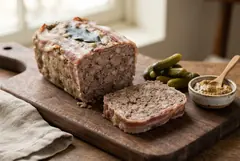
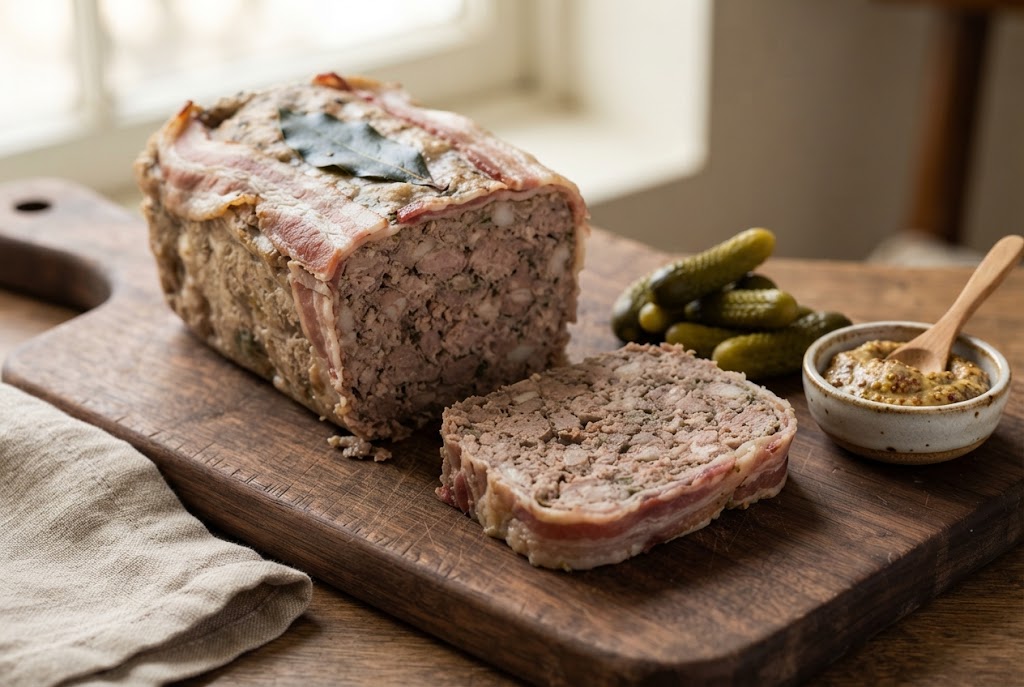
Pâté de campagne means country pâté. Coarsely chopped pork shoulder, belly and liver are mixed with onion, garlic, pepper, sometimes brandy or wine, packed into a terrine and baked. It's often wrapped in caul fat or lined with bacon. Unlike a smooth mousse, the texture is deliberately rough.
- Taste
- savoury, peppery, mineral from the liver, gently sweet from onion
- Texture
- coarse and crumbly, firm enough to slice
- Look
- grey-pink flecked loaf, often with a darker bacon edge or a bay leaf on top
Liver proportion is the mechanism. Enough liver gives the mineral depth that makes it taste like pâté rather than meatloaf; too much and it turns bitter and pasty. Country pâté sits at a modest ratio — usually a fifth to a third — which is why it reads as savoury and rustic rather than rich and livery.
What it pairs with — and why
| Pair it with | Why it works |
|---|---|
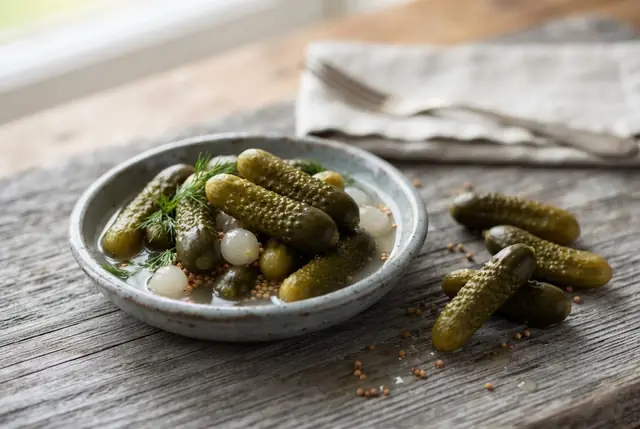
| Cornichons | Sharp vinegar against fat and liver. The single most important partner. |
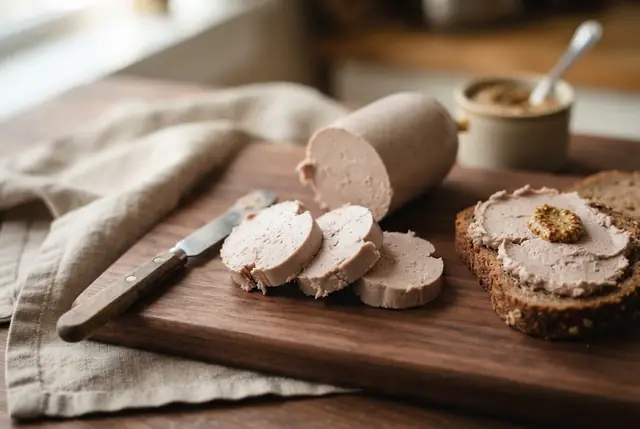
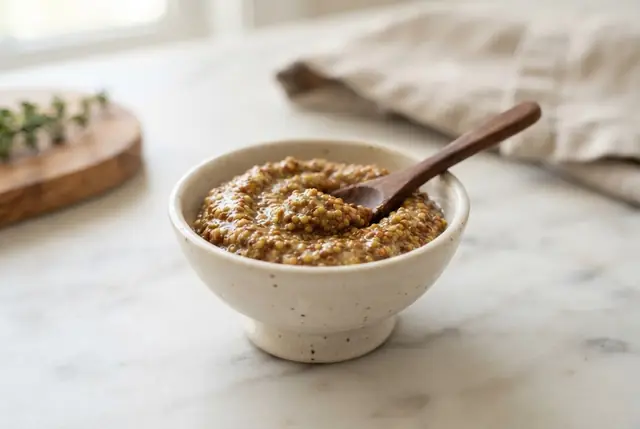
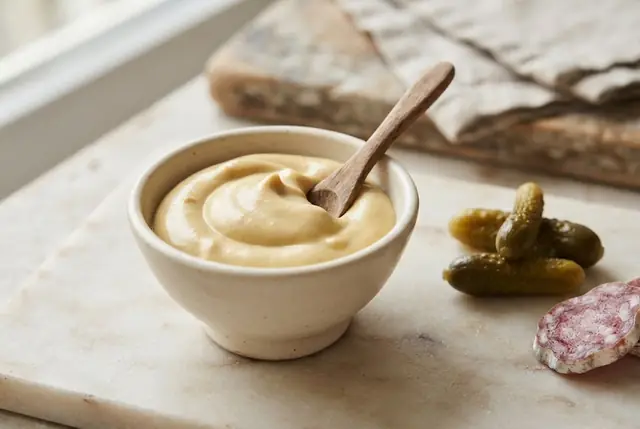
| Grainy or Dijon mustard | Same job, more body. |
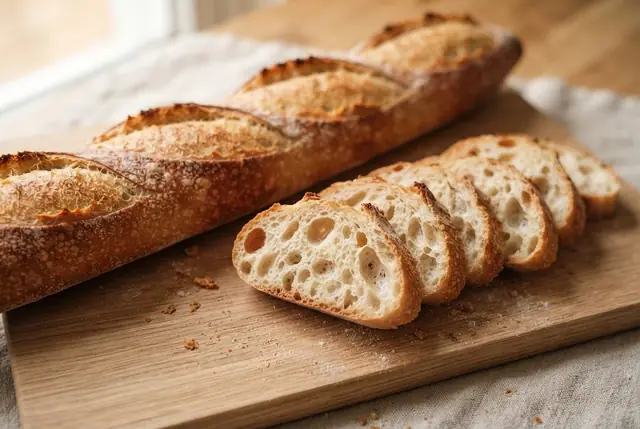
| Baguette and butter | The French plate. Bread carries it; butter softens the edge. |
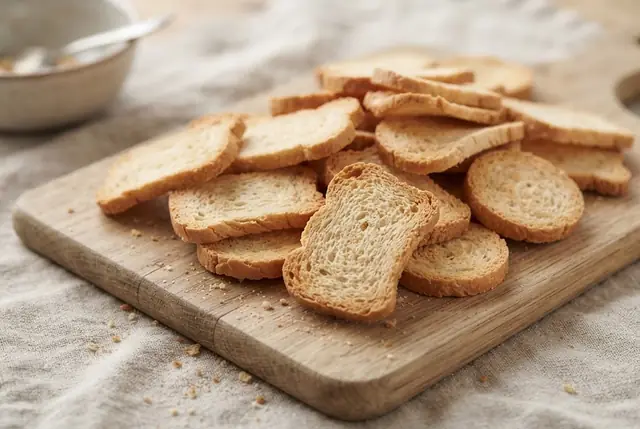
| Melba toast | Dry and neutral under something rich and soft. |
| Pickled onions and caperberries | More acid, more crunch. |
| Fig jam or cherry preserve | Sweetness against mineral liver. Excellent and less obvious. |
| Beaujolais, dry cider, Riesling | Light, acidic, French. |
Skip it with: smoked cheese, which fights the liver. And skip serving it next to another liver product — one pâté per board.
How to prep it for the board
- Slice about ⅓ inch thick and lay the slices flat. Thinner and they crumble apart.
- Or serve the terrine whole with a knife and let people cut their own. It looks generous and it's how a French charcuterie does it.
- Temper 20 minutes. Cold pâté is firm and mute.
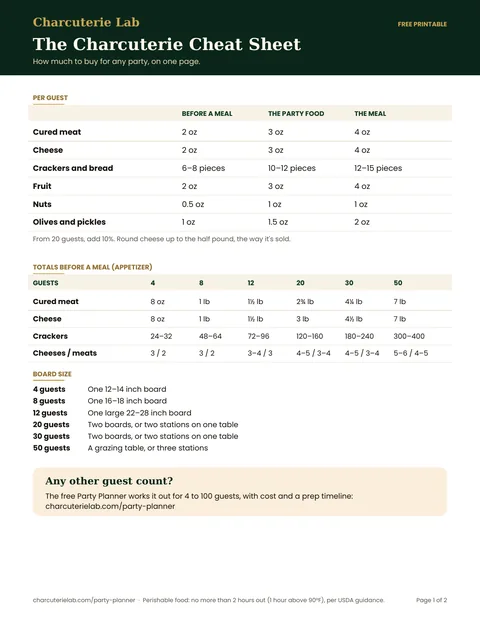
- Serve 1–1.5 oz per person.
- Cornichons and mustard directly beside it — this is a pairing the dish depends on.
- Leave the bay leaf or bacon edge on for looks; nobody eats it.
- Fix: crumbling badly? Chill it briefly, then use a thin knife dipped in hot water between slices.
What to buy
| Product | Where | Notes |
|---|---|---|
| Les Trois Petits Cochons Pâté de Campagne | Whole Foods, most grocery | The most widely available good one in the US. |
| Fabrique Délices | Whole Foods, specialty | California-made French charcuterie. Excellent. |
| French deli counter pâté | French delis, specialty grocers | Cut to order, usually better and cheaper. |
| Pâté de campagne Breton | Specialty importers | The protected Breton style. Coarser and porkier. |
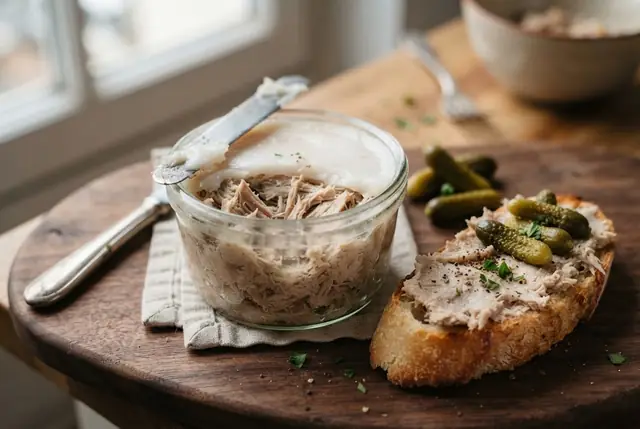
| Rillettes | Whole Foods, French delis | The shredded, spreadable relative — see its own page. |
| Liverwurst | Grocery deli | The German equivalent — see its own page. |
Label check: pork and pork liver near the top, a coarse visible texture, and a short ingredient list. Smooth uniform pâté is a mousse, which is a different product.
Skip: pâté in a sealed tin for a board if a fresh terrine is available. The texture difference is large.
Our buyer's guide: for a board, try Alexian Pâté de Campagne or a pâté or mousse from Les Trois Petits Cochons. See our pâté buyer's guide.
Quick FAQ
Is pâté de campagne the same as liver pâté?
It contains liver but isn't dominated by it. Coarse pork is the bulk; liver is maybe a fifth to a third.
Is it cooked?
Yes — baked in a terrine mould, then chilled. It's ready to eat.
How is it different from rillettes?
Pâté is ground and baked into a sliceable loaf. Rillettes are slow-cooked shredded meat packed in fat, and they spread.
How much per person?
1–1.5 oz. It's rich.
Do I need the cornichons?
Effectively yes. Acid is what keeps a fatty liver terrine from feeling heavy.