The short version
The small sour pickles that come with every French charcuterie plate, and they're there for a reason. Pâté and rillettes are almost pure fat; a cornichon's sharp vinegar cuts it so completely that you can eat a second slice. On a meat board they're not a garnish, they're a function.
What it is
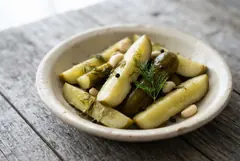
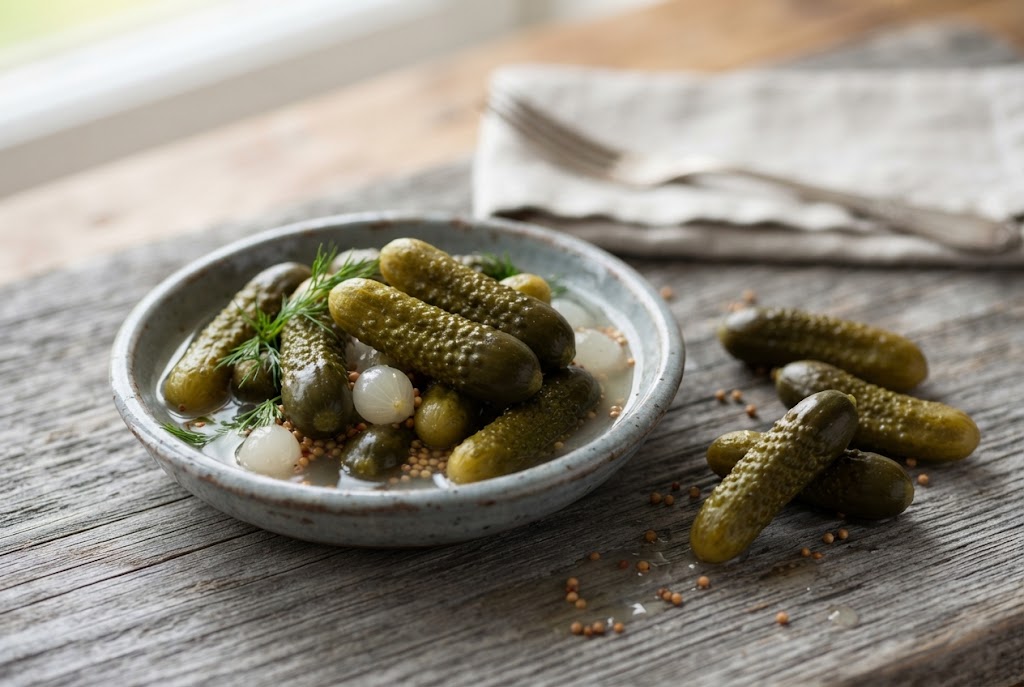
Tiny gherkin cucumbers picked young and pickled in white wine vinegar with tarragon, pearl onions, mustard seed and peppercorns. Distinctly French — the Polish and German equivalents are usually sweeter or dill-forward. Sharp, never sweet.
- Taste
- sharply sour, tarragon-herbal, mildly salty
- Texture
- very crunchy, firm all the way through
- Look
- small bumpy green pickles, one to two inches, in cloudy brine
The mechanism is acid at high concentration in a small bite. Fat coats the palate and dulls it; acetic acid strips it. A cornichon delivers enough vinegar in one crunch to reset the mouth completely, and its size means you can do that between every bite without filling up.
What it pairs with — and why
| Pair it with | Why it works |
|---|---|
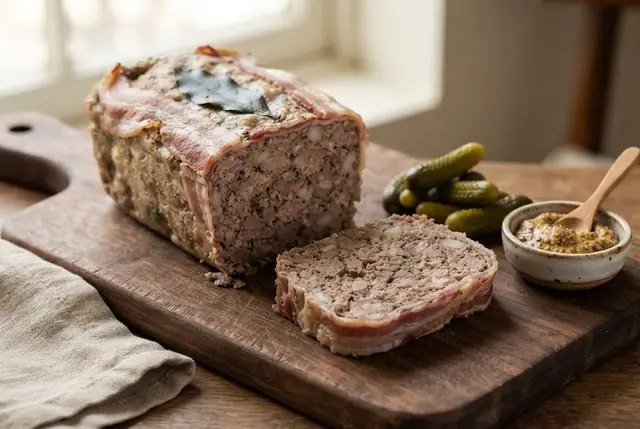
| Pâté de campagne and terrines | The classic. Rich liver fat needs acid to be edible in quantity, and this is the sharpest small thing available. |
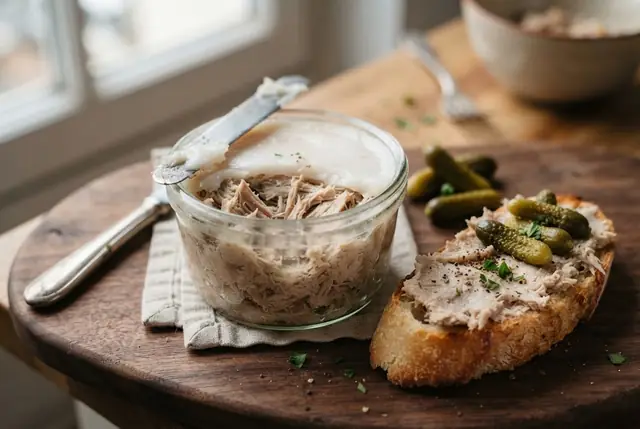
| Rillettes | Same logic, more so. Rillettes are pure rendered fat and need cutting. |
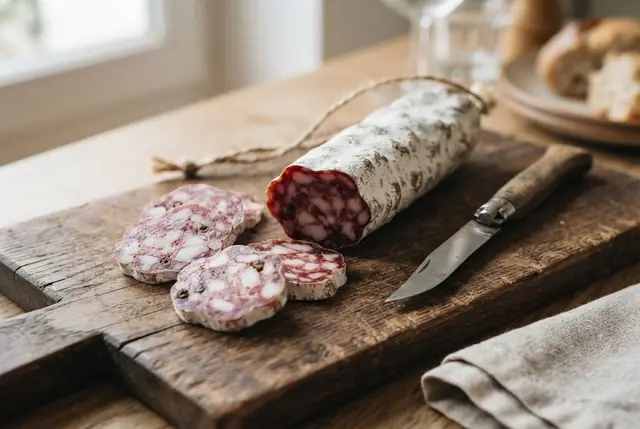
| Saucisson sec and dry salami | Fat and salt sliced by vinegar and crunch. |
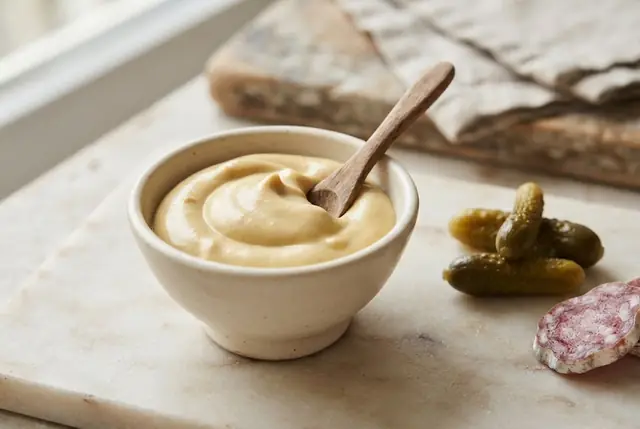
| Dijon mustard | Two acids at different intensities, served side by side on every French plate. |
| Comté and gruyère | Nutty, dense, fatty cheese with a sour crunch. The Alpine ploughman's. |
| Raclette and melted cheese | The traditional accompaniment, and the reason both are on the same menu. |
Skip it with: delicate fresh cheeses and sweet jams. Cornichons are aggressive and small enough to be everywhere on a board.
How to prep it for the board
- Drain them and serve in a small bowl or scattered beside the pâté.
- Don't rinse them. The brine is the point.
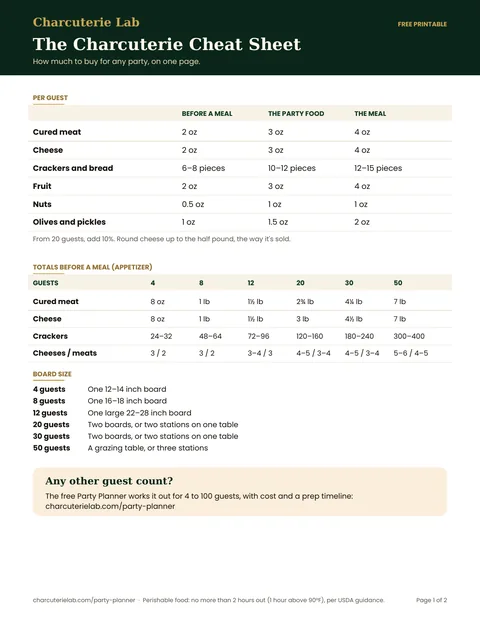
- Serve 0.5 oz per person — three or four.
- Put them next to the pâté and the mustard, which is where they earn their place.
- Buy the sour kind, not the sweet. Read the label; some brands add sugar.
- Serve cold or at room temperature — both work.
- Fix: soft and limp? That's an old jar. They should snap.
What to buy
| Product | Where | Notes |
|---|---|---|
| Maille cornichons | Any grocery | The widely available standard. Properly sour and crunchy. |
| French cornichons extra-fins | French delis, specialty | Smaller and crunchier. The best grade. |
| Trader Joe's cornichons | Trader Joe's | Cheap and good. |
| Cornichons with pearl onions | Grocery, specialty | Two pickles in one jar. Good value on a meat board. |
| Polish or German gherkins | European delis | Often sweeter or dill-forward. A different and less useful thing here. |
Label check: vinegar and tarragon, no sugar. "Sweet gherkins" are a different product entirely.
Skip: anything soft in the jar, and any brand that lists sugar high in the ingredients.
Ranked picks: our top cornichon pick is Maille Cornichons Original, and our top-rated pickle overall is Mt. Olive Kosher Baby Dills (4.5 out of 5). See the full ranking of the best pickles.
Quick FAQ
What are cornichons?
Tiny French pickled gherkins, sharply sour and crunchy, usually flavoured with tarragon and mustard seed.
Are cornichons the same as gherkins?
They're the same cucumber, but cornichons are picked smaller and pickled sour in the French style. Many gherkins are sweetened.
What do you eat cornichons with?
Pâté, terrines, rillettes and dry salami — anything rich and fatty that needs acid to cut it.
Why does a charcuterie board need pickles?
Acid. A board of cured meat and cheese is fat and salt, and pickles are the cheapest way to cut through both.
How many per person?
Three or four — about half an ounce.