The short version
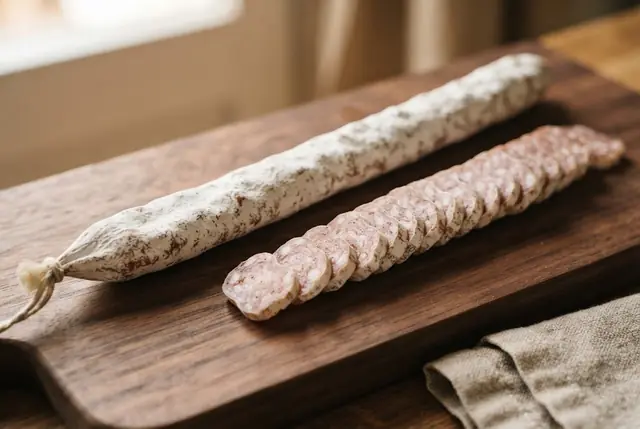
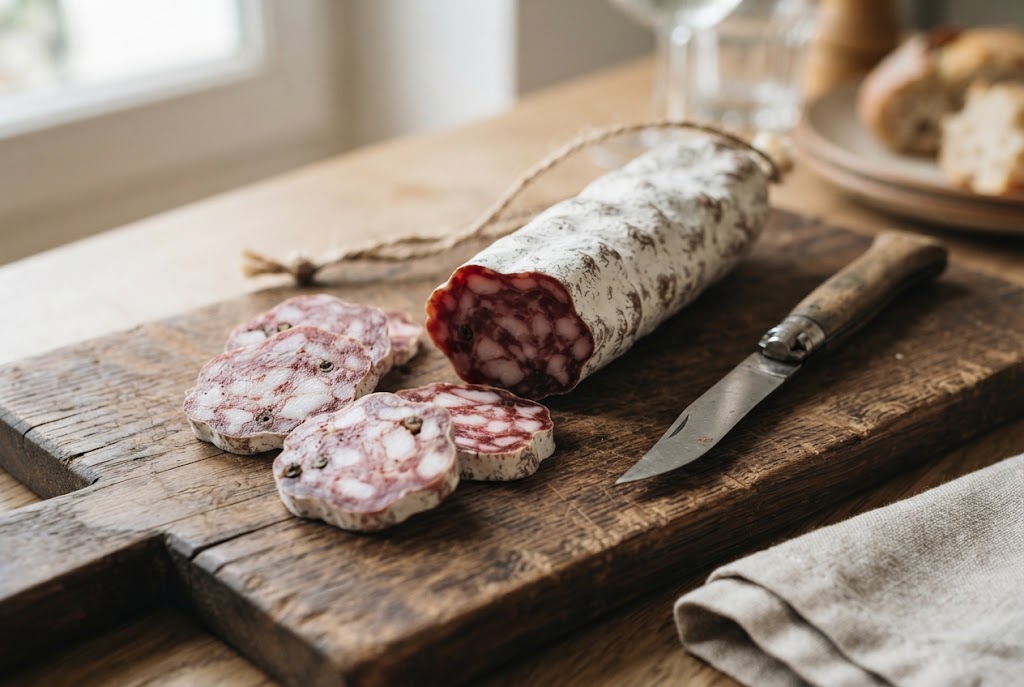
The French dry sausage you see hanging in every charcuterie window, coated in a chalky white mould. Tangier and firmer than Italian salami, and eaten with bread, cornichons and a knife. The mould is deliberate and edible.
What it is
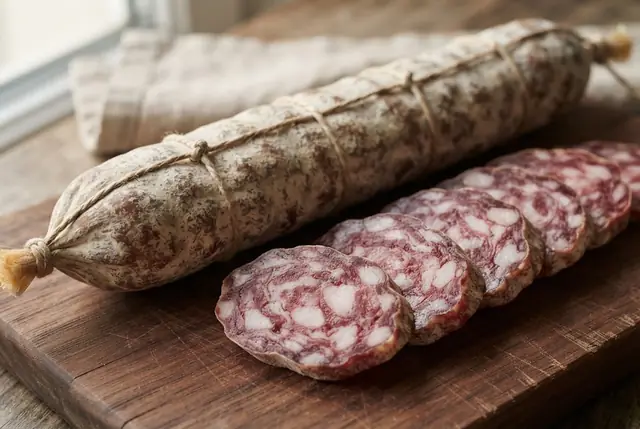
Saucisson sec simply means dry sausage. Coarsely chopped pork and fat are seasoned with salt, pepper, garlic and sometimes wine, cased and hung to dry for four to twelve weeks. During drying, Penicillium nalgiovense is encouraged to bloom on the surface, which protects the sausage from spoilage moulds and contributes flavour.
- Taste
- tangy, garlicky, peppery, nuttier than Italian salami
- Texture
- firm and dry, coarse grind, a satisfying chew
- Look
- dark red interior with large white fat pieces, chalky white exterior
Surface mould is the mechanism, and it's doing real work. The bloom occupies the casing so undesirable moulds can't, slows moisture loss so drying is even, and its enzymes contribute the faintly mushroomy tang that separates French saucisson from Italian salami.
What it pairs with — and why
| Pair it with | Why it works |
|---|---|
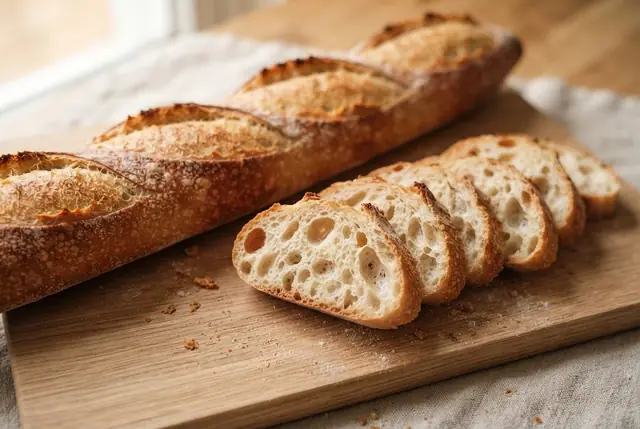
| Baguette and butter | The French service, and the correct one. |
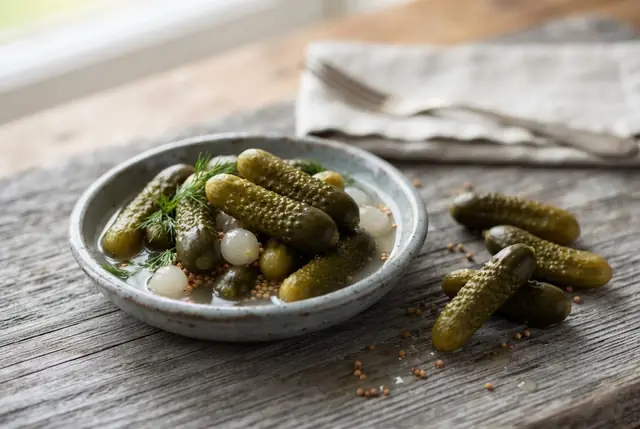
| Cornichons | Sharp vinegar against fat and garlic. Non-negotiable in France. |
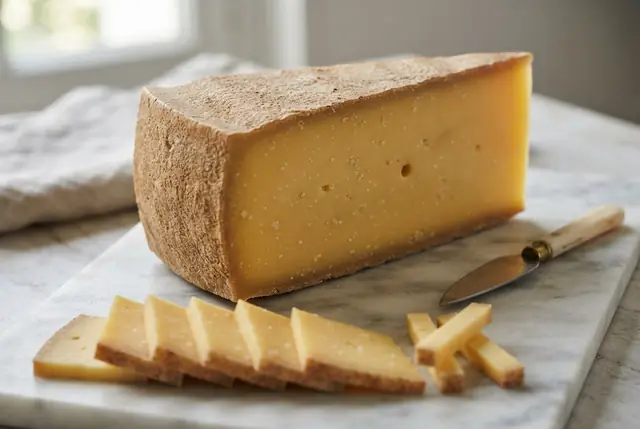
| Comté or Tomme de Savoie | Nutty alpine cheese against a tangy sausage. |
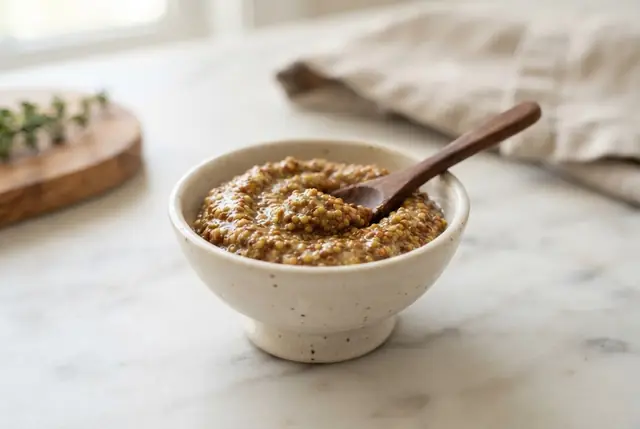
| Grainy mustard | Sharpness, and traditional. |
| Walnuts and apple | Tannin against fat, fresh acid against garlic and salt. |
| Beaujolais, Côtes du Rhône, dry cider | Light French reds or acidic cider. |
| A sharp knife on the board | Worth stating — in France it's sliced at the table as people eat. |
Skip it with: delicate fresh cheeses. Garlic and tang linger, and anything subtle after a bite of saucisson tastes of nothing.
How to prep it for the board
- Leave the white mould on. It's edible and it's the flavour. Peeling it is the most common mistake with this sausage.
- Slice on a steep diagonal, about ⅛ inch, for large ovals.
- Or put the whole sausage on the board with a knife and let people cut their own. That's how it's served in France and it looks generous.
- Temper 20 minutes.
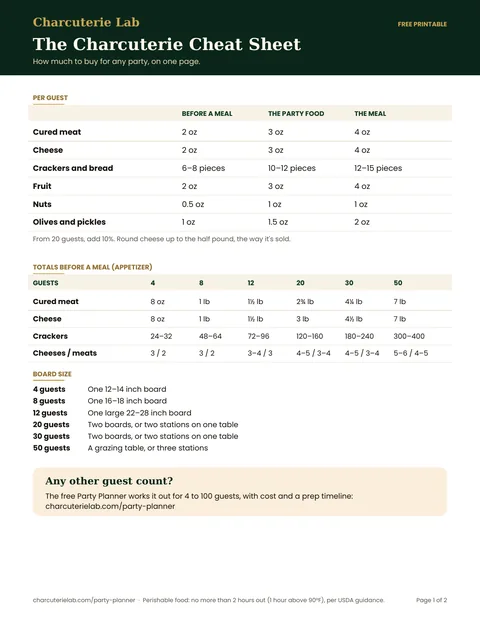
- Serve 1–2 oz per person.
- Cornichons within reach.
- Fix: if the outside is hard and the inside soft, it dried too fast — trim the hard rim and the middle is fine.
What to buy
| Product | Where | Notes |
|---|---|---|
| Saucisson sec, French import | Whole Foods, French delis, specialty | Look for a good even white bloom. |
| Les Trois Petits Cochons Saucisson Sec | Whole Foods, most grocery | American-made French style. The easiest good one to find. |
| Rosette de Lyon | French delis, specialty | The larger, finer-ground cousin — see its own page. |
| Saucisson à l'ail | French delis | The garlic version. Bolder. |
| Fabrique Délices | Whole Foods, specialty | California-made French charcuterie. Excellent. |
| Fuet | Whole Foods, Spanish grocers | The thinner Catalan relative — see its own page. |
Label check: an even chalky bloom, not patchy grey or green. Pork, salt, pepper, garlic and sometimes wine should be the whole list.
Skip: washing or scrubbing the mould off. It's the single thing people get wrong with saucisson.
Quick FAQ
Can I eat the white powder on the outside?
Yes. It's an edible cultivated mould that protects the sausage and adds flavour. Leave it on.
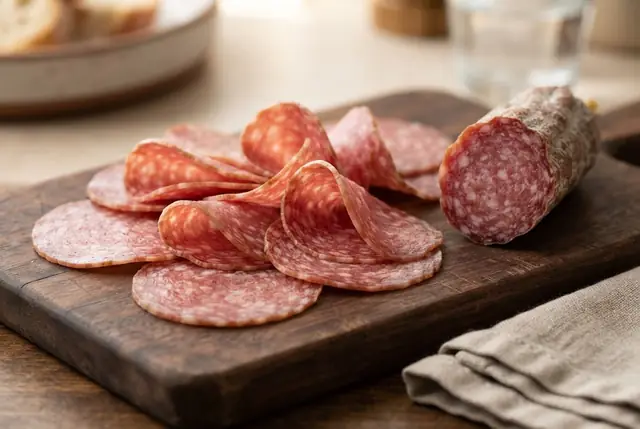
Saucisson or salami?
Saucisson is French, tangier, drier and usually coarser. Italian salami is often softer and sweeter. Same family, different accent.
Do I peel the casing?
Natural casing with the mould can be eaten, though many people peel it. Plastic casing must come off.
How much per person?
1–2 oz as one of several meats.
How do the French serve it?
Whole, on a board, with a knife, bread, butter and cornichons.