The short version
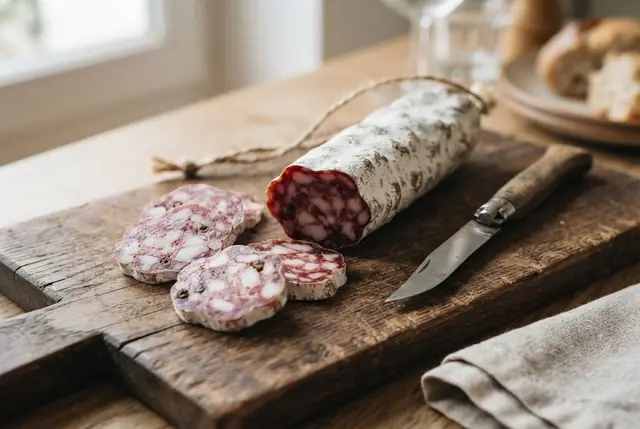
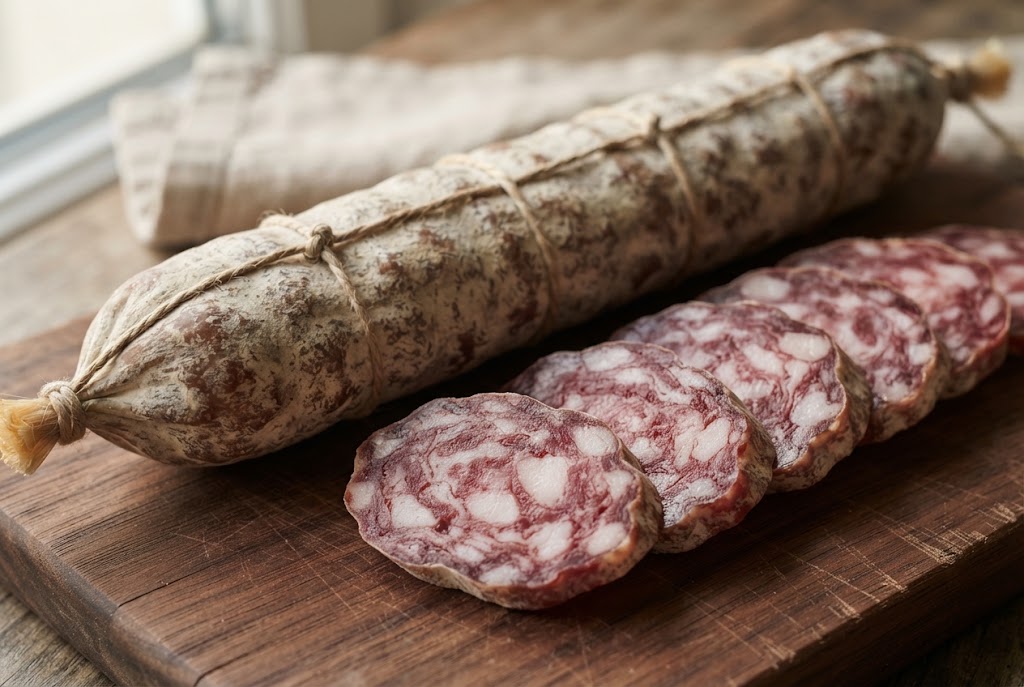
A large French dry sausage from Lyon, cured in a wide casing for three to six months — much longer and fatter than ordinary saucisson. The slices come out the size of a coaster, which makes it the most impressive-looking salami you can put on a board.
What it is
Rosette takes its name from the rosette — the wide end section of pig intestine used as its casing. That casing is broad and thick, so the sausage dries slowly and evenly over months rather than weeks. Coarse-cut pork shoulder and back fat, salt, pepper, sometimes a little wine and sugar.
- Taste
- deep, nutty, gently tangy, less garlicky than saucisson
- Texture
- firm but tender, drier than salami, melting fat
- Look
- very large rounds, deep red with big white fat pieces, tied with string
Slow drying in a wide casing is the mechanism. A thin sausage dries in weeks and stays bright and lactic; a thick one dries over months, during which enzymes break proteins down further. That's why rosette tastes rounder and nuttier than fuet or ordinary saucisson at the same seasoning level.
What it pairs with — and why
| Pair it with | Why it works |
|---|---|
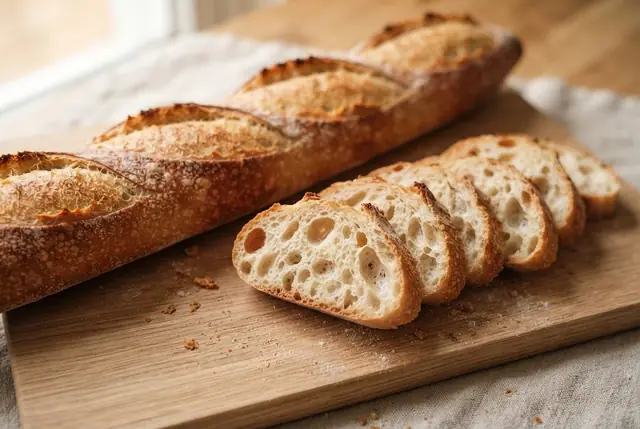
| Baguette and butter | Lyonnais bouchon service. Bread, butter, sausage, wine. |
| Cornichons and pickled onion | Sharp vinegar against slow-cured fat. |
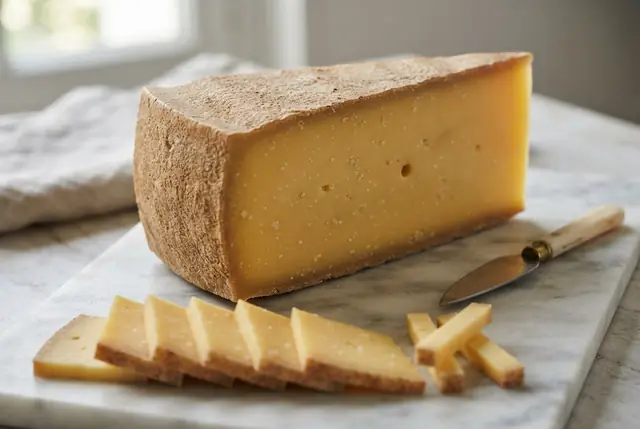
| Comté or Beaufort | Nutty alpine cheese against a nutty sausage. |
| Grainy mustard | Traditional and useful. |
| Walnuts | Tannin cuts slow-cured fat and the crunch breaks a uniformly soft bite. |
| Beaujolais | The Lyonnais wine, and the classic match. |
| Cornichons again | Worth repeating — a plate of rosette without them is unbalanced. |
Skip it with: delicate fresh cheeses. It's a big, savoury sausage and it dominates anything subtle.
How to prep it for the board
- Slice thin — the rounds are large enough that thickness isn't needed for presence.
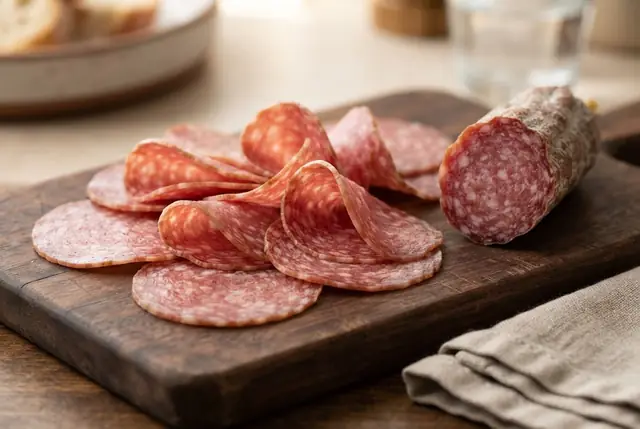
- Lay slices flat, slightly overlapping, as a single row. The size is the feature. Folding it hides it.
- Temper 20 minutes so the fat softens.
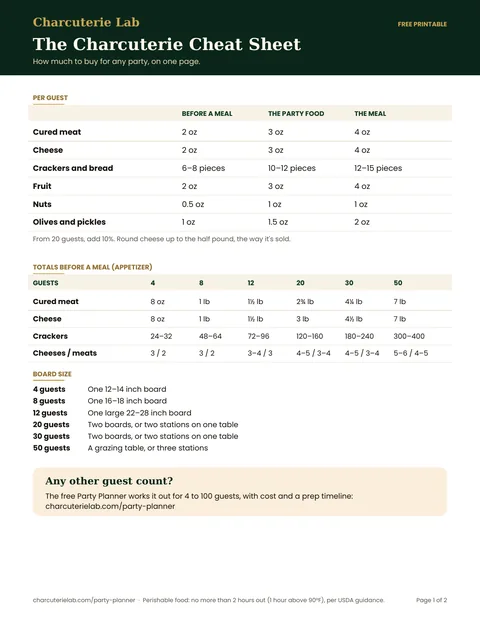
- Serve 1–2 oz per person — that's only two or three slices given the diameter.
- Peel the casing unless it's clearly edible.
- Put cornichons directly beside it.
- Fix: if the slices are too big to eat neatly, halve them into half-moons rather than slicing thinner.
What to buy
| Product | Where | Notes |
|---|---|---|
| Rosette de Lyon, French import | French delis, specialty grocers | The real thing. Look for the wide diameter and string tie. |
| Les Trois Petits Cochons Rosette | Whole Foods, grocery | American-made French style, widely available. |
| Fabrique Délices Rosette | Whole Foods, specialty | California-made, excellent. |
| Jésus de Lyon | French delis, specialty | The larger, even longer-cured relative. Superb. |
| Saucisson sec | Whole Foods, grocery | The smaller everyday version — see its own page. |
| Salame Milano | Italian delis | The Italian fine-ground equivalent. |
Label check: a genuinely wide sausage — three inches or more across — and a long cure. Small "rosette" is usually just saucisson under a better name.
Skip: slicing it thick because the rounds are big. Large diameter plus thickness is too much sausage in one bite.
Quick FAQ
Why is rosette so much bigger than other salami?
It's cured in the wide end section of the intestine, which allows a much fatter sausage and a much longer cure.
Rosette or saucisson sec?
Rosette is bigger, cured longer, milder on garlic and nuttier. Saucisson is smaller, tangier and more everyday.
What is Jésus de Lyon?
An even larger, longer-cured version from the same tradition. Excellent and harder to find.
How much per person?
1–2 oz — only two or three of those large slices.
What's the classic pairing?
Baguette, butter, cornichons and Beaujolais. That's a Lyonnais lunch.