The short version
A dense, fruity alpine cheese from Savoie, made in wheels with a distinctive concave side. Richer and more floral than Comté or Gruyère, and priced accordingly. Brillat-Savarin called it the prince of Gruyères and the name has stuck for two centuries.
What it is
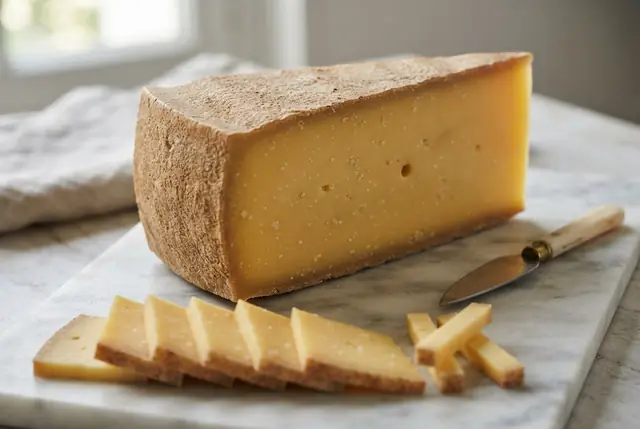
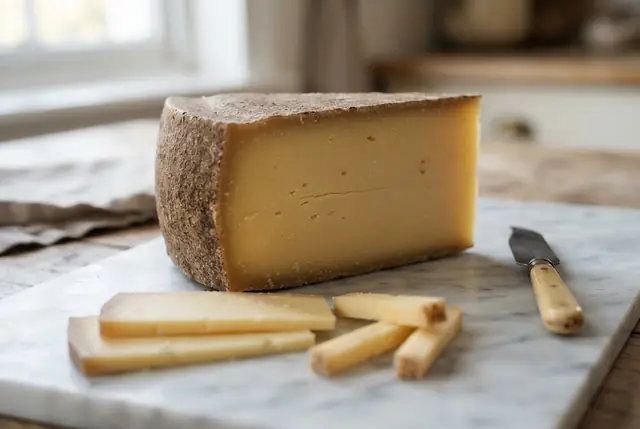
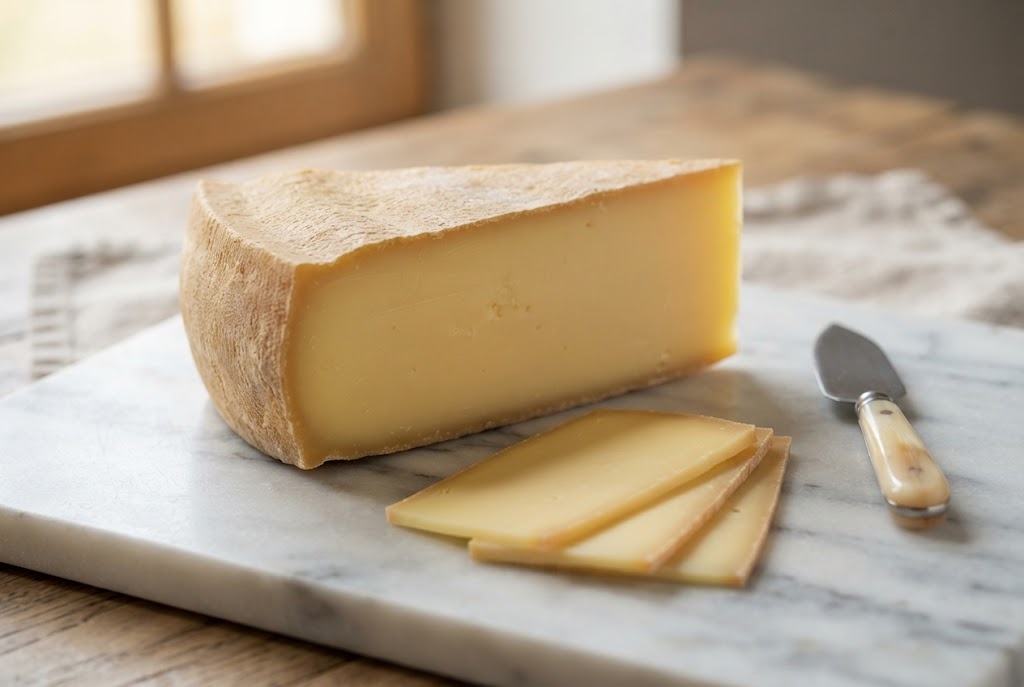
Beaufort AOP is made from raw milk of Tarine and Abondance cows in the Savoie Alps. The wheels are pressed in beechwood hoops, which gives the rind its inward curve — the easiest way to identify it on a counter. Beaufort d'Alpage is made only in summer, from a single herd grazing high mountain pasture.
- Taste
- fruity, floral, nutty, rich, savory
- Texture
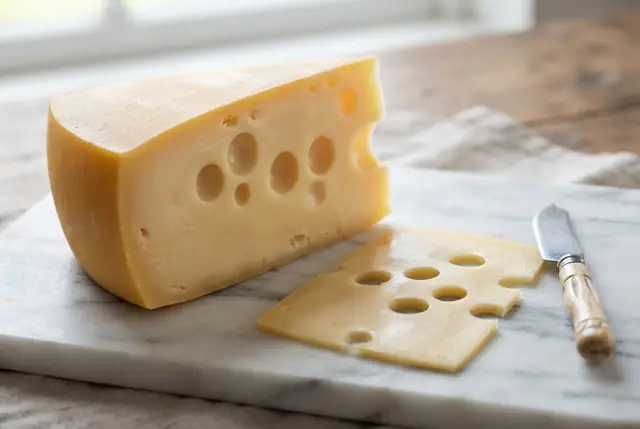
- dense and supple, smooth, almost no holes
- Look
- ivory to pale yellow paste (deeper in summer wheels), concave-sided wheel, brushed natural rind
Milk fat is the mechanism, and it's why Beaufort eats richer than its alpine neighbors. Beaufort is made from whole milk with no skimming — unusual for a large-format cooked cheese — so the paste is denser, the mouthfeel rounder, and the floral notes from mountain pasture carry through instead of being stripped out with the cream.
What it pairs with — and why
| Pair it with | Why it works |
|---|---|
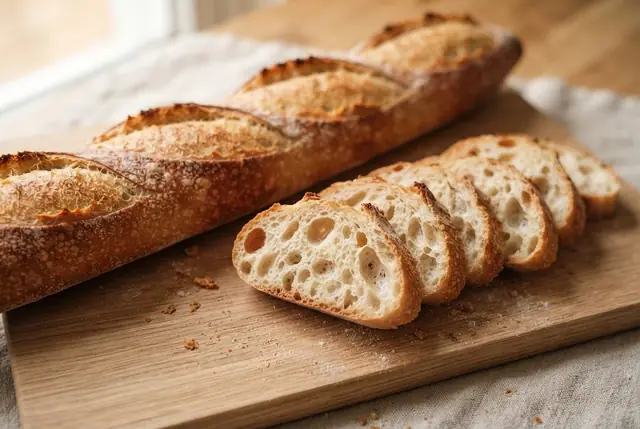
| Baguette and nothing else | Genuinely. Beaufort is complex enough that competition makes it worse. |
| Cured ham and saucisson | Salt and cure against a rich, fruity cheese. |
| Walnuts and hazelnuts | The cheese's own nut register. |
| Apple and pear | Acid cutting density. |
| Cornichons | Sharp vinegar as a reset. |
| Chardonnay, Roussette de Savoie, Vin Jaune | Savoie and Jura whites are the regional match. |
| Dry champagne | Bubbles against fat, for a formal board. |
Skip it with: delicate fresh cheeses, and heavy sweet jams — this is an expensive cheese with a lot to say and sugar drowns it.
How to prep it for the board
- Cut thick batons or rough wedges. It's supple and dense and it deserves a piece with weight.
- Temper 30 minutes — the floral notes need warmth.
- Serve 1–2 oz per person. It's expensive; a small quantity of the good one beats a large quantity of the ordinary.
- Serve it plainly. Bread and maybe a walnut. This is the cheese to let speak.
- Look for d'Alpage if you're spending anyway — summer mountain milk, and the difference is real.
- Trim the rind.
- Fix: wrap in parchment. Beaufort is expensive to waste and plastic ruins it within days.
What to buy
| Product | Where | Notes |
|---|---|---|
| Beaufort AOP, 6–12 months | Cheese counters, Whole Foods, Murray's | The standard version. Rich and fruity. |
| Beaufort d'Été (summer) | Cheese counters, specialty | Made from summer pasture milk. More floral. |
| Beaufort d'Alpage | Specialty shops, Murray's | Single-herd high-mountain summer milk. The best and the most expensive. |
| Comté | Whole Foods, Costco | The cheaper alternative, and excellent — see its own page. |
| Gruyère | Grocery, Whole Foods | Saltier and more direct. Widely available. |
| Abondance | Cheese counters, specialty | The other Savoie alpine cheese. Nuttier, worth trying. |
Label check: the AOP mark and the concave rind. If the wheel's sides are straight, it isn't Beaufort.
Skip: buying a large piece. It's costly and it's best fresh from the counter — a small wedge is the right purchase.
Quick FAQ
How is Beaufort different from Comté?
Beaufort is made from whole unskimmed milk, so it's denser and richer, with more floral and fruity notes. Comté is more varied and cheaper.
Why is the wheel concave?
It's pressed in a beechwood hoop called a cercle à Beaufort, which curves the sides inward. It's the easiest way to identify it.
What is d'Alpage?
Summer cheese made from a single herd grazing high mountain pasture. Rarer, more expensive, and noticeably more floral.
Can you eat the rind?
Trim it — it's natural but tough.
How much per person?
1–2 oz. It's rich and expensive, so a small piece is right.