The short version
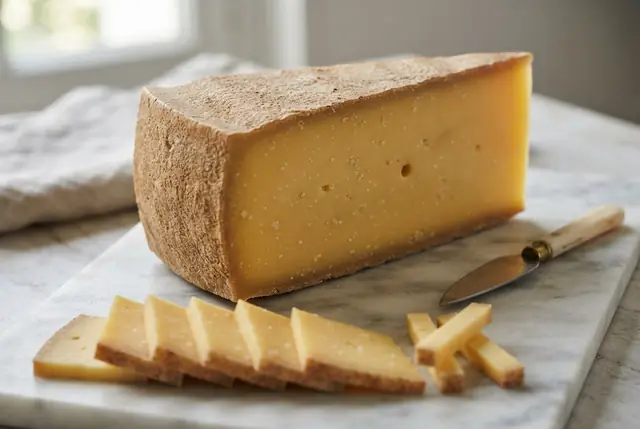
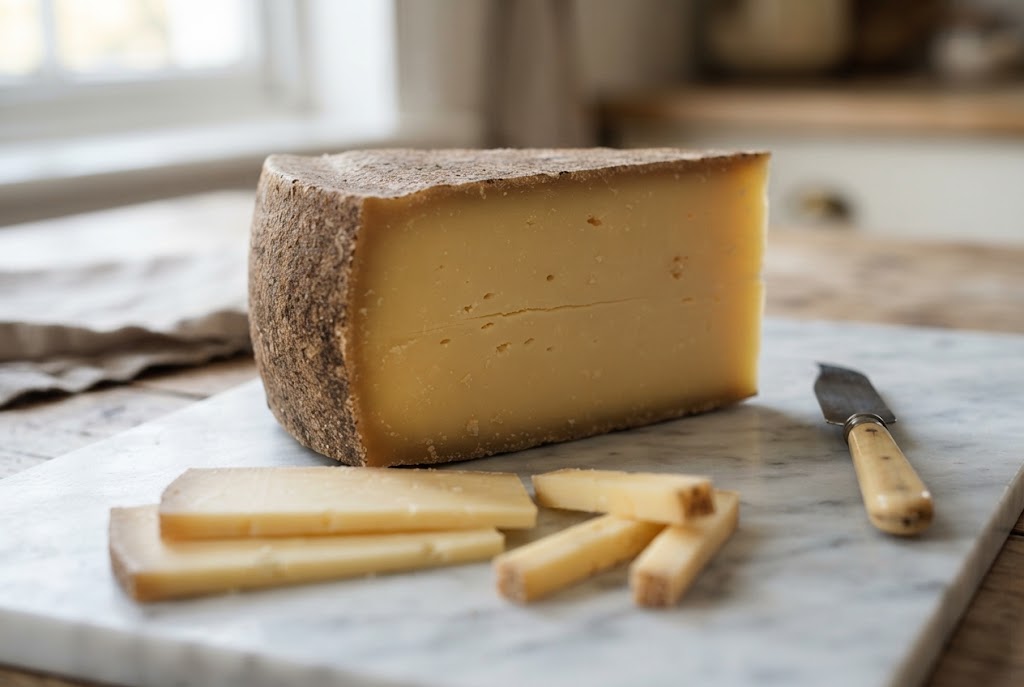
A firm Swiss alpine cheese aged five months to two years. Salty, nutty and distinctly brothy — the savory note people describe as "meaty." It's the cheese in fondue and in a croque monsieur, and it's just as good uncooked.
What it is
Gruyère AOP comes from western Switzerland, made in wheels of about 35kg from raw cow's milk. It's a cooked, pressed cheese — the curd is heated in copper vats before pressing — which drives out moisture and produces a dense paste that melts smoothly rather than separating.
- Taste
- salty, nutty, brothy, faintly sweet, more savory with age
- Texture
- firm and dense, supple, crystalline in older wheels
- Look
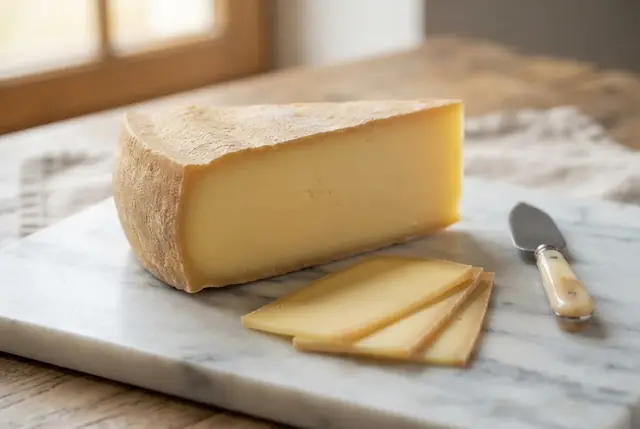
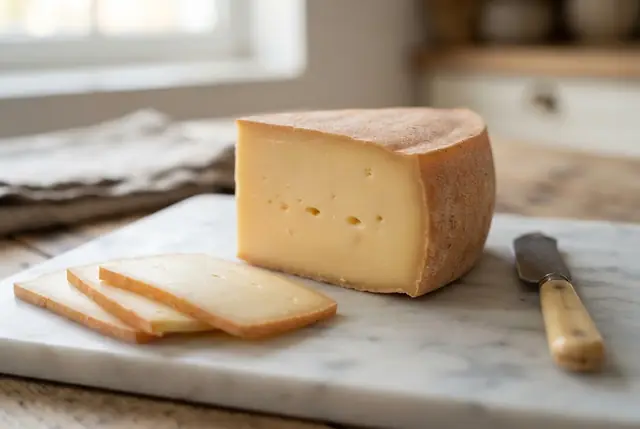
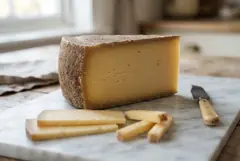
- pale gold, natural brownish rind, occasional small eyes
Cooked curd is the mechanism, and it explains both of Gruyère's qualities. Heating the curd builds a tight protein structure with low moisture, which gives the cheese its density and its long aging potential — and because that structure holds together under heat, Gruyère melts into a smooth sauce instead of splitting. Very few cheeses are excellent both raw and melted; this is one.
What it pairs with — and why
| Pair it with | Why it works |
|---|---|
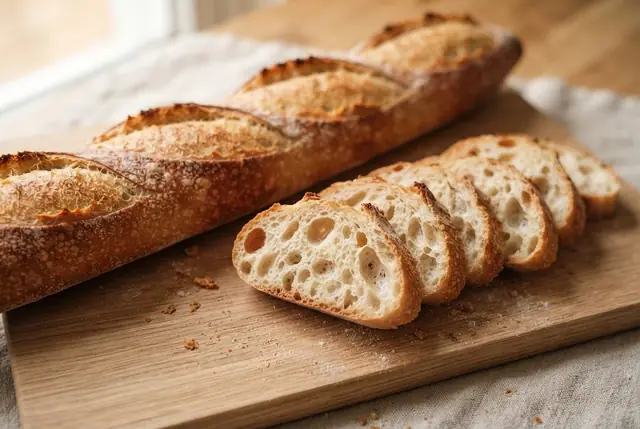
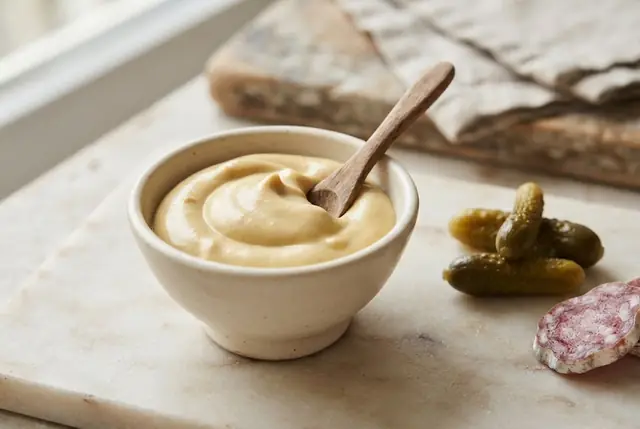
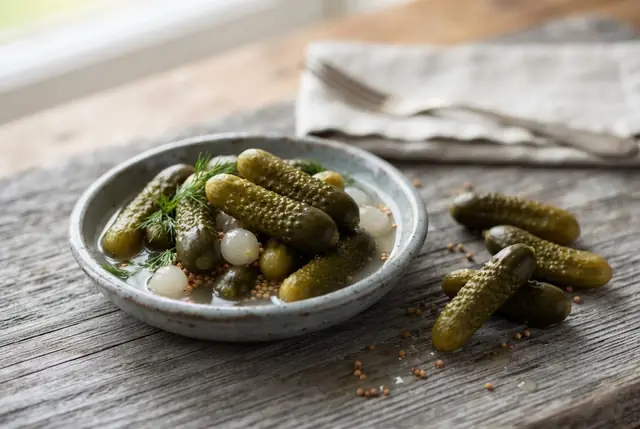
| Baguette and cornichons | The alpine cheese plate. Plain bread and sharp acid. |
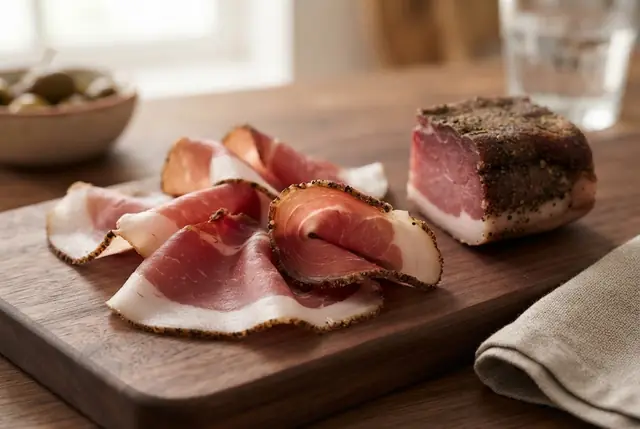
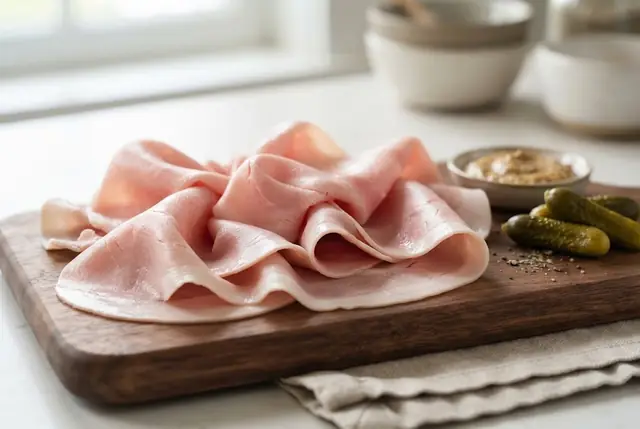
| Cured ham and speck | Salt and smoke against a brothy savory cheese. |
| Apple and pear | Fruit acid cutting salt and fat — the standard alpine partner. |
| Walnuts | Tannic bitterness against nutty, salty density. |
| Whole grain mustard and pickled onion | Sharp and vinegary, and traditional. |
| Dry Riesling, Chasselas, Chardonnay | Swiss and Alsatian whites, both high-acid. |
| Dark beer, dry cider | Malt and acid both work. |
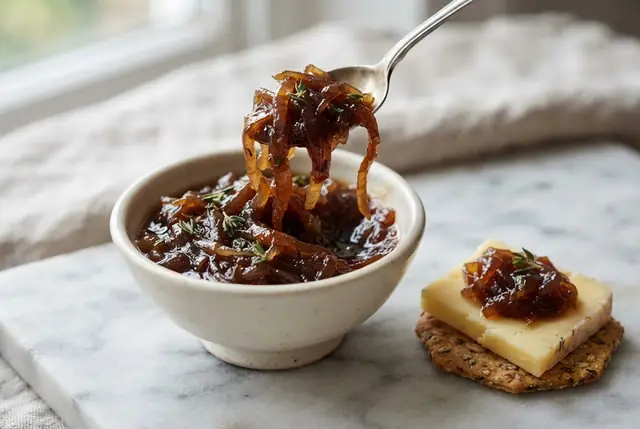
Skip it with: delicate fresh cheeses in the same corner, and heavy sweet jams — Gruyère's salt and sweetness fight rather than balance.
How to prep it for the board
- Cut into thick batons or rough chunks. Its density suits a substantial piece; thin slices go waxy.
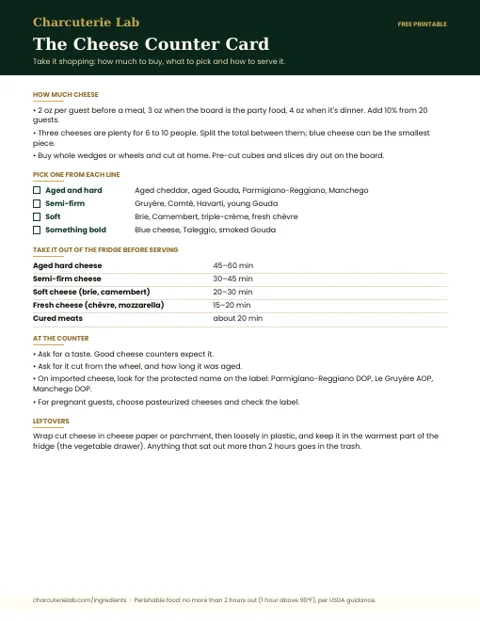
- Temper 30 minutes.
- Serve 1–2 oz per person.
- Buy the older one if you're choosing. Twelve months and up develops the crystals and the brothy depth that make it interesting rather than merely good.
- Put it beside Comté if you have both — same family, clearly different, and comparison boards are more fun than survey boards.
- Trim the rind.
- Fix: wrap in parchment. Plastic makes alpine cheeses sweat and turn sour at the surface.
What to buy
| Product | Where | Notes |
|---|---|---|
| Gruyère AOP, 12 months | Whole Foods, cheese counters, most grocery | The standard and the right default. |
| Le Gruyère Réserve (18+ months) | Cheese counters, specialty | Crystalline and much deeper. The board version. |
| Gruyère d'Alpage | Specialty shops | Made in summer mountain huts. Rare, expensive, remarkable. |
| Emmi Gruyère | Grocery cheese case | Widely distributed Swiss brand. Reliable. |
| Costco Gruyère | Costco | Good price for a large board. |
| Comté or Beaufort | Cheese counters | The French alpine cousins — see their own pages. |
Label check: "Le Gruyère AOP" and Swiss origin. French Gruyère exists and is legally distinct — it has holes and is milder. American "gruyere" is usually something else entirely.
Skip: pre-shredded Gruyère for a board. It's coated with anti-caking starch and it dries fast.
Ranked picks: our top-rated Gruyère is Emmi Kaltbach Le Gruyère AOP (4.4 out of 5), and the best value is Emmi Le Gruyère AOP. See the full ranking of the best Gruyère.
Quick FAQ
Does Gruyère have holes?
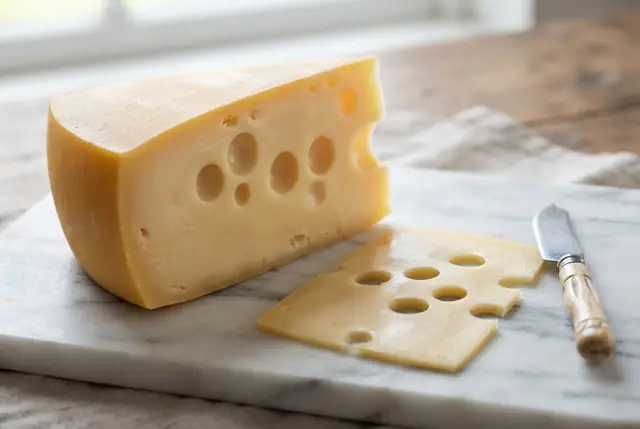
Swiss Gruyère AOP has very few or none. French Gruyère does. If you're seeing lots of holes, you're probably looking at Emmental.
Gruyère or Comté?
Gruyère is saltier and more directly savory; Comté is fruitier and more varied. Both are excellent — put them side by side.
Can you eat the rind?
Trim it. It's natural but tough.
Why is it in every fondue recipe?
Cooked curd gives it a tight protein structure that melts smoothly instead of splitting.
How much per person?
1–2 oz as one of three cheeses.