The short version
The original holey Swiss cheese — mild, sweet, faintly nutty, and much gentler than Gruyère. It's the alpine cheese for a crowd that doesn't want a challenge, and the holes have a genuinely interesting explanation.
What it is
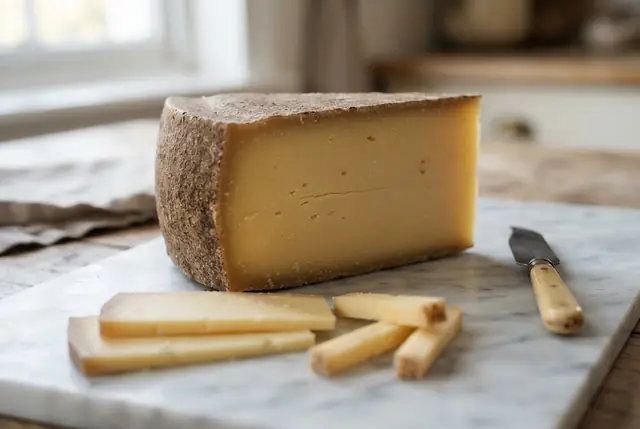
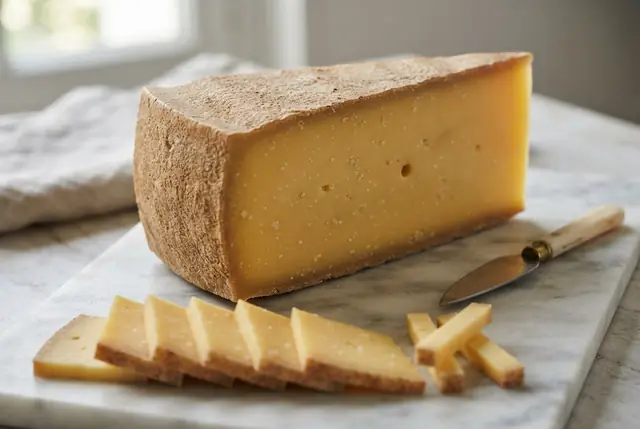
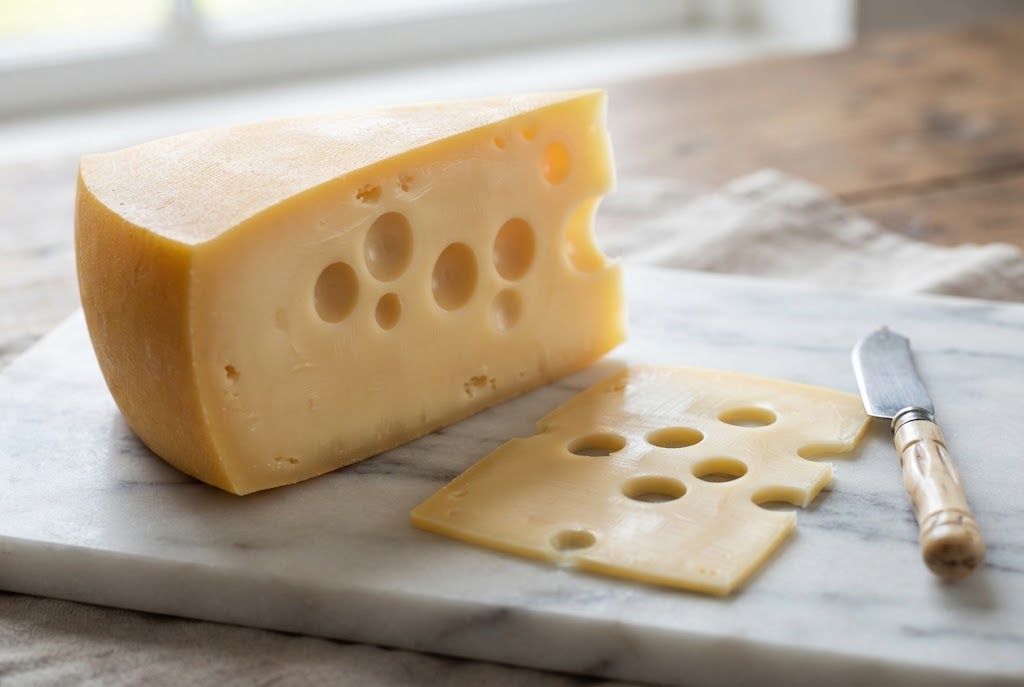
Emmentaler AOP is made in the Emme valley in enormous wheels of up to 120kg — the largest cheese in common production. The paste is pale, elastic and dotted with holes ranging from cherry to walnut size.
- Taste
- mild, sweet, nutty, gently savory
- Texture
- firm but elastic, smooth, not crumbly
- Look
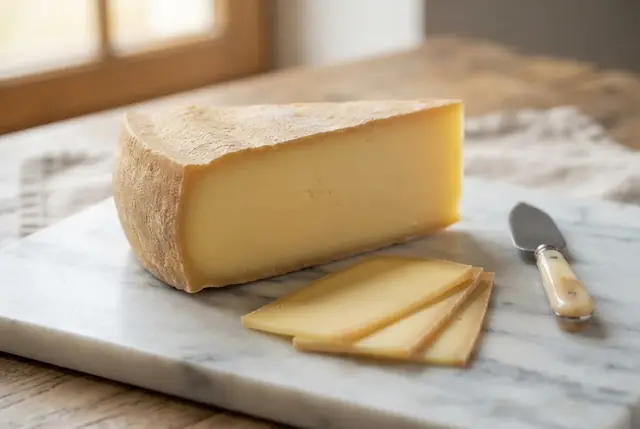
- pale yellow with large round holes, thin natural rind
Bacterial gas is the mechanism. A third culture, Propionibacterium freudenreichii, consumes lactic acid during aging and releases carbon dioxide. In a dense cheese that gas can't escape, so it forms bubbles — the eyes. Those same bacteria produce propionic acid, which is where the sweet, nutty flavor comes from. The holes and the taste have the same cause.
What it pairs with — and why
| Pair it with | Why it works |
|---|---|
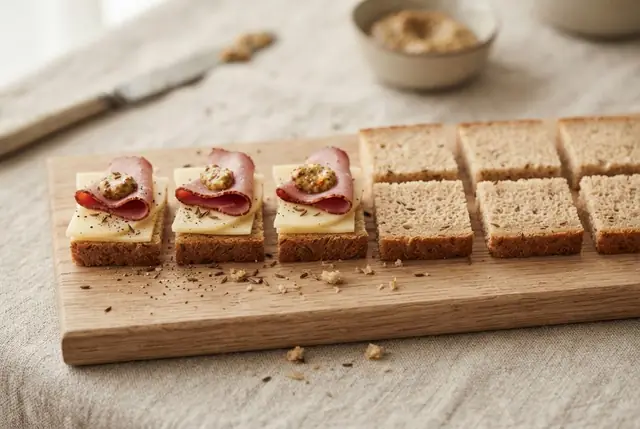
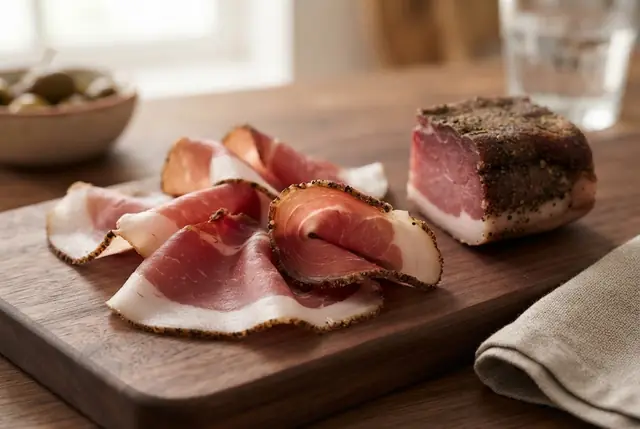
| Cured ham and speck | Salt and smoke against a mild sweet cheese. The alpine standard. |
| Cornichons and pickled onion | Sharp vinegar against gentle sweetness. |
| Apple and grapes | Fresh acid, no competition. Emmental is mild enough that fruit leads. |
| Cocktail rye | Soft dark bread and mild sweet cheese — the northern European bite. |
| Whole grain mustard | The cheese needs an edge from somewhere. |
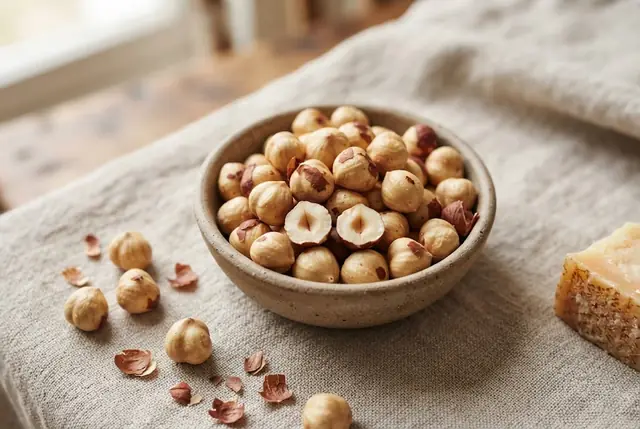
| Walnuts | Emmental's own nutty note, reinforced. |
| Dry Riesling, Chasselas, light lager | Nothing heavy required. |
Skip it with: blue cheese and other strong cheeses on the same corner — Emmental is the mildest alpine cheese and it loses easily. Also skip it if the board already has Gruyère and Comté; three alpine cheeses is one too many.
How to prep it for the board
- Cut into thick batons or triangles, showing the holes in cross-section. The holes are the visual identity — don't hide them.
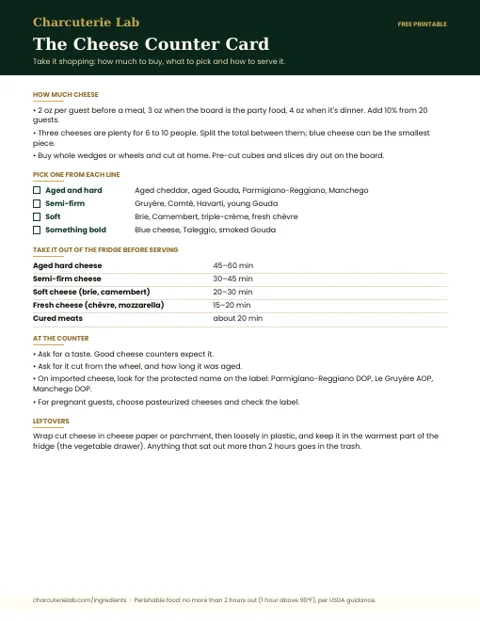
- Temper 30 minutes.
- Serve 1–2 oz per person.
- Use it as the safe cheese. Every board benefits from one item that no guest will hesitate over, and this is a good candidate.
- Put mustard or pickles beside it. On its own it's pleasant but a little flat.
- Trim the rind.
- Fix: if it's the most-ignored cheese on the board, it's probably fine — just too mild next to whatever else you served. Move it beside the fruit.
What to buy
| Product | Where | Notes |
|---|---|---|
| Emmentaler AOP (Switzerland) | Whole Foods, cheese counters, grocery | The real thing. Sweeter and nuttier than the imitations. |
| Emmi Emmentaler | Grocery cheese case | Widely distributed Swiss brand. Reliable. |
| Jarlsberg | Most grocery stores | Norwegian, sweeter and softer, holes included. Widely liked. |
| French Emmental | Grocery | Milder still. Fine, less character. |
| Baby Swiss | Grocery deli | American, softer and much milder. Smaller holes. |
| Gruyère | Cheese counters | The step up in flavor — see its own page. |
Label check: "Emmentaler AOP" and Swiss origin for the original. Generic "Swiss cheese" at a US deli counter is usually a domestic imitation — perfectly edible, much blander.
Skip: pre-sliced deli Swiss for a board. It dries at the edges and reads as a sandwich ingredient.
Ranked picks: our top-rated supermarket Swiss is Sargento Aged Swiss (4.6 out of 5), and the best block is Kerrygold Swiss Cheese. See the full ranking of the best Swiss cheese.
Quick FAQ
Why does Swiss cheese have holes?
A bacterium called Propionibacterium freudenreichii produces carbon dioxide during aging. The gas can't escape the dense paste, so it forms bubbles.
Emmental or Gruyère?
Emmental is mild and sweet; Gruyère is salty and savory. Emmental for a cautious crowd, Gruyère for a cheese board.
Is Jarlsberg the same thing?
No — it's Norwegian, made with a similar process but sweeter and softer. Many people prefer it.
Can you eat the rind?
Trim it. It's thin but not pleasant.
How much per person?
1–2 oz.