Quick Answer: Gruyère and Comté are close cousins: both are firm alpine cheeses made from raw cow's milk, cooked and pressed into huge wheels, and both taste nutty and melt beautifully. Gruyère is Swiss and tends to be saltier, more savory and brothy. Comté is French, from the Jura mountains just across the border, and tends to be fruitier and sweeter, with a flavor that changes with the season the milk came from. They swap one for one in cooking. On a board, pick by the flavor you want, or serve both.
Gruyère vs. Comté at a glance
| Gruyère | Comté | |
|---|---|---|
| Country | Switzerland (western cantons) | France (Jura) |
| Protection | Le Gruyère AOP | Comté AOP |
| Milk | Raw cow's milk | Raw milk from Montbéliarde and French Simmental cows |
| Minimum aging | 5 months | 4 months |
| Wheel size | About 25 to 40 kg | About 40 kg |
| Taste | Salty, nutty, brothy, savory | Fruity, nutty, sweet, buttery |
| Variety | Fairly consistent | Varies a lot by season and dairy |
| Holes | Few or none | Few or none |
| Best use | Melting and boards | Boards and melting |
Why they taste different
They're made almost the same way. In both, the curd is heated, pressed into big wheels and aged for months while the rind is brushed and salted. That cooked-curd method is why both melt smoothly without turning greasy.
The differences come from salt and milk.
- Gruyère is salted more heavily as it ages, so it tastes more directly savory, almost like a good broth.
- Comté keeps more fruit and sweetness. Its milk changes with the season: summer milk from cows on mountain pasture makes wheels that taste more floral and fruity, and winter hay-fed milk makes wheels that taste more of nuts and butter. Two pieces of Comté can taste noticeably different, which cheese lovers enjoy.
Age matters as much as the name. A young Gruyère or Comté is mild and supple. At 12 to 24 months, both get firmer and more complex, often with crunchy crystals.
About "gruyere" made in the US
Swiss Gruyère AOP and French Comté AOP are protected names in Europe. In the US, courts have ruled that "gruyere" is a generic term, so American cheesemakers can sell cheese under that name. Some American alpine-style cheeses are excellent, but if you want the Swiss original, look for Le Gruyère AOP on the label. Comté sold in the US is French and carries the AOP mark.
Which is better on a charcuterie board?
Both are excellent. Choose by the rest of the board:
- Comté suits a fruit-forward board: apples, pears, grapes, dried apricots and a dry white wine like a Jura Chardonnay or a white Burgundy.
- Gruyère suits a savory board: cured ham, speck, cornichons and Dijon. See Gruyère, ham, cornichons and Dijon.
Both also love walnuts, a dry Riesling, a Pinot Noir or a Belgian-style ale.
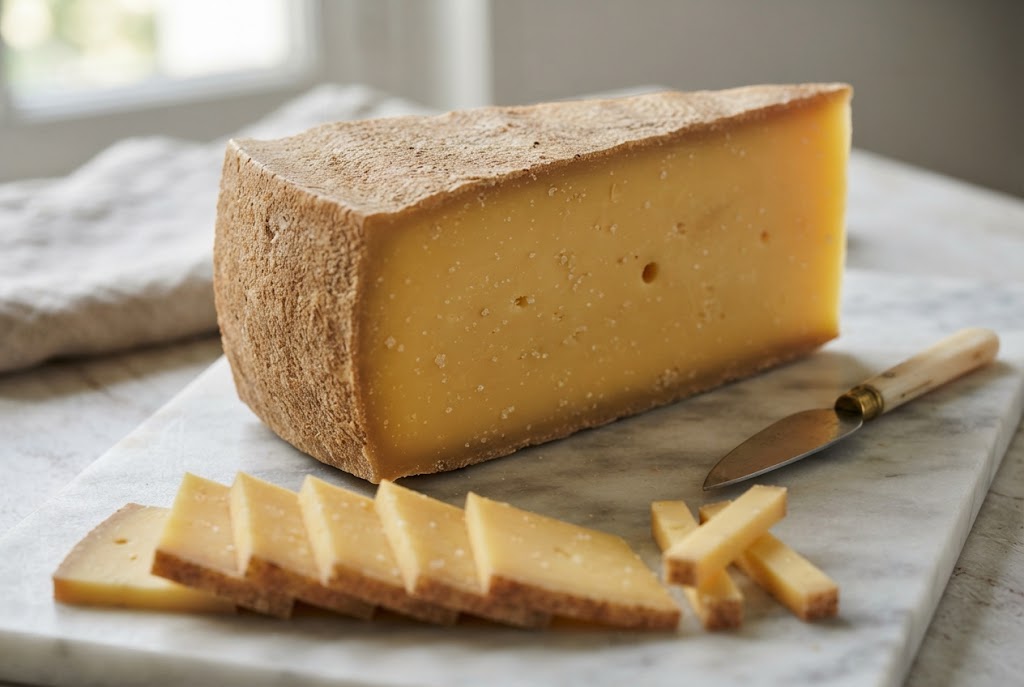
Cut them into thin slices or long batons, and take them out of the fridge 45 to 60 minutes before serving. Wrap leftovers in parchment or wax paper rather than plastic.
How much to buy
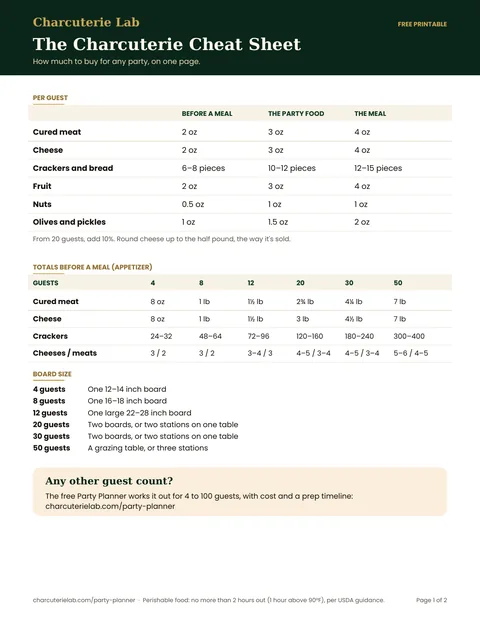
Plan on 2 oz of cheese per guest before a meal, 3 oz when the board is the party food and 4 oz when it's dinner. Either cheese is usually one of two or three in that total.
Which should you buy?
- For a cheese lover's board: Comté aged 18 to 24 months.
- For value: a 12-month Comté, often a bargain at warehouse clubs.
- For a savory or French-ham board: Le Gruyère AOP, ideally a reserve or older wheel.
- For fondue, gratins and French onion soup: either, or a mix of both.
Our ranking of the best Gruyère brands covers the ones worth buying.