The short version
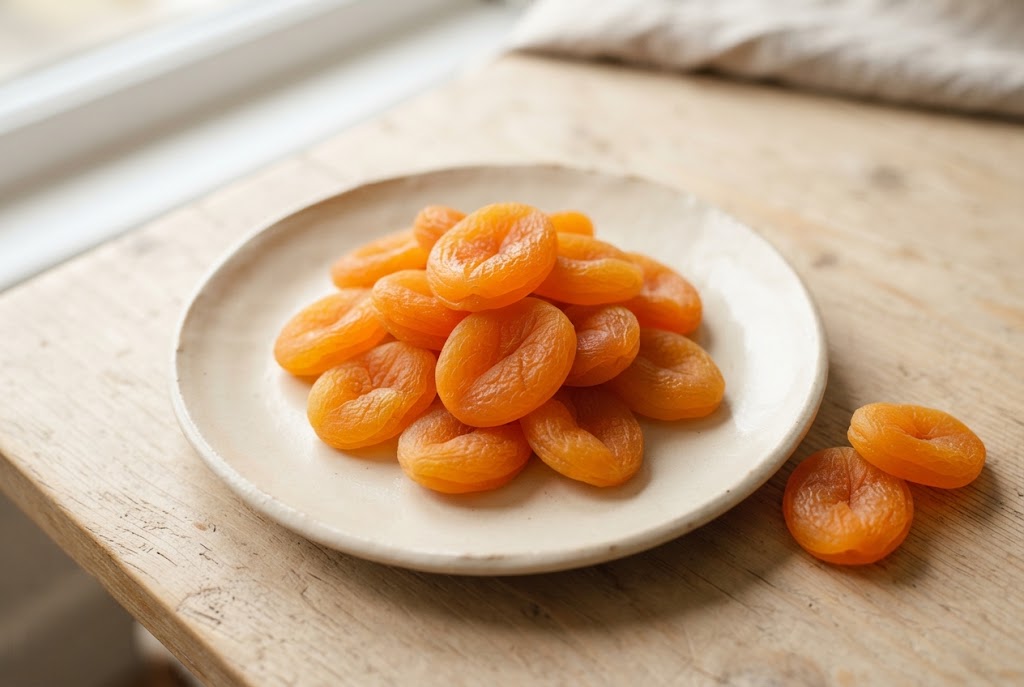
The dried fruit that does the most work. Unlike dates and raisins, apricots keep real acidity when dried, so they cut fat instead of just adding sugar. Two kinds are sold: bright orange Turkish (sulphured, sweeter, plumper) and brown Californian or unsulphured (tarter, more intense, less pretty).
What it is
Apricot halves, dried to leathery-soft. Sulphur dioxide is what keeps the orange colour; without it the fruit oxidises to deep brown, which is a cosmetic change, not a quality one. Turkish apricots are usually whole and pitted; Californian are halves.
- Taste
- tart-sweet, concentrated, faintly floral
- Texture
- chewy, leathery, pliable
- Look
- orange or deep amber discs
The mechanism is acid that survives drying. Most drying flattens fruit into pure sugar — raisins, dates, figs. Apricots keep enough malic acid to work like fresh fruit, but with none of the moisture problems. That combination makes them the only dried fruit you can lean on for a board that has to sit out for three hours.
What it pairs with — and why
| Pair it with | Why it works |
|---|---|
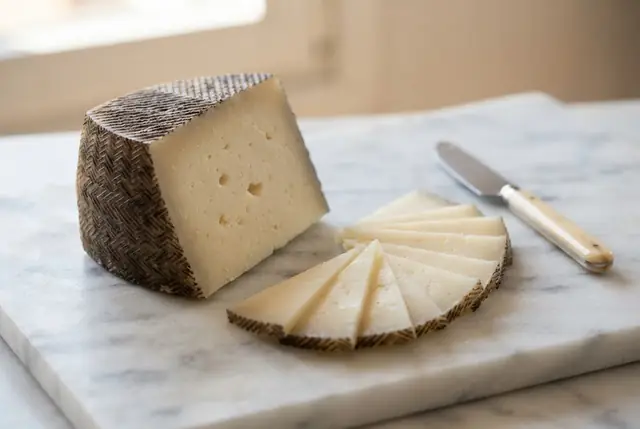
| Manchego | The Spanish standard. Sheep-milk nuttiness and apricot's almond note come from the same aromatic family. |
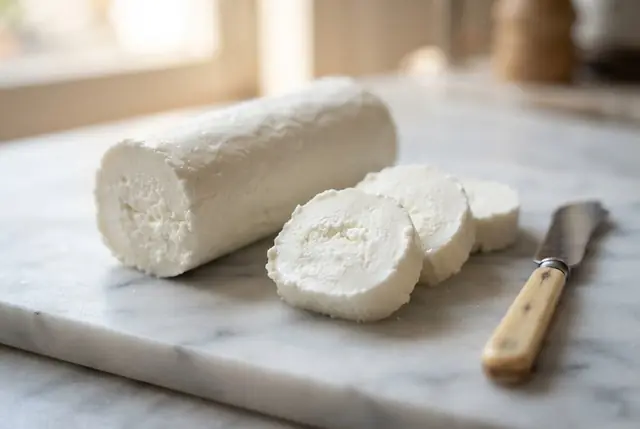
| Fresh goat cheese | Tart on tart, with the apricot's sugar landing a beat later. |
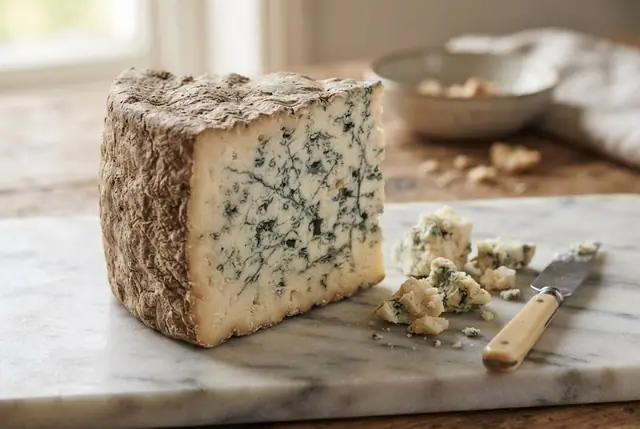
| Stilton and blue cheese | Sweetness handles the salt; the acid keeps it from being cloying the way a date is. |
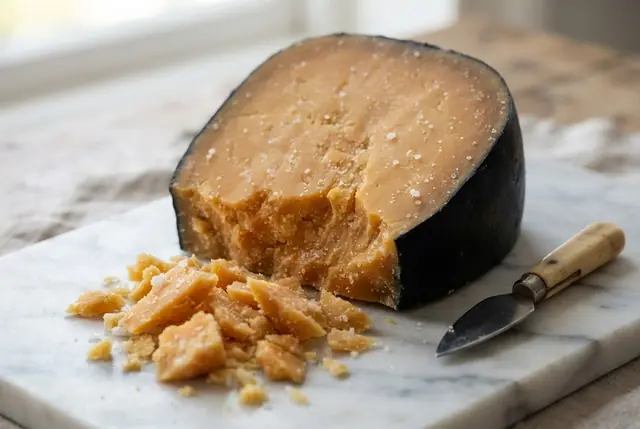
| Aged gouda | Caramel and butterscotch against bright tart fruit. |
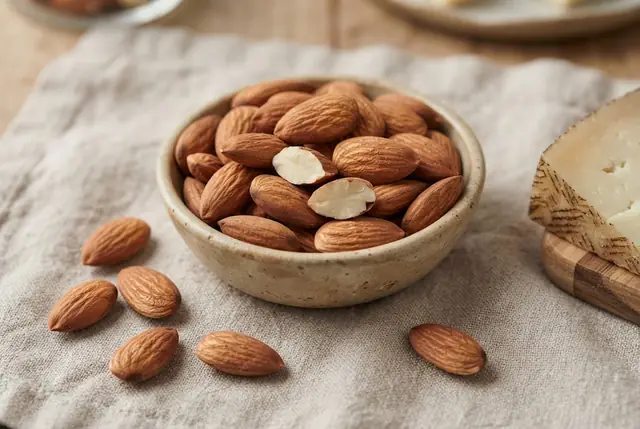
| Almonds and marcona almonds | Apricot kernels are an almond relative — the pairing is botanical, not just conventional. |
| Prosciutto and serrano | Salt and chew, both concentrated. Good on a board with no fresh fruit. |
Skip it with: nothing in particular. Apricots are the least fussy dried fruit. Just don't crowd the board with three other sweet dried things.
How to prep it for the board
- No prep. Straight from the bag onto the board — the only board fruit that's genuinely zero-work.
- Fan or stack them in a loose row rather than piling them.
- Buy Turkish for looks, Californian for taste. Orange photographs; brown tastes better.
- Slice them into strips if the board is small and you want them to read as an accent rather than a snack.
- Serve 1 oz per person — three or four halves.
- Steam or soak briefly if they've dried hard in the pantry.
- Fix: too sweet? Buy unsulphured Californian. They're noticeably sharper.
What to buy
| Product | Where | Notes |
|---|---|---|
| Turkish dried apricots | Any grocery, Trader Joe's, Costco | Plump, orange, sweet, cheap. The default. |
| Californian dried apricots | Grocery, Whole Foods | Tarter and more intense. Halves rather than whole. |
| Unsulphured (brown) apricots | Whole Foods, health stores | Deep brown, no sulphites, strongest flavour. |
| Blenheim dried apricots | California specialty, online | The best there is. Expensive. Worth trying once. |
Label check: sulphur dioxide keeps the colour bright and is a real allergen for a small number of people — worth knowing if you're feeding a crowd. Skip any with added sugar; apricots don't need it.
Skip: hard, dark, brittle apricots, and "apricot flavoured" fruit pieces.
Quick FAQ
Turkish or Californian dried apricots?
Turkish are sweeter, plumper, and brighter orange. Californian are tarter and more concentrated. Both work.
Why are some dried apricots brown?
They're unsulphured. Sulphur dioxide preserves the orange colour; without it the fruit oxidises. Brown ones often taste better.
Do dried apricots need any prep?
No — straight from the bag. Steam them briefly only if they've gone hard.
What cheese goes with dried apricots?
Manchego, fresh goat cheese, stilton, and aged gouda.
Are they a good substitute for fresh apricots?
Yes, and for ten months of the year they're the better option.