The short version
England's blue cheese: firm, crumbly, nutty and surprisingly mellow. It's saltier than Gorgonzola and less aggressive than Roquefort, and it sits in the middle of the blue spectrum where most people are comfortable. Christmas cheese in Britain, and it earns it.
What it is
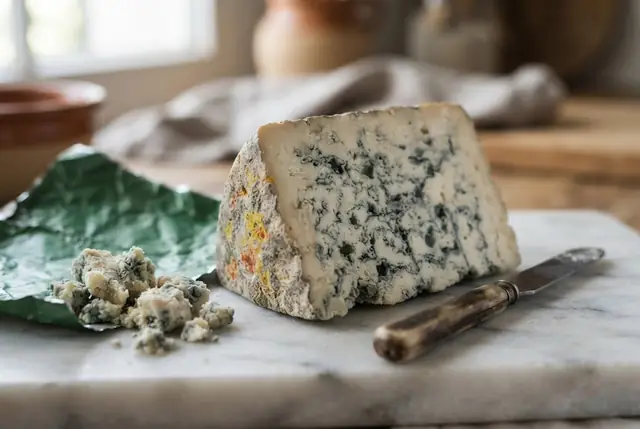
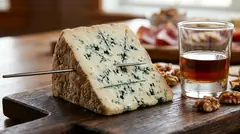
Blue Stilton PDO can only be made in Derbyshire, Leicestershire and Nottinghamshire — and, in one of the better ironies in cheese, not in the village of Stilton, which is in Cambridgeshire. It's made from pasteurized cow's milk, hand-ladled, and aged nine to twelve weeks with piercing to develop the veins.
- Taste
- nutty, savory, mellow blue, moderately salty
- Texture
- firm and crumbly, dense, slightly creamy near the veins
- Look
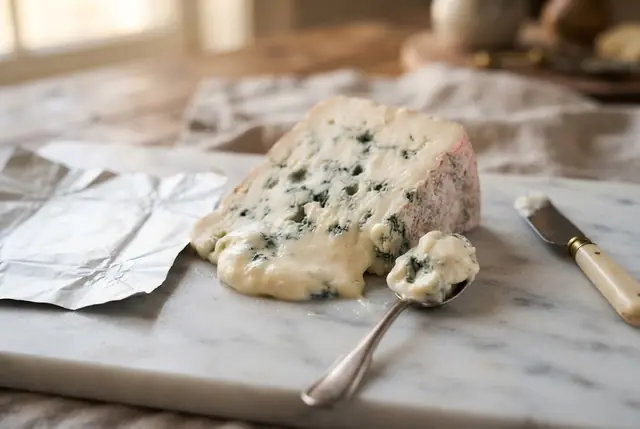
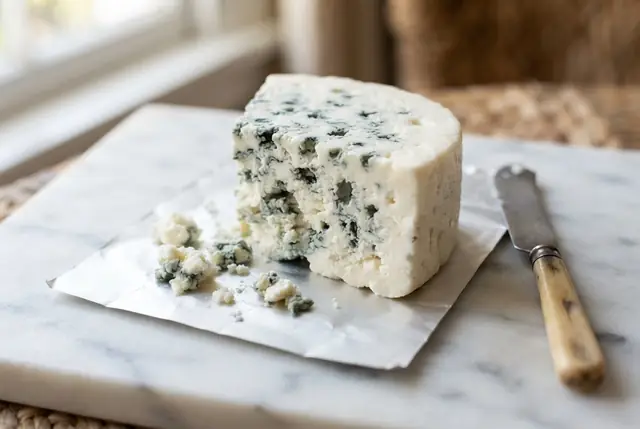
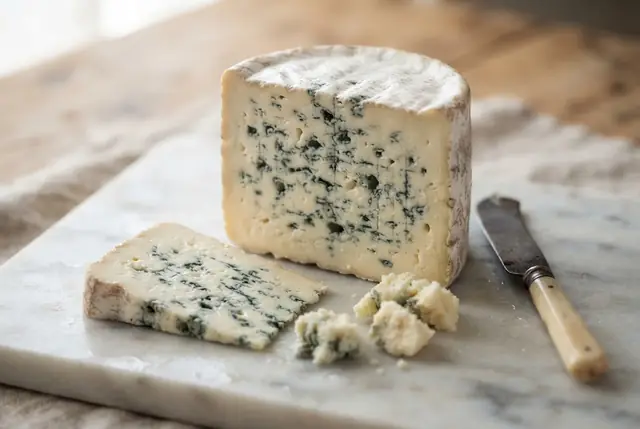
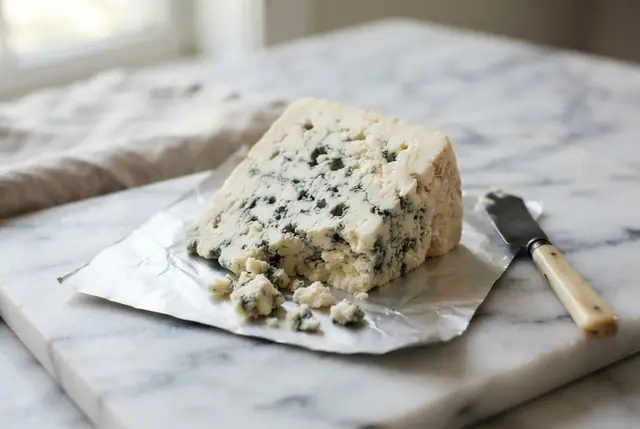
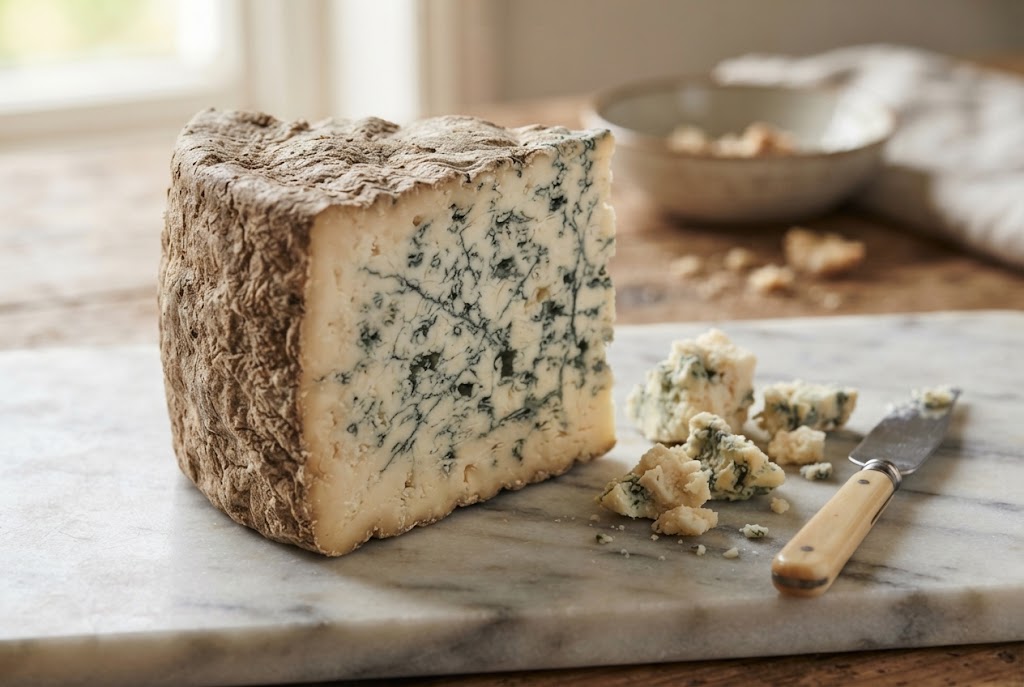
- pale ivory paste with blue-green veining, dry brown crusty rind
Slow, even veining is the mechanism. Stilton is pierced later and aged in cooler conditions than most blues, so the mold spreads gradually and evenly rather than fast and aggressively. That produces a cheese with blue character throughout but without the sharp ammoniac punch that faster-veined blues develop.
What it pairs with — and why
| Pair it with | Why it works |
|---|---|
| Port | The pairing. Sweet fortified wine against salt and funk — and both are English Christmas traditions for the same reason. |
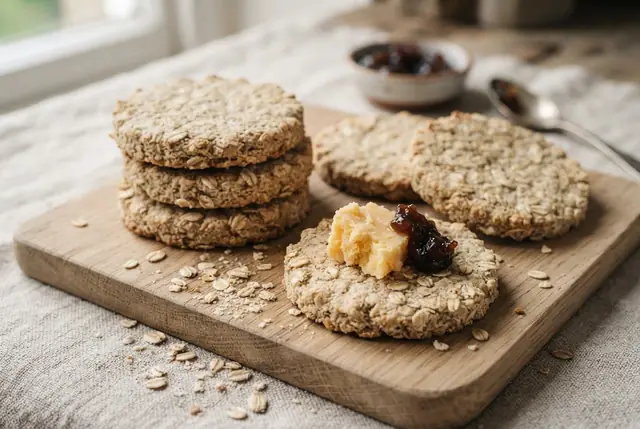
| Oatcakes | The Scottish and northern English base. Sweet oat, crumbly texture, enough body for a wet cheese. |
| Walnut raisin bread | Sweet raisin and tannic walnut. If you serve one thing with Stilton, make it this. |
| Pear and apple | Cool, sweet, acidic. |
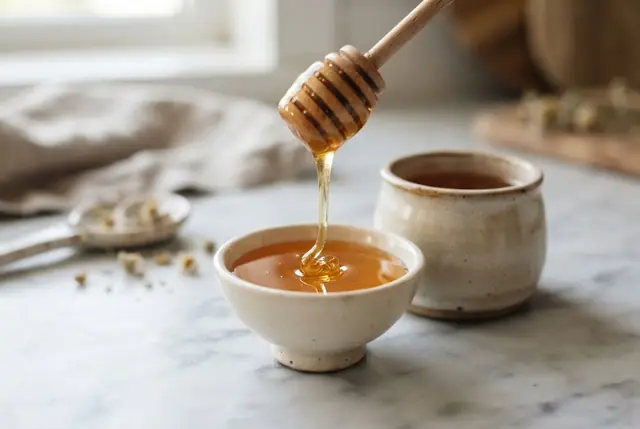
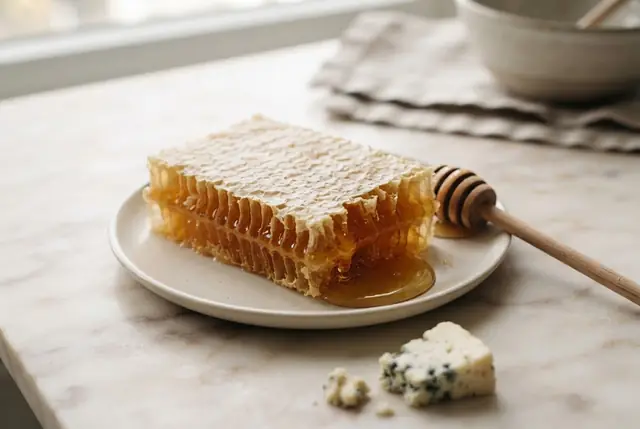
| Honey | Sweetness against salt, reliably. |
| Celery | Traditional in Britain, and the crunch and bitterness genuinely work. |
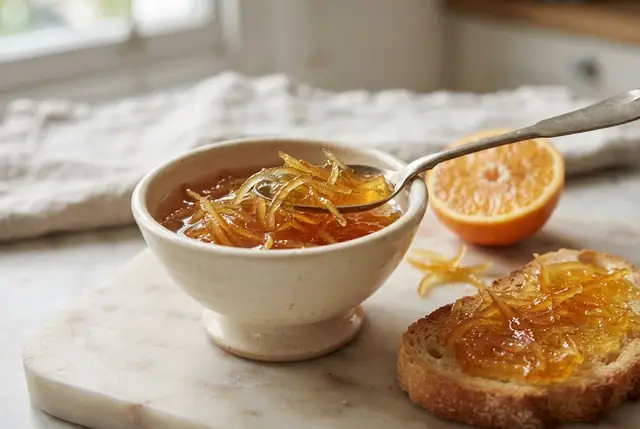
| Quince paste and fig jam | Dense fruit pastes that hold up. |
Skip it with: delicate fresh cheeses nearby, and smoked cheeses. And skip the white Stilton with fruit in it if you want the real thing — that's a different product.
How to prep it for the board
- Temper 45 minutes. Cold Stilton is mostly salt; warm, the nuttiness appears.
- Cut wedges from the center out, or crumble a portion into a rough pile. Both look intentional.
- Serve about 1 oz per person.
- Give it its own knife. Blue transfers.
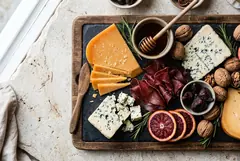
- Put port beside it if you're doing it properly, or honey if you're not.
- Don't scoop out the middle with a spoon. It's a Victorian habit that dries the wheel out and cheesemongers dislike it.
- Fix: browning at cut faces is oxidation. Trim thinly; the interior is fine.
What to buy
| Product | Where | Notes |
|---|---|---|
| Colston Bassett Stilton | Cheese counters, Whole Foods, Murray's | Widely regarded as the best. Hand-ladled and noticeably creamier. |
| Cropwell Bishop Stilton | Whole Foods, cheese counters | Excellent and more widely available. |
| Long Clawson Stilton | Grocery cheese case, Costco | The most widely distributed. Perfectly good. |
| Stichelton | Specialty shops | Raw-milk Stilton-style cheese — can't legally use the name. Exceptional. |
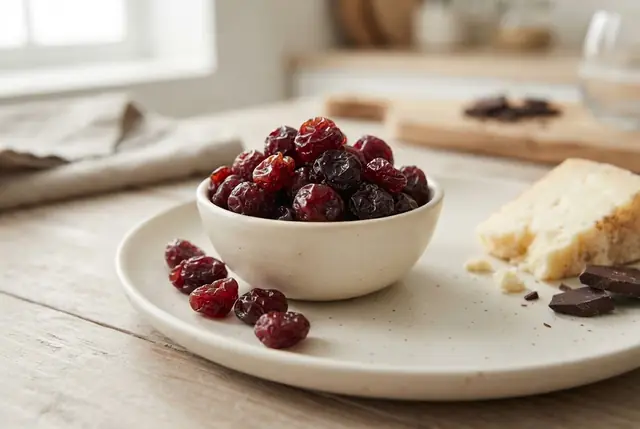
| White Stilton with cranberries | Grocery, seasonal | A different product entirely — mild fresh cheese with fruit. Not blue. |
| Gorgonzola dolce | Grocery cheese case | The gentler alternative — see its own page. |
Label check: the PDO mark. And note that white Stilton with fruit is not a blue cheese — it's a mild crumbly base with dried fruit added.
Skip: pre-crumbled Stilton, and the fruit-studded white version if you want an actual blue.
Ranked picks: our top-rated blue cheese is Point Reyes Original Blue (4.5 out of 5), and the best value is Trader Joe's Cave Aged Blue. See the full ranking of the best blue cheese.
Gluten-free? Yes. See Is blue cheese gluten-free?.
Quick FAQ
Can Stilton be made in Stilton?
No — and it never could under the PDO. The village is in Cambridgeshire, which is outside the protected zone. The cheese was sold there, not made there.
Is Stilton very strong?
Moderate. Saltier than Gorgonzola dolce, milder than Roquefort. It's the middle of the blue range.
Why port?
Sweet fortified wine against salt and funk — the same principle as honey, with more body. It's also a British Christmas tradition on both sides.
What's white Stilton?
The same base cheese without the blue mold, usually sold with dried fruit mixed in. A different product.
How much per person?
About 1 oz.