The short version
A cow's-milk blue from the volcanic Auvergne, developed in the 1850s by a farmer trying to make Roquefort from the milk he actually had. Creamy, grassy and moderately sharp — the best-value French blue and the one most cooks reach for.
What it is
Bleu d'Auvergne AOP comes from the Massif Central. The story is that Antoine Roussel, a local cheesemaker, experimented with introducing rye-bread mold into cow's-milk curd and piercing the wheels with needles to admit air — the technique that made cow's-milk blue possible at scale.
- Taste
- creamy, grassy, moderately sharp, savory, clean finish
- Texture
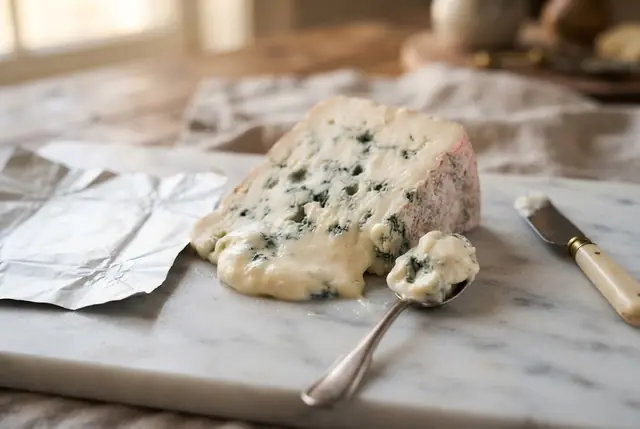
- moist and creamy, crumbly, softer than Stilton
- Look
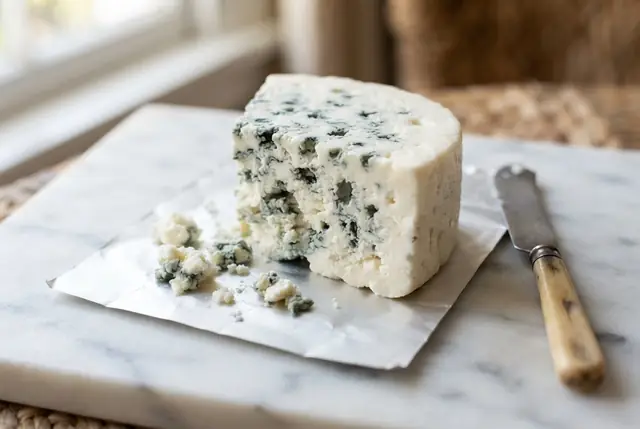
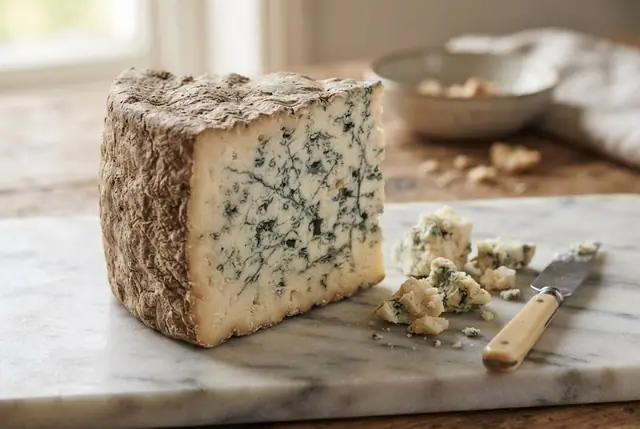
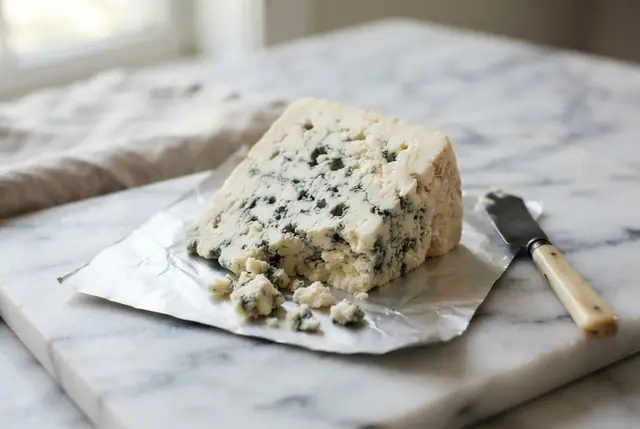
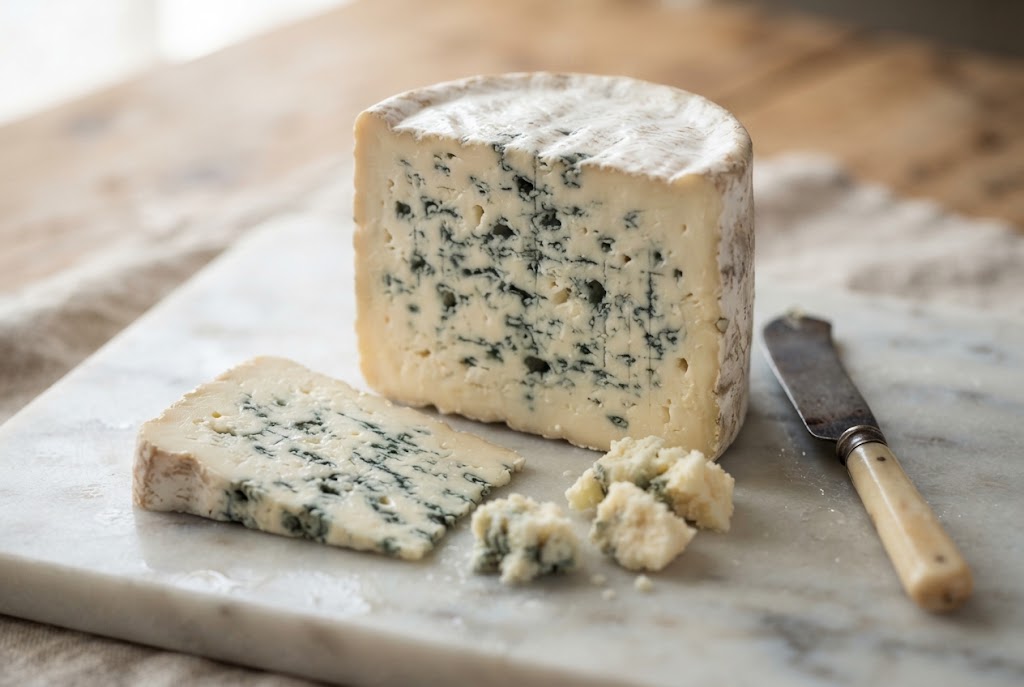
- ivory paste with even blue-green veining, thin natural rind
Even veining is the mechanism, and it's the direct result of Roussel's needle-piercing technique. Air reaches the whole interior rather than only pockets, so the mold develops uniformly. That's why Bleu d'Auvergne tastes consistent from edge to center where less-pierced blues concentrate their sharpness in patches.
What it pairs with — and why
| Pair it with | Why it works |
|---|---|
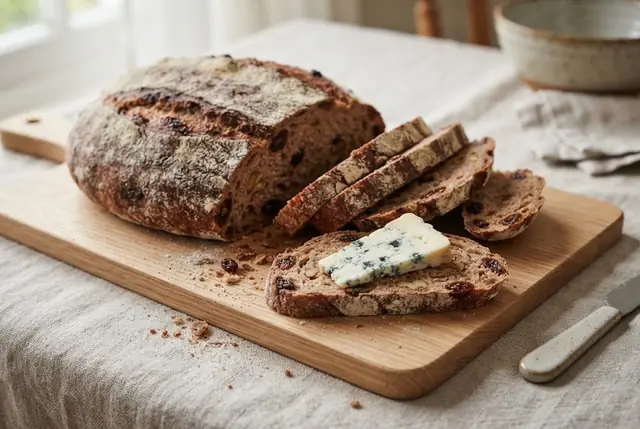
| Walnut raisin bread | Sweet raisin, tannic walnut, salty blue. Reliable with every blue and especially good here. |
| Honey | Sweet against salt — the reliable move with any blue cheese. |
| Pear and apple | Cool, sweet, acidic. |
| Endive leaves | Bitter crunch against a creamy paste — the French salad, deconstructed. |
| Walnuts | Tannin meeting blue bitterness. |
| Steak or a burger | Worth stating: this is the blue that melts best, and it's what most French cooks use. |
| Sauternes, Monbazillac, port | Sweet wine against salt. |
Skip it with: delicate fresh cheeses nearby, and other blues on the same board unless comparison is the point.
How to prep it for the board
- Temper 45 minutes.
- Cut wedges from the center out, or crumble a portion. It's moist enough that a wire cuts more cleanly than a blade.
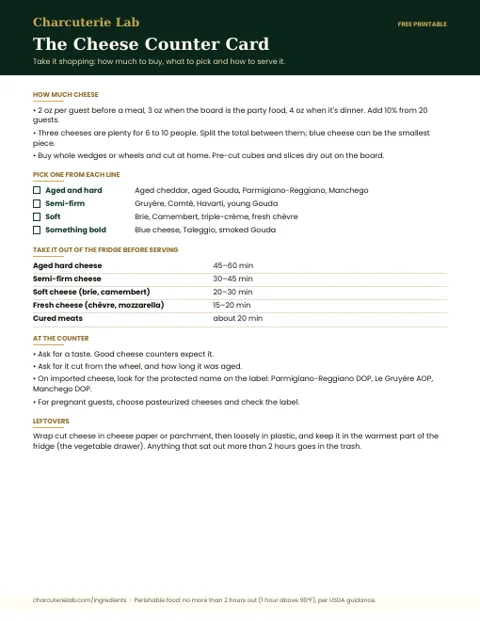
- Serve about 1 oz per person.
- Give it its own knife.
- Use it as the default blue on a general board — it's more complex than Danish Blue, gentler than Roquefort, and cheaper than both Stilton and Roquefort.
- Put honey and walnuts beside it.
- Fix: trim browning at cut faces. Wrap in foil rather than plastic.
What to buy
| Product | Where | Notes |
|---|---|---|
| Bleu d'Auvergne AOP | Cheese counters, Whole Foods, grocery cheese case | The standard. Widely available and good value. |
| Fourme d'Ambert | Cheese counters, Whole Foods | The other Auvergne blue — taller cylinder, milder, creamier. Excellent. |
| Bleu des Causses | Cheese counters, specialty | Cow's-milk blue from Roquefort's own caves. Closer to Roquefort in style. |
| Saint Agur | Grocery cheese case | Creamier and milder. Widely liked. |
| Roquefort | Whole Foods, cheese counters | The sheep's-milk step up — see its own page. |
| Trader Joe's Bleu d'Auvergne | Trader Joe's | Available intermittently. Cheap and decent. |
Label check: the AOP mark. Generic French blue without it is usually a milder industrial cheese.
Skip: buying Roquefort when Bleu d'Auvergne will do. For most boards — and all cooking — this is the smarter purchase.
Quick FAQ
Bleu d'Auvergne or Roquefort?
Bleu d'Auvergne is cow's milk, gentler, creamier and about a third of the price. Roquefort is sheep's milk and much more intense. For a general board, Auvergne.
What's Fourme d'Ambert?
The other Auvergne blue — a tall cylinder, milder and creamier. Also excellent and worth trying.
Is it good for cooking?
It's the best blue for melting — into sauces, dressings and onto steak. That's what most French cooks use it for.
How much per person?
About 1 oz.
Can you eat the rind?
It's thin and natural. Edible, though most people trim it.