The short version
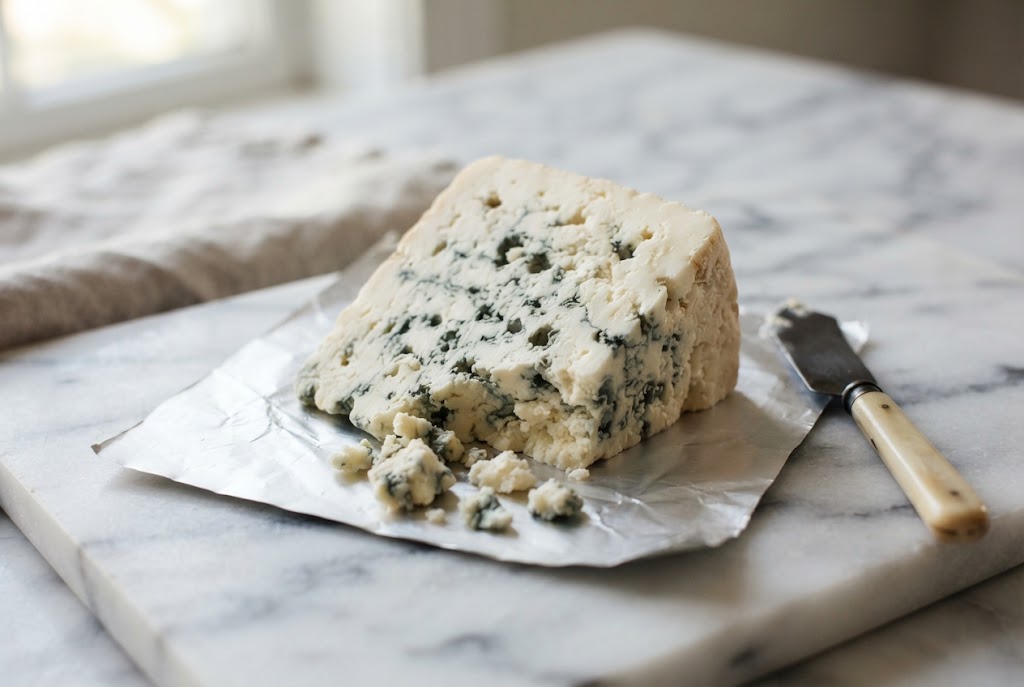
A cow's-milk blue from Newton, Iowa, hand-made and cave-aged since 1941 by the family behind the washing machines. Crumbly, tangy and lemony-sharp. It's the cheese that proved American artisan cheese could exist.
What it is
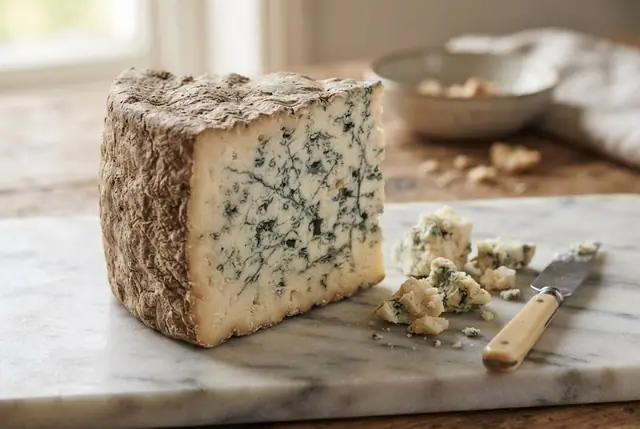
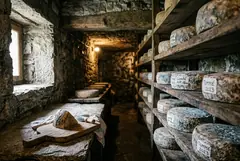
Maytag Blue was developed at Iowa State University and put into production by Fritz Maytag II using milk from the family's prize Holstein herd. It's aged at least six months in man-made caves — far longer than most industrial blues — and still hand-made in small batches.
- Taste
- sharp, tangy, lemony, salty, with a clean acidic finish
- Texture
- dry and crumbly, less creamy than European blues
- Look
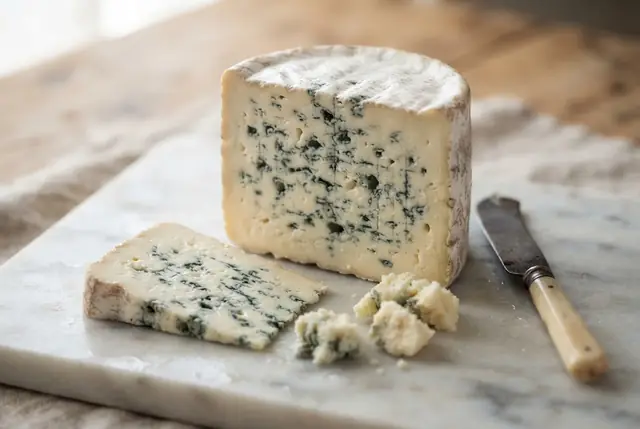
- white paste with dense blue-green veining, no rind
Acidity is the mechanism, and it's what distinguishes Maytag from its European relatives. Where Roquefort reads as salt-forward and Stilton as nutty, Maytag leans acidic and lemony — a brighter, sharper profile that comes from a higher-acid curd. It's a genuinely different flavor direction, not an imitation of anything.
What it pairs with — and why
| Pair it with | Why it works |
|---|---|
| Honey | Sweet against sharp acid and salt. |
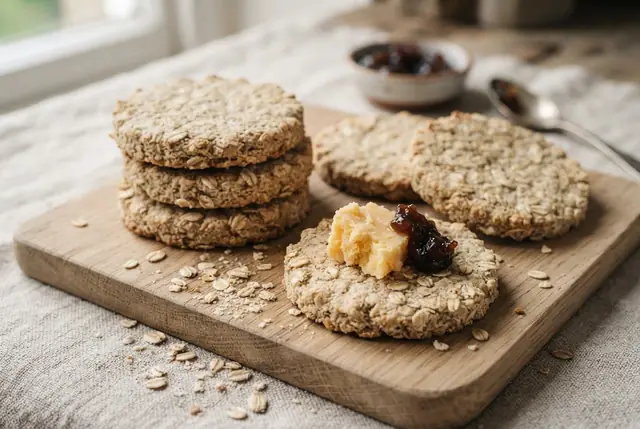
| Oatcakes | Sweet oat and crumbly texture — a good match for a crumbly cheese. |
| Pear and apple | Fruit acid alongside cheese acid, with sugar between. |
| Walnuts and pecans | Tannin and butterfat. Pecans especially, for an American board. |
| Bacon | The wedge-salad logic, and it's genuinely good on a board. |
| Hot honey | Heat and sweet against acidic salt. |
| Bourbon, port, sweet cider | American spirits work here in a way they don't with French blues. |
Skip it with: delicate fresh cheeses, and smoked cheeses. Its acidity also fights vinegary condiments — keep pickles at the other end.
How to prep it for the board
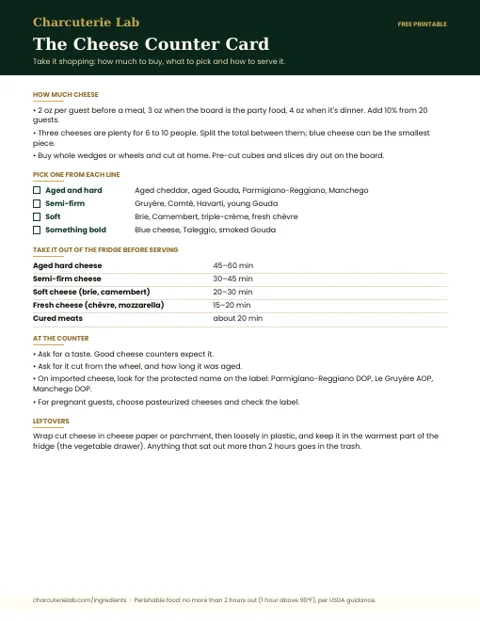
- Temper 45 minutes.
- Crumble it. It's dry and crumbly by nature and it won't hold a clean wedge. A rough pile looks right.
- Serve about 1 oz per person.
- Give it its own knife or spoon.
- Build an American board around it — pecans, apple, bacon, bourbon, oatcakes. It's more interesting than treating it as a Roquefort substitute.
- Put honey beside it.
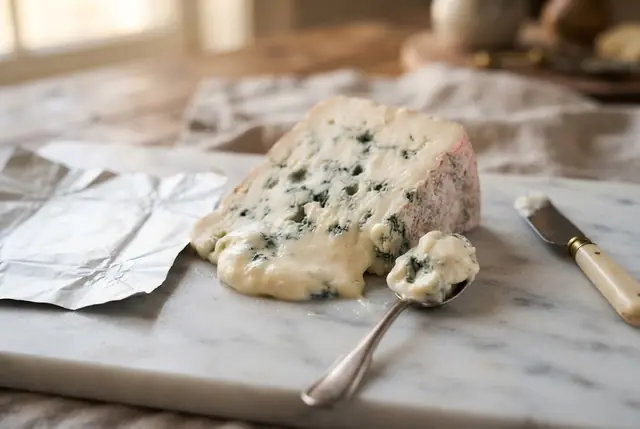
- Fix: browning at the cut face is oxidation. Trim thinly and wrap in foil.
What to buy
| Product | Where | Notes |
|---|---|---|
| Maytag Blue | Cheese counters, Whole Foods, online from the dairy | The original. Widely available for an American artisan cheese. |
| Rogue River Blue | Specialty shops, Rogue Creamery | Oregon, leaf-wrapped, seasonal. One of the great cheeses of the world and priced like it. |
| Rogue Creamery Oregon Blue | Whole Foods, cheese counters | More available and much cheaper than Rogue River. Excellent. |
| Point Reyes Original Blue | Whole Foods, cheese counters | California, creamier and milder. Widely stocked. |
| Jasper Hill Bayley Hazen Blue | Cheese counters, specialty | Vermont, dense and fudgy. Superb. |
| Bleu d'Auvergne | Grocery cheese case | The French everyday blue — see its own page. |
Label check: Maytag is sold in wheels and wedges direct from the dairy and through cheese counters. Buy a wedge cut recently rather than a pre-packed tub.
Skip: pre-crumbled American blue for board use. Dried and often anti-caked.
Quick FAQ
Is it made by the washing machine family?
Yes. Fritz Maytag II started the cheese operation in 1941 using the family farm's Holstein herd. The two businesses have long been separate.
How does it compare to Roquefort?
Drier, crumblier and more acidic. Roquefort is saltier and richer. Maytag is lemony-sharp rather than salt-forward.
What other American blues are worth trying?
Rogue River Blue and Oregon Blue from Rogue Creamery, Point Reyes Original Blue, and Jasper Hill's Bayley Hazen.
How do I serve it?
Crumbled, with honey beside it. It won't hold a clean wedge.
How much per person?
About 1 oz.