The short version
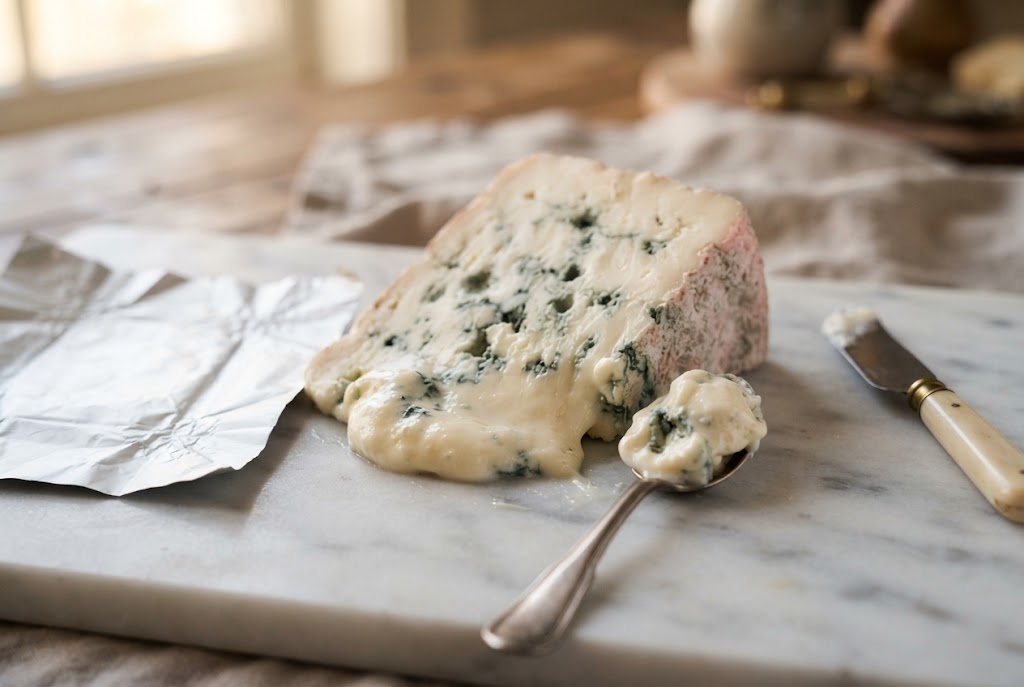
Italy's blue cheese, made in two distinct grades. Dolce is soft, sweet and spoonably creamy — the gentlest blue there is. Piccante is firmer, saltier and much sharper. Nearly everyone who says they hate blue cheese has only ever met a piccante.
What it is
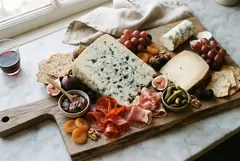
Gorgonzola DOP is made in Lombardy and Piedmont from cow's milk inoculated with Penicillium roqueforti. The wheels are pierced with needles so air reaches the interior and the mold can grow into veins. Dolce is aged about two months; piccante three to four or more.
- Taste (dolce)
- sweet, creamy, mildly tangy, gentle blue
- Taste (piccante)
- salty, sharp, spicy, assertive
- Texture
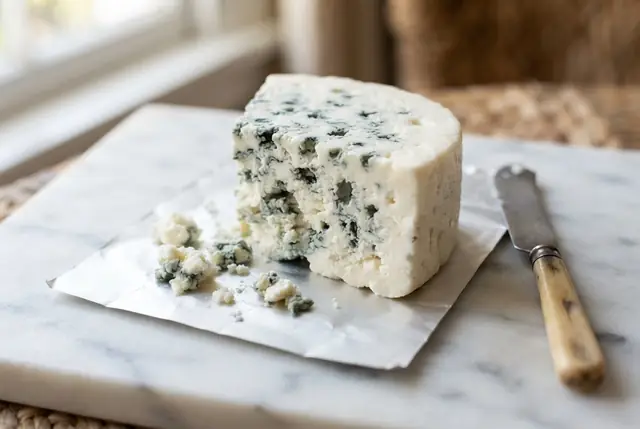
- soft and almost spreadable dolce; firm and crumbly piccante
- Look
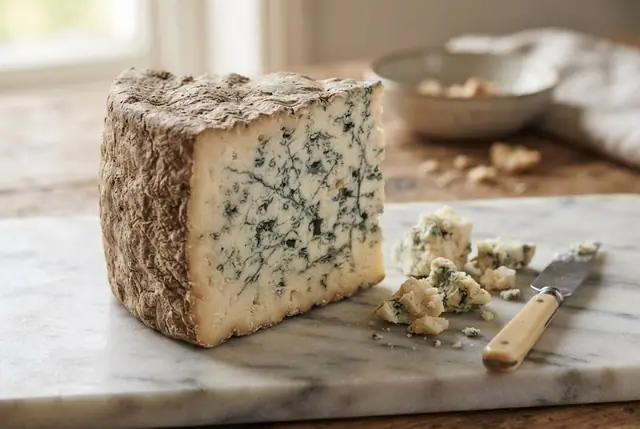
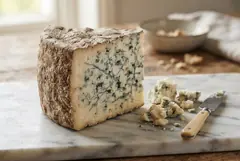
- ivory paste with blue-green veining, thin natural rind
Air, not time alone, is the mechanism. Blue mold needs oxygen, so blue cheeses are pierced to let it in — the veins follow the needle tracks. More piercing and longer aging means more mold, more of the sharp compounds it produces, and a firmer, drier paste. That's the whole difference between the two grades.
What it pairs with — and why
| Pair it with | Why it works |
|---|---|
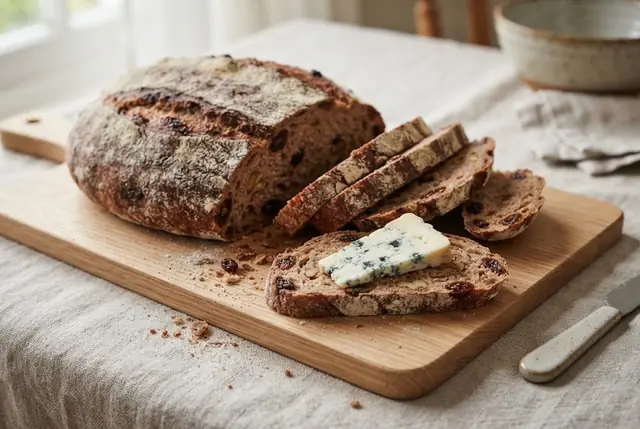
| Walnut raisin bread | Sweet raisin, tannic walnut, salty blue. The single best bite in this category. |
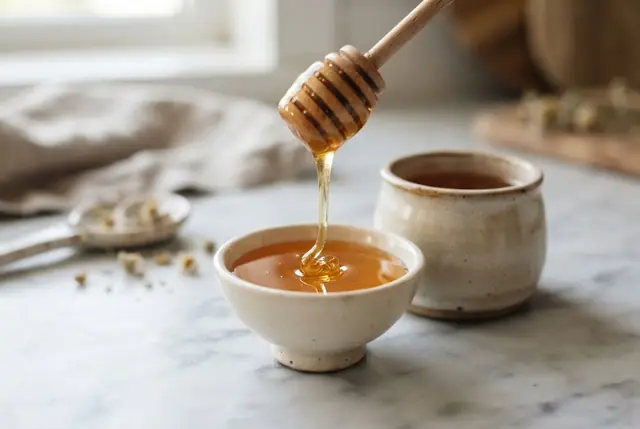
| Honey | Sweet against salt and funk. The most reliable blue-cheese pairing there is. |
| Fresh pear | Cool, sweet and wet against sharp and salty. Classic and correct. |
| Oatcakes | Sweet oat, crumbly texture, and enough body to hold a wet cheese. |
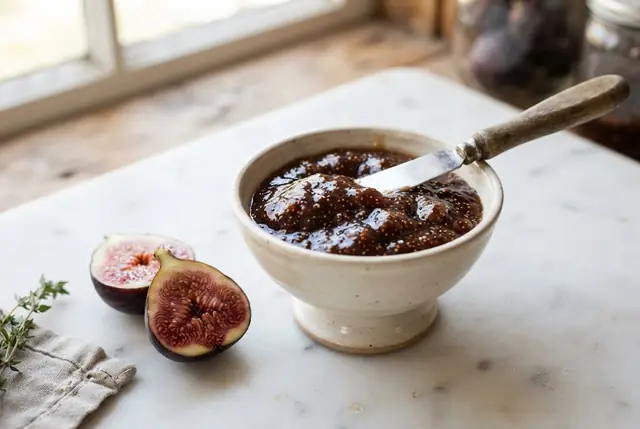
| Fig jam and mostarda | Dense preserves that stand up to a strong cheese. |
| Walnuts | Tannin meeting blue-mold bitterness halfway. |
| Sweet wine — Sauternes, Moscato, port | Sugar against salt. The classic rule for every blue. |
Skip it with: delicate fresh cheeses anywhere nearby, and smoked cheeses — two assertive aromas colliding. Give it its own end of the board.
How to prep it for the board
- Buy dolce unless you know the crowd. It converts skeptics; piccante confirms their opinion.
- Temper 45 minutes. Cold blue tastes mostly of salt; warm, the sweetness and the creaminess arrive.
- Serve about 1 oz per person. Blue is rich and most people take a small amount.
- Give it its own knife and its own corner. Blue mold transfers to whatever the blade touches next.
- Put honey directly beside it with a spoon. This is the pairing that makes blue work for people who think they don't like it.
- Dolce is spreadable — serve it with a small spoon rather than a cheese knife.
- Fix: if the paste is browning at the edges, trim it. Blue cheese oxidizes at cut faces faster than most.
What to buy
| Product | Where | Notes |
|---|---|---|
| Gorgonzola Dolce DOP | Cheese counters, Whole Foods, most grocery | The gentle one. Start here for any mixed crowd. |
| Gorgonzola Piccante DOP | Cheese counters, Italian delis | The sharp one. For a board where blue is the point. |
| Gorgonzola Cremificato | Cheese counters | An extra-creamy dolce style. Excellent spooned onto crostini. |
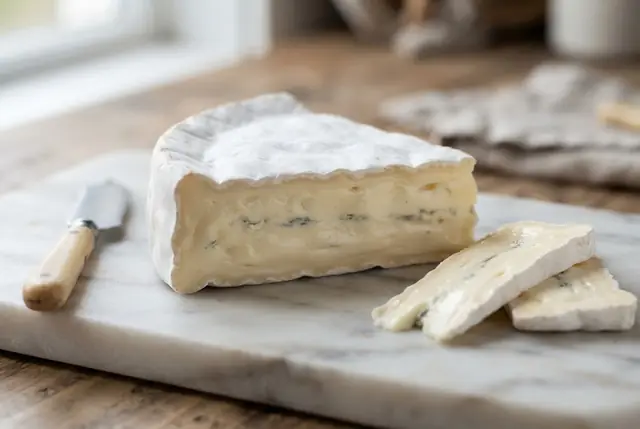
| Cambozola | Grocery cheese case | Blue-brie hybrid, even gentler — see its own page. |
| Stilton | Whole Foods, cheese counters | The English alternative, firmer and nuttier — see its own page. |
| Trader Joe's Gorgonzola | Trader Joe's | Cheap and usually dolce-style. |
Label check: dolce or piccante on the label, plus the DOP mark. Unlabeled "gorgonzola" at a US counter is usually a domestic imitation and tends toward sharp.
Skip: pre-crumbled blue cheese for a board. It's dried, often anti-caked, and it looks like salad topping.
Ranked picks: our top-rated blue cheese is Point Reyes Original Blue (4.5 out of 5), and the best value is Trader Joe's Cave Aged Blue. See the full ranking of the best blue cheese.
Gluten-free? Yes. See Is blue cheese gluten-free?.
Vegetarian? Usually not. See Is gorgonzola vegetarian?.
Quick FAQ
Gorgonzola dolce or piccante?
Dolce for a mixed crowd — soft, sweet and gentle. Piccante if the board is for people who already like blue cheese.
Why does blue cheese have veins?
The wheels are pierced with needles so oxygen reaches the interior, letting the Penicillium mold grow. The veins follow the needle tracks.
What's the one pairing to get right?
Honey. Then walnut raisin bread. Both work on the same sweet-against-salt principle.
How much per person?
About 1 oz. Blue is rich.
Why does it need its own knife?
Blue mold transfers to whatever the blade touches next, and it will end up on the brie.