The short version
A citrus with the sugar in the skin and the acid in the flesh, so you eat it whole and it flips halfway through. Nothing else on a board does that. Small, bright orange, and cheap enough to be a conversation piece rather than a splurge.
What it is
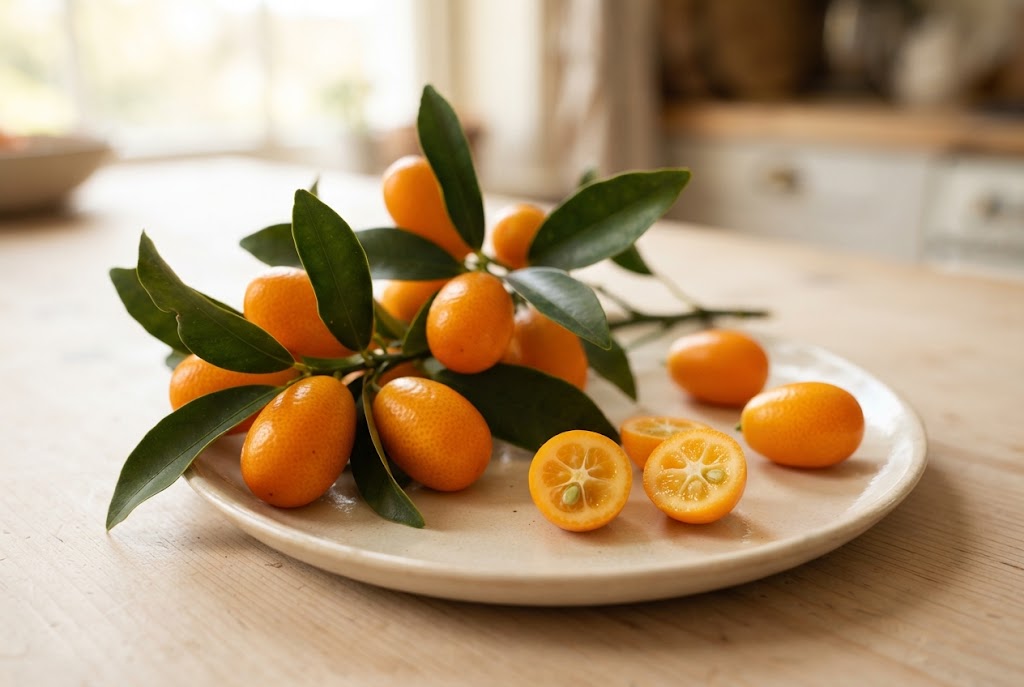
A thumb-sized citrus, oval or round, eaten peel and all. Nagami is the oval one and the one you'll find — tart flesh, sweet peel. Meiwa is round, sweeter overall, harder to source. Season runs December through April.
- Taste
- sweet peel, sharply sour flesh, floral finish
- Texture
- firm skin, juicy interior, a couple of small seeds
- Look
- tiny glossy orange ovals, often sold on the branch with leaves
The mechanism is inversion. Every other citrus asks you to discard the bitter part and eat the sweet part; a kumquat reverses it. On a board that's mostly salt and fat, an ingredient that changes character mid-bite is genuinely useful — it resets the palate twice.
What it pairs with — and why
| Pair it with | Why it works |
|---|---|
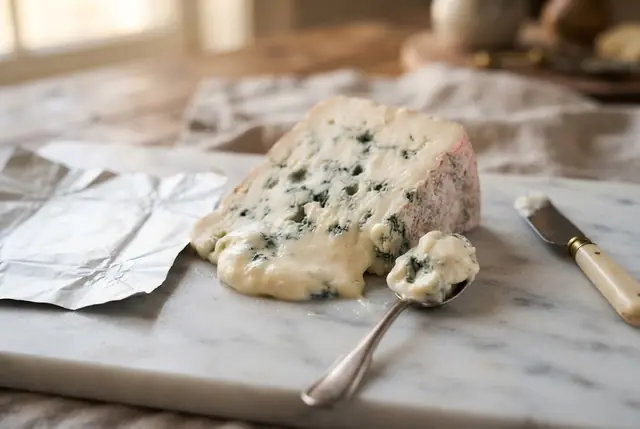
| Blue cheese | Sweet peel handles the salt, sour flesh cuts the fat. The one citrus that works with blue. |
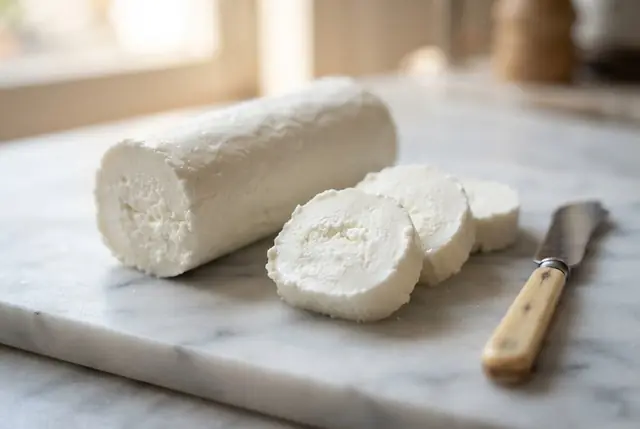
| Fresh goat cheese | Sharp against sharp, with the peel's sugar arriving after. |
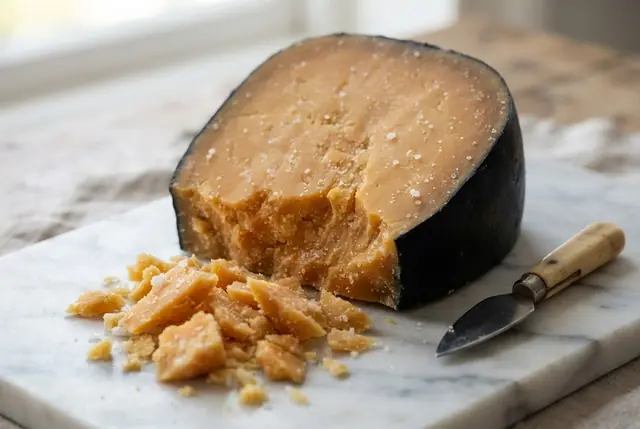
| Aged gouda | Caramel and butterscotch against bright bitter citrus. |
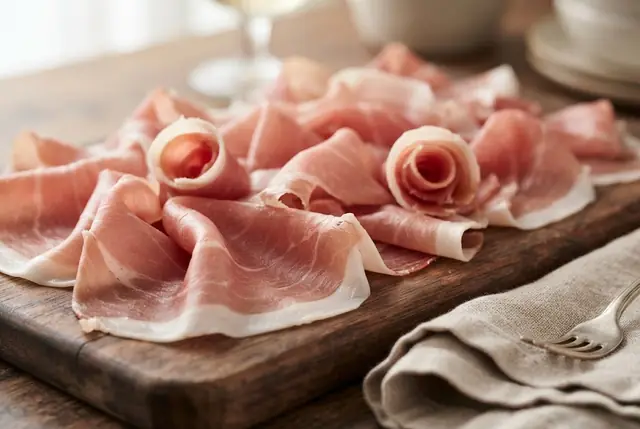
| Prosciutto | Wrap a slice around a halved kumquat — salt, fat, sugar, acid in one bite. |
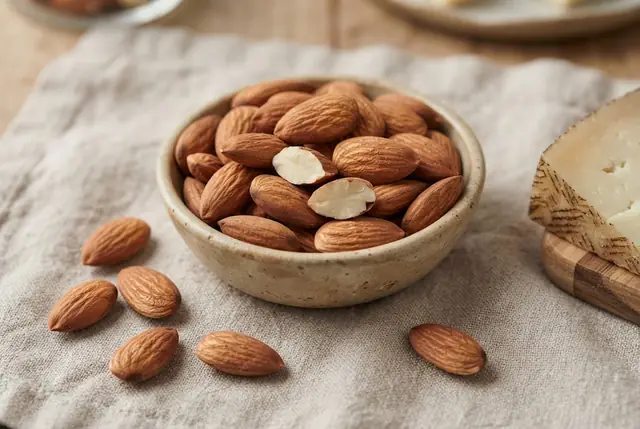
| Almonds | Bitter almond and bitter pith are the same register. |
| Dark chocolate | Candied-orange logic, without candying anything. |
Skip it with: delicate fresh cheeses. Kumquat is loud and will flatten mozzarella or burrata.
How to prep it for the board
- Wash well. You're eating the peel, so it matters more than with other citrus.
- Roll each one firmly between your fingers before serving. It breaks the oil cells in the skin and releases the aroma.
- Slice crosswise into thin wheels, or halve them, or leave whole — all three are legitimate.
- Pick out the seeds if you've sliced them.
- Buy them on the branch if you can find them. Leaves and stems on a board look better than anything you can arrange.
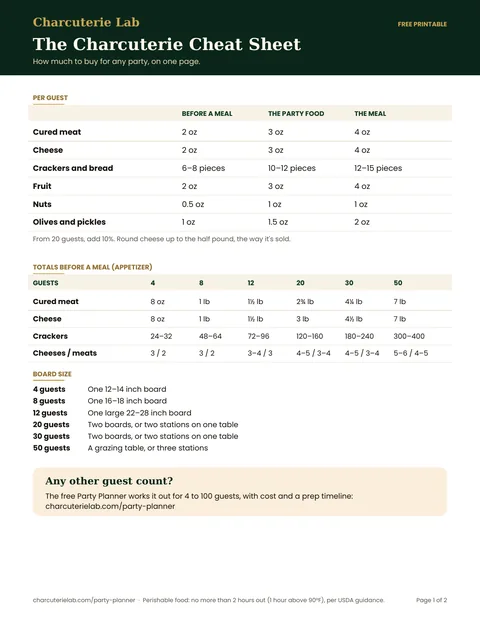
- Serve 0.5–1 oz per person. They're strong; nobody eats six.
- Fix: too sour for your crowd? Halve, toss with a little honey, and let them sit twenty minutes. Or simmer whole in sugar syrup for ten minutes.
What to buy
| Product | Where | Notes |
|---|---|---|
| Nagami kumquats | Grocery, Asian markets, Dec–Apr | The standard oval kumquat. Tart flesh, sweet peel. |
| Meiwa kumquats | Farmers markets, specialty | Round and sweeter throughout. Better for eating whole. |
| Kumquats on the branch | Asian markets, farmers markets | Worth paying extra for. The leaves make the board. |
| Candied kumquats | Specialty, Italian delis | Sweet enough to sit in the dessert corner beside chocolate. |
Label check: firm, glossy, deep orange. Soft or dull skin means old fruit, and since you're eating the skin there's nowhere to hide.
Skip: pale yellow-orange kumquats — underripe, and the peel will be bitter rather than sweet.
Quick FAQ
Do you eat kumquat skin?
Yes — the skin is the sweet part. The flesh inside is the sour part.
How do I serve kumquats on a board?
Sliced into thin wheels, halved, or whole. Whole on the branch looks best.
Are kumquats too sour?
The flesh is sharp. Roll them first to release the peel oils, and pair them with something salty like blue cheese or prosciutto.
When are kumquats in season?
December through April.
Do they have seeds?
Usually two or three small ones. Pick them out if you're slicing.