The short version
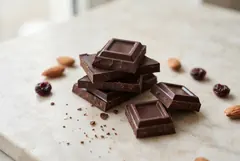
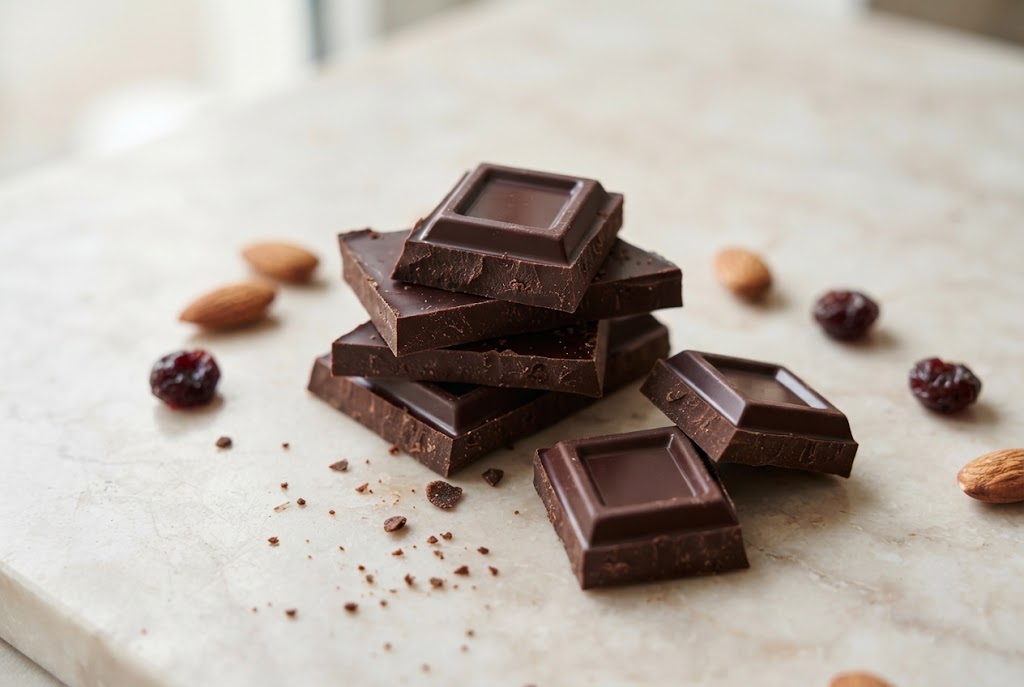
Chocolate gives a board an ending — a corner people move to when they've had enough salt. 70% cocoa is the sweet spot: bitter enough to work with cheese, not so bitter that guests wince. Break it into irregular shards rather than laying out neat squares.
What it is
Cocoa solids, cocoa butter and sugar, with cocoa percentage indicating how much of the bar is cocoa-derived. 60–70% is approachable; 70–80% is the board range; 85%+ is bitter and divisive. Single-origin bars vary enormously — Madagascar is fruity and bright, Ecuador floral, Venezuelan nutty.
- Taste
- bitter, sweet, fruity to nutty depending on origin
- Texture
- hard snap, melting on the tongue
- Look
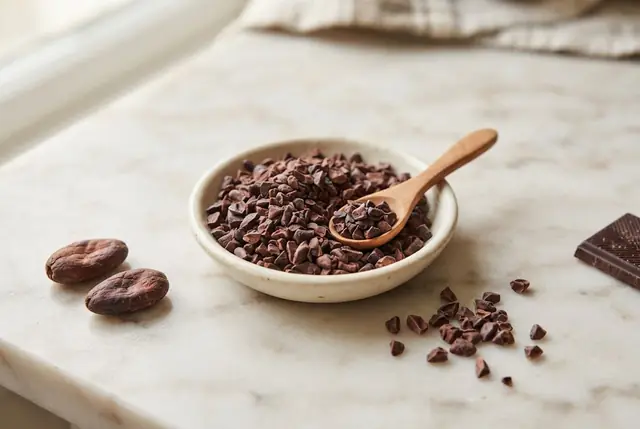
- glossy dark brown shards with a clean break
The mechanism is bitterness plus fat. Cocoa's bitter compounds do what tannin does — they clear fat from the palate — while the cocoa butter melts at body temperature and coats it again. That double action is why chocolate pairs so well with blue cheese: the bitterness handles the salt, the fat carries it, and the sugar softens the funk.
What it pairs with — and why
| Pair it with | Why it works |
|---|---|
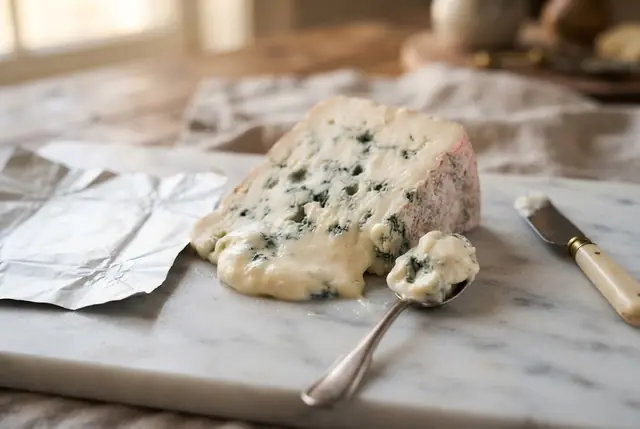
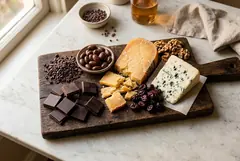
| Gorgonzola and blue cheese | Bitter and sweet against salt and funk. The pairing most guests haven't tried and remember afterwards. |
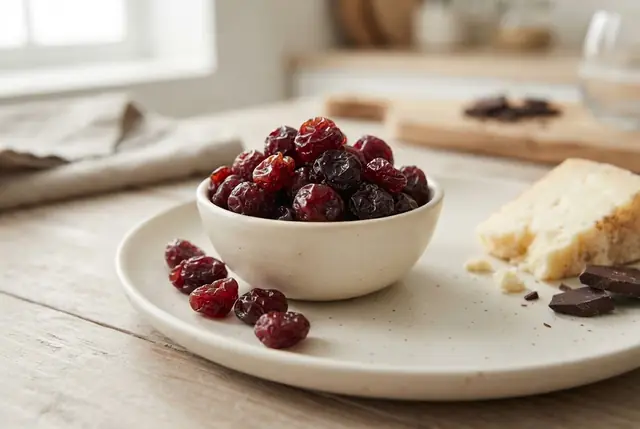
| Dried cherries | Tart fruit and bitter chocolate — the oldest confectionery pairing there is. |
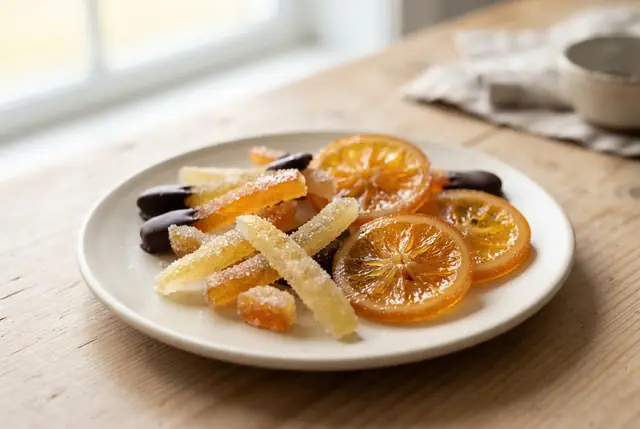
| Candied citrus | Orange and chocolate. Both bitter, both sweet, both from the same tradition. |
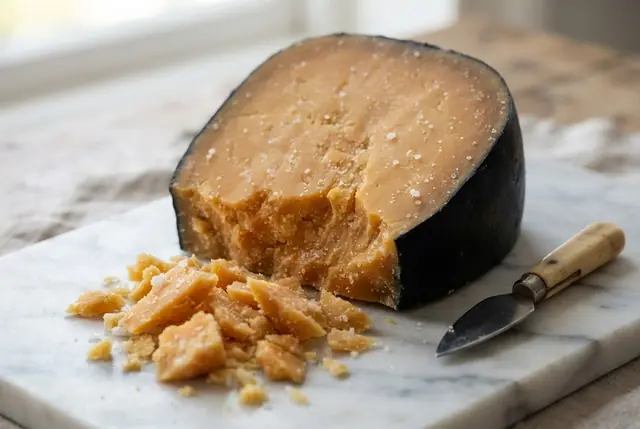
| Aged gouda | Caramel and butterscotch in the cheese meeting cocoa's roast notes. |
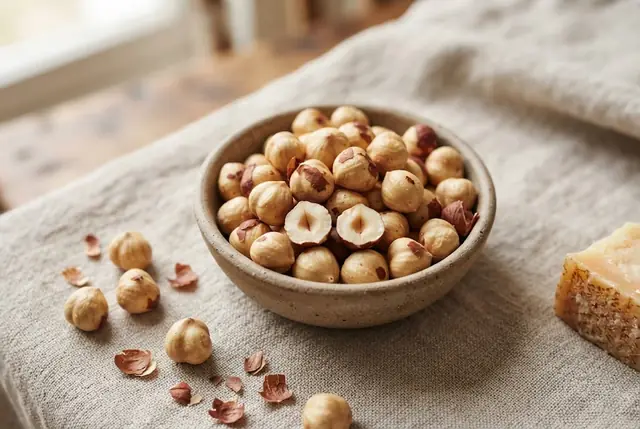
| Hazelnuts and toasted nuts | Gianduja logic — chocolate and hazelnut share roasted aromatic compounds. |
| Flaky sea salt | Salt suppresses bitterness and amplifies cocoa. Sprinkle it on. |
Skip it with: cured meat and delicate fresh cheeses. Chocolate belongs in its own corner.
How to prep it for the board
- Break it into irregular shards, not squares. Shards look generous; a grid of squares looks like a vending machine.
- Break it cold, straight from the fridge, for a clean snap — then let it come to room temperature to serve.
- Put it in its own corner, with the nuts, dried fruit and candied citrus.
- Serve at room temperature. Cold chocolate tastes of almost nothing.
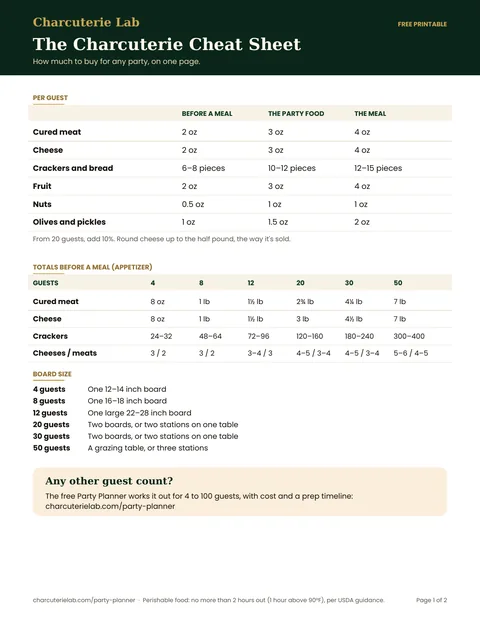
- Serve 0.5 oz per person.
- Finish with flaky salt on a few shards.
- Fix: whitish bloom on the surface? That's cocoa butter, not mould. Harmless, and it still tastes fine.
What to buy
| Product | Where | Notes |
|---|---|---|
| 70% dark chocolate bar | Any grocery | The board default. Lindt, Green & Black's, Ghirardelli all work. |
| Single-origin bars | Specialty, chocolatiers | Madagascar (fruity), Ecuador (floral), Venezuela (nutty). Worth exploring. |
| Valrhona or Michel Cluizel | Specialty, online | Reference-quality. Noticeably better. |
| Sea salt dark chocolate | Grocery | Already finished. A shortcut that works. |
| Chocolate-covered nuts or citrus | Chocolatiers, specialty | Two ingredients in one. See their own pages. |
Label check: cocoa or cocoa mass should be the first ingredient, not sugar. Most dark chocolate contains soy lecithin and traces of dairy — worth flagging.
Skip: anything under 50% cocoa on a cheese board, and chocolate with fillings.
Ranked picks: our top-rated dark chocolate is Tony's Chocolonely Dark Chocolate 70% (4.4 out of 5), and the best value is Aldi's Choceur Dark Chocolate. See the full ranking of the best dark chocolate.
Quick FAQ
What percentage dark chocolate is best for a cheese board?
70% — bitter enough to work with cheese, approachable enough that guests will eat it.
Why does chocolate go with blue cheese?
Cocoa's bitterness clears the fat and the sugar softens the salt and funk, while the cocoa butter carries it all.
What's the white film on my chocolate?
Cocoa butter bloom, caused by temperature change. Harmless, and the chocolate is fine to eat.
Should chocolate be served cold?
No — room temperature. Cold chocolate is muted and doesn't melt properly on the tongue.
How much per person?
About half an ounce — two or three shards.