The short version
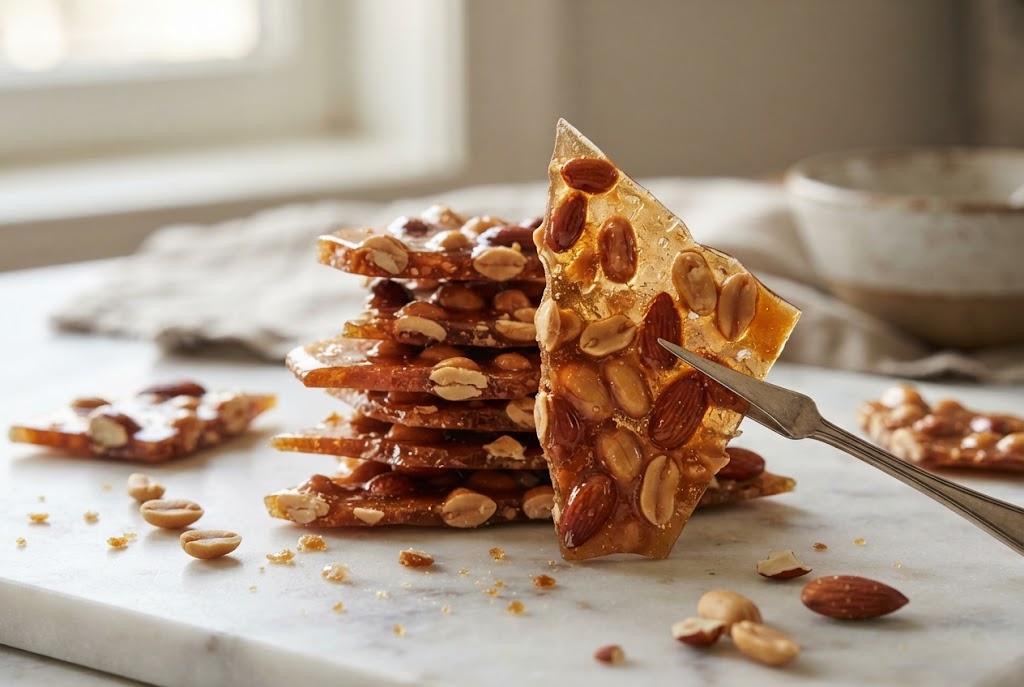
Sugar cooked to hard crack and poured over toasted nuts, then broken into shards. It is the one thing in the dessert corner that makes a noise. Everything else there is soft — chocolate, spreads, dried fruit, cake-like biscuits — and a plate of soft sweet things is where a board goes flat. A few shards of brittle fixes it and looks like more effort than it was.
What it is
A confection, not a candy bar. Sugar and a little glucose are cooked past 300F, so almost all the water is gone and the sugar sets glassy rather than chewy. Nuts are folded in at the end. Butter and baking soda are common additions — soda aerates the sugar and makes it lighter to bite.
- Taste
- deep caramel, toasted nut, and salt if it is made well
- Texture
- glassy and brittle, shattering rather than crumbling
- Look
- amber sheets or irregular shards with nuts suspended in them
The mechanism is a sugar glass. Above about 300F sucrose loses its remaining water and cools into an amorphous solid rather than crystals, which is why brittle snaps cleanly and dissolves fast instead of chewing. That fast dissolve is what makes it work with cheese: the sugar is gone in a second, leaving toasted nut behind rather than a mouthful of caramel.
What it pairs with — and why
| Pair it with | Why it works |
|---|---|
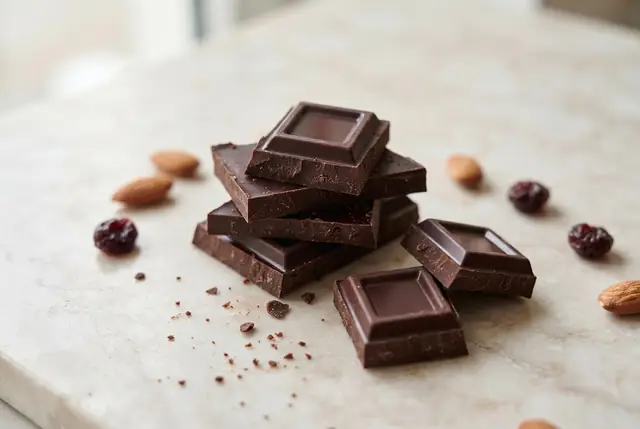
| Dark chocolate | Bitter against burnt sugar. Two versions of the same roasted flavour. |
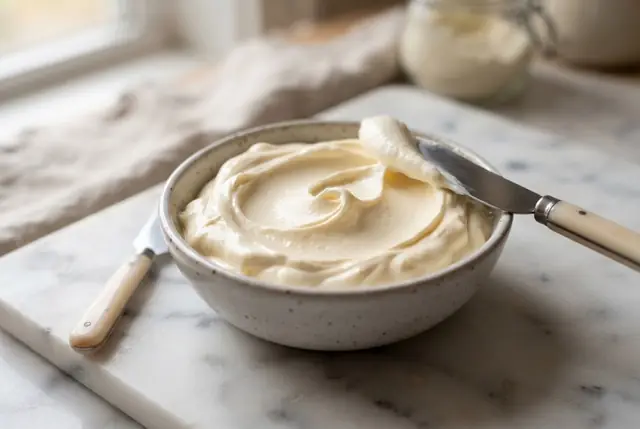
| Mascarpone | Soft cream and hard sugar. Push a shard upright into the bowl. |
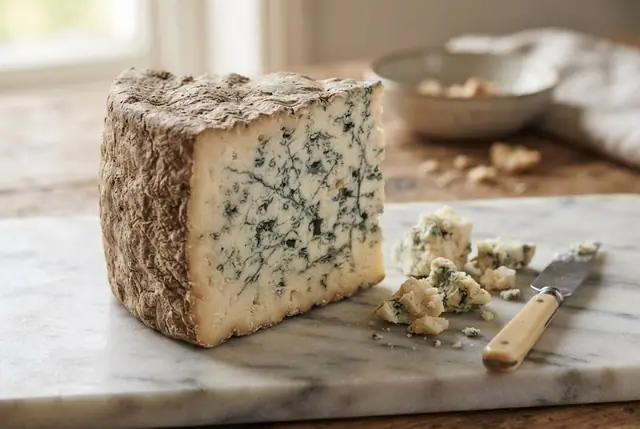
| Stilton and blue cheese | Salt and funk want sweetness, and caramel is more interesting than jam. The best savoury use of brittle there is. |
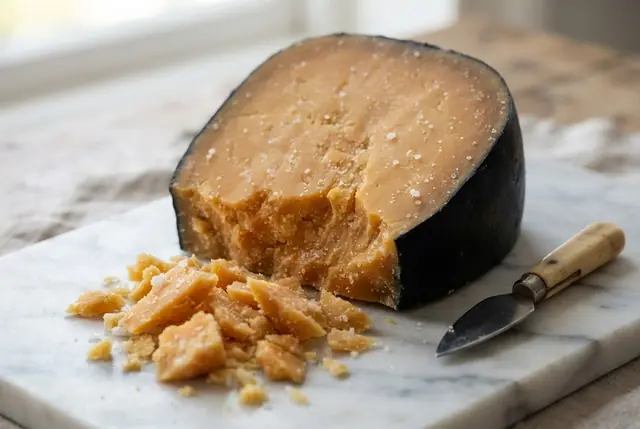
| Aged gouda | The cheese already tastes of butterscotch and has crunchy crystals. Brittle makes that explicit. |
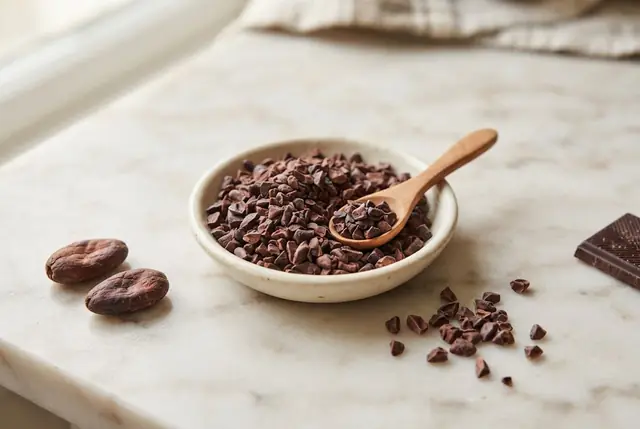
| Cocoa nibs | Bitter crunch beside sweet crunch. Scatter nibs across the shards. |
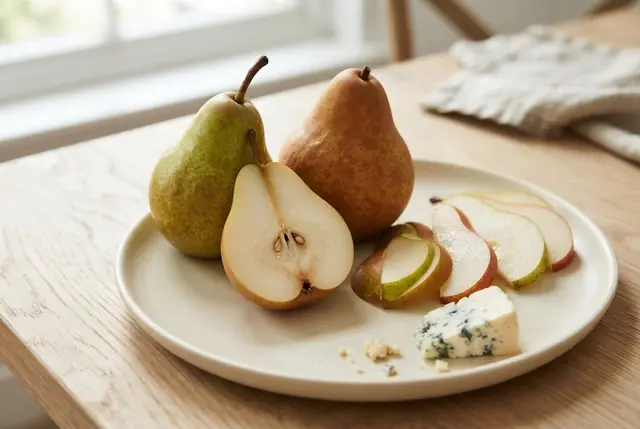
| Pears | Cool, wet and floral against hot-tasting caramel. An autumn pairing. |
Skip it with: brined items, cured fish and anything vinegary.
How to prep it for the board
- Break it into shards by hand, not with a knife. Uneven pieces look better.
- Stand a few shards upright against a cheese or in a bowl for height.
- Add it last. Brittle goes sticky within an hour in a warm room.
- Keep it off wet fruit and away from anything in brine.
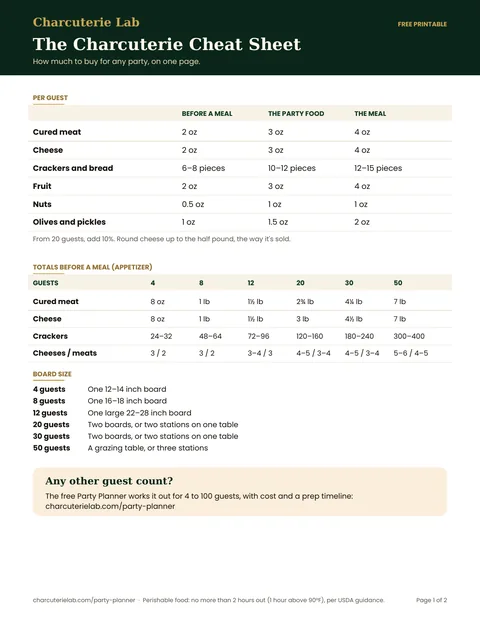
- Serve 0.5 oz per person — one or two pieces.
- Scatter flaky salt over it if it is a sweet commercial brittle.
- Fix: already tacky? Ten minutes in a 250F oven and then cooled flat will crisp it back up.
What to buy
| Product | Where | Notes |
|---|---|---|
| Almond or hazelnut brittle | Confectioners, farmers markets | The best flavour against cheese. Look for visible salt. |
| Peanut brittle | Any grocery, sweet counters | The familiar one. Sweeter and cheaper. |
| Sesame brittle (pasteli) | Greek and Middle Eastern grocers | Honey-based, less sweet, excellent with feta and blue cheese. |
| Croccante or torrone duro | Italian delis | The Italian almond version. Usually better made. |
| Homemade | Make it | Sugar, a little water and glucose to hard crack, nuts, butter, soda, salt. Fifteen minutes. |
Label check: nuts should be visible and plentiful. Thin sheets with three peanuts in them are sugar with a name.
Skip: anything already gone soft or sweating in its packaging.
Quick FAQ
What is the difference between brittle and praline?
Brittle is cooked to hard crack and shatters. Praline in the American South is softer and creamier; in France it is ground into paste.
Which nut is best?
Almond and hazelnut hold their flavour best against caramel. Peanut brittle is the most familiar and the sweetest.
Does brittle go with cheese?
Yes — blue cheese and aged gouda in particular. Caramel and salt crystals are already what those cheeses taste of.
How do I stop it going sticky?
Keep it in an airtight container away from anything moist and put it on the board at the last minute.
How much per person?
Half an ounce — one or two shards.