The short version
Sweeter, softer and more floral than apples, and a better match for blue cheese and hard aged cheese. The whole difficulty is timing: a pear ripens from the core outward, so by the time the outside feels soft the middle is mush. Check the neck.
What it is
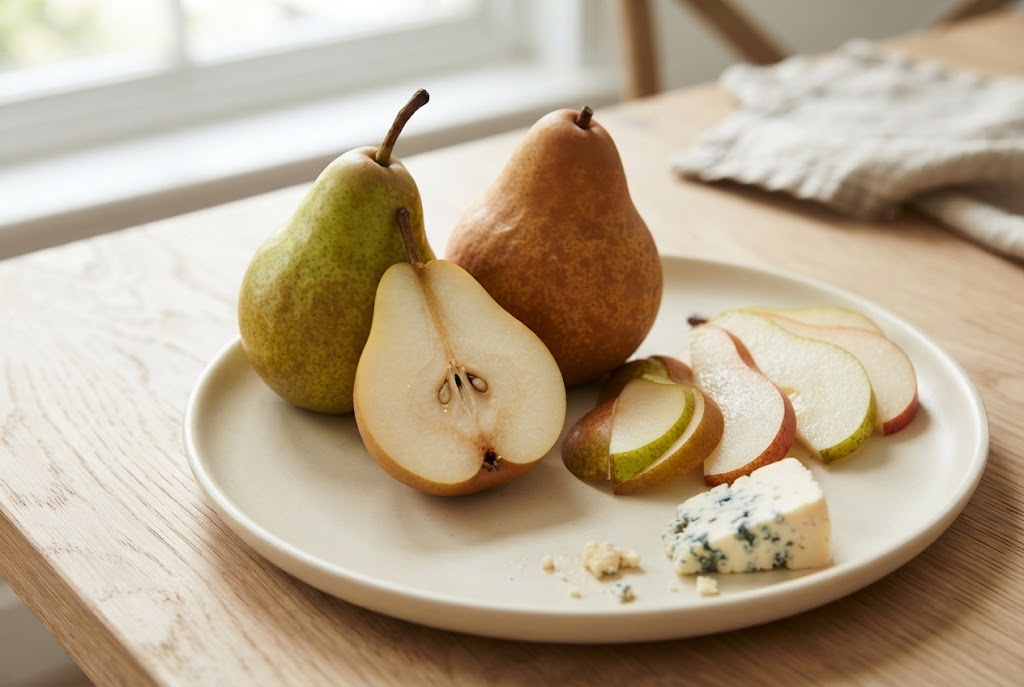
Bartlett is the classic yellow-when-ripe pear — juicy, floral, soft. Bosc is brown, firmer and holds its shape when sliced, which makes it the best board pear. Anjou is green, mild and slow-ripening. Comice is the sweetest and most fragile. Concorde and Forelle are smaller and firmer.
- Taste
- honeyed, floral, mildly acidic, more perfumed than apple
- Texture
- soft and buttery when ripe, grainy near the core
- Look
- pale cream flesh with a green, brown or red skin edge
Ripening from the inside is the mechanism, and it's why pears are the trickiest common fruit to buy. Ethylene works outward from the core, so a pear that feels soft at the belly is already over. The neck — the narrow part near the stem — firms up last and gives way first when ripe. Press there.
What it pairs with — and why
| Pair it with | Why it works |
|---|---|
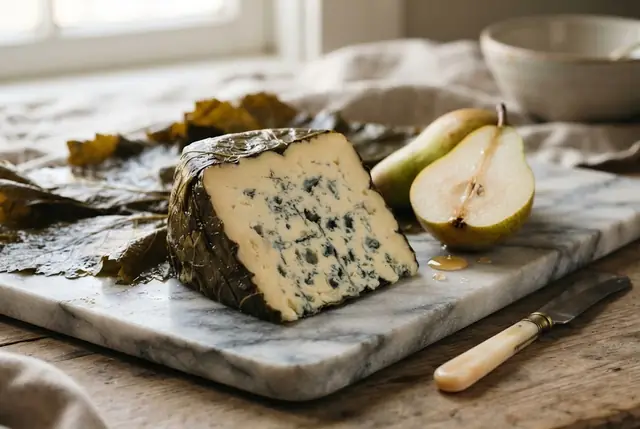
| Gorgonzola, Stilton, Roquefort | The great pairing. Sweet floral juice against salt and blue funk. Better than apple here. |
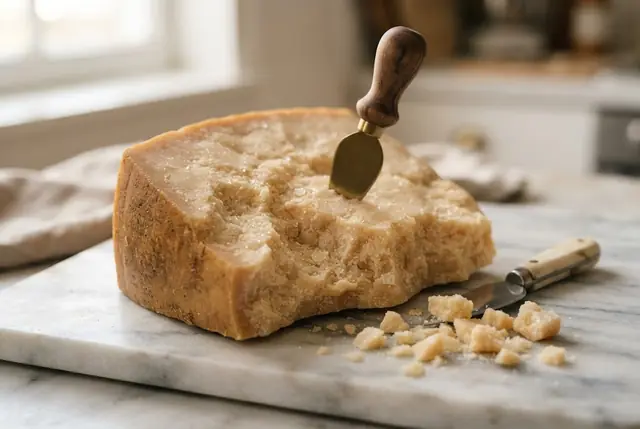
| Parmigiano-Reggiano | An Italian proverb tells farmers not to let on how good cheese and pears are together. |
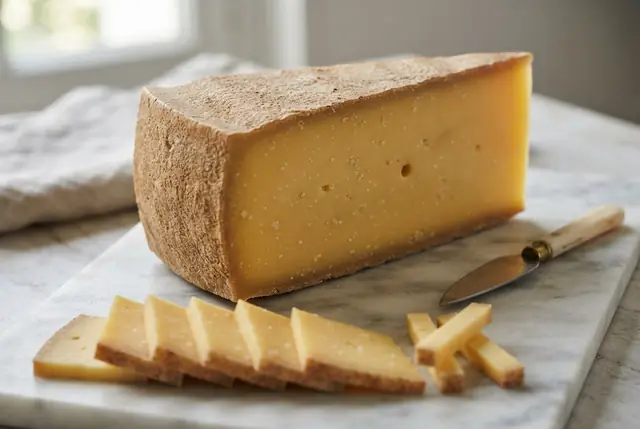
| Aged gouda and Comté | Caramel and nut against honeyed sweetness. |
| Prosciutto | Salt and fat against soft sugar, as with melon. |
| Walnuts and hazelnuts | Tannin and crunch against soft flesh. |
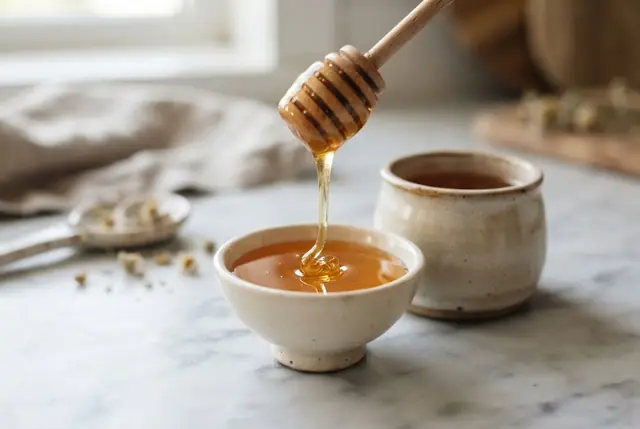
| Honey | Sweet on sweet, which works because pears are floral rather than sugary. |
| Sauternes, port, poire William | Sweet wine and pear brandy. |
Skip it with: nothing, but be aware pears are soft and delicate — they lose against a very sharp cheddar in a way apples don't.
How to prep it for the board
- Check ripeness at the neck. Press gently just below the stem. It should give slightly. A soft belly means it's already overripe inside.
- Buy them firm and ripen at room temperature for two to four days. Pears are one of the few fruits that genuinely ripen better off the tree.
- Slice thin lengthwise with the skin on, and core as you go.
- Stop browning the same way as apples — three minutes in lightly salted water, then drain and pat dry.
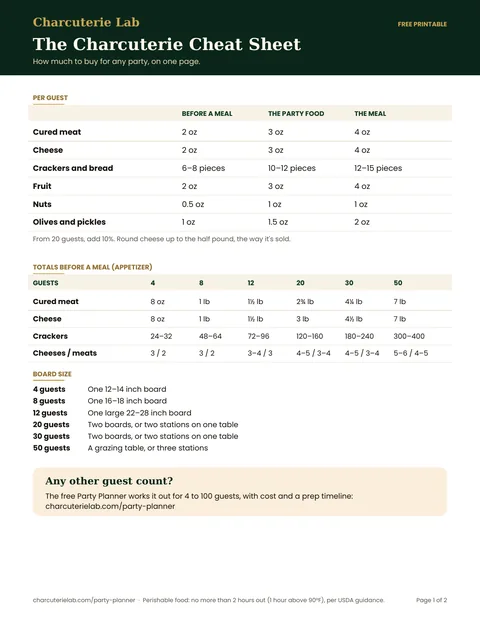
- Serve 3–4 slices per person.
- Fan them beside the blue cheese. That's the pairing worth making obvious.
- Fix: grainy near the core? That's normal pear stone-cell texture. Cut around it.
What to buy
| Product | Where | Notes |
|---|---|---|
| Bosc | Any grocery, autumn–winter | Brown, firm, holds its shape when sliced. The best board pear. |
| Bartlett | Any grocery | Juicy and floral. Ripens fast — check daily. |
| Anjou (green or red) | Any grocery | Mild and slow to ripen. Forgiving. |
| Comice | Grocery, specialty, winter | The sweetest and most fragile. Superb, briefly. |
| Forelle or Seckel | Farmers markets, specialty | Small enough to halve and serve whole. Very pretty on a board. |
| Farmers market pears | Local, autumn | Almost always better — pears bruise in transit. |
Label check: press the neck, not the body. Bosc stay firm even when ripe, so go by the neck and by smell — a ripe pear is faintly fragrant.
Skip: buying pears the same day you need them. They almost always need two to four days on the counter.
Quick FAQ
How do I tell when a pear is ripe?
Press the neck just below the stem. It should give slightly. Don't press the belly — by the time that's soft, the core is mush.
Which pear is best for a board?
Bosc. It's firm enough to slice cleanly and holds its shape.
Pear or apple with blue cheese?
Pear. It's softer and more floral, and it suits blue better than apple's sharpness.
Do I peel them?
No — the skin adds colour and it's thin enough to eat.
How much per person?
3–4 thin slices.