The short version
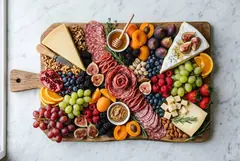
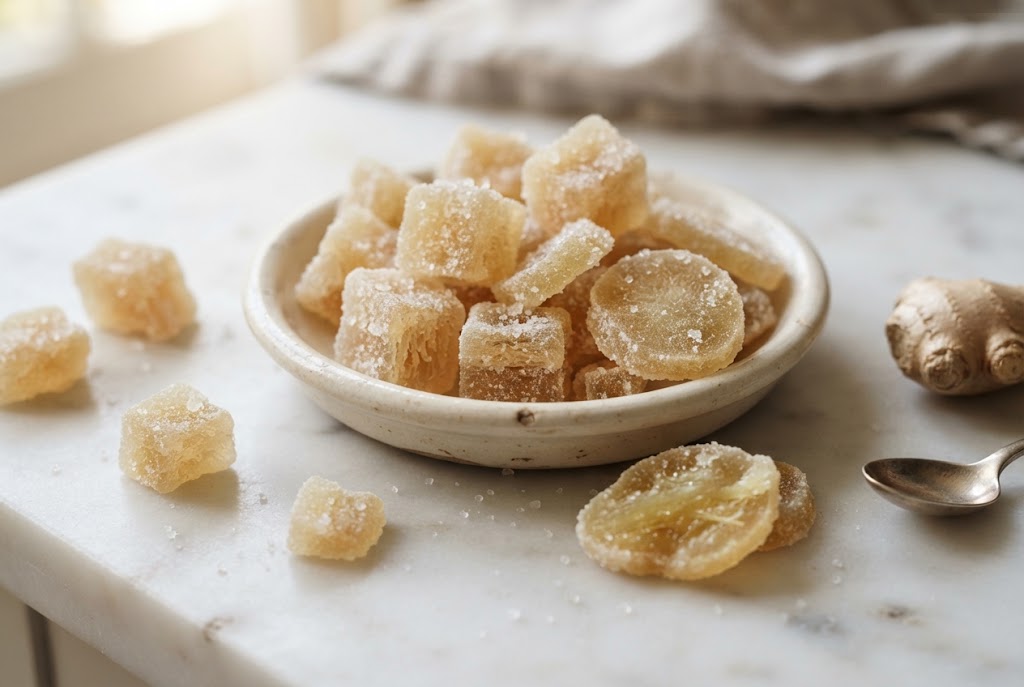
Young ginger simmered in sugar syrup until translucent, then dried and usually tossed in sugar. It reads as a sweet at first and then a spice, and the warmth lingers after the sugar has gone. That delayed heat is why it works on a rich board: one piece resets your mouth between the fifth and sixth thing you eat.
What it is
A preserve, not a confection. The syrup draws water out of the ginger and replaces it with sugar, which is what makes the pieces translucent and shelf-stable. Young ginger gives tender pieces; older ginger gives fibrous ones.
- Taste
- sweet first, then a clean building warmth
- Texture
- chewy and slightly fibrous, with a sugar crust
- Look
- translucent pale gold, sugar-frosted
The mechanism is capsaicin's cousin. Ginger's heat comes from gingerol, which is oil-soluble and slow to register — unlike chili, it builds after the sweetness has faded rather than arriving with it. That staggered timing is exactly what a rich board needs, because it gives the palate a second act instead of another sugar hit.
What it pairs with — and why
| Pair it with | Why it works |
|---|---|
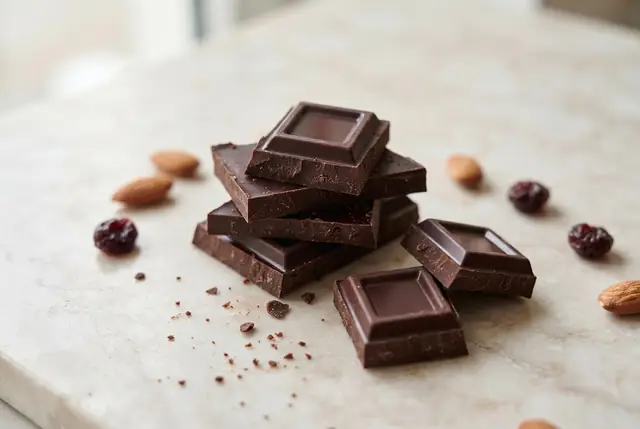
| Dark chocolate | Bitter and warm. The pairing that sells itself, and it is the reason chocolate-covered ginger exists. |
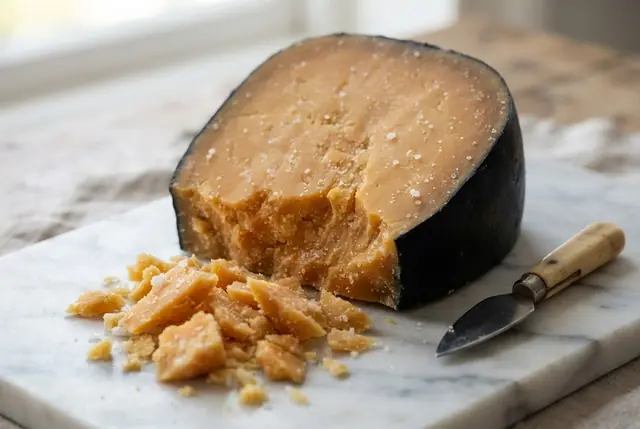
| Aged gouda | Butterscotch sweetness and crystal crunch against sugar and heat. The best cheese pairing here by some distance. |
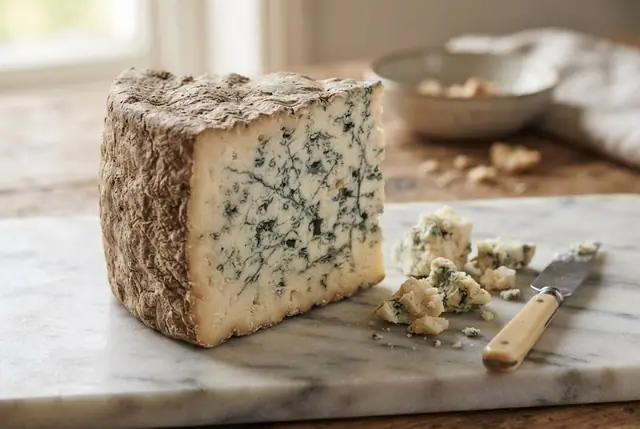
| Stilton and blue cheese | Salt and funk need sweetness; ginger brings sweetness plus a warm finish that fig jam cannot. |
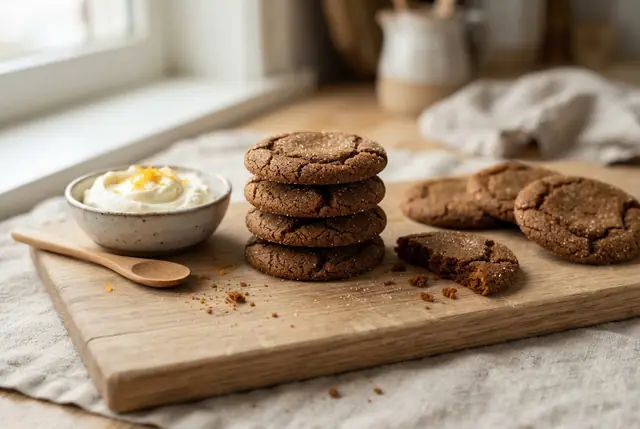
| Gingersnaps | Doubling down. Two forms of the same spice reads as a theme rather than a repeat. |
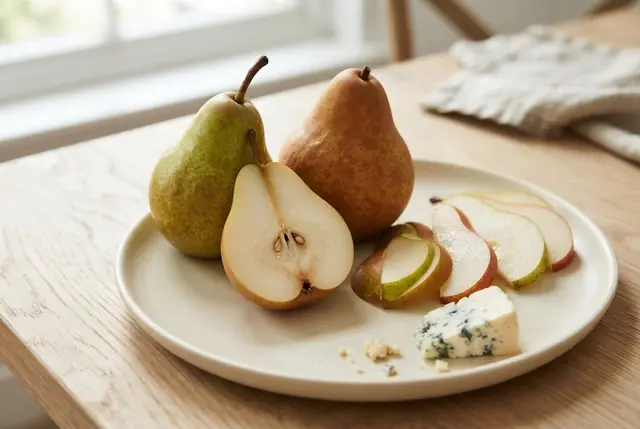
| Pears | Cool, wet and floral against warm and chewy. A classic autumn combination. |
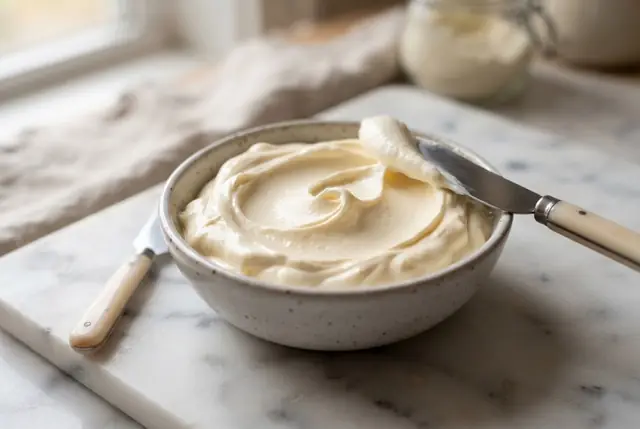
| Mascarpone | Cream flattens the heat just enough. Chop the ginger fine and stir it through. |
Skip it with: delicate fresh cheeses and fine dry-cured ham. Ginger walks over both.
How to prep it for the board
- Slice large pieces thin. A whole chunk is a lot of chew and a lot of heat.
- Serve it in a small dish or scattered with the sweet items.
- Keep it away from anything moist — sugar-coated ginger goes sticky fast.
- Chop some finely to scatter over mascarpone or chocolate.
- Serve 0.25 oz per person — two or three pieces.
- Pair it with something cold if the room is warm.
- Fix: unpleasantly fibrous? That is old ginger. Slice across the grain as thinly as you can and it becomes edible again.
What to buy
| Product | Where | Notes |
|---|---|---|
| Crystallised ginger chunks | Any grocery, baking aisle | The default. Cheap, keeps forever, easy to handle. |
| Australian glace ginger | Specialty grocers | Larger, softer, more expensive and much better. |
| Uncrystallised ginger | Health food shops | No sugar coating. More intense and less sticky-sweet. |
| Stem ginger in syrup | British import shelves | Soft, wet, excellent. Needs a bowl and a spoon. |
| Chocolate-covered ginger | Confectioners | Does the dark chocolate pairing for you. Good on a dessert board. |
Label check: ginger and sugar. Nothing else needs to be there.
Skip: small hard nuggets that rattle in the bag. They are old and fibrous.
Quick FAQ
Is candied ginger spicy?
It has real warmth, yes — the sugar softens it but does not remove it. The heat builds after the sweetness fades.
What cheese goes with candied ginger?
Aged gouda and blue cheese. Both carry enough sweetness of their own to meet it, and enough salt to balance it.
Crystallised or uncrystallised?
Crystallised is coated in sugar and drier. Uncrystallised is softer and more intense. For a board, crystallised is easier to pick up.
Is it the same as stem ginger in syrup?
Same idea, wetter. Stem ginger is excellent but needs a bowl and a spoon.
How much per person?
A quarter ounce — two or three pieces.