The short version
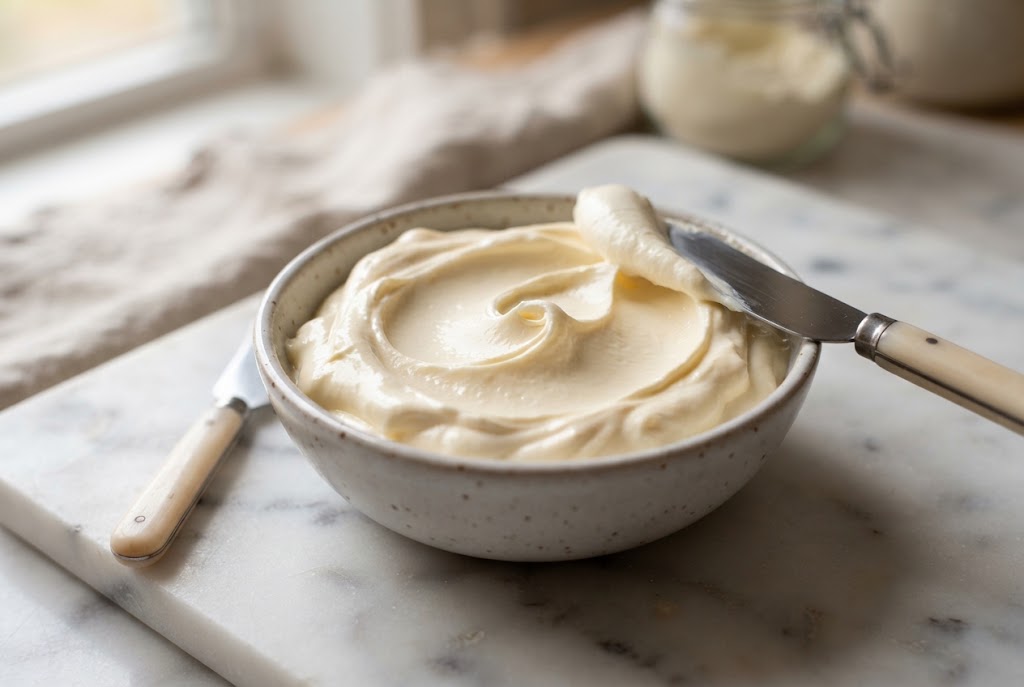
Cream thickened with a little acid and nothing else — no rennet, no cultures, barely a cheese by most definitions. It tastes like lightly sweetened whipped butter. Belongs on the dessert half of a board, not the savory half.
What it is
Mascarpone comes from Lombardy and is made by heating cream and adding an acid — tartaric or citric — until it thickens. That's the whole process. There's no fermentation, so there's no tang, and it is richer than cream cheese.
- Taste
- sweet, buttery, milky, almost no salt or tang
- Texture
- dense, smooth, spoonable, silkier than cream cheese
- Look
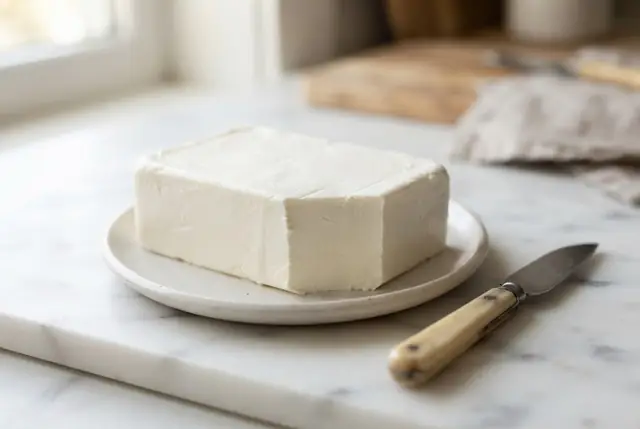
- pale ivory, thick, glossy
Absence of acid is the mechanism. American cream cheese is cultured, which makes it tangy; mascarpone is set with acid and then stopped, so it stays sweet. That single difference is why one belongs with smoked salmon and the other belongs with berries.
What it pairs with — and why
| Pair it with | Why it works |
|---|---|
| Berries | Tart fruit against sweet cream. The most direct and reliable pairing here. |
| Honey and honeycomb | Sweet on sweet works because mascarpone has no salt or tang to fight. |
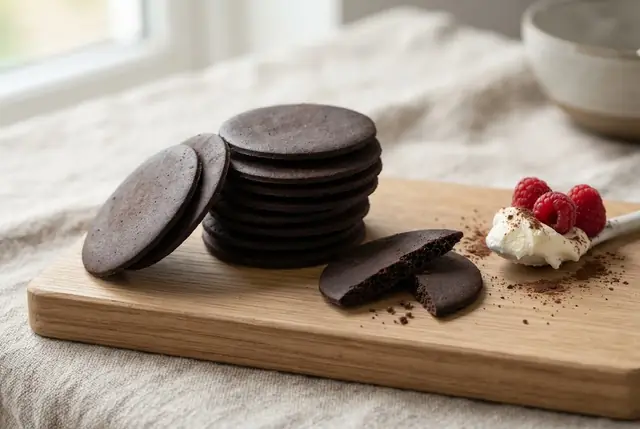
| Dark chocolate and cocoa nibs | Bitterness is what mascarpone lacks entirely. Add it. |
| Espresso or coffee | Tiramisu logic. Bitter and hot against sweet and cold. |
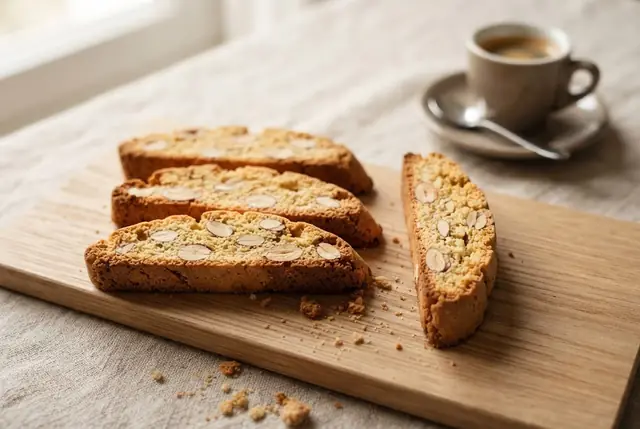
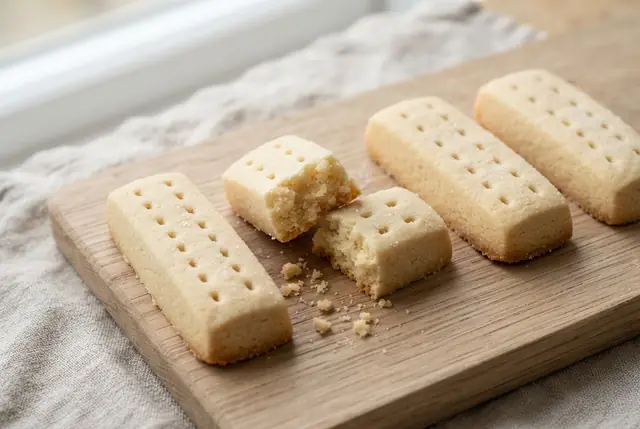
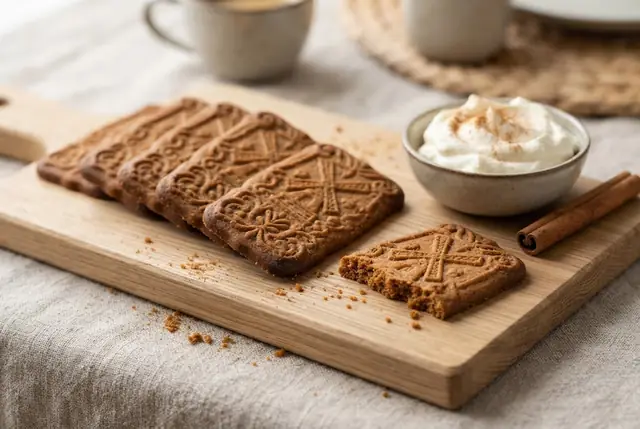
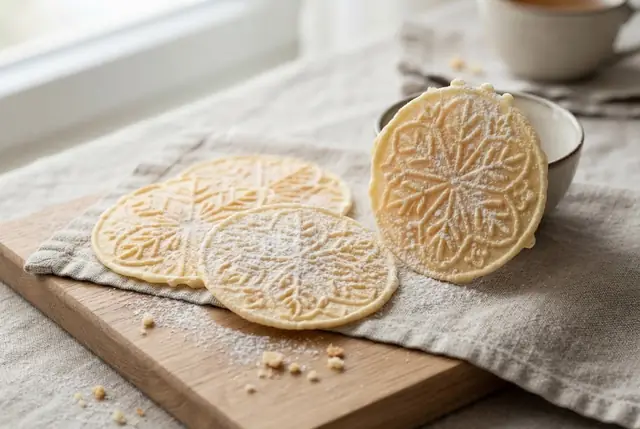
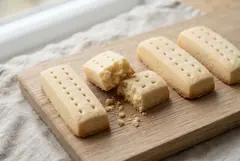
| Shortbread and biscotti | A dessert base under a dessert cheese. |
| Figs and stone fruit | Ripe fruit sugar and acid on a plain sweet cream. |
| Moscato, port, dessert wine | Sweet with sweet, which works here as it wouldn't with a savory cheese. |
Skip it with: cured meat, blue cheese and anything savory. Mascarpone has no salt and no tang, so it can't hold its own — it just tastes like cream that wandered onto the wrong board.
How to prep it for the board
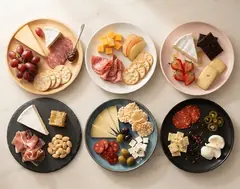
- Put it on the dessert end, or use it to build a dessert board of its own. Don't scatter it among the savory cheeses.
- Temper 20 minutes so it's spoonable rather than solid.
- Whip it with a little vanilla or lemon zest if you want it to read as finished rather than as an ingredient.
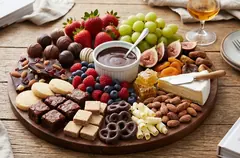
- Spread it in a shallow bowl and dent the top for honey to pool in.
- Serve about 1 oz per person. It's very rich and mostly fat.
- Give it a small spoon, not a cheese knife.
- Fix: too stiff to spread? Beat in a tablespoon of cream. Too loose? It was over-tempered — chill it fifteen minutes.
What to buy
| Product | Where | Notes |
|---|---|---|
| BelGioioso Mascarpone | Most grocery stores, cheese case | The widely available American version. Consistent. |
| Galbani Mascarpone | Grocery, Italian aisle | The Italian standard. Slightly richer. |
| Vermont Creamery Mascarpone | Whole Foods, natural grocers | Small-batch American. Cleaner flavor. |
| Trader Joe's Mascarpone | Trader Joe's | Cheap and reliable. |
| Italian deli mascarpone | Italian markets | Fresher, and worth it if the date is recent. |
| Crème fraîche | Grocery dairy case | The tangier substitute. Better with savory things. |
Label check: cream and an acid. If you see gums, starches or added sugar, it's a dessert filling rather than mascarpone.
Skip: buying a large tub. It doesn't keep long once opened and you'll use an ounce per person.
Quick FAQ
Is mascarpone the same as cream cheese?
No. Cream cheese is cultured and tangy; mascarpone is acid-set and sweet. They're not interchangeable on a board.
Can I use it on a savory board?
It won't hold up. Use cream cheese, boursin or labneh instead.
How much per person?
About 1 oz. It's mostly butterfat.
How long does it keep once open?
Under a week refrigerated, and it goes sour rather than moldy.
What's the easiest thing to do with it on a board?
Whip it, spread it in a bowl, pool honey in the middle, and put berries and shortbread beside it.