The short version
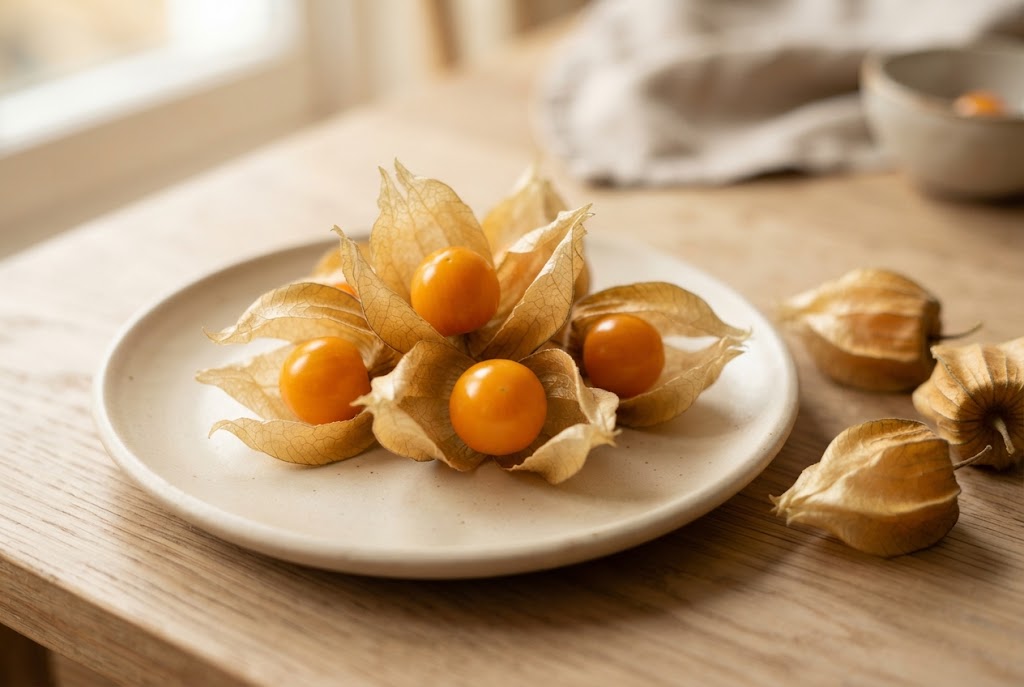
A marble-sized orange berry wrapped in a dry papery husk. Peel the husk back into petals and leave it attached, and you have a fruit with a built-in handle that looks like it came from a restaurant. They are tart, sweet and faintly savoury, and three of them on a board do more visual work than a whole bowl of grapes.
What it is
Physalis peruviana, a relative of the tomatillo. The berry ripens inside a lantern of dry calyx, which protects it and keeps it for weeks. Sold in punnets, usually imported from Colombia, Peru or South Africa.
- Taste
- tart and sweet at once, with a faint tomato note behind it
- Texture
- taut skin that bursts, with tiny soft seeds inside
- Look
- glossy amber-orange berry inside a straw-coloured paper husk
The mechanism is acid in a small package. The berry is high in citric and malic acid for its size, so a single one delivers a sharp hit that a grape cannot — and because it comes with its own handle, it can sit on a board for hours without being touched, then still be picked up cleanly. It is one of very few fruits that solves both the flavour and the handling problem at once.
What it pairs with — and why
| Pair it with | Why it works |
|---|---|
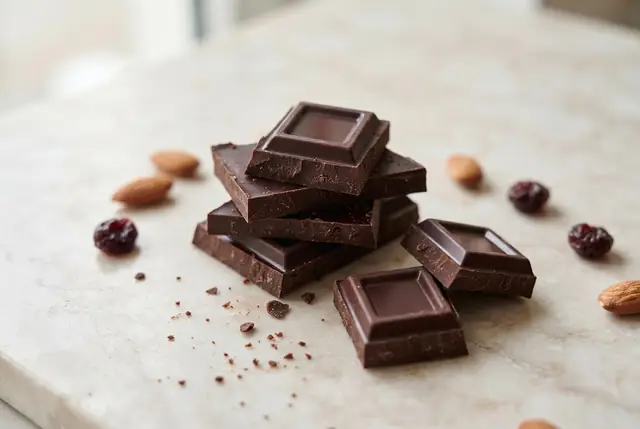
| Dark chocolate | The pairing chocolatiers already make — physalis dipped in dark chocolate is a classic petit four. Tart fruit and bitterness. |
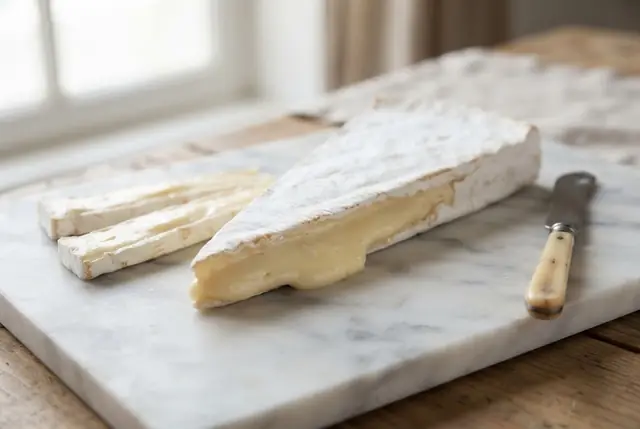
| Brie | Bloomy mild cheese with sharp fruit, and the husk looks extraordinary against a white rind. |
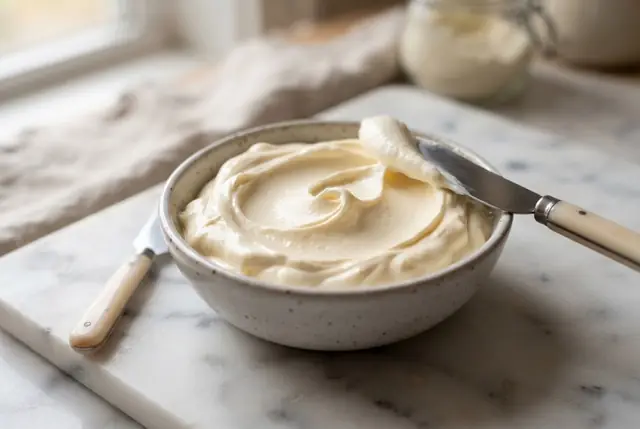
| Mascarpone | Sweet cream and tart berry. It needs nothing else. |
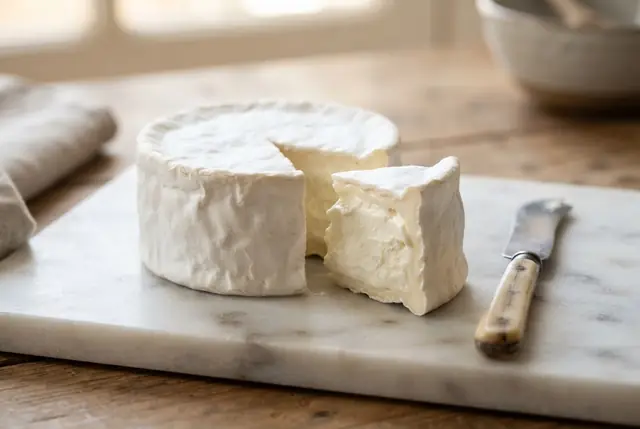
| Triple-crème | Very rich cheese needs sharp acid more than it needs sugar. |
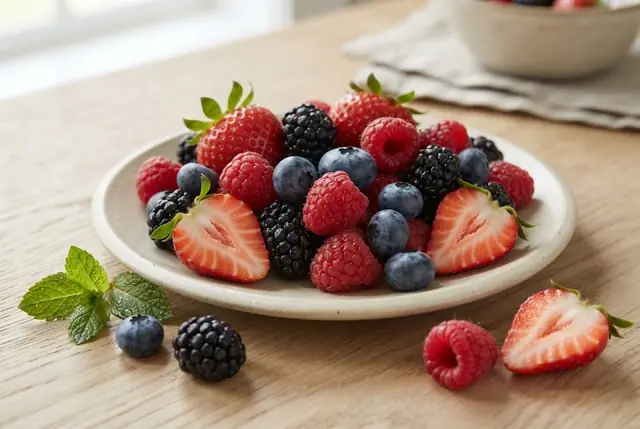
| Berries | Same corner, different shapes and acid levels. Physalis gives the fruit corner a focal point. |
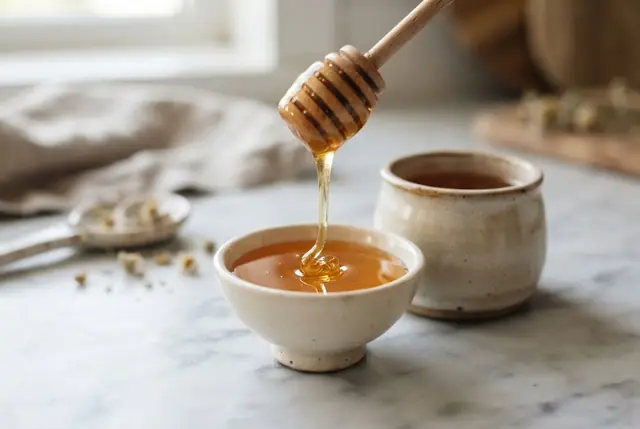
| Honey | Dip the berry halfway. Sweet against tart, and it looks like it was plated. |
Skip it with: cured meat and brined items. This is a fruit-corner and dessert-corner ingredient.
How to prep it for the board
- Peel the husk back into four or five petals, but never tear it off.
- Twist the petals slightly so they hold their shape.
- Wipe the berry — there is a natural sticky film under the husk.
- Stand them upright or lean them against a cheese. They are a focal point.
- Serve two or three per person.
- Add them last. The husk is fragile once opened.
- Fix: husk brittle and shattering? They are old but the berry is usually still fine. Remove the husk entirely and use them like berries.
What to buy
| Product | Where | Notes |
|---|---|---|
| Physalis in a punnet | Larger supermarkets, greengrocers | The common form. Check the berries feel firm through the husk. |
| Goldenberries | Health food shops | The same fruit under a different name. |
| Chocolate-dipped physalis | Chocolatiers, patisseries | Already the pairing. Excellent on a dessert board. |
| Dried goldenberries | Health food shops | Chewy and very tart. A good dried fruit, no visual effect. |
| Ground cherries | Farmers markets, late summer | The smaller sweeter North American cousin. Worth buying on sight. |
Label check: husks should be straw-coloured and dry, not green or damp. Berries should feel firm.
Skip: punnets with any sign of mould inside the husks — it spreads fast.
Quick FAQ
What is physalis called?
Cape gooseberry, goldenberry, ground cherry and Peruvian groundcherry all refer to it. Physalis is the genus name and what most shops use.
Do you eat the husk?
No. Peel it back like petals and leave it attached — it is the handle and the whole visual effect.
What does it taste like?
Sharply sweet and tart, with a tomato-like note underneath. Closer to a tart pineapple than to a berry.
Is it related to the tomatillo?
Yes, closely. Tomatillos are the savoury member of the same family and grow in the same papery husk.
How much per person?
Two or three berries. They are a garnish and a punctuation mark.